







Authenticity, AI, and the present of the Church — Young people react to Pope Leo LIVE!
“Dude, we met the pope today!” Ben Rowe exclaimed as he walked through the halls of the Indianapolis Convention Center.
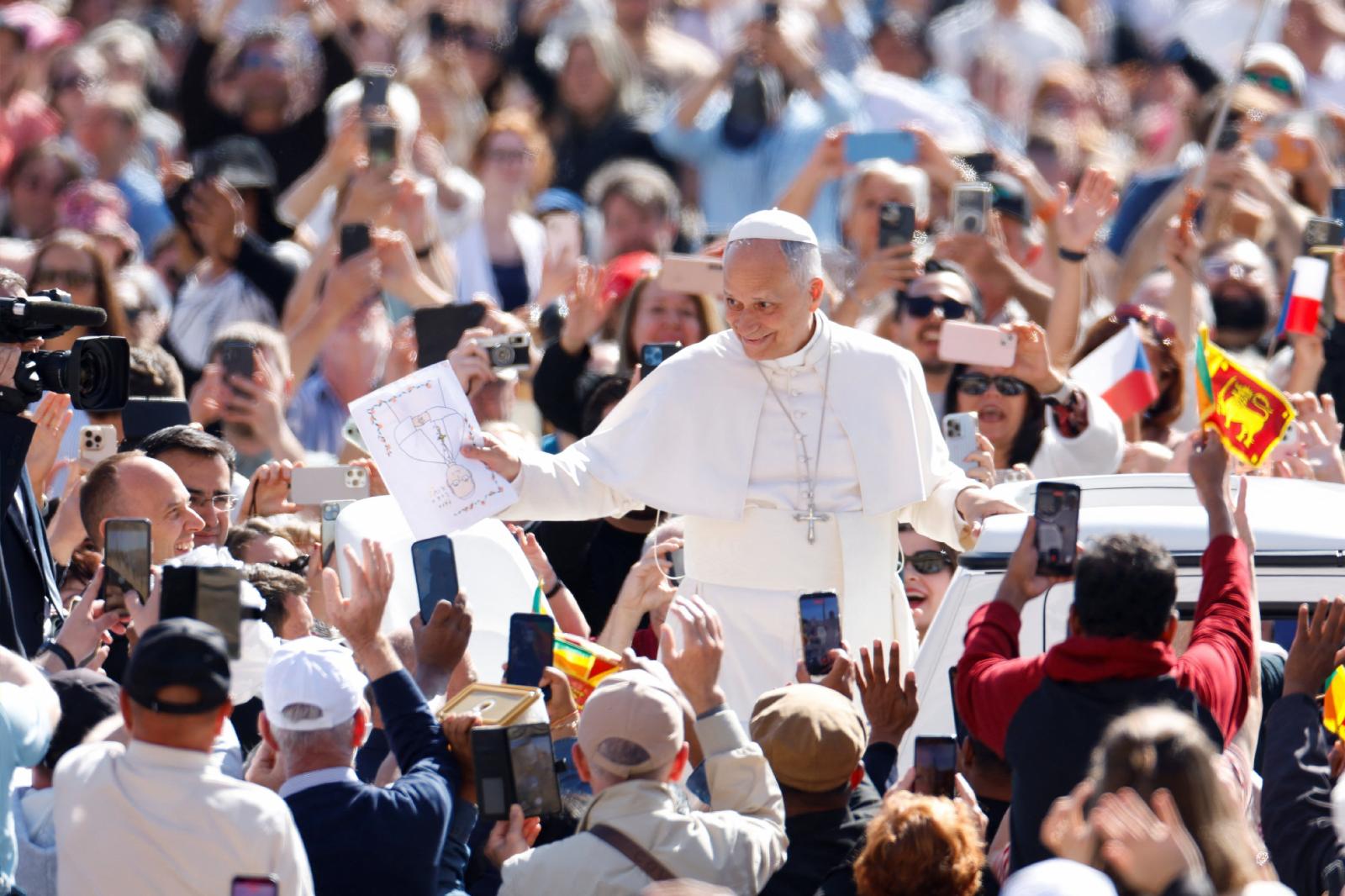
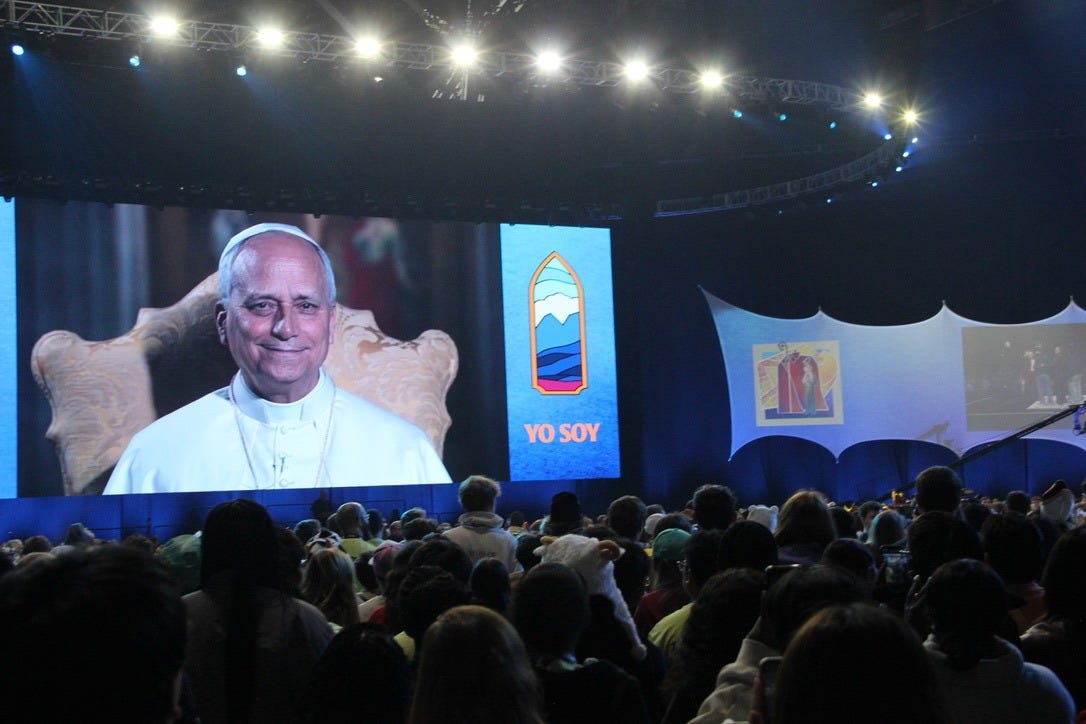
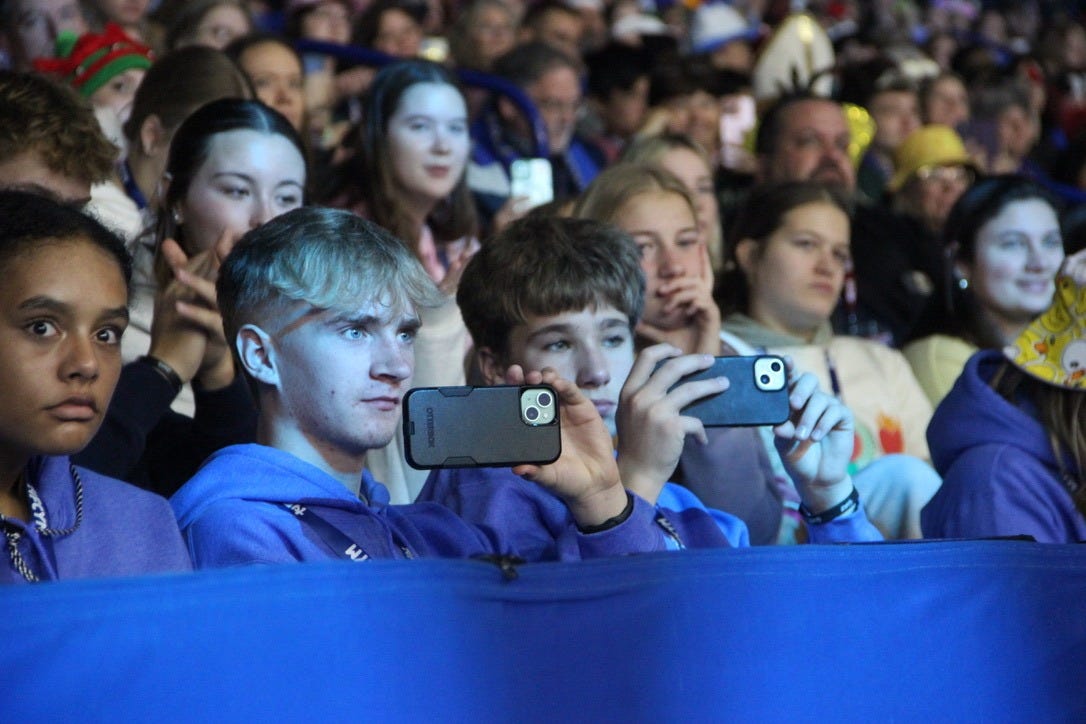
Rowe and 16,000 other teenagers virtually ‘met’ the pontiff during Pope Leo LIVE, a 45-minute dialogue between the pope and attendees at the National Catholic Youth Conference.
“I mean it would have been cooler if he was in person, but video calls still work, and it was a good experience to meet the pope and to just have the conversation with him,” Rowe, a high school senior from Granger, Iowa told The Pillar. “It was awesome for him to be able to give us feedback on lots of the things and problems in our world.”
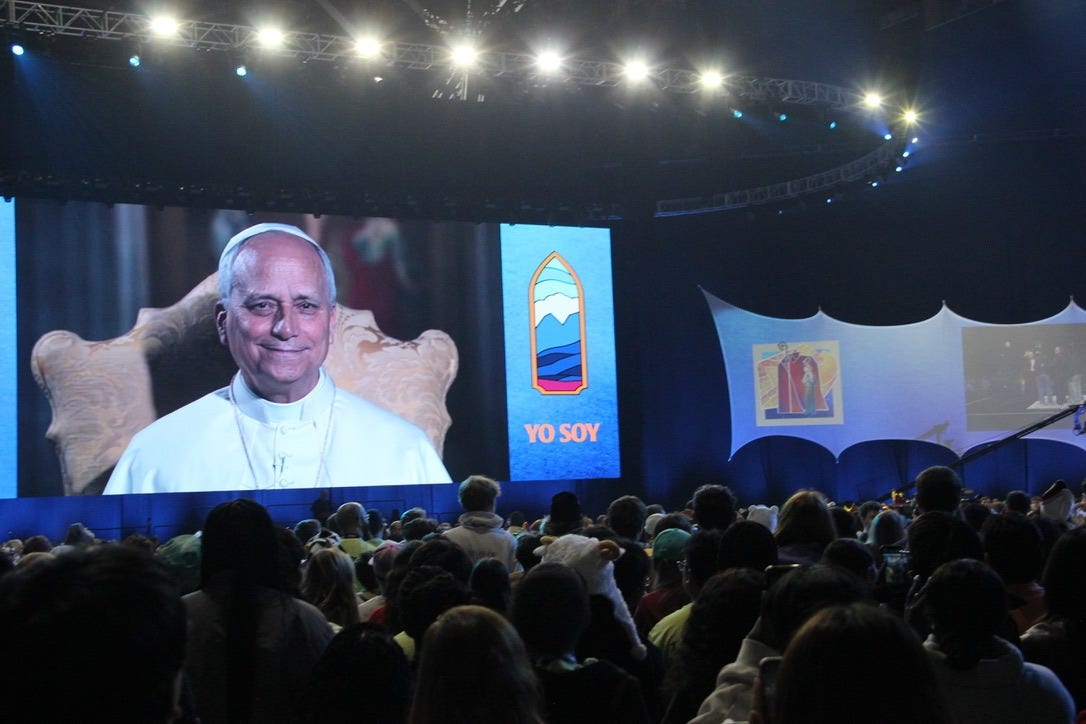
During the encounter, five young adults asked the pope a series of questions developed from Zoom conversations between a team of adult moderators and 40 teenage participants in the weeks leading up to the conference.
Elise Wing and Ezequiel Ponce, two of the teenagers who asked the pope questions, explained that prior to the event, they participated in multiple hour-long conversations with their peers, sharing about their experiences. Adults would take notes and ask follow-up questions to flush out themes.
“The process was very comfortable, and it honestly kind of felt like therapy,” Wing said in a press conference. “We were just sharing our thoughts and our stories. It wasn’t super structured. The adults were taking notes and noting down themes that kept coming up.”
‘It felt real’
Many of the teenagers who spoke with The Pillar said the conversation felt authentic to them. Authenticity in relationships was a key theme of the pope’s comments to the conference participants.
“It felt very real, especially when we interrupted him with our applause, when he was laughing, he still went on saying his things,” Adriana Royo, a high school junior from Pennsylvania, told The Pillar. “He felt very wise to me, very authentic, very authentic.”
“It felt pretty real,” Rowe said. “My first thought was it might just be a recording and they were just like going along with the script. But it definitely wasn’t. You could see him playing off of the crowd and thinking about answers, so that was cool to see.”
But Annie Schiller, a high school junior from Long Island, New York, said the conversation “felt very scripted” to her. The questions that made up the conversation had been sent to the Vatican ahead of the event and were read from cue cards by the host and teens.
Despite that, “they were good questions that were relatable,” Schiller added.
The host of the event, author and radio show host Katie Prejean McGrady, said she felt that the event ran smoothly and felt authentic.
“I had this legitimate fear that it was going to have that Zoom feel, but the way they had the setup with him in the chair, seeing us on the screen, I felt like I was hanging out with him in his living room,” McGrady told The Pillar. “It felt very real.”
McGrady said she believes the event will have a significant impact on the teens in attendance.
“A friend texted that her nephew was here. And she said that the pope’s dialogue changed my nephew’s life. He just texted his aunt and was like, ‘I know what I want to do with my life because of that event’,” McGrady said. “I don’t know what it was specifically that the Holy Father said, but it changed that kid’s life. And it moved me. It was huge for these kids.”
Upon the completion of the dialogue, the stadium gave the pope a standing ovation. Some students had tears in their eyes.
“Just hearing the pope’s voice speaking to us was powerful,” Jonathan Alayah, a high school senior from East Chicago, Indiana told The Pillar. “It moved me to tears, his message, and it really motivated me to really open my spiritual life.”
Alayah said he was particularly touched by the pope’s words that each of the young people there was created for a particular purpose.
“It was so impactful for me to hear because a lot of our generation doesn’t really believe in God and often feels forgotten so to hear that we have a mission and that mission is to pursue Christ – that was powerful.”
Other teens mentioned to The Pillar that they were moved by Leo’s words on trusting in God’s mercy and dealing with distractions during prayer.
‘Do your own homework’
Among the themes of the conversation that seemed to resonate most with the conference participants were the pope’s words on the use of technology – particularly on the use of AI, which many of the young people said they use in their day-to-day lives.
Many of the teens who spoke with The Pillar mentioned the pope’s advice on using AI in a limited and intentional manner.
“When I look around me or think about my own school habits, I know people use AI, like Chat GPT, all the time on all their assignments,” said Liv Neuberg, a high school junior from Columbus, Indiana.
“When I use it on my biology assignments, I just don’t retain any information…I know if I actually put in more effort in class, I’d probably know more,” Neuberg reflected. “It kind of makes you think that if we keep using AI, it’ll dumb us down, and we’re already getting dumber.”
Neuberg was touched by Pope Leo’s call for the responsible use of AI. This means, the pope said, “using it in ways that help you grow, never in ways that distract you from your dignity or your call to holiness in your education.”
“I think after hearing what he said, I’ll probably stop using AI as much,” Neuberg said. “I think I can use it for my benefits sometimes, but I also shouldn’t use it right when I go back to school because I need some distance from it.”
Other teens agreed that the pope’s words on AI were particularly impactful.
“What the pope said about AI was really interesting. It’s good, but don’t abuse it. I like that. I thought that was pretty cool,” Rowe said.
“I found when he said to not let AI control you, that it’s at our disposal and we are to control it particularly helpful,” Jack Sheridan, a high school junior from Long Island, New York told The Pillar.
“The pope reminded us that we can’t just look at AI for all the answers in life. We need real experiences with other people, and you just have to use it to your advantage, we can’t let it take over us.”
‘The present of the Church’
Another common message that resonated with many young people was the pope’s statement that the youth “are not only the future of the Church, you are the present. Your voices, your ideas, your faith matters right now, and the Church needs you.”
Several teens shared that they often hear people say that they are the future of the Church, but rarely do they feel that they have a place in it today.
“When he said that we are not just the future of the Church, but we are the present, that really struck a chord with me,” said Liam Quirk, a high school senior from Louisville, Kentucky. “I’ve never thought of it that way. As a youth I have always been told that I am the future of something: You’re the future of the school. You’re the future of the Church. I’ve never been the present of anything.”
“I walked away after hearing that, and I really want to get more involved and be more open with my faith, more involved in my church, my parish, and activities at school that I’ve never really been a part of,” Quirk said.
“I’ve got friends who have asked me to do that for ages now, and I’ve never really been too into it, but the pope inspired me to really go out and join in all of these other things and all these groups and to really make my faith known.”
Schiller echoed this sentiment.
“Everyone always says that we are the future of the church, but we all go to church now, and we all have to participate now. And I feel like that doesn’t get noticed at all,” she said.
“It was just encouraging to hear him say that we are the present of the Church.”