






‘Coming together for prayer’ — the liturgical life of a USCCB meeting
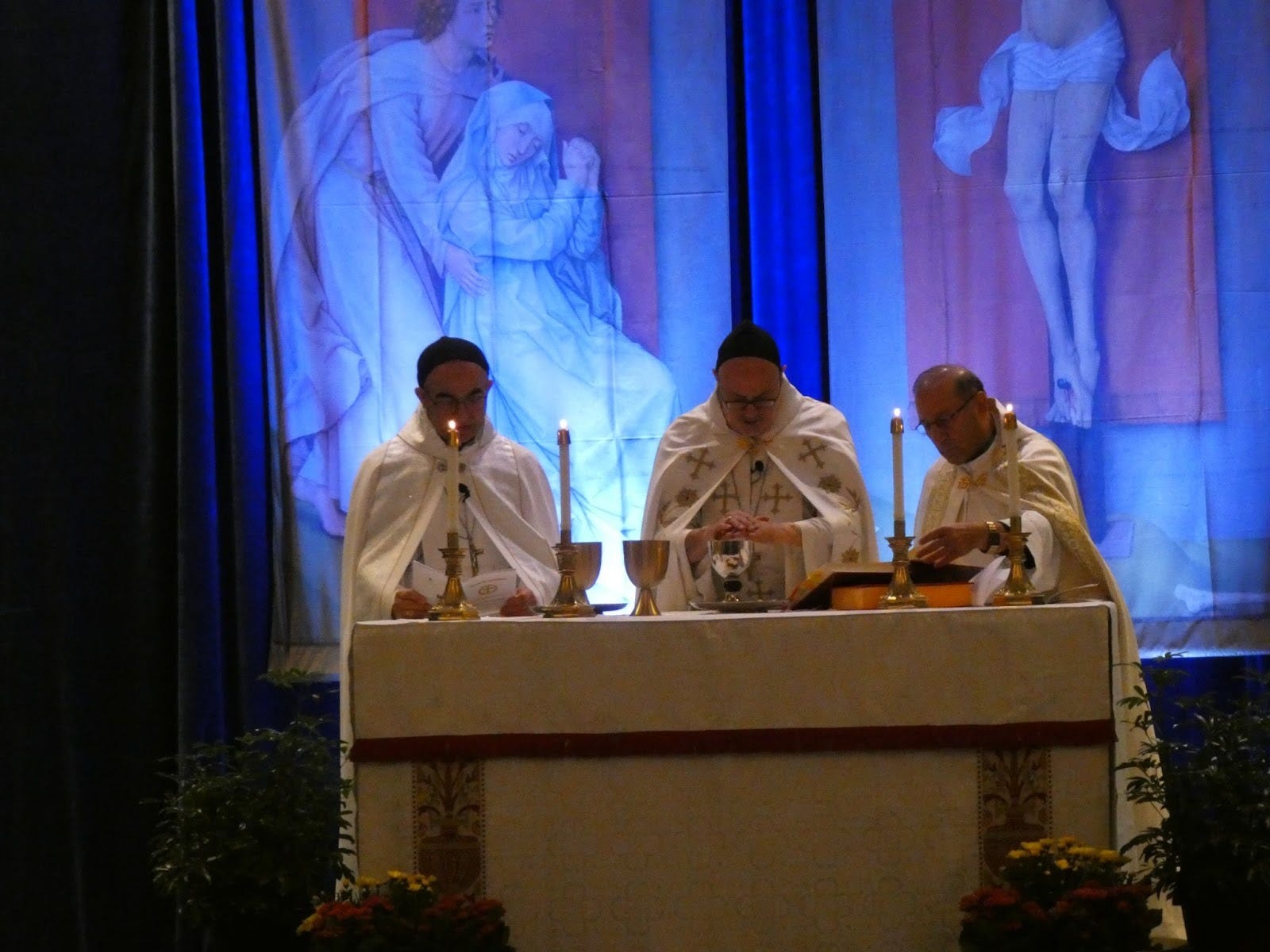
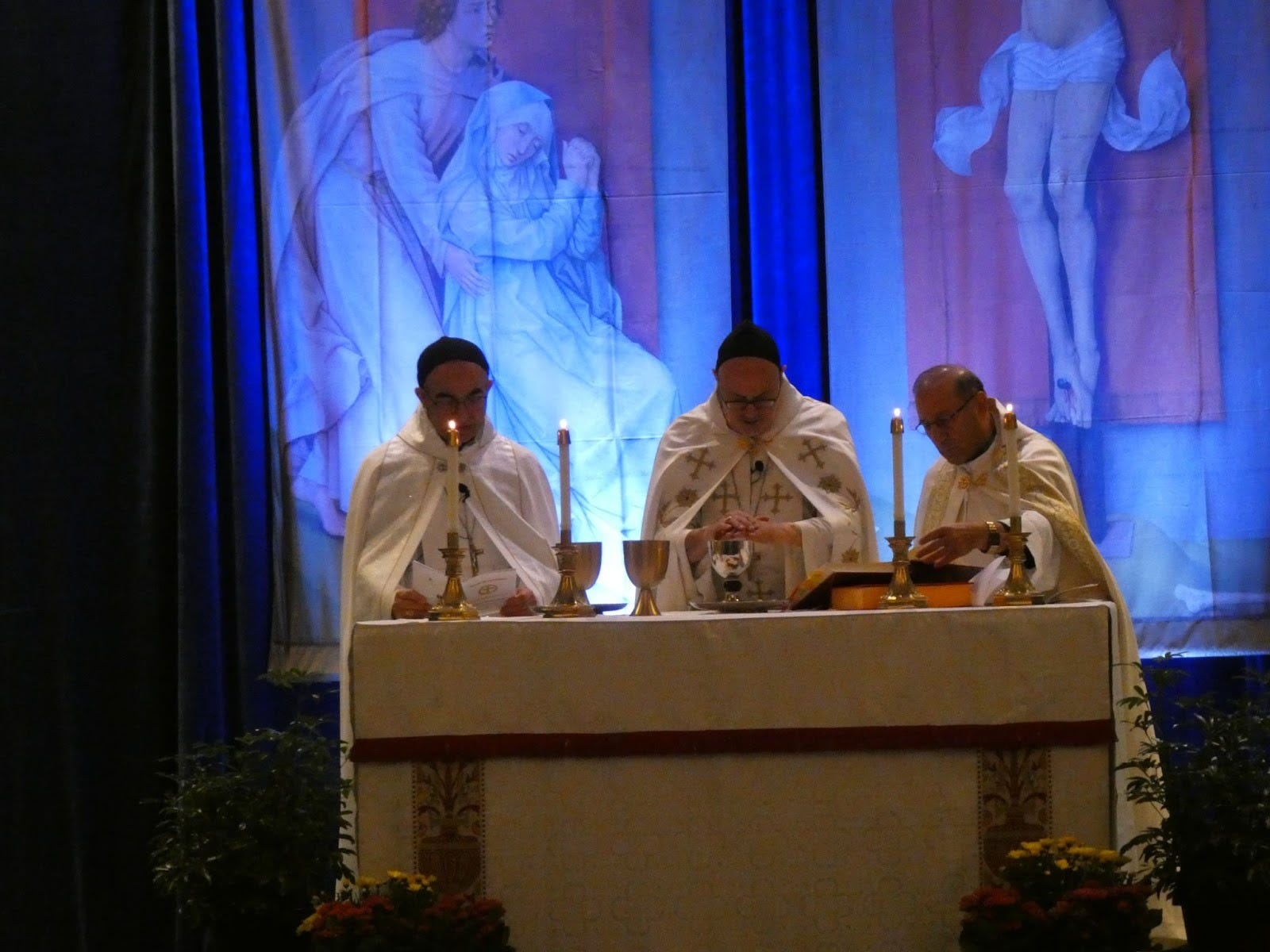
“I thank you for being willing to see something different,” Bishop Gregory Mansour told brother bishops gathered for a Maronite liturgy during the fall plenary meeting of the U.S. bishops’ conference.
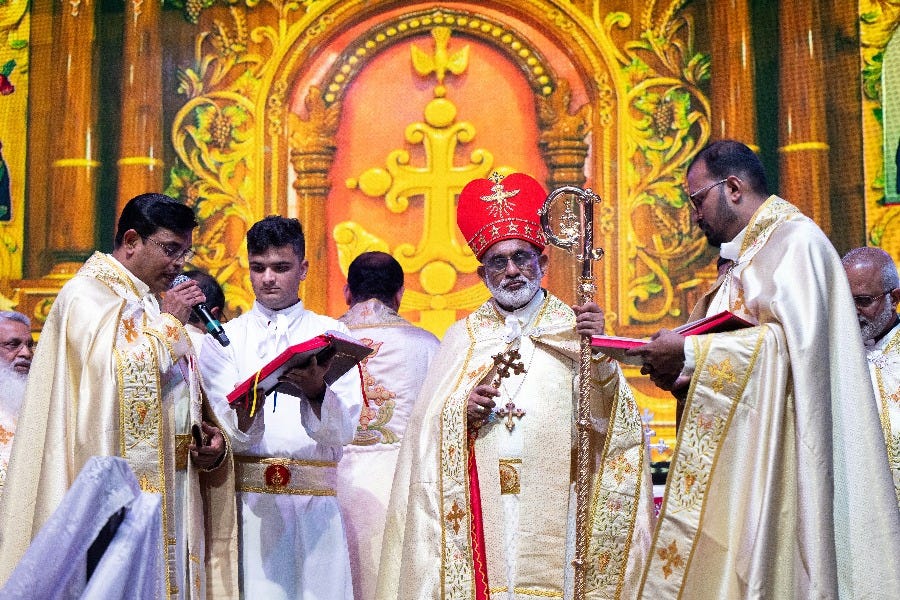
Mansour, who heads the Maronite Eparchy of St. Maron of Brooklyn, celebrated the Maronite liturgy Tuesday in the presence of 16 bishops and a handful of USCCB staffers and observers attending the liturgy — one of the many opportunities for bishops and staff members to pray and worship during the annual conference.
While the bishops gather to meet and discuss conference happenings, liturgies play a central role, allowing the conference to step away from the meetings and bureaucracy of the conference to pray, as brothers.
“These weeks are exhausting, I’m ready for a nap,” Bishop Steven Lopes, chair of the conference’s liturgy committee, told The Pillar midway through the plenary meeting.
“There’s a lot of random things outside the actual plenary assemblies, like insurance meetings and people who want to lobby you about this, that, and everything. There are days where I leave my room at 7 o’clock in the morning and I don’t get back until 10:30 at night. These weeks can overwhelm you.”
“So to begin the week in prayer and have regular liturgies makes it more than just another meeting. It’s a reminder, more than anything else, of what this week is actually meant to be about what is most important, which is Jesus Christ.”
—
At the helm for planning and organizing liturgies stands Fr. Dustin Dought, a priest of the Diocese of Lafayette and director of the USCCB’s divine worship secretariat.
In the weeks leading up to the annual four-day conference, Dought coordinates the liturgies, asks bishops to preach and ensures that the liturgies run smoothly.
“Liturgy is the font from which the Church’s life flows, and that is the peak toward which her life is directed,” Dought told The Pillar. “
“These liturgical celebrations are really the source of all the other work that we do during this week.”
“It makes sense, not only to begin our day with the celebration of the Mass, but to be returning to communal prayer, whether that’s the Liturgy of the Hours, or other sacraments throughout the day, so that the bishop’s work always flows from the Eucharist, and is always directed toward the Eucharist.”
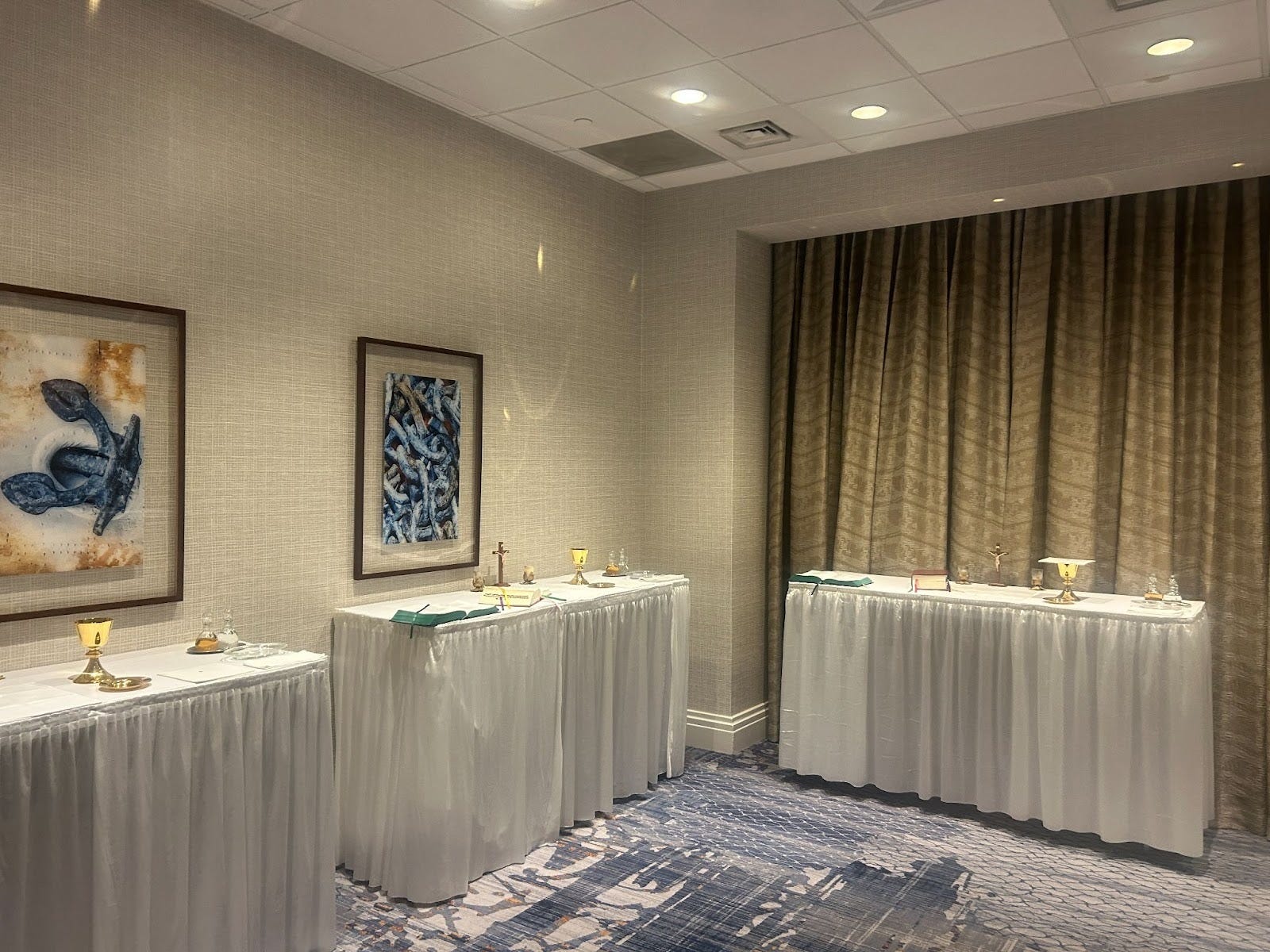
Each day of the plenary meeting, there are two planned Masses in the morning at which bishops can come to concelebrate. For bishops wishing to celebrate a private Mass, Dought and his team set up two rooms, each with six altars for the bishops’ use. Dought estimates that between 60 and 70 bishops celebrate a private Mass each day.
Every year, the conference invites an Eastern Catholic to celebrate a liturgy in the daily schedule; this year officials invited Mansour, a Maronite.
Mansour invited Bishop Elias Zaiden of the Eparchy of Our Lady of Lebanon of Los Angeles and Msgr. Peter Azar, rector of Our Lady of Lebanon Seminary, to concelebrate the Mass. He also invited Our Lady of Lebanon seminarians to sing in the choir.
“The beauty of Catholicism is that it’s a communion of churches,” Mansour told The Pillar.
“For me, it’s a great privilege. I come, I attend, I come to celebrate in the Latin Church’s liturgy.
But it’s a privilege for me to offer my own so that people, not only the Latin bishops, but also the Eastern bishops can come to know one another.”
The liturgies provide the opportunity for Latin bishops to learn about other ritual traditions.
“For my brother bishops to be able to participate in this liturgy, witness it, I think it’s really a grace,” Mansour said. “Several bishops came up later and said, that prayer that you prayed to the altar before you left really touched my heart, or the prayer: ‘you have united, oh Lord, your divinity with our humanity,’ that really touched me.’”
“It is good for them to see that when the church grew up, they grew up in three different language groups — Syriac, Greek, and Latin.”
Bishops have the opportunity to pray the Liturgy of the Hours with their brother bishops throughout the day, and all bishops begin afternoon meetings with midday prayer.
Lopes told The Pillar he looks forward to attending Mass and praying the breviary at the bishops’ conference, as he rarely has the opportunity to attend Mass without having to worry about what others are doing.
“For bishops, nine times out of 10 when they’re at Mass, they’re kind of in charge. Something’s going on, there’s a million people, on the altar or behind the scenes in the sacristy, so it is actually very nice to be able to come and actually pray. The liturgies at the conference are so well-planned and well-provided for, that you can just enter into them without having to think it through,” Lopes told The Pillar.
“Secondly, as it is rare in the life of a priest to pray the Liturgy of the Hours and to pray the Mass together with brother priests, it is even more so for bishops, that there is a very unique and powerful experience of coming together for prayer.”
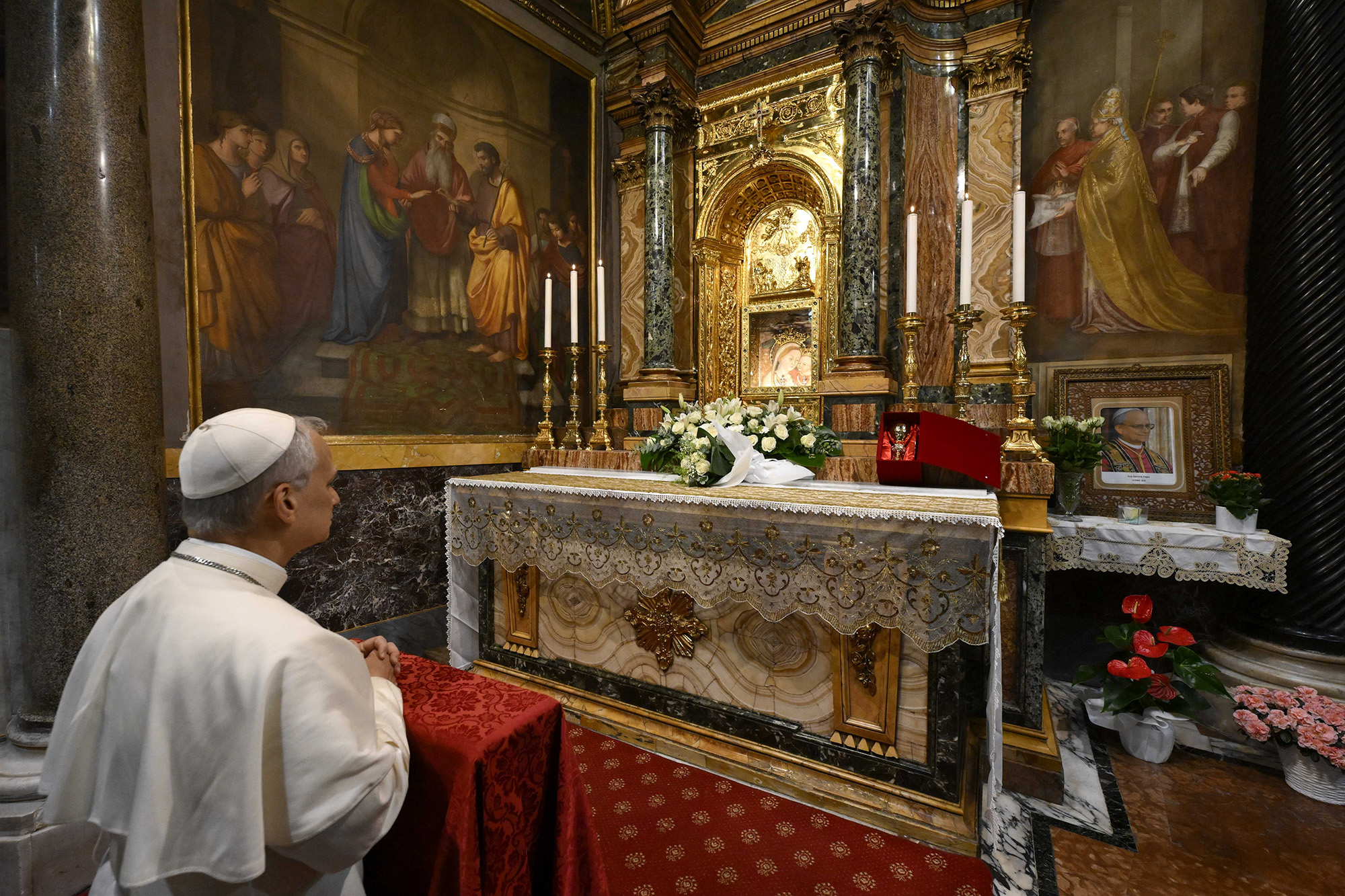
In addition to the public liturgies, the Blessed Sacrament is also reposed in a chapel to which bishops can visit throughout the day.
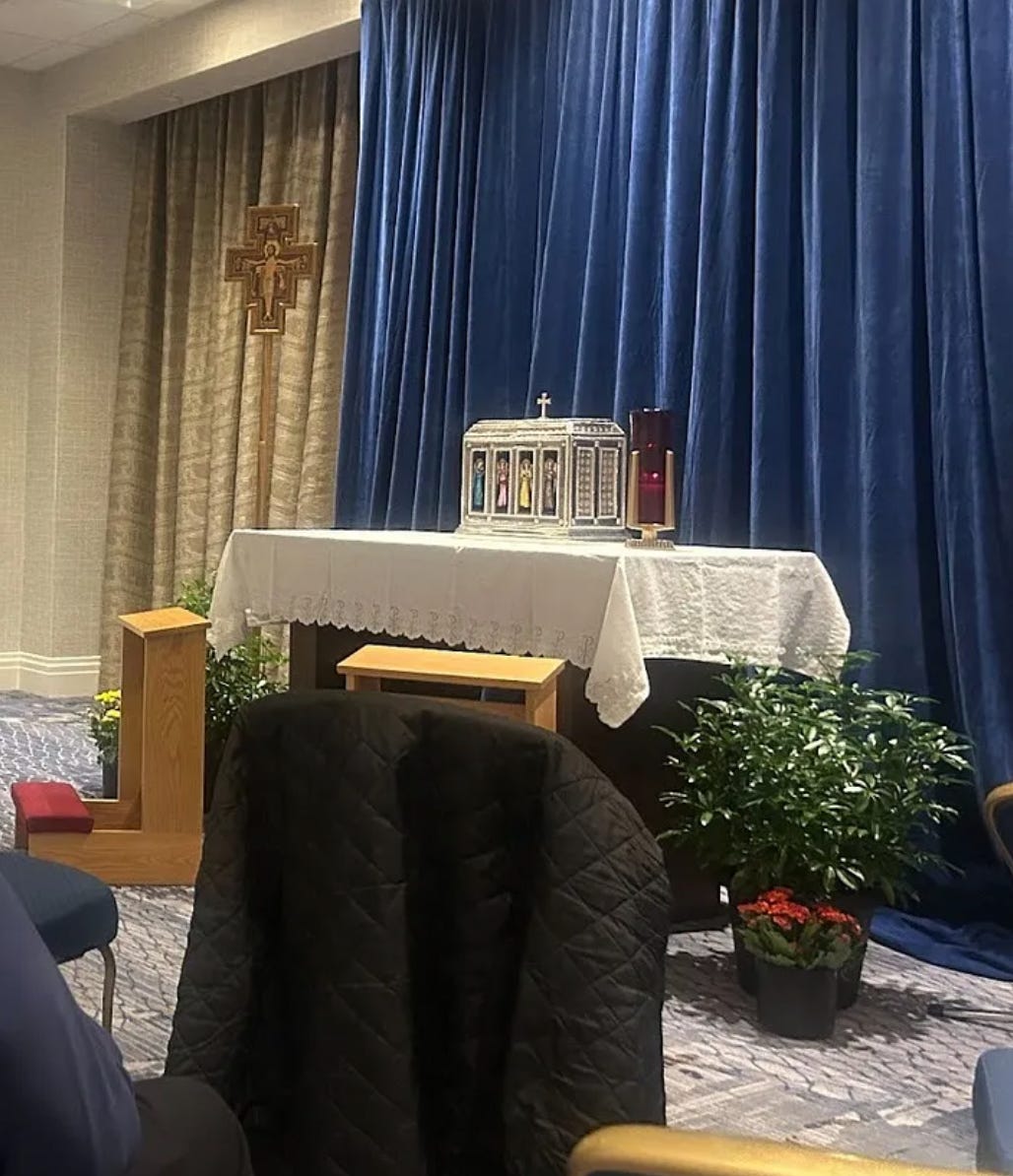
But before public sessions begin Tuesday, bishops partake in a morning of prayer, which begins with exposition of the Blessed Sacrament, and a Holy Hour, with the opportunity for bishops to go to confession.
“The morning of prayer centers the bishops,” Dought said. “Why are we here? Christ is why we are here. That He died and rose, and the fruit of His death and resurrection is His body, the Church. If we forget that, if we forget our origin, which is the love of God, which is the death and resurrection of Christ, then all that we do here is meaningless. It just helps to make first things first, to make preeminent things preeminent.”
The day of prayer was once held at the end of the conference, and many bishops returned to their dioceses before it got underway. But Pope Francis advised that the USCCB move the day of prayer to the start of the meeting, and in November 2021, the change was made.
“Pope Francis mentioned in the ad limina visits of bishops, that ‘Hey, I see y’all do this morning of prayer at the end of the plenary assembly. I’d encourage you to do that at the beginning of the assembly,’” Dought said. “And some bishops made some proposals and those proposals were accepted.”
Since the change, bishops have expressed gratitude at the opportunity to begin the conference with a morning of prayer.
“I love the morning of prayer,” Mansour said.
“We used to save the last day for a day of retreat and prayer but a few years ago, we had the bright idea of doing it first,” Mansour told The Pillar. “The whole morning is meant for confession, repentance, prayer, fellowship, and then we get into our meetings.”
During the morning of prayer, 12 priests from the Archdiocese of Baltimore were available to hear the bishops’ confessions — and bishops took advantage.
“We have 280 bishops attending this meeting, and we want to make sure that those who desire the sacrament have an opportunity for it,” Dought said. “There are long lines in that room all throughout the morning.”
Bishops can sometimes struggle to find a confessor, given their relationship of authority to local priests, so Lopes said the morning of prayer is an optimal opportunity for them to receive the sacrament.
“Just getting to confession is really hard for bishops because of the canonical relationships you have with the priests of your own diocese,” Lopes said.
“The fact that they build in ample time for confession with plenty of confessors is hugely important just to be able to provide that opportunity for the bishops.”
Mansour said confession is especially important at the start of the conference’s annual meeting.
“I try to go to confession as often as possible and I know my brother bishops feel the same way,” the bishop said. “It is good for us to clean our hearts before God and come before him humbly and say, ‘Lord, I need you.’”
Putting on the conference liturgies takes a team, including local seminarians at Baltimore’s St. Mary’s Seminary, who serve at liturgies.
“It takes lots of volunteers, there are lots of worship aides to be prepared,” Dought said.
As for choosing celebrants and presiders, Dought coordinates with the USCCB president to discuss which bishops to invite.
“The president of the conference tries to select a representative group of bishops to preach and celebrate Mass, a group that really showcases the breadth of the episcopacy in the United States, and also some that we would alternate. We keep records of who has celebrated Mass and things so he chooses and extends an invitation to bishops based on these factors.”
Dought and his team are some of the first USCCB staff members to arrive for the conference. They begin setting up the main chapel, adoration chapel, and the rooms for private Mass on Friday to prepare for the bishops who begin arriving over the weekend.
“We are one of the first teams here … when it comes to set up,” Dought said. “On Friday, we set up two rooms where bishops and priests can celebrate individual Masses and then set up our main chapel, where we have concelebrated Masses.
“On Saturday and Sunday, we had Mass at 7.30 a.m. There were 175 people there on Sunday.”
Dought and his team bring crates from Washington D.C. with chalices, ciboria, hosts and other necessities along with the altars. They coordinate with the Archdiocese of Baltimore to find deacons, seminarians and musicians for the liturgy.
“We have two big trunks that we bring from DC with all of these liturgical materials that we have,” Dought said. “We are very grateful to St. Mary’s Seminary here in Baltimore.They provide seminarians to serve for us. The musicians are from the Archdiocese of Baltimore, the deacons from Baltimore.”
Dought told The Pillar that it is a profound experience to see conference liturgies come together, and a sea of bishops concelebrating the Mass.
“Seeing all the bishops at Mass gives you a real heart for the Church,” Dought said. “St. Ignatius of Antioch said that when you see the bishop, you know that that is Christ. To see these men who have been called to this ministry, who have received it through no merit of their own, exercising it, being together, you not only see this ministry of Christ, you see the Church in the United States in communion, celebrating the Eucharist.”
“It is a really powerful symbol of Christ exercising his ministry today.”
For the bishops, the liturgies are an exciting, powerful part of the annual conference as it gives them the opportunity to gather around the altar together as successors of the apostles, a moving experience for many.
“These liturgies are a striking image of the Last Supper in a certain sense,” Lopes said. “There’s the Lord, and here is the College of Apostles around the Lord.”
“Spending time with each other socially and doing work and all the other things are fine, but gathering around the Lord to pray together as brothers and as apostles is a unique and a powerful experience.”