






![St. Anthony Clare—When it is time for me to leave [the Eucharist], …](https://www.catholicdigest.com/wp-content/uploads/2025/12/15-1024x538.png?#)



Henning: ‘What if I bring the Eucharist to them?’

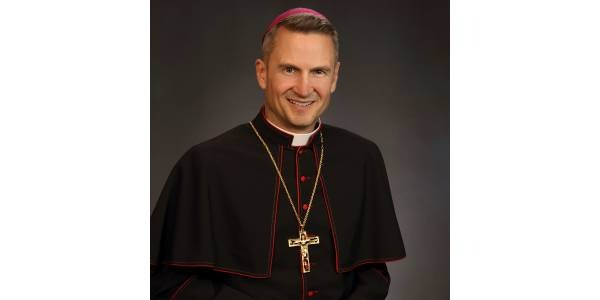
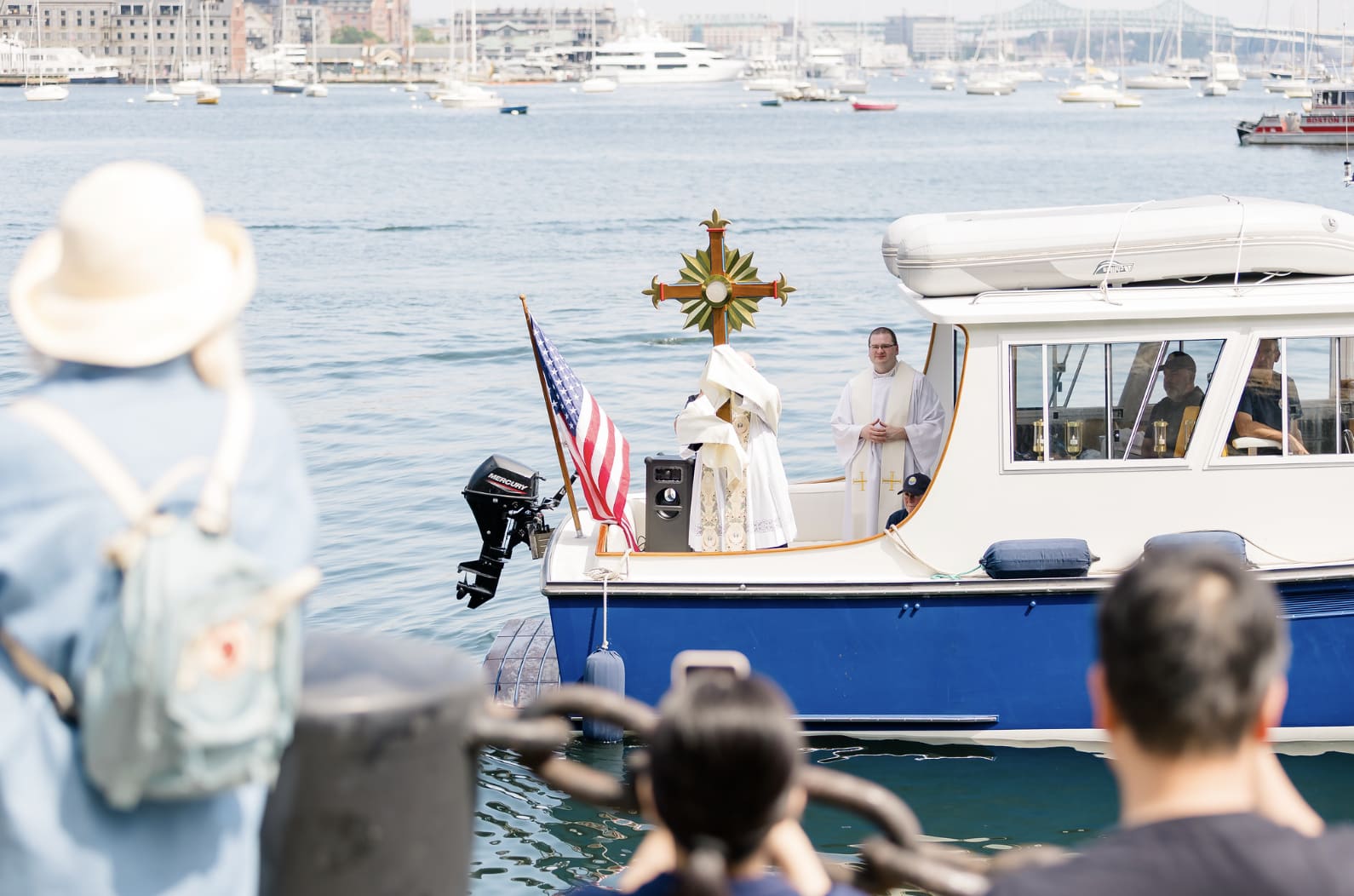
Boston’s Archbishop Richard Henning spent two days last month on the piers and harbors along the Massachusetts coast, traveling in a small boat with a big monstrance.
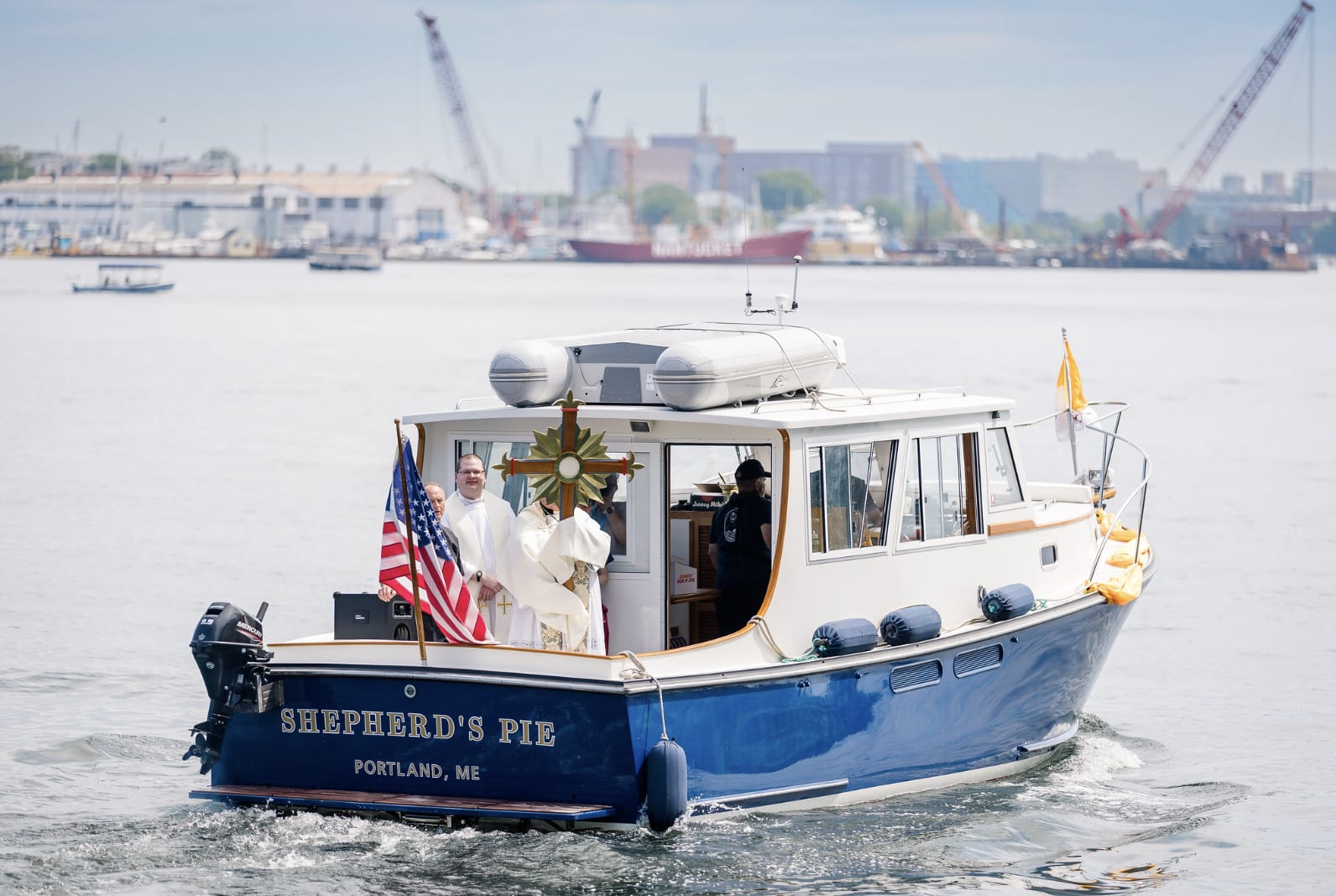
The archbishop was leading a Eucharistic pilgrimage-by-sea, aiming to bring the sacramental presence of Christ to Catholics living in the coastal towns of his archdiocese.
Henning, 60, talked with The Pillar about his archdiocesan “Into the Deep” Corpus Christi Eucharistic procession, which took place June 21 and 22 in Boston Harbor.
This interview has been edited for length and clarity.
Your Excellency, on the feast of Corpus Christi you led an oceangoing Eucharistic procession through the Archdiocese of Boston — a fitting day for a Eucharistic procession, and part of the Church’s Eucharistic Revival efforts.
What was that procession like?
The idea for this came from my own experience and life. I have always been around the ocean and the water; the sea coast is a happy place for me, it is where I like to go for leisure and sometimes for prayer.
I find it inspiring.
While I was Bishop of the Diocese of Providence, Rhode Island — the ocean state — I thought about doing a Eucharistic boat procession in Narragansett Bay along these lines and I took that idea with me up to Boston.
The city of Boston has always had a very close relationship with the sea, and a lot of the communities that we visited have a storied history related to the coast and the sea.
It seemed like it would be something that might draw people's attention, draw them in.
The other realities were practical. I wanted to do something to continue the effects of the Eucharistic Congress and to live them more locally. The Church’s 2024 Eucharistic pilgrimage processing from the East Coast started in Hartford, and did not pass through any of Massachusetts.
I wanted to do something to bring the [Eucharistic] Revival here, but it is difficult in Boston to bring people together: The traffic is a major obstacle and it is expensive to find large venues.
I thought about whether we should do a Mass or a large, day-long gathering. But then I thought: “Instead of getting people to come to us, what if I bring the Eucharist to them, in their communities?”
In the beginning, we thought about this concept, and we considered doing more like a typical procession —we would get people in boats to follow us along the way.
But we realized that between the ports it was open ocean and given that we have not done this before, we felt that it would introduce all kinds of logistical challenges and risks.
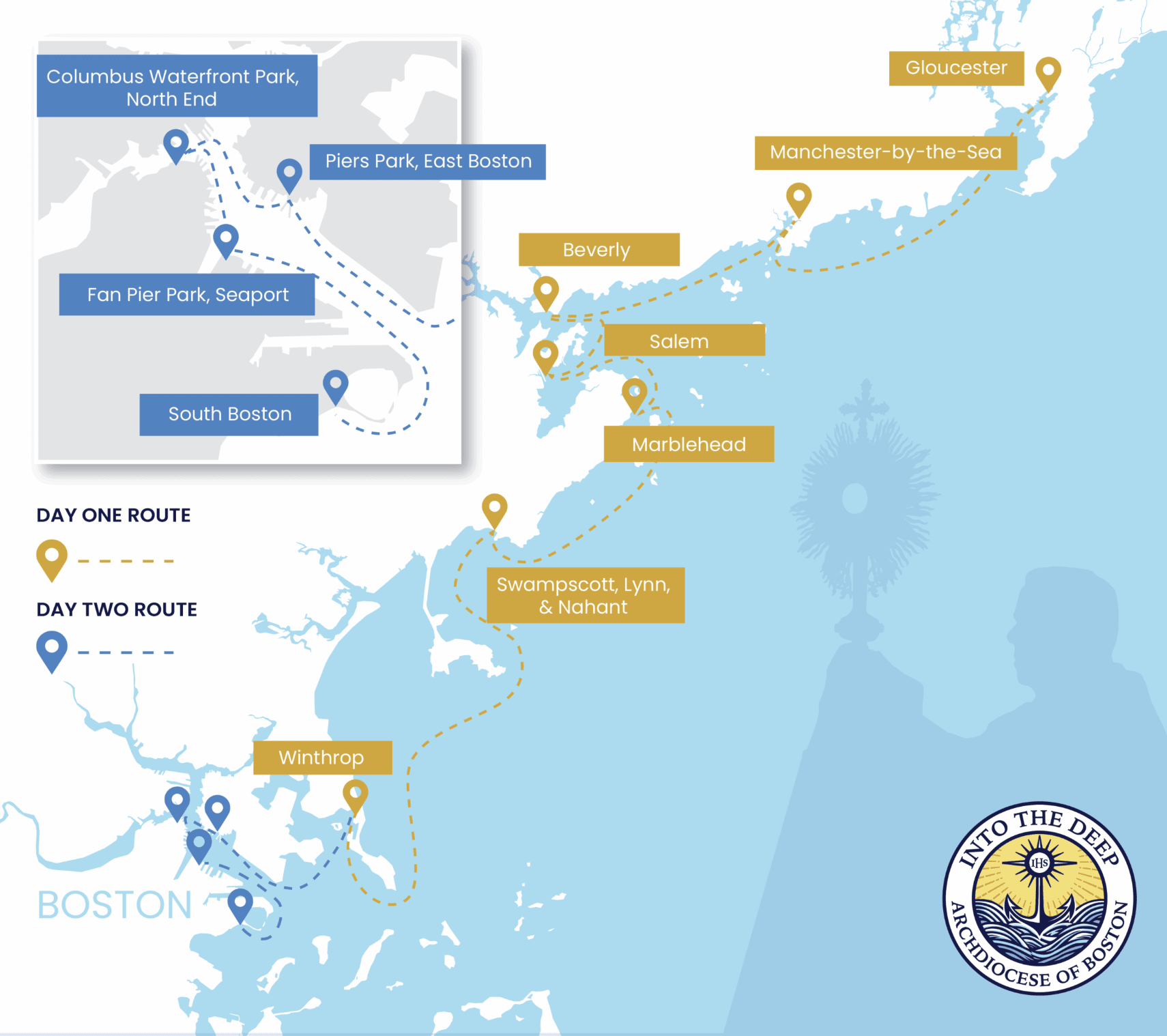
So, we decided instead to go ashore at the little ports along the coast between Gloucester and Boston and invite people to go to the shore front park or harbor of their own community. We felt that that would be the easiest way to do this logistically.
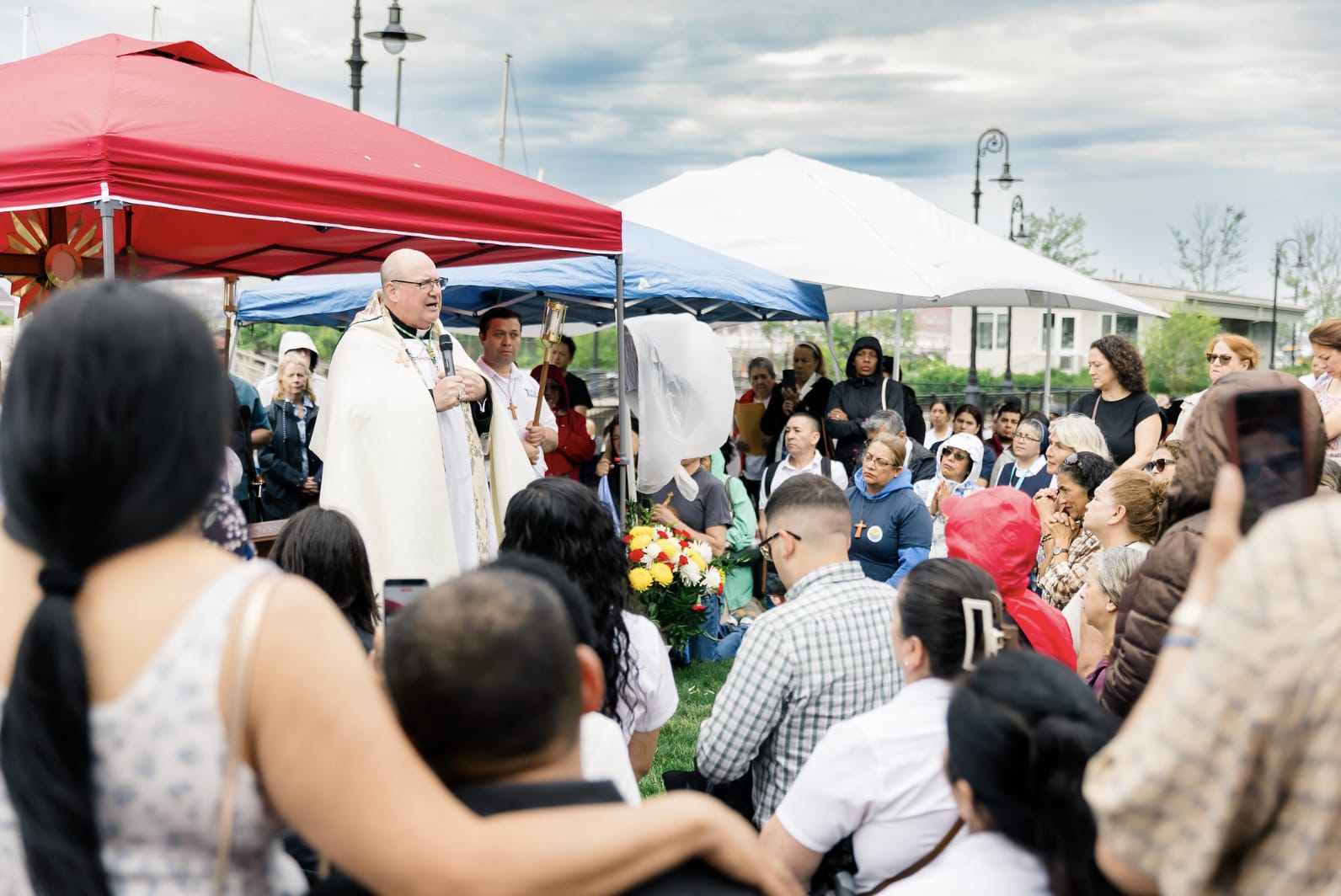
It was a logistics decision, but in the end, that decision also introduced a depth of meaning to the procession — because even though everyone knows that the Lord is with them in the tabernacle in their own church, there was a sense for people that the Lord was coming to them, coming to their shore, coming to their town.
That seemed to deeply move the folks that gathered at the stops.
—
When I pitched this idea to the staff, I hoped that the event would draw people that are not necessarily churchgoers.
I do not think that is what happened this time, but I learned myself as a pastor, that the folks we visited, who seemed to be mostly churchgoing folks — they still needed this.
Boston has a painful history and I think there was something powerful for them in this experience. So I am not unhappy that it was mostly people that were already full of faith.
I think we sometimes need the people who go to church to be reinforced and consoled and encouraged, and I think the Lord did that in the course of these two days.
—
I would like to do the boat procession again, but with a different route.
Because Boston is so big, we could not come from both the north and south, we just came [south] from Gloucester to Boston. Maybe next year, we will think about coming up from Plymouth to Boston.
Even though I pitched this idea, our evangelization and catechesis office made it a concrete reality. They really outdid themselves. They worked so hard, in a tremendous effort.
So many people pitched in, from the local pastors, volunteers in the communities, the local police, fire and harbormasters. Everyone was just outstanding.
By the grace of God, it all came together and it worked. It was a beautiful experience and I hope it was beautiful for the people there.
It certainly was for me because these were many of the communities I had not yet visited. There's 250 parishes in the Archdiocese. I've been to 50 or 60 already, but for a lot of these parishes, it was my first visit there.
The Eucharistic Revival movement began with talk about Catholics who don’t believe in the real presence of Christ in the Eucharist — and with hope the revival might address that.
Still, in some ways it seems the biggest beneficiaries turned out to be Catholics who do practice and believe what the Church teaches, but who needed encouragement and support in the faith, especially after some difficult years for the Church in the U.S.
Do you think that was a design of Providence? What do you make of it?
I do not have the answers to that. I experienced the Eucharistic Congress and it was very impactful for me, so I can give you some thoughts but they are not definitive:
I am not sure we will fully understand what God is doing until we look back and reflect on the power of the Spirit. I am seeing that the event in Indianapolis has gone beyond even the United States.
Something is afoot. The Holy Spirit is in motion.
Even in Massachusetts, which is so secular, we are seeing revival among the youth, and most especially among college students and young adults. I think the Eucharistic Revival is one thing stirring those embers.
I think one summons of the Spirit right now is for the Church to focus on Christ.
The Church in the United States, for many years, had large institutions and we were very institutionally focused, very bureaucratic and administrative. I am not saying that was bad — these were marvelous institutions that did great things.
But because of that large footprint, we became something of a political animal too — very much involved in issues that, I think, make it easy to be busy about being the Church, and to forget who the Church is about.
I feel like the Spirit is challenging me, in my own ministry as a bishop, to keep the focus on the Lord.
I think part of what was so beautiful for me at the Eucharistic Congress — the speakers were great, the programs were great — but the gift of that gathering was that the focus of every day was on the Lord himself.
I am not saying our boat procession accomplished that, but it was crafted to be another way to move in that direction.
You were installed as Boston’s archbishop last October, and gave an installation homily that was something of an apologia of your own faith, a testimony of your own life.
Does that model of preaching express the Christocentricity you’re talking about?
In preparing my homily for that day, I recognized that this was my first opportunity to introduce myself to Boston.
People suggested to me all kinds of things I should have done with that homily —- giving my vision, my program or what I was going to do as archbishop. I also received a lot of advice about the particular circumstances and history of the Archdiocese of Boston.
It would not have been me, if I had tried to give that kind of message.
I thought the best way to start — and the most important thing people needed to know about me — is that I am a believer, a human being, a sinner, like them. I need grace, I need God, and that is what gives me joy, hope, strength.
That was the gist of it.
With the coming anniversary of the Nicene Creed, it seemed like the right moment.
I also am of the conviction that the Church right now needs charismatic preaching that goes back to the foundations and starts there.
All that came together in my own reflection and prayer. I think the homily did express me, it did introduce me — but it also diverted people away from me and towards what this is really about.
I am not the Archbishop of Boston because I am the best person to be Archbishop of Boston. I’m far from that. I see it as a ministry given to me by the Lord and I have to give myself over to that, and point people back to the Lord.
That is certainly the example of Our Lady, his mother. She is always drawing us to him, to Christ’s heart. She is herself a model, but she points to him.
That is what I was trying to do in that homily — now, doing so imperfectly — I have a lot of flaws, I make lots of mistakes on a daily basis. I can’t help feeling — rather often — that I am not entirely competent for the responsibilities that I have in Boston.
But I have to turn back around and do what I ask others to do, which is to trust God and try to discern his will.
Do you think it’s significant that you visited some of your parishes for the first time during this Eucharistic procession? Does praying with your people change your relationship to the Catholics of the archdiocese?
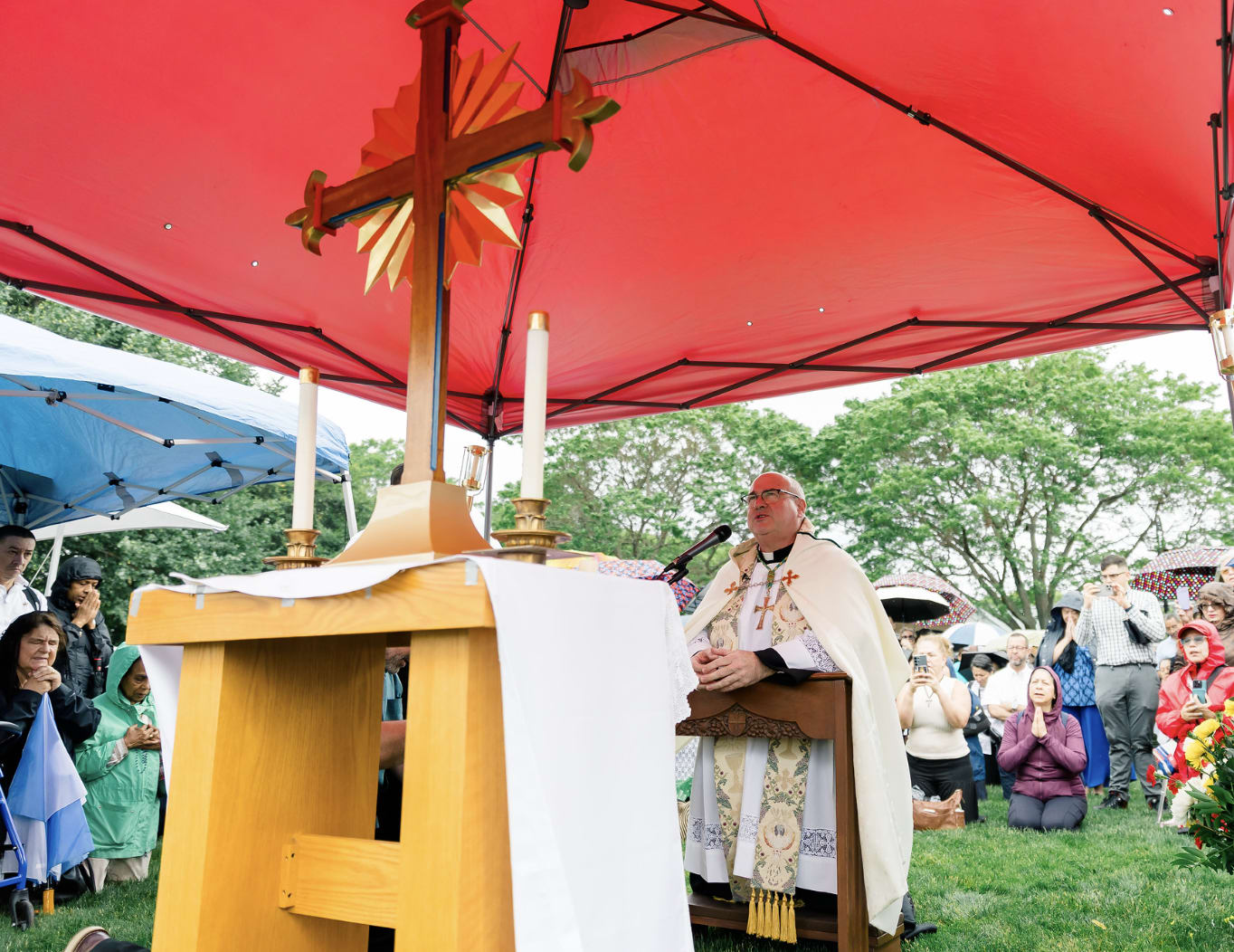
Absolutely, because I think that is part of the nature of the Church herself — that in communion with Christ, we are drawn into communion with one another.
I am a big fan of communion ecclesiology. The Church is a communion, but a communion forged by the Lord, and it all circles around the Son who is Christ.
When we deepen our relationship with Christ, we are more perfectly bound to one another.
In my personal experience at the Eucharistic Congress, it was an authentic moment of communion, one which I would never have imagined you could see with 50,000 people.
Everybody I have spoken with who was there in that stadium, knows that the Spirit was there. We knew it in our bones. That was something God wanted — and praise be to God for the people who partnered with the Lord in pulling off the Congress and giving us that gift.
I do not think that the Congress was the solution to all things. I think the solution to all things is Jesus Christ in his grace and mercy. But he invites us into his project.
—
I took advantage of the boat procession to use some of the imagery of the Gospel. We used a passage from the Bread of Life discourse as our theme, but I spoke a lot about how much you read about boats in the Gospel, as Jesus moves about the Sea of Galilee.
I preached the message that we are in the boat together, we are in the barque of Peter.
[The Lord] is in the boat, He is the one who is telling us not to be afraid, asking us to trust, asking us to do our part.
I think the Eucharistic Congress became this unique and graced moment where so many of us came together with that longing for the Lord, and we were simultaneously meeting him in varieties of ways, each of us individually coming with our own questions or issues and receiving a unique response.
It was remarkable.
You have said that the sea is a place where you find it easy to pray. In that context, are you praying with those images from the Gospel, or is it something more?
Growing up by the water, the sea is a place that I like. To stand by the side of the sea is to stand by something vastly larger and greater than yourself and to be reminded that there is something even greater than this.
I will jokingly call the sea my happy place, but it is a place for me where I can find a quiet place, either when I am walking or sitting by the sea. I find that in church too — I'm not a pure naturalist, but I do find that those moments by the sea can be instances for reflection, insight, inspiration, and quiet prayer.
Praying by the sea has just been important to me in my life.
It sounds like the people of Boston should buy you a boat!
[Laughter] Well, the experience of the pilgrimage taught me that I do not have to own a boat now. I have friends with boats!
The generosity of people wanting to offer their boats for this was very moving to me too. So all around it was a great experience. The weather cooperated. Thank God, it would have been a challenge for us otherwise if the weather was bad.
During the Eucharistic Revival, the Church has seen the election of a new pope, Leo XIV. Is there anything that can yet be said about the pope’s Eucharistic spirituality?
I am open and listening to the Holy Father. I do not want to predict or analyze him, but from listening to and reading his remarks, the first thing that has struck me is his serenity.
Really, I knew nothing about Pope Leo XIV when he walked out on the logia. I did not research any of the candidates before or during the conclave because God is in charge, the Holy Spirit is in charge, and it will be who it will be.
But seeing his serenity really struck me, because when I moved to Boston within the last year, I felt a bit overwhelmed. And so, with the pope, I thought, “How in the world is this man not shaking like a leaf?”
He seemed to have this quiet serenity.
I liked his first words and what he has said since.
The pope strikes me as a man who preaches Biblically, which appeals to me. He preaches directly, not highly theological, but accessible,
He seems willing to surrender himself to the ministry that has been entrusted to him. Doing that is one of those challenges for leaders in the Church, that you should be less yourself when you take on a ministry like this. The shadow side of that, is you can become a hypocrite if you [just] play a role — But there's a different kind ,of more authentic leadership, which is not playing a role, it’s accepting that I no longer belong to me, but that in a very real sense, I belong to the Lord and to his Church.
That is what I perceive in Pope Leo.
That fills me with a sense of excitement and hope, especially with what I am seeing on the ground in Boston. I have been on probably more than a dozen college campuses in my first six months, and there has been something remarkable happening among the college students.
I see Pope Leo as a man who can receive what is happening among the youth and amplify it. Those are all very positive signs as far as I am concerned.
And whatever I think of him, he is the Holy Father so he has my prayers, and my love, and respect.
What's Your Reaction?
 Like
0
Like
0
 Dislike
0
Dislike
0
 Love
0
Love
0
 Funny
0
Funny
0
 Angry
0
Angry
0
 Sad
0
Sad
0
 Wow
0
Wow
0