




















How to Achieve Whole-Person Holiness, Part 3

In Part 1 of this article, I laid out a general framework for achieving whole-person holiness. In Part 2 of this article, I began listing and explaining some practical steps we can take to achieve whole-person holiness. In the final part of this article, I will continue explaining practical steps we can take in the pursuit of complete holiness. These steps, done with grace and love, will further open our souls to God’s grace, thereby preparing us for complete sanctification and deification. Let’s start with the body.
Exercise and Diet
When I was younger, I exercised without giving God a thought. I would exercise for several months, get tired of it, and then stop for several months. Then, the cycle would repeat. However, several years ago, I began the habit of praying before and after exercising. Since starting this, I have rarely missed more than a week or two of exercise, and those times were typically due to work priorities.
My routine includes walking as fast as I can for 30 minutes a day, three times per week, and listening to Scripture or spiritual commentaries while doing it. I also do calisthenics (e.g., pushups, sit-ups, body-weight squats, etc.) 20 minutes a day, three other days per week. I ask God to accept my exercise as a prayer, to use my body for His will, and to keep me healthy if it is His will. I also ask Him to teach me through Scripture and the commentaries to which I listen. This simple prayer, for whatever reason, helps me to maintain my motivation to exercise.
In my opinion, a person in good physical shape is better equipped to go out and do whatever God’s calls him or her to do. God gives us a body, and we must care for it just like we should take care of any gift. But taking care of our bodies isn’t just about exercise. We need to discipline our appetites as well.
America has just about whatever food one can imagine, and it has this food abundantly. This is good in one sense, but it can also be a source of temptation for those who are disposed to overeating. Therefore, we must discipline our appetites by eating healthy foods in the right amounts, while also limiting our snacking. If we keep God at the forefront of our minds, we will better regulate the amount and types of foods that we eat. Creating the habit of praying before and even after meals will help us to remember that we should not overeat.
My biggest challenge when it comes to food is holiday meals. I especially love the Thanksgiving meal, and I used to overeat it every year. It was no doubt a gluttonous act. After I realized what I was doing, I took it to Confession. Since then, I have established the habit of reminding myself not to eat so much. If I want dessert, I eat a smaller portion of the main meal, or I have it some other time. This self-discipline has served me well thanks be to God. I can’t imagine losing grace because I intentionally gorged on food until I was sick. Food in place of grace? Let’s get real here.
Reflect On Scripture and Creation
The Church gives us Scripture readings every day for Mass. In addition to reading them, find a quiet place and spend 15 or more minutes meditating on one of them. Ask God to help you and to give you insights. If you don’t receive insights, that’s fine. They will come around eventually. If you receive them, however, jot them down in a journal. Writing an insight will help you to remember it better, and it will be accessible if you ever want to go back and revisit your thoughts.
Obviously, do not meditate on God’s word just for the insights. Understand that God gives us insights to draw us closer to Him. As we gain a deeper understanding of Scripture, we can’t help but give God the thanks and praise for His beautiful teachings. But Scripture is not the only thing God uses to give us insights.
Take some time throughout the day to notice God’s creation. Notice yourself and how wonderfully God makes you. Look at the sky, trees, grass, flowers, and animals. See the diversity of God’s beauty and the eternal wisdom and knowledge from which all creation proceeds. Enjoy the sounds and smells of nature as well. By doing this, we engage nature with our senses, and we come to understand the goodness of God. I find that sitting outside for a few minutes early in the morning works best for me, but use whatever approach works best for you. Regardless, think about God and give Him the praise.
Spend Quality Time with People
Spend quality time with family, friends, and fellow parishioners. Visit the sick and those in need. Host or attend a Bible study or prayer group. Meet up with friends for a cup of coffee and talk about God. Take time to interact with others made in God’s image and likeness. Especially, spend some time talking with fellow Catholics. St. Paul writes:
For God has not destined us for wrath, but to obtain salvation through our Lord Jesus Christ, who died for us so that whether we wake or sleep we might live with him. Therefore encourage one another and build one another up, just as you are doing. (1 Thess. 5:9-11)
I love these words because I have experienced exactly what Paul is describing. When we have meaningful conversations with others, we walk away feeling inspired and even motivated us to share God’s love. So, let us encourage and build one another up so that we can better equip one another to live with Christ and help others come to Him.
Interplay of Prayer and Works
You have probably noticed that our prayers and good works interact with one another to help form us in grace. This is because prayer prepares us for good works, and good works complete our prayers. We should pray before starting any good work. Why? Because God wants to be in us and to work through us as we perform His works (see Ephesians 2:10). In this way, we intentionally unite our good works to Jesus’s good works, and we (each one of us and Jesus) become partners in disposing our souls to more grace and in building up the kingdom. With His help, we put on His yoke, and we share our daily burdens with Him who makes these burdens light.
Daily Examen
Finally, examine your thoughts, words, actions, blessings, and burdens daily. A daily examen helps us to see how God uses our entire day to prepare us for more grace. Whether we experience ease or hardships, holiness or temptations, or compliments or criticisms, notice how God helps us to properly navigate them while we move toward the goal of whole-person holiness.
God uses every experience to dispose us to more grace, but we must cooperate with His will with steadfast faith, hope, and love. Do everything with the mind of Christ, think about God and His exemplar par excellence, Jesus Christ, and imitate Him. In doing so and with the help of grace, we can turn every joy and obstacle (e.g., sickness, temptations, concupiscence, irritable people, etc.) into moments of holiness.
Of course, this list of things we can do to invite more grace is not exhaustive. So, please modify as you see fit. God bless!
Author’s Note: Click below for related articles on:
- How to stop sinning.
- How God makes us gods.
- How God uses concupiscence to make us holy.
- How to differentiate between mortal and venial sins.
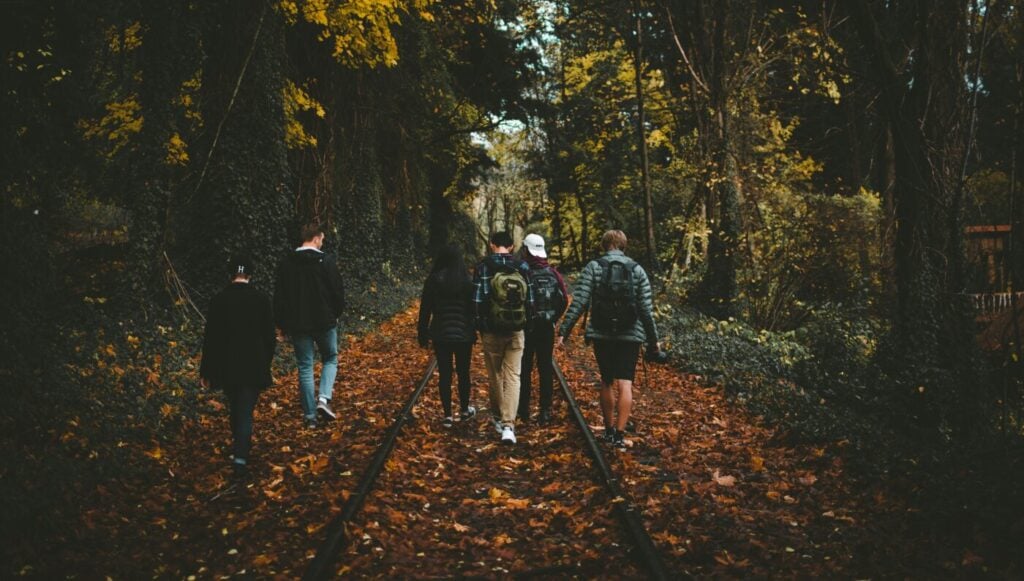
Photo by Anthony Intraversato on Unsplash