





















Just war theory in the age of AI weapons and the ‘Department of War’

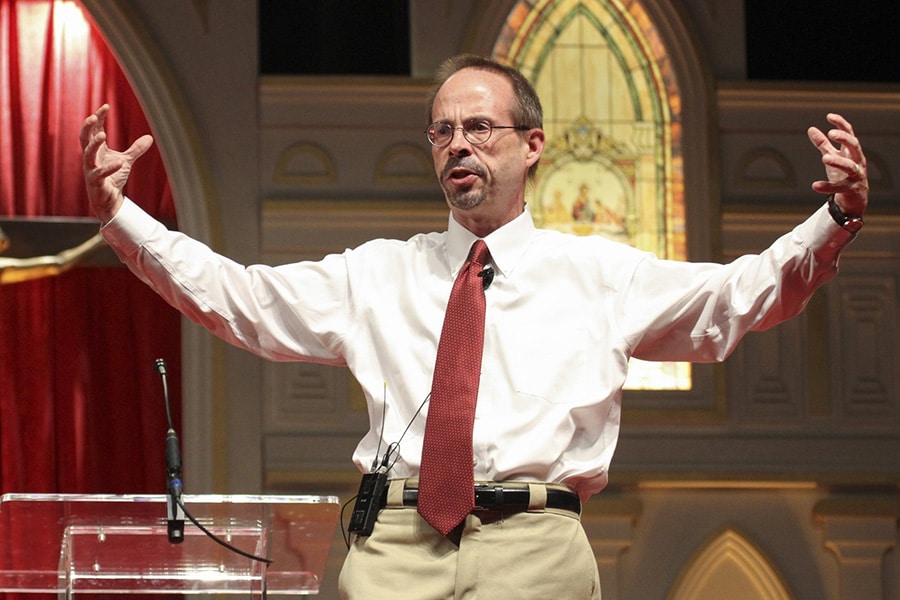
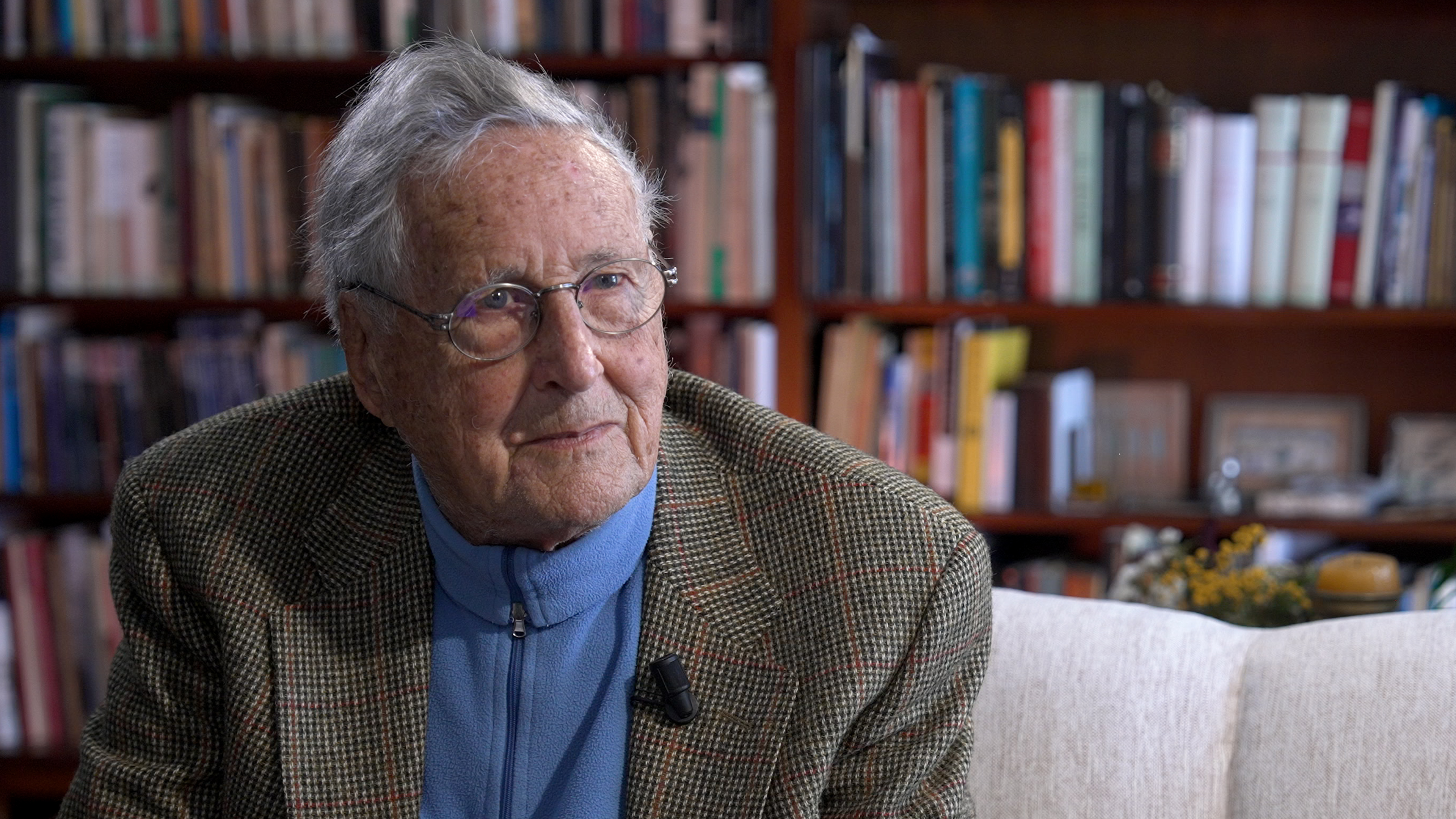
What does the Catholic Church have to say about war? How does the concept of a “just war” which has roots in St. Augustine’s writings relate to modern warfare? And what does a discussion of the ethics of war look like with modern weaponry, including weapons made with artificial intelligence? Charles Camosy recently discussed these questions and more with Dr. Jeffrey P. Bishop, a professor of philosophy and theological studies at St. Louis University, and a medical doctor who holds the university’s Tenet Endowed Chair in Bioethics.
Charles Camosy: Can you tell us a little bit about your background that makes you interested in questions related to ethics, theology, technology and war?
Jeffrey Bishop: I began my studies in medicine with a strong theological anthropology. It was this anthropology that inspired me to first study medicine. I always had a strong sense that our Christian moral vision was intricately linked to the kind of unique animal we are. As I became more and more interested in the ethics of medicine and as I studied more deeply the history of Western theological and philosophical anthropology, the more I began to realize that medical ethics was intricately tied to ethical questions more broadly.

For example, there have been several studies that show that principles like double effect were tied to just war tradition. However, it is not that medical ethics borrowed from the just war tradition, it was that the same theological anthropology informed our ethics across the board and into every facet of human relations.
So from our traditions in law to just war to a consistent life ethic, all of it is informed by the fact that we are made in the image and likeness of God and that our greatest happiness is in communion with God through our communion with one another.
Camosy: But what about war in particular?
Bishop: First and foremost, there is no doubt that the earliest Christians tended toward pacifism. There are even some Christians today, including Catholic Christians, who stand in that tradition of pacifism. So, even if you are not yourself a pacifist, it seems to me that one has to take this tradition seriously in Christianity as one thinks about war. Why? Because peace is an end; war is never an end. At best, war can only ever be a means to the end of peace. So, for Christians, the default position is pacifism; and for all Christians, the end of any political community is peace. So even for just war theorists, peace is the goal.
Think about it for a moment: “Jerusalem” itself means something like “foundation of peace,” or the “city founded in peace;” and the New Jerusalem that Christ is ushering in is the new city of peace. Peace is the condition for the possibility of blessedness. War is dangerous because it creates chaos and, when in war, it is too easy to give license to our worst tendencies.
Right off the bat, we can see why in the just war tradition there are conditions that must be met or conditions that are supposed to be met before even going to war: “jus ad bellum.” I translate this Latin phrase quite literally, as justice must be considered when moving toward war.
So, the tradition establishes for us several things that must be considered before going to war. And once war has been advanced, there are criteria that must be considered to limit the inevitable chaos that war enacts. These principles are referred to as “jus in bello,” justice in war-making. The chaos of war renders one mad with power and jus in bello principles are meant to curb us from this kind of madness.
Camosy: What’s your general sense of the current standoff between the AI company Anthropic and the Department of War?
Bishop: Before I can answer this question, I think we need to acknowledge that there has been at least in my reading of this administration a shift in tone around questions of war-making. Think about what is being projected when the federal government’s defense department is called the Department of Defense and what is being projected when we call it the Department of War.
Even just the change in the name suggests that some in certain sectors of our country have felt that “jus in bello” (justice in war-making) the principles that are supposed to animate the execution of war has put too many strictures on the United States. And with the attitude projected by our leaders and the way that talk about the “awesome” power of death we can reign down on the world, there seems to be too much zeal for war, which as I have said can never be an end.
So, it is into this space that people have been calling for the use of artificial intelligence to create autonomous weapon systems. Just to be clear, proponents of these systems give reasoned and measured responses, even if sometimes our political operatives are incapable of doing so.
We might actually be able to be more surgical in our actions, promoting “jus in bello” principles. We can minimize noncombatant deaths, and even possibly minimize combatant deaths. We can certainly minimize the numbers of our own soldiers that are put at risk, and possibly even bring a war to a quicker end in order to achieve peace. And the proponents of the use of autonomous weapons suggest that it takes out the possibility of human error and human frailty. They believe it might prevent a My Lai incident.
Yet, the fact that Anthropic has said that it will not participate in the development of these weapons, suggests that they are very worried about whether it can achieve these goals, no matter who is using them. If companies that are optimistic about the use of artificially intelligent tools may not be able to reliably deliver on a justly achievable peace, we should certainly pause before we proceed.
Moreover, I think there are anthropological reasons that Anthropic and all of us should consider when we are thinking of autonomous weapons systems.
The Christian tradition has always understood that humans standing in the moment of judgement are essential to executing a war for the establishment of peace. Will an autonomous weapon, programmed to execute its mission within the limits of legal warfare, ever make the moment-to-moment judgements needed in warfare judgements that a seasoned, virtuous soldier can make?
A virtuous battlefield leader, taking into consideration the facts on the ground, might find ways around killing combatants and find solutions to reduce death and destruction unavoidable to the linear and statistical models that govern AI devices’ activities.
While humans are capable of passions that run amok in war-making, humans are also capable of passions like mercy and forgiveness and compassion and empathy that are absolutely necessary in just war-making. Thus, a robust Christian anthropology understands the creativity and the goods possible that we humans have even in war-making.
Finally, there is also the problem that people in power tend to overestimate their own justice when they are in power. We see this in the fact that every president, no matter which party, has attempted to keep exceptional powers granted to them by Congress.
We humans are frail, and because of the chaos that war inevitably brings about, we have to realize that even those who swear that they will only use the power in a limited way often overstep the bounds.
I cannot say with certainty that Anthropic will stand by their decision not to participate in the development of these intelligent war-making tools, but I will say they seem to have the same impulse that the Church has had when it is at its best.
Camosy: The Catholic Church has consistently and strongly spoken out against autonomous weapons, at least since 2013, and more recently the Holy See has called for a global ban. Do you think Catholics should support Anthropic on this particular issue? If so, what should that support look like?
Bishop: Well, I certainly think a consistent life ethic suggests that the Church needs to be leading the way in calling for a global ban on the development and use of autonomous weapon systems.
In fact, I think there may come a time when it will be the Church that helps these companies to stand firm because these companies have many, many other reasons to develop these kinds of weapons, not least the profit motive.
So, the Church must also muster its social teaching in relation to industry to convince these multibillion-dollar companies to stand firm.
The problem is that once we have autonomous systems for things like driverless cars or pilotless planes, it is just a short leap to autonomous systems. The systems just need to be tweaked for other purposes. And then there is the problem that every tool stirs our desires to use the tool. Our doctrine of human frailty is a great descriptive tool about how we are driven by our desires, but it takes a serious spiritual discipline for us to root out those desires once the tools are built.
Camosy: Do you think there is room for dialogue between companies like Anthropic and religious voices and traditions? If so, what do you think that should look like?
Bishop: Well, there must always be a dialogue between the Church and government and the church and our political leaders.
We are in a time, thankfully, when the Church no longer has the crass, hard power of the levers of worldly power. The Church only has the soft power of moral persuasion. It must be unwavering in a consistent life ethic. It must be unwavering in its social teaching.
No matter what tools come along to stir our desires, we must help companies and the governments of the world to see that war-making is a terrible tool and that it can only be used as a last resort because it is so antithetical to true peace, where true peace is not just the absence of war, but a state of being at home in blessedness that is only possible in the New Jerusalem in that heavenly kingdom.
Read More Commentary