

















Miami clergy, staff accompany aid to Cuba for ongoing recovery from Hurricane Melissa
MIAMI (OSV News) — Representatives and clergy of the Archdiocese of Miami recently accompanied a series of ongoing humanitarian relief shipments to Cuba following last year’s Hurricane Melissa.
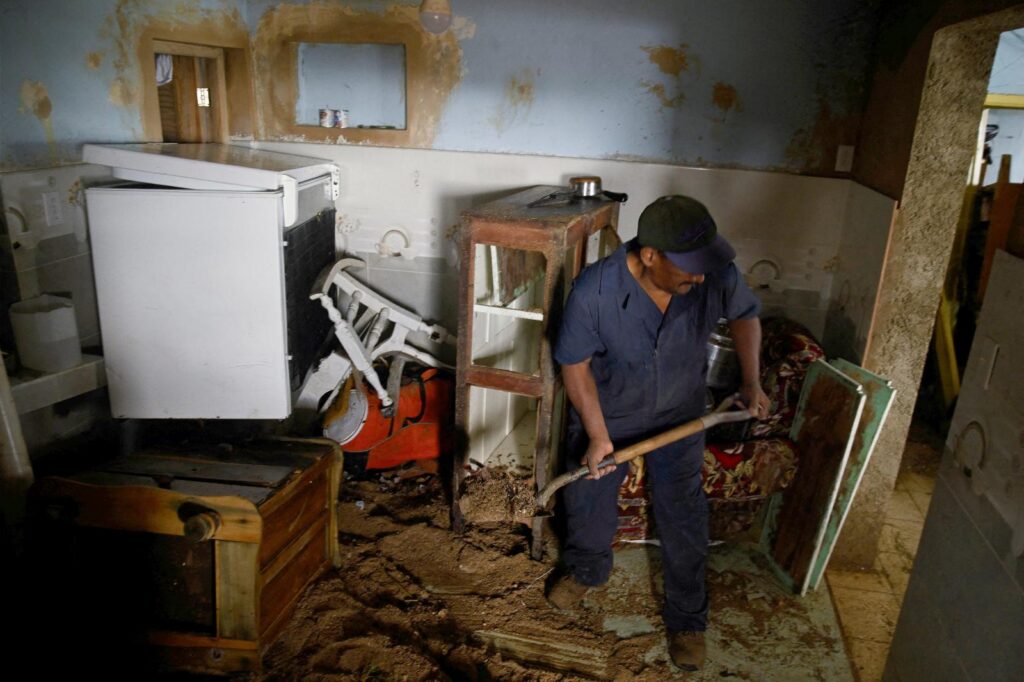
The new airlifts of foodstuffs and hygiene supplies were approved by the U.S. and Cuban governments this year and amount to some $3 million in aid to mostly eastern Cuban communities impacted by the Category 5 hurricane in 2025.
The hurricane made landfall on Oct. 28 in Jamaica as a Category 5 storm before passing over the Bahamas, the Dominican Republic, Haiti and Cuba. Dozens were killed, mostly in Jamaica and Haiti.
Weakening economic situation
But Cuba’s weakening economic situation prompted action from a small group of donors through Catholic Charities of the Archdiocese of Miami.
Those local efforts at the end of last year were extended in 2026 through a $3 million governmental partnership with Catholic Relief Services, the U.S. Church’s overseas relief and development agency. The partnership marks a return of the Baltimore-based agency to Cuba for the first time in a decade.
The Catholic Church in Cuba, through its regional dioceses, has been entrusted with overseeing the distribution of the aid to ensure that it benefits those most in need in the communist nation, according to Peter Routsis-Arroyo, CEO of Catholic Charities of the Archdiocese of Miami.
Hurricane impacted 4 dioceses
“Caritas Cuba along with priests, staff and volunteers from the parishes in the four dioceses impacted by Hurricane Melisssa continue to distribute the humanitarian assistance provided by CRS using a needs-based criteria,” Routsis-Arroyo said.
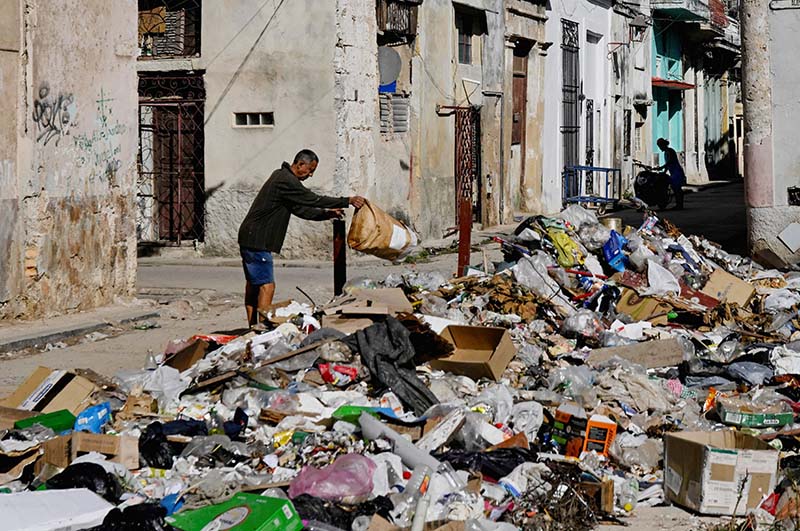
“The newest obstacle is the fuel shortage that will make the distribution more challenging,” he said Feb. 21. “It is also making garbage pickup throughout the region almost nonexistent which could lead to the spread of more diseases.”
In November, Routsis-Arroyo and two other archdiocesan representatives traveled to Cuba to accompany the third of four shipments, which departed from Miami International Airport and arrived at Antonio Maceo International Airport in Santiago, Cuba.
Airlift of humanitarian aid
On Jan. 28, Father Jose Espino, rector of the National Shrine of Our Lady of Charity in Miami, and Sister Eva Perez-Puelles from the Daughters of Charity in Miami accompanied a new airlift of aid to Santiago, Cuba. Father Elvis Gonzalez, pastor of St. Michael the Archangel Parish in Miami and Father Esney Munoz Diaz, of the same parish, oversaw an air delivery the following day to the Holguín region.
“They are met by a bishop or a representative from Caritas Cuba, making sure these supplies get into the correct hands,” Routsis-Arroyo said, adding that the Jan. 28 flight included 648 food kits, along with 510 hygiene kits, for example.
“Caritas Cuba needs-based criteria for dispensing the aid, with single mothers, senior citizens and people with disabilities and reduced mobility taking priority,” he added, noting that a hurricane appeal in the Miami Archdiocese last year provided an initial $400,000 in hurricane relief to the island following Hurricane Melissa.
A pledge to help Cuba
“The difference now is that this new aid is part of the $3 million the U.S. government allowed to be used as part of a pledge to help Cuba,” Routsis-Arroyo said, noting that he met on Jan. 28 with Miami Archbishop Thomas G. Wenski to discuss the operation.
“We (in the Miami Archdiocese) are trying to help and complement those efforts, we will continue our own relationships and efforts with Cuba.”
This is not the first time aid has been sent to Cuba. Archbishop Wenski explained to the Florida Catholic in December that it is “something that we’ve been doing for a long time.” “In the last five years, we’ve probably sent 45 containers to Cuba to help dioceses and religious communities in their work with the poor, especially elderly people,” he said.
Food collection after 1996’s Lili
Archbishop Wenski also organized a campaign in 1996, when he was the director of Catholic Charities of Miami, to collect food after Hurricane Lili struck Cuba. “We were able to send that food on two plane loads,” he said.
That shipment was made possible thanks to the relationship he had developed with the director of Caritas Cuba.
Santiago in the eastern part of Cuba is where the hurricane had the greatest impact. The humanitarian relief effort in Cuba aims to assist people in the Archdiocese of Santiago de Cuba and the Guantanamo-Baracoa, Holguín and Bayamo-Manzanillo dioceses.
Rice, beans, oil and sugar
The U.S. State Department has said the food kits include supplies such as rice, beans, oil and sugar. The assistance will also include water purification tablets and storage containers, as well as household essentials like pots and pans, along with sheets, blankets and solar lanterns.
Last year, the Trump administration moved to dissolve the U.S. Agency for International Development, placing some of its remaining functions under the purview of the State Department.
Cuts to funding for the government’s now-shuttered humanitarian aid agency in countries all over the globe included funding for some efforts by Catholic and other faith-based humanitarian groups including CRS.
‘Longstanding and trusted partner’
Robyn Fieser, media relations manager for CRS, said in a statement, “Following Hurricane Melissa, we are supporting the delivery of emergency supplies to families in Cuba with funding from the U.S. government, working in coordination with the Catholic Church, a longstanding and trusted partner in reaching communities during times of crisis.”
Archbishop Wenski said this new project with Cuba serves as an opportunity for the U.S. government to rebuild some of its coordination with CRS. “I think (U.S. Secretary of State) Marco Rubio was very wise in rebuilding that relationship,” the archbishop told the Florida Catholic, the archdiocesan news outlet.
“CRS is back helping Cuba and hopefully this opens funds and provides assistance to Cubans, because that is the only thing that is reaching Cubans right now,” the archbishop added.
Tom Tracy writes for the Florida Catholic, news outlet of the Archdiocese of Miami. This story was originally published by the Florida Catholic and distributed through a partnership with OSV News.
The post Miami clergy, staff accompany aid to Cuba for ongoing recovery from Hurricane Melissa first appeared on OSV News.