








Padre Pio and the Popes: A Dance of Love and Hate
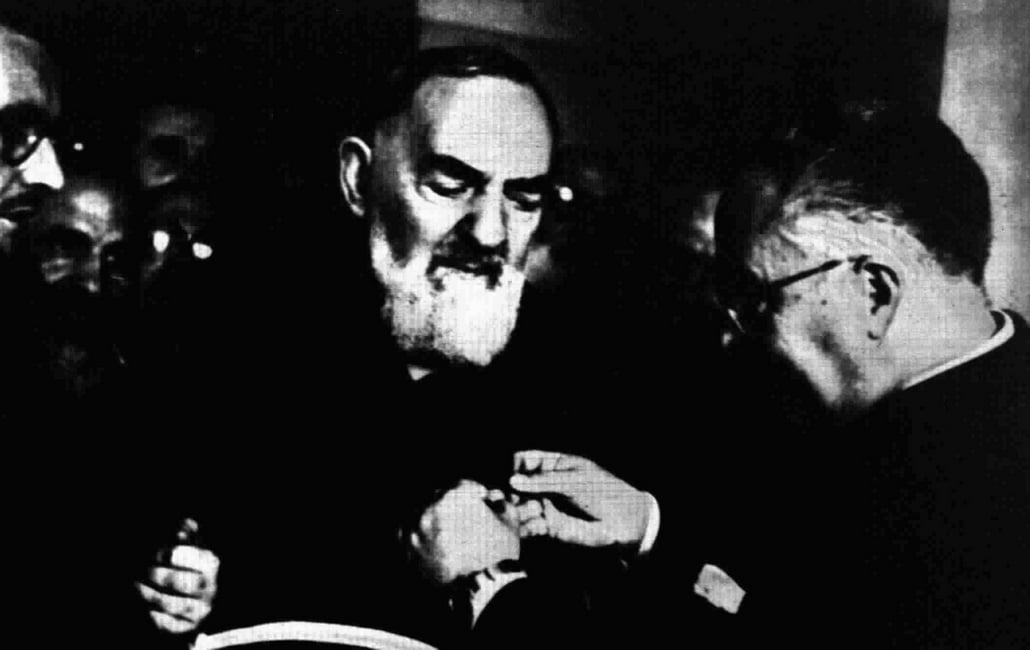
During the wild 1920s, the pope at the time, Pope Pius XI, had been influenced by his best friend, Fr. Agostino Gemelli, to regard Padre Pio as a malevolent villain.
Gemelli was a medical doctor and a psychologist who claimed that Pio did not have the genuine stigmata and that the carmine piercings on Pio’s hands and feet were self-inflicted by Pio’s own mind—a psychosomatic and deliberate result caused by a morbid obsession with Christ’s Passion. Pio’s ulterior motive was to be reverenced as a flesh portrait of the crucified Christ. Gemelli even denounced Pio as “a psychopath” who fooled gullible people that the wounds had been given to him by Jesus.
Pope Pius also had vocal supporters of Pio begging him not to impose sanctions on the Capuchin friar and let him practice his ministry so that as many souls as possible could benefit, especially in the confessional.
One day, at a secret meeting, deep in inner sanctum of the Vatican, Pius XI was surrounded by the red-capped princes of the Church; some cardinals were for Pio, but most were against. Pius XI was ready to strip Pio of all his faculties and suspend the 38-year-old who was being hailed as the “Second St. Francis” a divinis.
Suddenly, the door to the secret chamber opened, and a young Franciscan friar limped in. It was Padre Pio bilocating to the hallowed halls so he could plead his case personally. Pio knelt before the pope, kissed his feet, and begged, “Your Holiness, for the good of the Church, do not permit this to occur.”
Pio kissed Pius’s feet again and promptly disappeared. Later it was ascertained beyond question that Padre Pio had never left San Giovanni Rotondo but had simultaneously appeared in the Vatican.
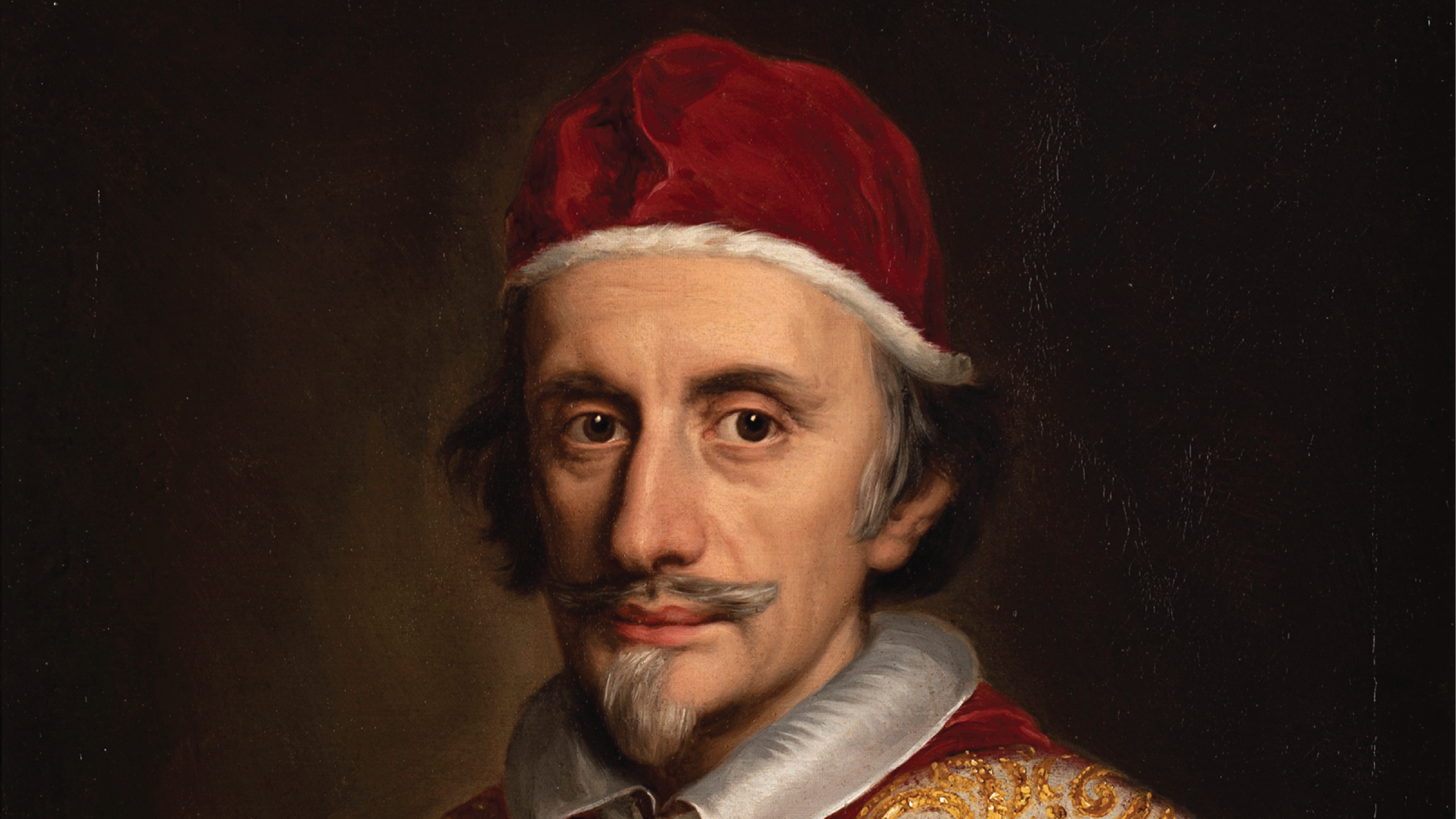
The fierce-faced Pius XI never did suspend Pio from sacred ministry completely. His Holiness did, however, order that Pio be imprisoned in his friary for two years, and even though he rescinded this order in 1933, he never trusted the stigmatist whom he suspected of taking advantage of the poor and the sick. Even though he had a tough demeanor, Pius XI had a soft heart and wanted to protect the faithful from fake wonder workers who aimed to bilk them out of money.
Pius XI was on the Throne of Peter for 17 years. His successor was Pope Pius XII, the dove-like ascetic who had long been an ardent admirer of Pio. Pius XII’s papacy lasted 19 years, and it was the golden era of Pio’s ministry. Pius XII’s own sister was a spiritual daughter of Pio, and she left her name on the friary guest book for everyone to see. Pius XII exhorted the faithful at papal audiences to go on pilgrimage to Pio.
During the reign of Pius XII, Pio heard confessions for at least 15 hours a day, while also founding a hospital that was proclaimed one of the best in the world, where the destitute were treated free of charge. This refuted the false notion that abounded during Pius XI’s time that the poor were seen as “easy prey.”
Pius XII is perhaps best known as being the wartime pope during the hellscape of World War II, when whole cities were bombed and over 153,000 Italian civilians perished. It was a good thing Pius XII allowed Pio so much freedom. Pio became like an angel and flew through the sky to prevent bombing raids, and he befriended multitudes of American servicemen, who in turn went back to America and spread the word about the wonderworking priest. Back home on American soil, these valiant young men became Pio’s foot soldiers in the war for souls.
Also, Pio’s confessor and secretary, Fr. Georg Pogany, was Jewish and, on account of being given refuge in the friary, was saved from the Holocaust.
After the war, Pius XII gave Pio a dispensation from his vow of poverty so he could handle donations for the hospital he had founded. Pius XII was hailed by Pio as “sweet Christ on earth.” When Pius XII died, Pio had a vision of him going to heaven.
Pius XII was replaced by Pope John XXIII, who will go down in history as the one who convened Vatican II. Regrettably, Pope John nursed mild contempt for zealous Southern Italian piety, and this came to include Pio and his spiritual children. It didn’t help that Pio came under dire attack from his own friars and a few spiritual daughters, one of whom perjured herself when she swore that Pio and she had had sexual relations. Pope John concluded Pio was “an idol of straw.” After a grueling apostolic visitation, Pio was slapped with severe restrictions, treated like a criminal, and even locked in his own cell.
This didn’t end until the election of Pope Paul VI. Paul VI was appalled when he discovered that Pio was being curtailed like a reprobate. He ordered that all restrictions be lifted. For the remaining four years of Pio’s life, he exercised his ministry in peace. He was able to clear his name of the innuendo that had plagued him in the early 60s. Pio was Paul VI’s spiritual father and directed him on matters of global significance.
In 1965, Paul VI sent Cardinal Bacci to Pio. The pope wanted the 78-year-old’s advice on the Second Vatican Council. Pio said, “What the pope had to do he has done. Close it.” Shortly afterwards, Paul VI closed the Council.
Pio died in the early hours of September 23, 1968, of a heart attack. In the years after, Paul VI continued to follow the last direction Pio gave him when he didn’t give the green light to contraception.
Reviewing the potted history above, we face a major tenet of Pio’s priesthood: it was powerfully influenced by whoever the reigning pontiff happened to be. If the pope held Pio in high esteem, then times were good for Pio, but if the pope held Pio in suspicion, times were very difficult indeed. Pio, then and now, was polarizing; people, including prelates, either loved him or hated him.
As a Padre Pio biographer, I encounter both those who radically love and those who radically loath the Padre—and some jump from one side to the other! I hope my book Padre Pio and You can be a small help in making him known, so that many others may love Pio.
Image from Wikimedia Commons