





![St. Anthony Clare—When it is time for me to leave [the Eucharist], …](https://www.catholicdigest.com/wp-content/uploads/2025/12/15-1024x538.png?#)



Papal dukes, lay preachers, and the Weezer trials

Hey everybody,
Since the American pope was elected more than two months ago, I’ve heard a lot of conversation about which Americans might be on the way to canonization — following, I think, in the mold of Pope St. John Paul II, who canonized eight Poles, by my count, and beatified about 120 of his countrymen, including 108 Polish Catholics killed during World War II.
Compare that to Pope Benedict XVI, who canonized only three of his German countrymen — so far as I can tell — and Francis, who canonized the same number of Argentines.
Everybody, it seems, has got a list of the American blesseds and venerables deserving of attention from the pontiff — and, for all we know, Pope Leo may have a list of his own, perhaps sketched out during his July weeks on vacation at Castel Gandolfo, from which he returns today.
But while there’s good reason for us to talk about possible American canonizations, I think there’s another set of papal declarations just as fun for speculation: papal dukedoms.
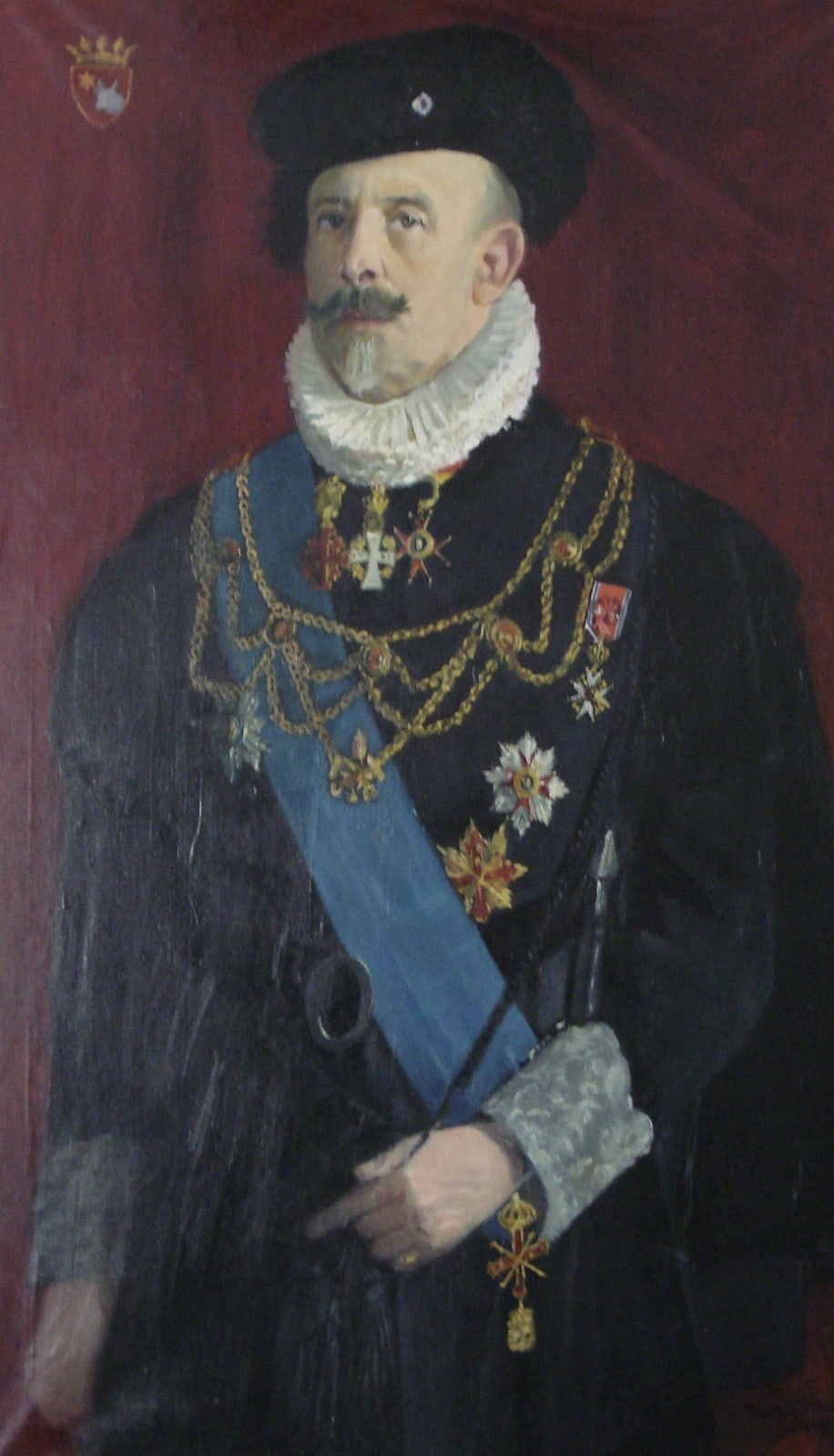
The pope is the sovereign of the Holy See, and as such, he can do the sorts of things that sovereigns do. While most of what European royalty does today is not worth imitating — and would be flagrantly contrary to his vows as a consecrated religious — Pope Leo does have the prerogative to create titles of nobility, and, if you ask me, I think he ought to at least consider using it.
Scholars of history, monarchists, and various kinds of cosplayers know that in 1968, Pope St. Paul VI simplified the papal household, and did away with most titles of papal nobility, excising them from the rolls.
But no pope can bind his successor by merely ecclesiastical law. On this front Leo can do as he wants.
And maybe he’ll want to make some American papal nobility?
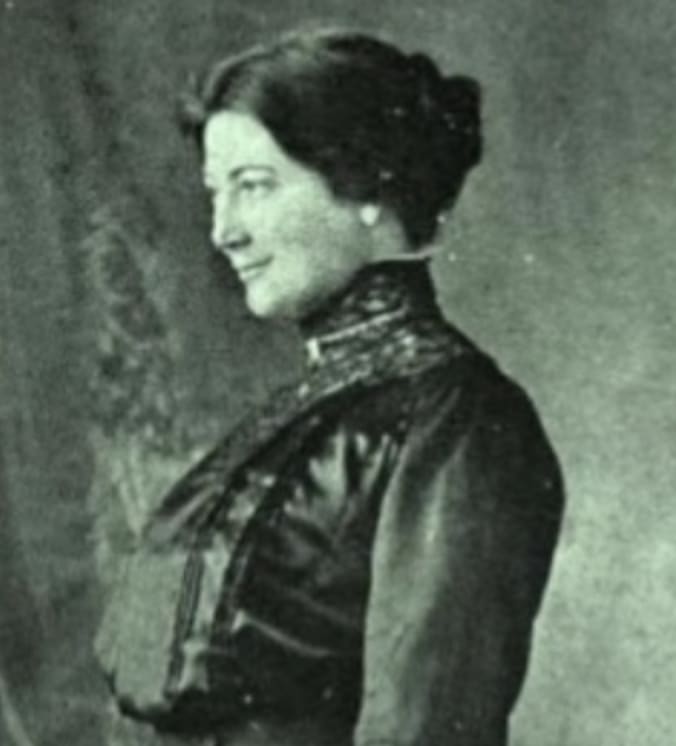
Among the most high-ranking papal aristocrats in our storied American history are Nicholas Frederic Brady and his wife Genevieve.
Nicholas became a papal duke in 1926, and Genevieve — who had already been given just about every medal the Catholic Church in the U.S. has on offer — became a duchess.
The Bradys were actually very devout, and Nicholas was a convert,
But, of course, there were politics involved in their nomination to the papal aristocracy. By the time he became a papal duke, Nicholas had already given more than $1 million to the causes of the cash-strapped Vatican, which is something like $19 million today. Plus, there’s some speculation that Pius XI wanted to honor Americans with papal nobility, as a sign that the Vatican was not dependent on Mussolini’s Italy, with which negotiations were then underway for what would be the Lateran Treaty, three years later.
But most especially, the Bradys had a tenacious champion in young Fr. Francis Spellman — one of America’s most pragmatically ambitious Churchmen — who was then working in the Vatican Secretariat of State, and building a friendship with Eugenio Pacelli, who would eventually take a 1936 holiday in the Bradys’ Long Island mansion, three years before he became Pope Pius XII.
Before the Bradys there was another American papal duke, Joseph Loubat — who became one in 1898 — and a couple of counts and countesses came both before and after them. Among them was Rose Kennedy, JFK’s mom, who became a countess in 1951.
John F. was a mere congressman then, but Rose’s family had already given a lot of dough to apostolic projects — and, worth noting — her family was still very close with then-Cardinal Francis Spellman, himself still pals with Pius XII, who conferred the honor on Countess Kennedy.
So should Pope Leo name a new generation of American papal aristocrats? I don’t know. I mean, he doesn’t have Spellman around anymore to recommend people, and one wonders which American cardinal he’d look to for filling the slots. I’ve got to imagine that a few U.S. cardinals have lists of their own ready to go — this seems exactly the sort of thing to which the patricianesque Cardinal Donald Wuerl has likely dedicated some thought, doesn’t it?
But also, today’s the feast of St. Mary Magdalene, in which we remember the Lord’s closeness to people on the real margins — and correspondingly, we remember just how hard it is for a camel to enter the eye of a needle.
It is far better for Pope Leo to urge a new generation of American saints than it is for him to confer the baubles and honors of a once proud papal aristocracy.
But if he put out an application for people willing to try both, I suspect there’d be more than a few takers among us. I’m certainly game to try.
The news
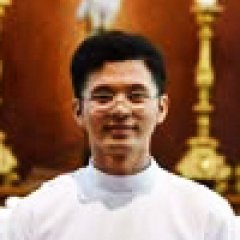
Charles was a Minnesota farm kid, an Eagle Scout, and an altar boy. He hoped to become a priest. But he died at 18, on March 20, 2000, after he was struck by a car while walking to work.
Since then, his life has touched thousands of people across the United States, many of whom gather each year for a memorial Mass remembering Charles.
Charles Untz might himself be among the Americans considered for canonization — but for now, remarkably, his parents say they’re not pushing for that, and that they only want to do what the Church deems right.
The story of Charles Untz — and the community impacted by him — is worth reading.
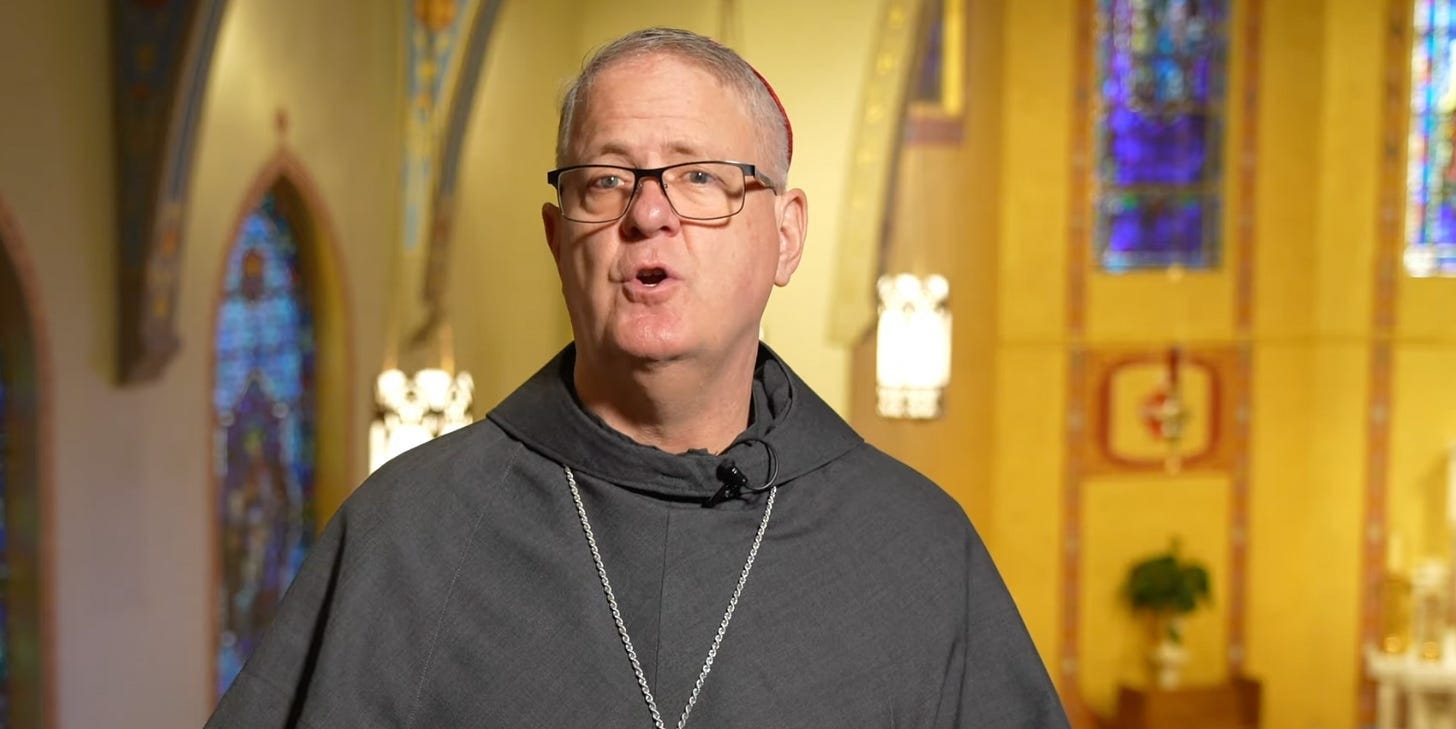
The archbishop was leading a Eucharistic pilgrimage-by-sea, aiming to bring the sacramental presence of Christ to Catholics living in the coastal towns of his archdiocese.
When it concluded, he talked with The Pillar about the Eucharist, his pastoral ministry, and a sense that the Holy Spirit is calling the Church “to focus on Christ.”
“The Church in the United States, for many years, had large institutions and we were very institutionally focused, very bureaucratic and administrative. I am not saying that was bad — these were marvelous institutions that did great things,” he said.
“But because of that large footprint, we became something of a political animal too — very much involved in issues that, I think, make it easy to be busy about being the Church, and to forget who the Church is about.”
“I feel like the Spirit is challenging me, in my own ministry as a bishop, to keep the focus on the Lord.”
It’s a good interview, and you should give it a read.
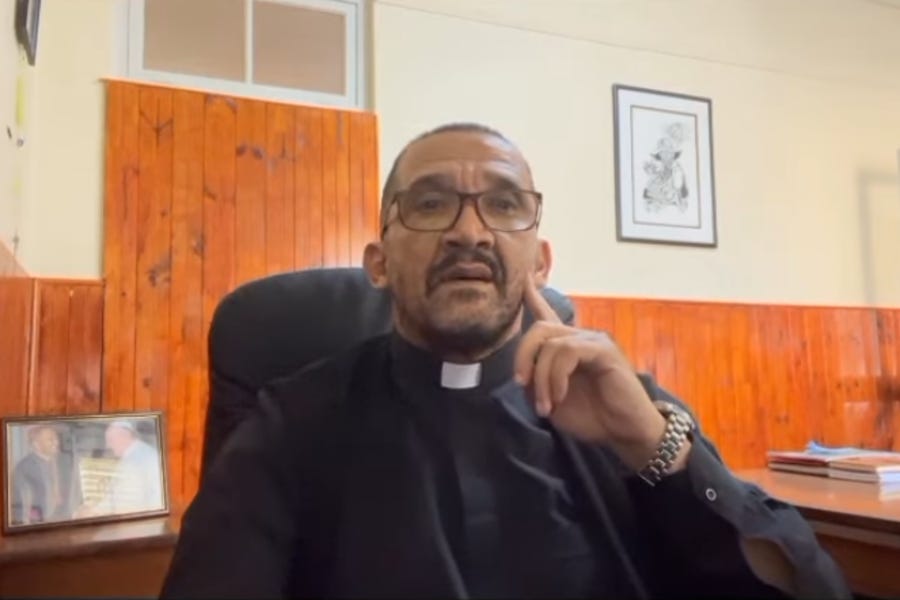
Pregnant girls expelled from the country’s 18,000 Catholic schools are expected to enroll in Congolese public schools, according to bishops’ conference officials.
But Congo’s government is pushing back on that practice this month, insisting that girls no longer be expelled over pregnancy, and that “there is no justification for excluding pregnant girls from the education system if they have not expressed a desire to leave school.”
With school set to start in September, Church and state leaders are at a standoff over the issue.
—
René Brülhart, the former head of the Vatican’s financial intelligence agency, was acquitted of corruption and bribery charges by a Swiss court last week.
The ruling comes after Brülhart had previously faced abuse of office and breach of confidentiality charges in the Vatican itself — and while acquitted in the Vatican finance trial of most charges, was convicted of failure to report a serious transaction to the promoter of justice and issued a fine of 1,750 euros.
While serving as head of the Vatican’s finance watchdog, Brülhart was separately contracted by the Vatican Secretariat of State to act as an “advisor” on the department’s investments, which it was his job to police, but the contract was not disclosed to Vatican financial authorities.
But the Middle East makes for weird conversation because everyone’s got opinions, but few of us have real facts.
That’s especially true when it comes to Middle Eastern Christians, and their place in the complex politics of the place.
So we asked Luke Coppen to help. Who are Palestine’s Christians?
‘I have seen the Lord’
Today being the feast of St. Mary Magdalene, the Church is likely to hear a bunch from the advocates for ordination of women to the priesthood — they tend to from Mary Magdalene as a kind of proto-presbytera, and to cite as evidence that it was Mary Magdalene who was first to tell the apostles and disciples that Christ had risen.
The argument goes like this: If Mary Magdalene was chosen by God as the very first person to proclaim the resurrection, why can’t she preach?
After all, God called her to be a primary witness of his life, death, and resurrection? In John’s Gospel, Christ sent her to be his messenger: “Go to my brothers and tell them, ‘I am going to my Father and your Father, to my God and your God.'"
It was she who announced his victory over death. “I have seen the Lord,” she told the disciples, setting off an explosion of hope, of faith, of disbelief in some, and extraordinary joy in others.
So, the women’s ordination people say, are we really prepared to say she was not a priest? Or that other women can’t be.
Are we really prepared to say that God did not call her, when clearly he did? Are we blinded to the Gospel by our own priors?
It’s maybe a compelling argument, but it’s not a sound one. And the problem with it — the perennial problem for women’s ordination advocates, actually — is clericalism.
Here’s why:
What's Your Reaction?
 Like
0
Like
0
 Dislike
0
Dislike
0
 Love
0
Love
0
 Funny
0
Funny
0
 Angry
0
Angry
0
 Sad
0
Sad
0
 Wow
0
Wow
0