


















The Not-So-Nice Voice Crying Out in the Wilderness


Where did John baptize people?
The Jordan River runs south out of the Sea of Galilee, seventy miles to the north of Jerusalem. Pilgrims, headed to Jerusalem for the feasts, would take the river road south to Jericho and then head west up the Jericho Road the last fifteen miles to Jerusalem. The Baptist positioned himself somewhere near where these two roads met. It was a good location for business, busy with people coming and going from the big city.
What was the Baptist’s first line in Sunday’s Gospel?
It was “Repent!” Preparation begins with repentance, which means change your way of thinking. In Greek it means change your mind. In Hebrew it means return from a false road in order to get on the right one. The concept here is all the same—a complete transformation of the heart. And such a deep transformation requires an external manifestation of the change. John required an external physical act as evidence and proof of an inner spiritual one (Ricciotti, LOC 268).
The Baptist, then, was not standing at the crossroads warmly greeting the pilgrims, saying, “All you need is faith alone, and you are saved! All are welcome! Have a nice time in Jerusalem!” No, he didn’t say that because merely being a member of a particular race of people, even the race chosen by God, was not good enough.
Produce good fruit as evidence of your repentance. And do not presume to say to yourselves, “We have Abraham as our father…”
What happened after the Baptist told people to go out in the water and confess their sins?
What happened next was what usually happens in sales situations: most people kept walking by, and if they were polite, they may have smiled, kept walking, and said, “No thanks. I’m not interested.” After all, the water was probably cold, and who likes to be uncomfortable if they don’t have to be? Who likes to be unnecessarily inconvenienced?
Another group of pilgrims were actually interested in what the Baptist was selling. They asked John, “What should we do?” And as word-of-mouth advertising spread, and this group grew in size, another group became interested in John. But their question was not “What shall we do?” Their question was “Who are you?” That is what the corrupt leaders of the Jews wanted to know: Who was John? And who gave him the permission to be conducting liturgical ceremonies out in the river?
Who was John? John was the voice; the voice of one crying out in the desert. And what follows the voice? The Word. “The bridegroom follows the bridegroom’s friend, who prepares a worthy people for the Lord by cleansing them with water in preparation for the Spirit” (Greg. Nazianzen – Office 1st Week Advent).
The voice called the Pharisees and Sadducees a “brood of vipers.” That wasn’t very nice of John, was it? But they really were a brood of vipers. And after they colluded with the Herodians, the Baptist found himself in Herod’s dungeon where he was permanently “canceled.”
That wasn’t very nice of Herod and the Pharisees, was it?
The Not-So-Nice Origins and Meanings of the Word “Nice” was published a few years back.
The priest-author wrote that “nice” is an overused word today which usually means “pleasant,” “kind,” or “easygoing.” But the adjective “nice” once meant anything but nice in the modern sense. Rather, it was a derogatory term used to describe a person as something of a fool.
The priest noted that the word “nice” comes from the Latin nescius, which means “ignorant” or “unaware.” In the twelfth century, the Old French word for “nice” meant “careless, clumsy, weak, simple, foolish, or stupid.” In the fourteenth century, the word “nice” morphed into meaning “fussy, fastidious.” In the fifteenth century, it meant “dainty, delicate.” By the 1800s, the word “nice” acquired its current connotation of “kind and thoughtful.”
However, the priest-author was convinced that the word “nice” is beginning to return to its less noble meanings. This is happening, he wrote, because the word “nice” is being used in a reductionist manner that attempts to simplify the entire moral life to being “nice.” It is as if the only virtue left in our pseudo-tolerant world is “niceness,” and “Thou shall be nice” is the only remaining commandment.
And so, today, for example, if a person is derelict in his duty to keep the 1st and 3rd commandments, which mandate him to put God first and worship Him accordingly, well, those derelictions are no longer sins, due to the fact that person is “nice.”
Do you see how this is false?
What about the nice person, gentle and kind, who actually keeps God’s commandments and witnesses to Christ? Does the world hate him any less because he is nice? Not really. He’s simply considered a nice bigot and a kind fool. He’s still hated. He is just no longer respected as a worthy adversary, for he is harmless, and introduces no tension. He then is not so far away from being a pushover, one who is easily manipulated, silenced, and pressured into tacit approval. And thus “nice” begins to move backward into its older meanings: dainty, agreeable, weak, simple, and even back into weak, simple, unaware, and ignorant.
And so, what do you think about the adjective “nice” now? Have I changed your way of thinking? Think about this: What is one of the worst things scorned boyfriends hear from about-to-be-former girlfriends? It’s this: “Hey, you’re a nice guy, however…”
Centuries before Christ was born, Isaiah wrote, “He shall strike the ruthless with the rod of his mouth, and with the breath of his lips he shall slay the wicked.”
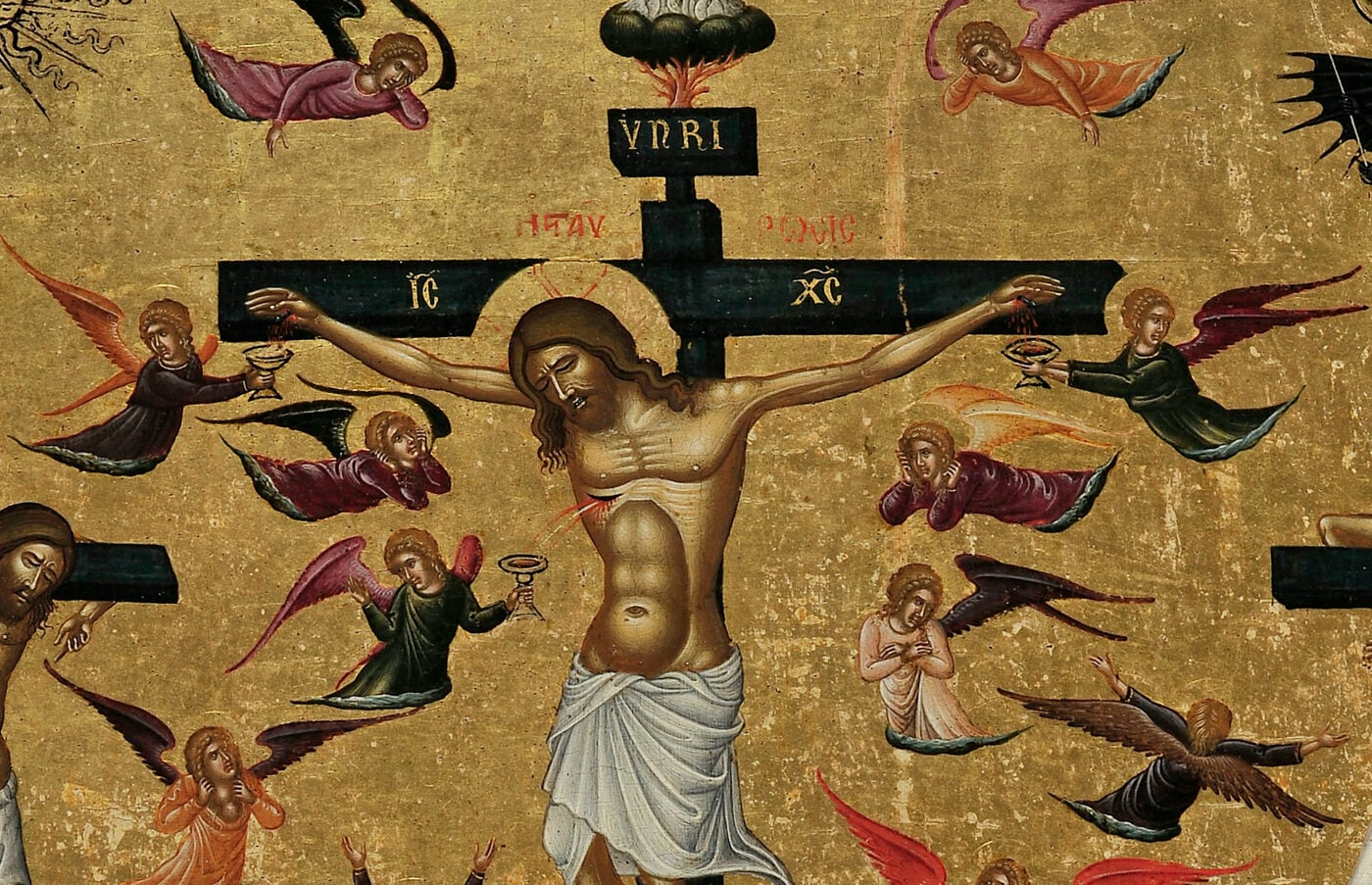
Those weren’t very nice words of Isaiah. But understand: He was writing about Christ. And he was also writing about the Holy Sacrifice of Mass. The Holy Mass is Calvary, and when Christ says, “It is finished,” death is slayed. And so, at Mass we proclaim the death that gives us life; the death that was a result of the collusion of the Jews and Romans.
And now it is time to introduce some tension: I’ll do so by stating that simply being a nice member of the New Chosen People, the Church, is not good enough. Fruit has to be produced, or you will be chopped down.
His winnowing fan is in his hand. He will clear his threshing floor and gather his wheat into his barn, but the chaff he will burn with unquenchable fire.
That’s not very nice of Christ, is it? But think: How does one pass on a “nice religion” to his children or anyone else? He doesn’t. For who goes to war for a nice “Pushover Jesus”? Who dies for a Jesus who is agreeable, weak, simple, and easily manipulated? Do you see the problem? Do you understand why your friends, siblings, children and grandchildren dropped the Faith? They’ve been taught to play nice, when our enemies have been anything but nice. They’ve been conditioned to say, “Hey, Jesus, you’re a nice guy, however …”
My friends: We’re all going to end up dead on the threshing floor. Death, judgment, heaven, hell. Wheat in the barn or chaff in the unquenchable fire. And there is nothing nice about that. In the meantime, we are pilgrims on the road to Jerusalem, getting closer to the big city, as we prepare the way of the Lord. Preparation begins with repentance, which means changing your way of thinking.
Up ahead at the crossroads of life and death is the Bridegroom’s friend, the voice. He’s telling you it’s time to get a bit uncomfortable and inconvenienced. He’s telling you to confess your sins. You see, a deep transformation requires an external manifestation of the change.
In the silence at Mass listen for the Bridegroom, the Word. Listen to Him say to you:
It’s not Christmas yet. And I’m not your boyfriend. So, you better get yourself in a good location for the business of your salvation. Get in the confessional and then go out and produce good fruit. Do that on your pilgrimage to the Heavenly Jerusalem where you can live with me forever.
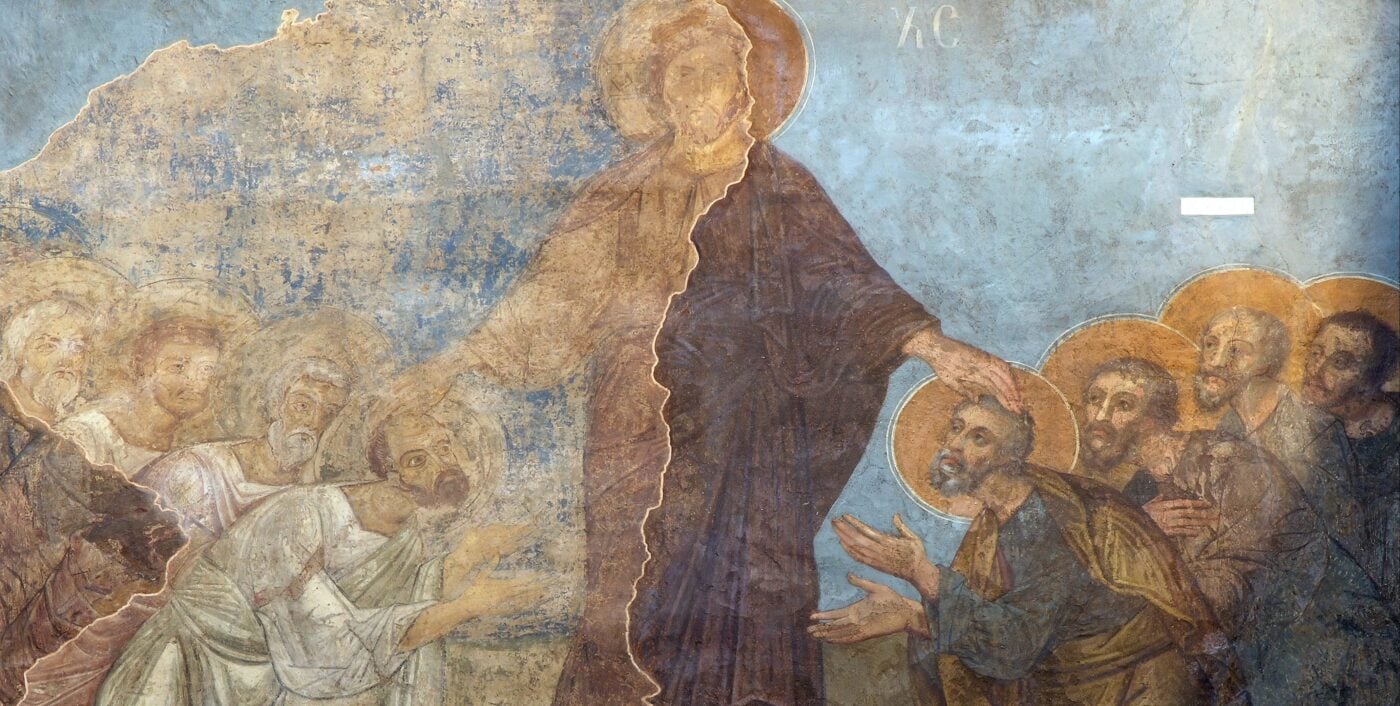
Image from Wikimedia Commons