










![St. Anthony Clare—When it is time for me to leave [the Eucharist], …](https://www.catholicdigest.com/wp-content/uploads/2025/12/15-1024x538.png?#)



What is Sacred Heart Seminary’s protocol for firing professors?
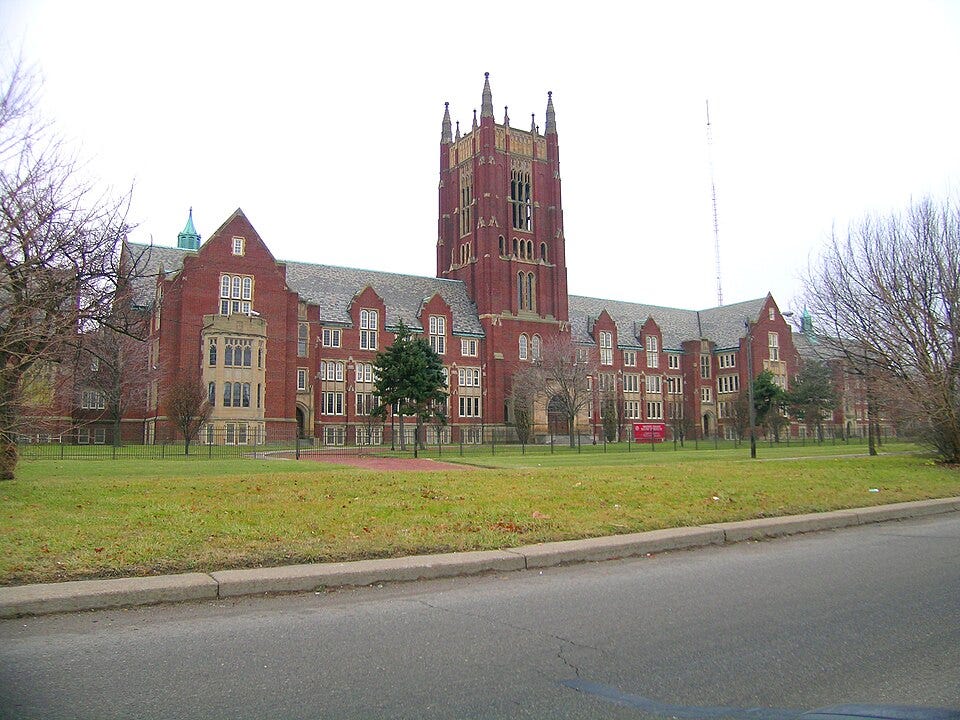
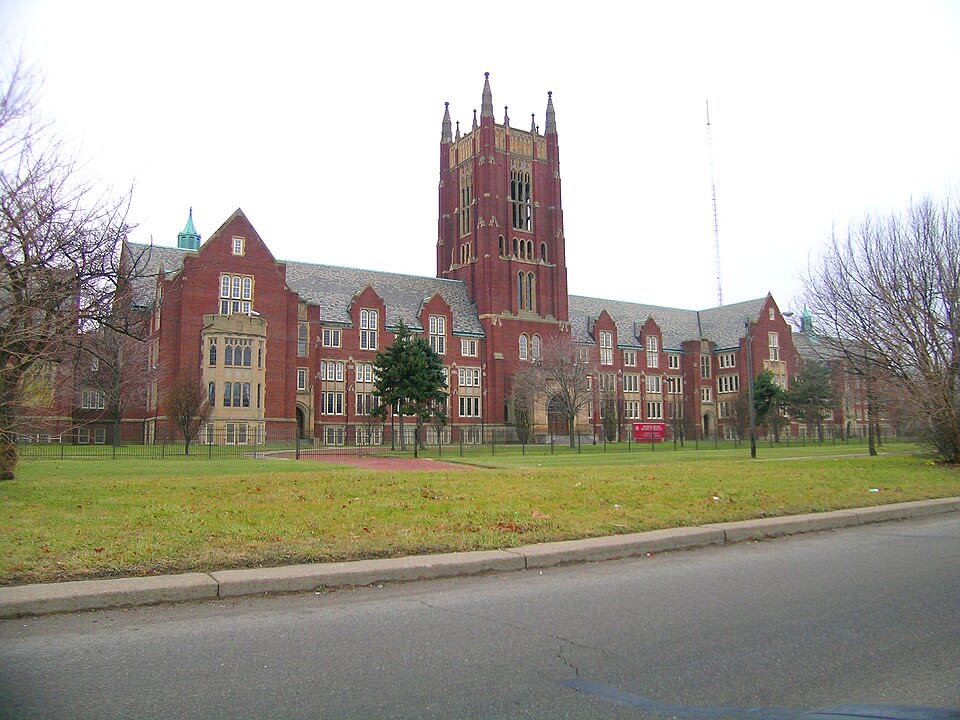
The dismissal last week of theology professors Ralph Martin and Eduardo Echeverria and canon law professor Ed Peters from Sacred Heart Major Seminary in Detroit has sparked controversy.
The three professors had each been teaching at the seminary for decades. News of their dismissal has proven contentious, prompting allegations that their terminations were politically motivated.
The controversy has been exacerbated by several statements from the professors suggesting they were not given a clear reason for their termination. Details remain unclear, including how much time the professors actually had left on their employment contracts when they were notified of termination.
But some have questioned whether the case might have followed the seminary’s rules for dismissing faculty.
What is the protocol for dismissing professors at Sacred Heart Major Seminary? And was the protocol followed?
The seminary handbook lays out the ordinary process for firing faculty members during a period in which they are under contract.
“The employment of a faculty member may, after due process, be terminated by SHMS at any time, if the seminary determines that the faculty member is in material violation(s) of the contract and/or Faculty Handbook,” the handbook says.
The termination process is triggered when “[w]ritten notification of intent to dismiss signed by the Rector/President of SHMS and specifying the grounds for dismissal, is delivered to the faculty member,” the handbook states.
“Termination must be given by the Rector/President stating the basis for termination.”
When dismissal becomes effective five days later, unless the faculty member appeals.
If an appeal is made, the case is reviewed by a three-member faculty panel. One member is chosen by the faculty member being dismissed, another by the president or rector, and a third by these two selected members of the panel.
“The three peers are independent and do not represent in any way the faculty member or the Rector/President,” the handbook states.
The peer review panel must then consider the information presented to it by the faculty member and rector or president, delivering its recommendation in writing within 10 days.
At that time, the faculty member will have three more days to submit additional information to the president or rector, who may then decide to move forward with dismissing the faculty member, or else rescind the intent to do so.
The handbook adds that “upon the completion of this process, both SHMS and the faculty member retain the right to pursue canonical and/or civil remedies.”
It is unclear whether these protocols were followed in the dismissal of Martin, Echeverria and Peters last week.
But statements from the three suggest they may not have been given a clear basis for termination, and that Detroit Archbishop Edward Weisenburger, rather than the seminary's rector, may have undertaken the terminations directly, seemingly apart from the ordinarily prescribed process.
Canon law establishes that under ordinary circumstances, the day-to-day decisions about the governance of a seminary belong to its rector: “In the handling of all affairs, the rector of the seminary represents it.”
The law does allow “competent authority” to “establish otherwise for certain affairs.” And canon law specifically allows the diocesan bishop to remove a seminary faculty member who is “gravely deficient” in the discharge of his duties.
But canonical commentators specify that the bishop desiring such a removal is required to follow the particular policies of his institution — and indicate that if a bishop acts unilaterally without observing prescribed policies, a dismissed faculty member would likely have a case to appeal at the Vatican.
For his part, Martin released a statement on his dismissal July 25 through Renewal, the Catholic charismatic ministry he leads. He said the news of his termination after more than 20 years at the seminary came as a shock.
“Yesterday, Archbishop Weisenburger told me that he was terminating my position at the seminary effective immediately,” Martin said. “When I asked him for an explanation, he said he didn’t think it would be helpful to give any specifics but mentioned something about having concerns about my theological perspectives.”
The next day, Peters posted on twitter.com that his teaching contract at the seminary had also been terminated by Weisenburger.
Echeverria told the National Catholic Register that he had not been given a reason for his termination, but declined to say more, due to a non-disclosure agreement.
The three fired professors declined to respond to questions from The Pillar. It is not clear if any of them are appealing their dismissals, though Peters noted on twitter.com that he had retained counsel.
Sacred Heart Major Seminary did not respond to questions from The Pillar about whether the protocols laid out in the seminary handbook were followed in the professors’ termination.
A communications official with the Archdiocese of Detroit told The Pillar that the archdiocese “does not comment on archdiocesan or seminary personnel matters.”
Weisenburger was installed as Archbishop of Detroit in March of this year. The early months of his tenure have already seen controversy.
The archbishop generated considerable pushback when he announced new liturgical restrictions in the archdiocese, which took effect last month. The restrictions include limiting the celebration of the Traditional Latin Mass to four designated regional sites and a personal parish, as well as prohibiting the celebration of Mass ad orientem in the ordinary form.
What's Your Reaction?
 Like
0
Like
0
 Dislike
0
Dislike
0
 Love
0
Love
0
 Funny
0
Funny
0
 Angry
0
Angry
0
 Sad
0
Sad
0
 Wow
0
Wow
0