









![St. Anthony Clare—When it is time for me to leave [the Eucharist], …](https://www.catholicdigest.com/wp-content/uploads/2025/12/15-1024x538.png?#)



What’s happening with couples’ blessings in Germany?
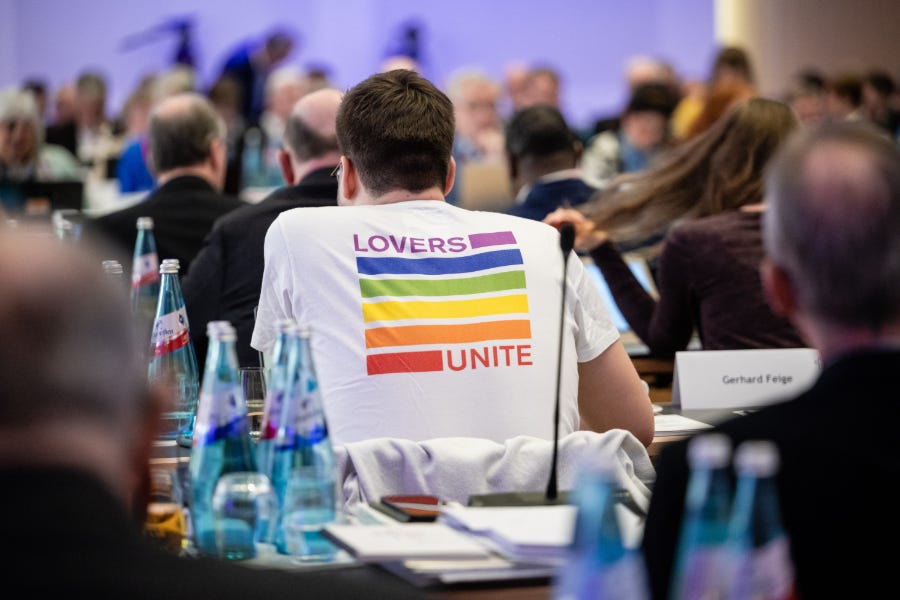
The Archdiocese of Cologne has confirmed it will not implement guidance on blessings for unmarried and same-sex couples issued in April by the German bishops’ conference and the lay Central Committee of German Catholics.
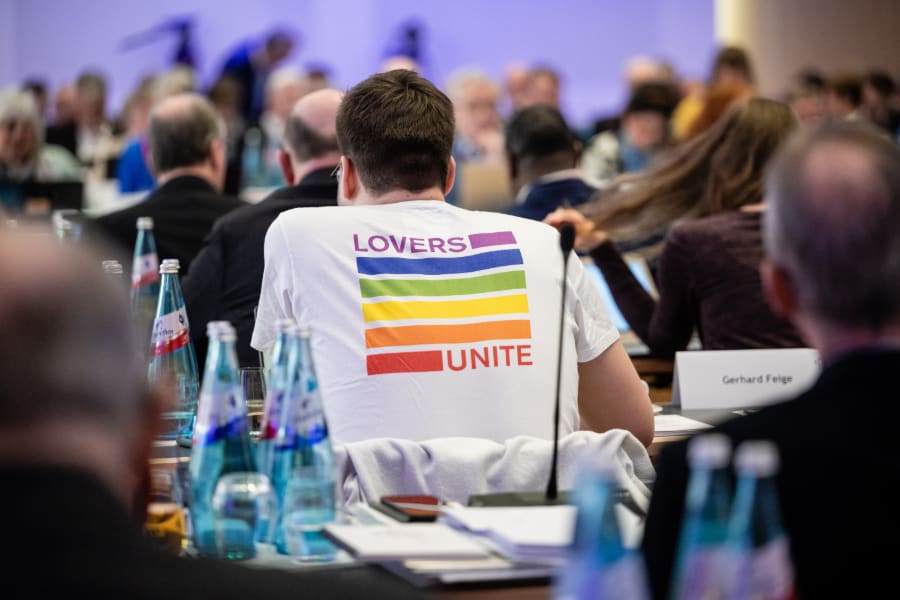
Msgr. Guido Assmann, the Cologne archdiocese’s vicar general, said the April guidelines appeared to “go beyond the regulations of the universal Church” set out in Fiducia supplicans, the 2023 Vatican instruction on blessings.
The archdiocese’s decision to reject the guidelines suggests that Catholic divisions over blessings exist not only between continents, but also within individual countries.
In Germany, dioceses are traveling in different directions on blessings, with some offering detailed plans for ceremonies and others saying they have nothing to add to the guidance given by Rome.
How have German dioceses arrived at seemingly contradictory positions on blessings? Let’s take a look.
What’s the background?
Long before the publication of Fiducia supplicans, some Catholic parishes in Germany offered blessing ceremonies aimed at unmarried and same-sex couples.
The practice caught Rome’s attention, prompting the Vatican’s doctrinal office to declare in 2021 that the Church does not have the power to bless same-sex couples.
In response, German priests and pastoral workers held a day of protest, conducting blessing ceremonies attended by same-sex couples.
Same-sex blessings were one of the major topics at Germany’s “synodal way,” a multi-year initiative that brought together the country’s bishops and select lay people to discuss far-reaching changes to Catholic teaching and practice.
In March 2023, synodal way participants adopted a resolution on “blessing ceremonies for couples who love each other,” which called for the official introduction of blessing ceremonies in all German parishes.
The resolution noted that the bishops’ conference and the Central Committee of German Catholics — known by its German acronym, ZdK — were preparing a handout that would include “suggested forms for blessing celebrations for various couple situations (remarried couples, same-sex couples, couples after civil marriage).”
In May 2023, the Working Group for Catholic Family Education, a professional association promoting pastoral care for families in the Church in Germany, published a template for blessing ceremonies.
The 52-page document included liturgical texts that, according to critics, resembled a church wedding ceremony.
At that stage, it seemed that the handout requested by the synodal way might take a similar form. But in a sensational development in December 2023, the Vatican’s doctrine office adopted a new position on blessings, announcing in Fiducia supplicans that spontaneous “blessings of couples in irregular situations and of couples of the same sex” were permissible.
Amid a backlash against the document, led by Catholics in Africa, the Dicastery for the Doctrine of the Faith specified that the blessings should last “a few seconds, without an approved ritual and without a book of blessings.”
The German bishops’ conference and the ZdK realized they couldn’t publish the blessings handout requested by the synodal way without taking account of the new Vatican document.
On April 23, two days after the death of Pope Francis, the German Church’s news website katholisch.de reported that the bishops’ conference and the ZdK had published the handout.
The bishops’ conference batted away accusations that it had waited until a papal interregnum to publish the text.
It pointed out that the document was dated April 4, when Pope Francis had returned from hospital to the Vatican. Yet the document’s publication was only announced after the pope’s death.
The handout was approved by a body known as the Joint Conference, which periodically brings together representatives of the bishops’ conference and the ZdK. The text was presented in an official press release merely as a recommendation from the Joint Conference “that the diocesan bishops proceed in accordance with the guidelines” it contained.
The handout was issued with no indication of whether its publication had been discussed with the Vatican. But katholisch.de reported in May that the document had taken so long to appear because it was submitted to the doctrinal dicastery before publication. It said that feedback from doctrinal prefect Cardinal Víctor Manuel Fernández was incorporated into the text.
German opponents of the synodal way nevertheless argued that the document strayed beyond the limits established by Fiducia supplicans.
The handout said that “no approved liturgical celebrations or prayers are provided for the blessings.” But the German Catholic group New Beginning insisted the overall tenor of the document encouraged “a ritual practice,” while “Fiducia supplicans explicitly called for a non-ritual practice.”
Divergent responses
The bishops’ conference and the ZdK presented the handout as a set of recommendations for bishops, acknowledging that each of the country’s 28 diocesan bishops is free to decide what to do with the document.
What's Your Reaction?
 Like
0
Like
0
 Dislike
0
Dislike
0
 Love
0
Love
0
 Funny
0
Funny
0
 Angry
0
Angry
0
 Sad
0
Sad
0
 Wow
0
Wow
0