










Why Do We Call the Archangels Saints?
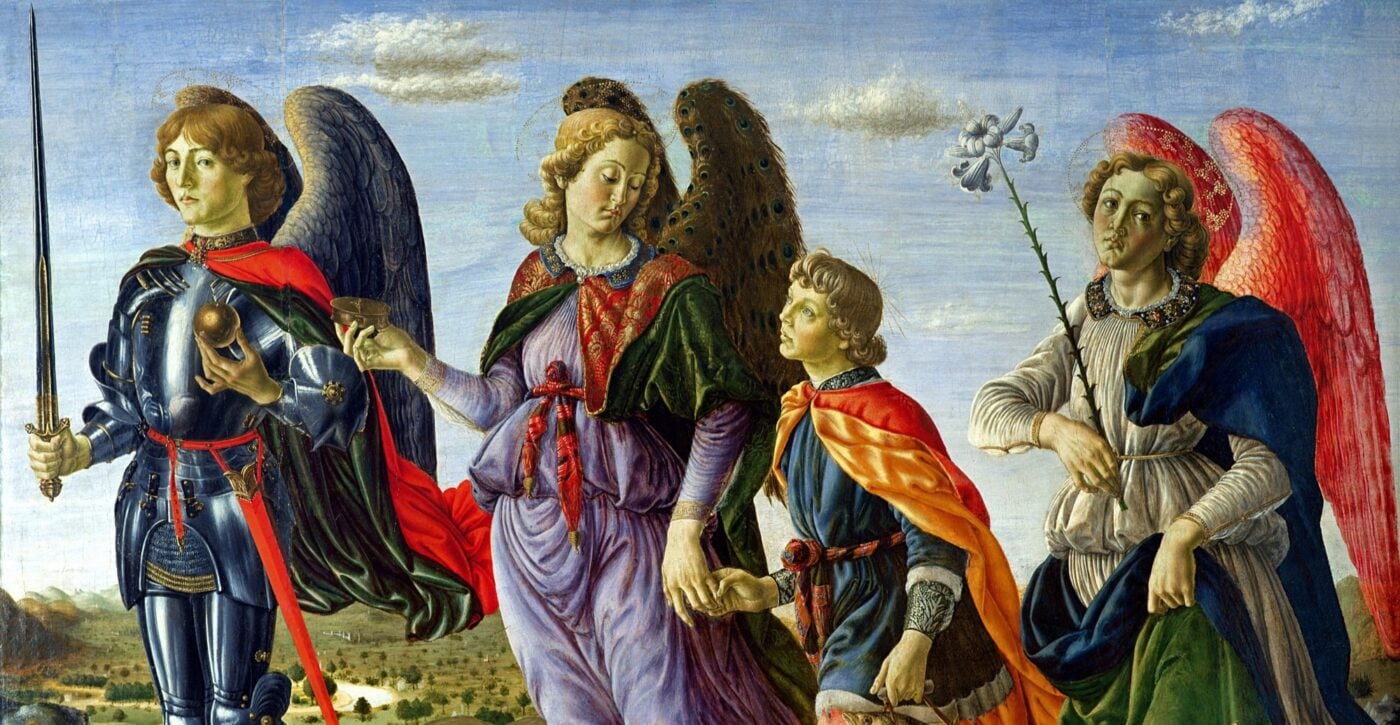
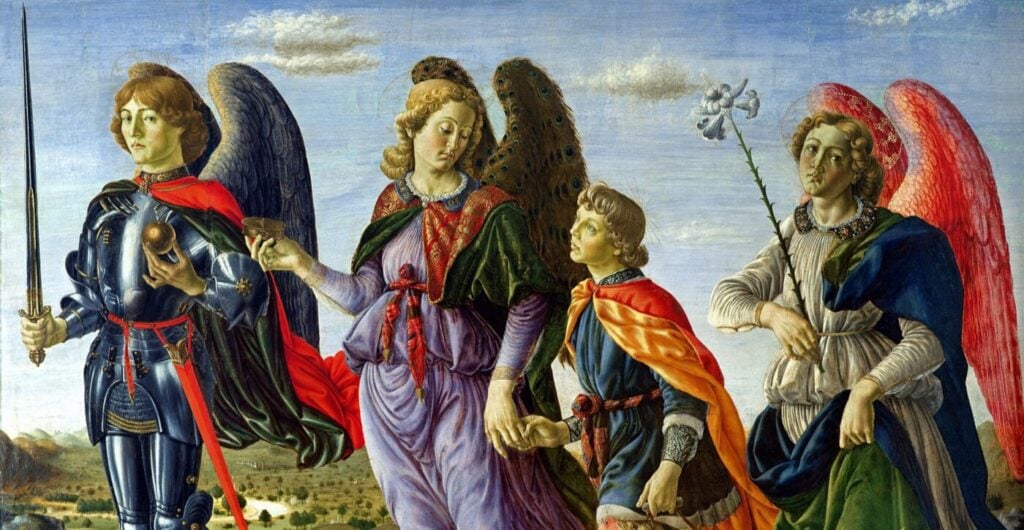
Perhaps one of the most frequently pondered questions when it comes to the archangels Michael, Gabriel, and Raphael is why the Church has dubbed them “saints.”
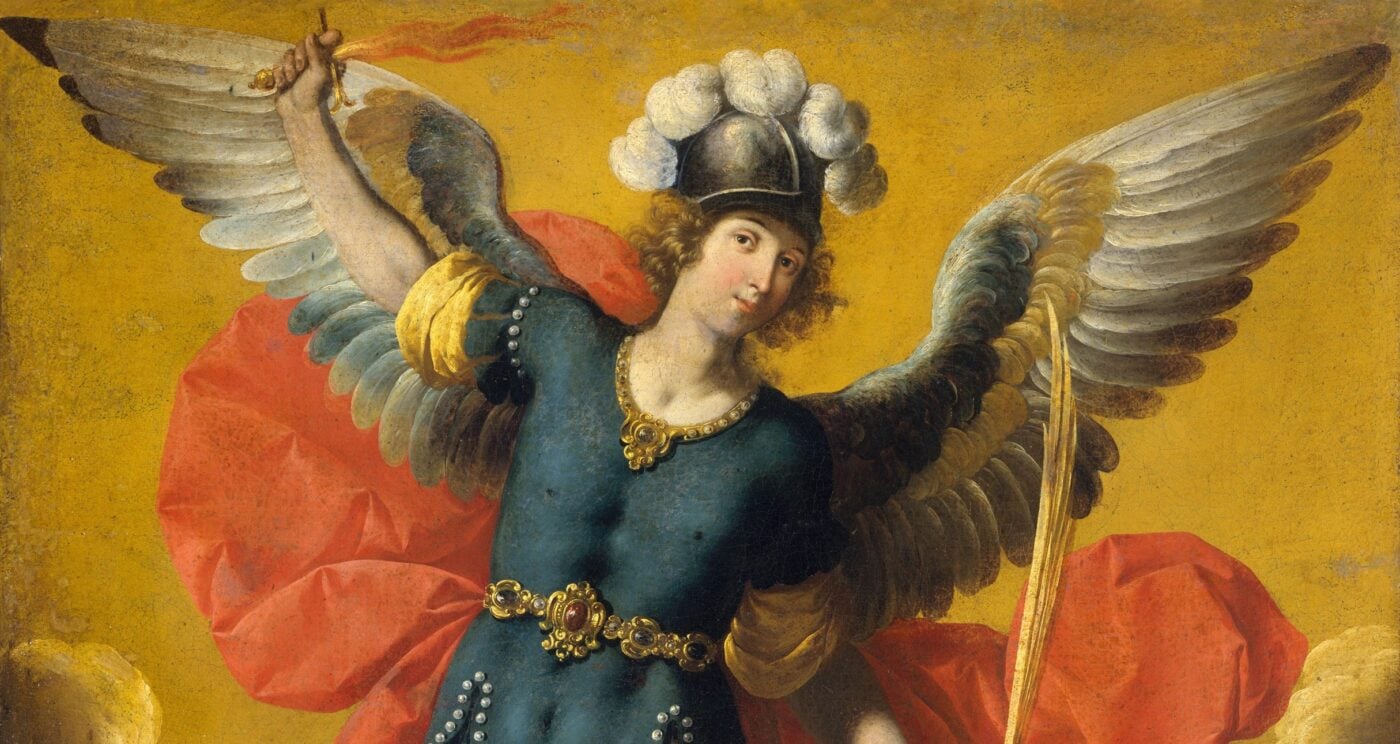
Scripturally, these are the only angels whose names are revealed. Still, the fact that these angels have names does not change their essence; despite their status as “archangels,” they are still every bit an angel in substance as every other angel in existence. That substance, according to St. Aloysius of Gonzaga, is as follows:
Angels…are of a purely spiritual substance and of an immortal nature, immune from the sufferings, disease, aging, and death to which corporeal beings are all subject. Their intelligence is such that they are free from all errors and ignorance with respect to knowledge of created things. In addition to this perfectly illuminated light of intelligence, the angels possess a will which is completely and utterly constant, such that it may not be overcome or made to waver by any perturbation or adversity.
Angels are certainly amazing! Still, none of the characteristics of the angels listed by St. Aloysius remotely describes the earthly life of a canonized saint. Some of the holiest saints we can think of suffered greatly in their lives from precisely the things from which angels are “immune”: “disease, aging, and death.” No saint in the history of the Church had such a high degree of intelligence that they were “free from all errors and ignorance with respect to knowledge of created things.” And whose will was so “completely and utterly constant, such that it [was never] overcome or made to waver by any perturbation or adversity”? No, the saints we all know and love were no angels in life.
So how can the angels be classified as saints?
The answer lies in what the Church means by the word “saint.” In our modern times, “saint” has come to be understood as synonymous with “canonized,” but this is not the origin, nor the full meaning of the word. The derivative of “saint” comes from the Latin sanctus, which is translated as “holy one.” What are the angels if not holy ones in heaven? Thus, in this broader sense, angels are indeed saints—that is, holy ones—just as are the men and women who lived heroic lives of virtue on earth and are now recognized by the Church as our intercessors in heaven.
However, we must be clear: the Church has given the title “saint” to certain angels, but not to all. Why not to all? Because, incredulously, not all angels are holy:
Michael and his angels battled against the dragon. The dragon and ITS ANGELS fought back, but they did not prevail and there was no longer any place for them in heaven. (Rev. 12:7-8)
The title “saint” helps to distinguish the angels who are in heaven from those who are not. But if there are indeed angels who are not in heaven—that is, the ones who were “thrown down to earth” because they “deceived the whole world”—how are we to understand St. Aloysius’ contention that the angels “possess a will which is completely and utterly constant, such that it may not be overcome or made to waver by any perturbation or adversity”? It seems that a number of them were indeed overcome—according to St. John, one third of all the angels in the celestial court (Rev. 12:4)!
The fact is, St. Aloysius did not say that angels could not be overcome at all; just that they could not be overcome by “perturbation or adversity.” In other words, unlike us, angels do not succumb to worry, anxiety, or fear, which are perhaps among the most insidious obstacles to our own trust in God. Angels do not doubt the existence of God for the simple reason that they see Him face to face! They do not doubt in His divine providence because of their “perfectly illuminated light of intelligence.” However, mystifyingly, there is one obstacle by which they can be overcome, despite their unwavering will and their perfect intelligence. Angels can be overcome by their pride.
Herein lies the reason that we mere “corporeal beings,” who do indeed suffer from “disease, aging, and death,” whose intelligence is riddled with all manner of “errors and ignorance,” whose will is “completely and utterly” inconstant, and who are subject to being “overcome or made to waver by perturbation or adversity,” are just so dear to Our Lord’s heart. All those adversities, weaknesses, and failures serve one purpose alone, and that is to keep us humble.
Humiliations have a way of getting the job done on our behalf, as long as we accept them for what they are: gifts which come from the hand of the God who loves us and wants us with Him in heaven more than anything. This is something that the angels do not experience, as ones whose intelligence are “free from all errors and ignorance.” Therefore, even though they already are in heaven, it is possible for them to lose heaven, if they choose to succumb to their pride rather than remain rooted in the humble place of love and service to the Lord.
As sobering as this is, the good news is that after those one-third of fallen angels were cast out, the two-thirds that remained had the perfectly illuminated intelligence to see where pride landed the devil and his minions. Although we humans are subject to being deceived by those fallen angels, the angels in heaven are not. They are indeed capable of succumbing to their own pride, just like every other angel; but unlike us, they are not lacking in wisdom. Their “perfectly illuminated intelligence” might not reveal to them the future consequences of their actions, but the consequences of the actions of the past are, for them, in plain sight. And from this eternal view, the choice is clear. It is unwavering. It is constant.
Scripture tells us that the Lord’s “dominion is an everlasting dominion that shall not be taken away, his kingship shall not be destroyed” (Dn. 7:14). The battle for truth has already been fought; heaven has already won by the blood Jesus shed for us on the Cross. The group of holy ones includes the canonized saints, and it includes the angels in heaven, but we must also realize, it includes all of us too! The waters of baptism have made us holy. We are marked for God, called to join Him in heaven as saints. What is left for us to do is to act like it—by making acts of the will.
So let us resolve to increase our trust in the risen Lord who has already won the battle against deceit on our behalf. Let us offer Him our praise and thanks daily—unceasingly—especially for the humiliations in our lives which He intends for the purpose of conquering our pride. Then, let us simply and peacefully follow His instructions and “do whatever he tells [us]” (Jn. 2:5). Jesus will take care of everything.
Author’s Note: This article was adapted from a chapter in 26 Steps with the Saints: Examining the Lives of the Holy Ones.
Image from Wikimedia Commons