





A country in crisis: After deadly protests, Tanzanian bishop laments ‘deteriorating democracy’

In his Angelus address Sunday, Pope Leo XIV asked for prayers for Tanzania, urging “everyone to avoid all forms of violence and to follow the path of dialogue.”
The statement came after incumbent Samia Suluhu Hassan won Tanzania’s presidential election with 98% of the vote, in an Oct. 29 election widely denounced as fraudulent, because most of Hassan’s opposition parties were banned from running.
After the result, Tanzanians took to the streets in massive protests, which ended with at least 700 people dead, according to the country’s opposition and international human rights organizations. However, many fear the actual count surpasses 1000 killed in the protests, with the government militarizing large parts of the country and enacting an internet blackout.
Tanzania is somewhat of a rarity in Africa. The country is one of the most stable countries in the continent, as it has not suffered from any civil wars or military coups since its independence in the 1960s. But it has been ruled by the same party, CCM, since that time.
The CCM was founded by Julius Nyerere, considered the founding father of Tanzania. Nyerere was a devout Catholic and saw his beatification cause opened in 2005.
The Catholic Church in Tanzania has thrived in recent years. The country has more than 1500 seminarians, a number that grows by the year, and a national seminary for more than 500 seminarians was opened in 2021. Two new dioceses were established in the country this year due to the growth of the Church throughout Tanzania.
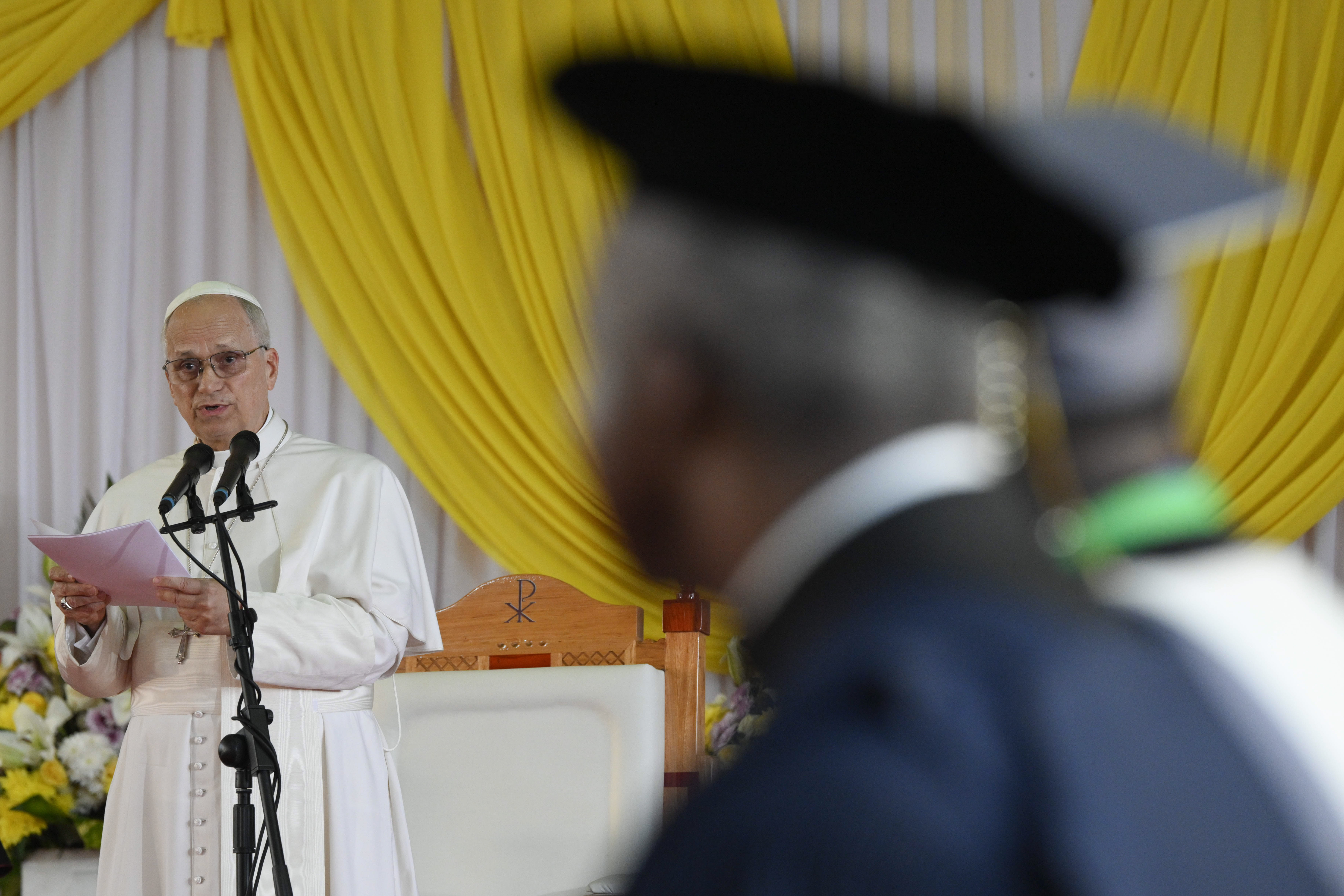
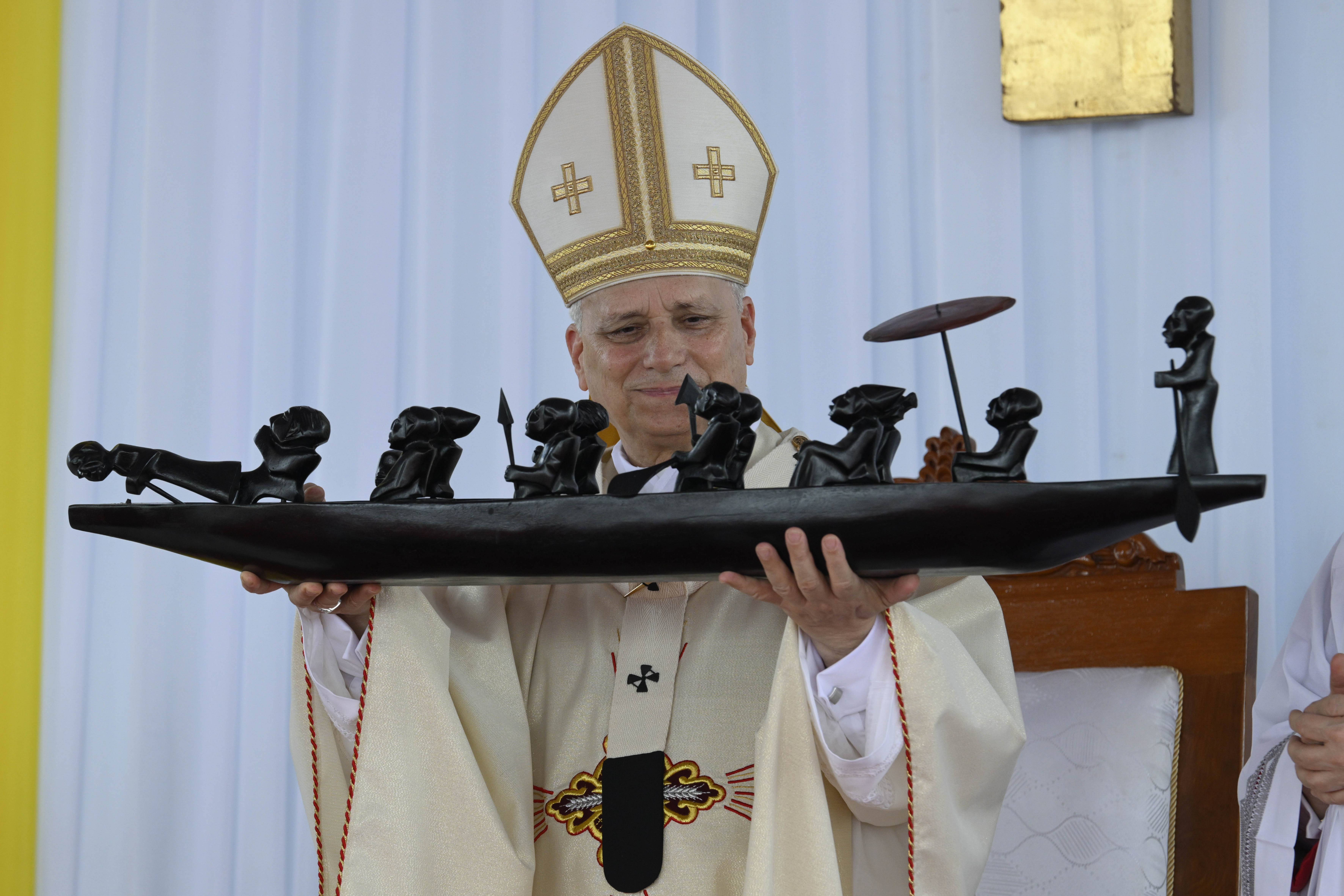
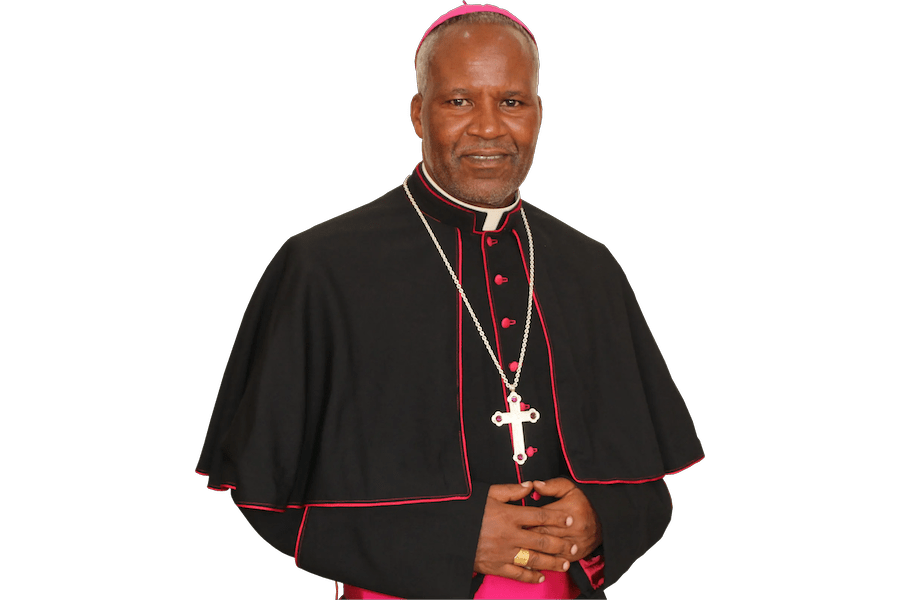
The Pillar spoke with Bishop Wolfgang Pisa, OFM Cap., Bishop of Lindi and president of the Tanzanian bishops’ conference, about the country’s crisis and the role of the bishops amid the situation.
Pisa joined the Capuchins in 1989 and was ordained a priest in 1999. He obtained a masters’ degree in social ethics at The Catholic University of America and later became the provincial superior of the Capuchins in Tanzania. He obtained a PhD in social ethics from the same university in 2019. He was appointed Bishop of Lindi in 2022 by Pope Francis.
The interview has been edited for clarity and length.
What are the origins of the crisis in Tanzania?
Thank you for approaching me on this issue, because we also feel that a lot of people are concerned with our situation. Now, there are many things contributing to the crisis, but I think there are three major ones.
The first is our country’s deteriorating democracy. The presidential election in 2020 didn’t follow the rule of law, it didn’t have the minimal guarantees to say it was a free and fair election. Therefore, there was a lot of tension when the 2025 election was coming up. It has been by far the worst election in the country in terms of guarantees — it was the climax of lack of democracy.
And it’s not only me as a bishop and not only the Church who’s saying this, but many international organizations. We had a local election in 2024 and we saw a lot of injustice, a lot of violations of electoral rules, so we thought this was coming for the presidential election.
During the local election’s campaign in 2024, many opposition parties expressed their concerns. The leader of Chadema, the main opposition party, was arrested and accused of treason and is still in prison. The main opposition leader expressed that in a situation without clear laws, it would be imprudent to have elections without changing the national electoral commission.
Another opposition party was also disqualified from running. All those were clear indications that the ruling party didn’t want any strong opposition parties for the presidential election we just had.
Tanzania has been ruled by the same party since independence, CCM. It changed its name, but it’s the same party. The party was founded by Servant of God Julius Nyerere, a great man. We still honor him as the father of our nation.
While most Tanzanians wanted to continue having a one-party system, he insisted on the necessity of turning the country into a multi-party system, which we did in 1995.
Unfortunately, the government party’s leadership has changed a lot. They are not living by the principles upon which the party was founded. Our leaders are individualistic, people are in the government for power and not for serving our people. There’s no internal democracy in the party, candidates are hand-picked by the leadership.
And the party has become less and less open to democracy. Dictatorships believe that if they go to a free and fair election, they will lose power, so they can’t allow it. Our leaders are putting their interests first, not the interests of the people.
Many foresaw that the presidential election would not be free and fair. Why? Because the national electoral commission was appointed by the government, and the government is composed solely of the ruling party, which also ran in the election. Many members of the commission held national government positions before.
Even the Church expressed concerns about these matters. We are concerned with the freedom and fairness of the electoral commission. From the beginning, there was concern that the electoral commission was biased.
Even during vote counting, people from the opposition party were not allowed to supervise the counting. You could only cast your vote and go back. So how can you assure people that their vote that was cast is going to be counted fairly? This was another concern.
Many people expressed concerns and said that it was better to postpone the election until we had clear election rules, an independent national electoral commission, and even a new constitution. Otherwise, this would be a fake election, it’s not a real election.
Now, a second major concern is security. People have been disappearing, people have been killed by security forces or unknown organizations. There are a lot of people who are taken into custody without ever being taken to court. Security and government repression are major issues.
The Church has expressed concern about this issue publicly. We believe that there is no independence of powers, so the legislative and judicial power are not keeping the government in check with these issues. There’s a lot of insecurity in the country.
Now, these disappearances seem to have a political motivation. The people who have disappeared have been publicly critical of the government. The most significant recent case was that of Humphrey Pole Pole, the former Tanzanian ambassador to Cuba. He resigned after he was critical of the electoral process and said the election would not be fair, and said openly that this election should be postponed.
A few days before the election he disappeared from his residence. When the police were asked, they said they were looking for him too. He has not been found yet; no one is sure of his whereabouts but a lot of people, including human rights organizations, suspect that the government is involved.
This created anger among the people. A lot of people have a missing brother, or a missing son, and it’s a rampant violation of our constitution. This created social anger among the citizens.
According to a study by the University of Dar es Salaam, 87 people were forcibly disappeared between 2020 and 2024, with 36 of them being later confirmed dead. The government hasn’t refuted those figures.
Lastly, another major issue is that our public institutions are compromised. The legislative and judicial power are not independent. They don’t have any checks and balances over the government. People can’t go to the courts to express their concerns, the judicial system is not protecting people. This added fuel to a fire that was already burning.
What is the current status of the protests? Some reports indicate that there are more than 1000 dead.
Unfortunately, it has been very difficult to know because we had an internet blackout and the government hasn’t said anything. I’ve been talking with the bishops in the most affected areas this morning. I asked them if they knew any figures of people who have died in the area, but they were unable to say. But as it looks, it’s at least some hundreds of people.
It’s difficult to establish because the government hasn’t given any figures, and I’m afraid they won’t. And if they do, it won’t be an authentic figure. Why? Because we’ve had absolutely shameful scenarios whereby the police went to the hospitals where protestors had been treated but died, and took those cadavers. People who lost their loved ones are in horror; they can’t bury their dead loved ones and they don’t know where their bodies are. They can’t have closure. So we won’t be able to trust the figures. And they’re doing all of this to bury the truth.
The opposition says it’s about 700 dead in the protests, but as a Church we aren’t certain of the exact figure.
What has the Church said about the crisis before and after the election? Are government authorities listening to the Church?
Before the election, the Church had written to the government saying that it would be difficult to have a fair election unless the rules for the elections were changed, and the national electoral council was reconstructed.
The Church also advised in different forums that the government should listen to the concerns of the people and opposition parties. They have to come together and discuss and solve all the irregularities before the election.
Unfortunately, we asked for a meeting with the president but never got one. Our main concern was that the government should listen to the people before the election. We didn’t think the election would bring a deadly protest as it happened, but we saw that people weren’t happy and the situation was tense.
Next week we have our plenary assembly. We are going to discuss our position in the crisis. But the way I see it, many of the bishops would love to have a peaceful country.
Many, many people are not happy with how the election went. And so many lost their lives. If I were to be asked, the way forward is national reconciliation, to form a committee of national reconciliation and healing whereby different stakeholders can be involved: the government, opposition parties, religious leaders, people from all sectors, so we build one nation, so we heal our nation.
We’ve never had an election before in which we experienced these kinds of deadly protests. It’s traumatic, it’s horrific. We need healing.
Does the conflict have a religious component? Are you working with religious authorities from other denominations?
We have an interfaith committee with our Muslim brothers and sisters and other Christian denominations. After the election we met. We might differ in opinions, we might differ in the way we express, but I think that especially after the election the interfaith committee can be a powerful voice in the crisis, even if there are times whereby we might not be in total agreement.
One thing I can say is that institutions in every country with a dictatorship tend to compromise in the same way they’ve compromised the pillars of the state and part of the media. There is also fear of infiltration through the religious bodies.
I wouldn’t say this has happened within the bishops’ conference. I think the Catholic bishops have one voice. But sometimes, when you hear public statements from some religious leaders, it feels like a compromised statement.
The challenge is that this totalitarian government is working day and night to infiltrate religious communities. With the interfaith committee, sometimes we might run the risk of compromising the truth.
Are you worried about the Church if it continues criticizing the government so openly? Has the Church been threatened by the government?
The Church is not supposed to compromise its prophetic voice, despite the risk. But we also need to be prudent.
The government has gone beyond threats. The secretary general of the bishops’ conference, Fr. Charles Kitima, was assaulted by unknown people in May. They wanted to kill him. He was in the hospital for many days. He’s only recovered very recently. So many priests have received threats.
But this is not new. During the previous president’s government, one of the bishops and the then-secretary general of the bishops’ conference had their passports confiscated. So they’ve gone beyond threats. There are clear indications that the Church is being targeted.
Many people think that the Catholic Church in Tanzania is the only institution that is not compromised by the government so far — and I pray that continues to be the case.
The Church in Tanzania is the fastest-growing Church in Africa. It has the most vocations. A large part of Tanzanian Catholics are young people and children, so it’s a growing, lively Church. We’re blessed with many vocations. This year the pope had to create two more dioceses because of how the Church is growing.
The bishops’ conference of Tanzania is the third-largest bishops’ conference in Africa, after Nigeria and the DRC. But we have the advantage that we don’t have the issues of persecution and civil war that Christians in these countries undergo. This is the first time we experience something like this.
Tanzania was widely perceived as one of the most stable countries in Africa. How did it achieve that stability, and how can it return to it?
We lament what has happened, but this is a jubilee year, so we’re hopeful for reconciliation. We hope the new leaders will be open to the suggestions of the people and will engage with stakeholders, with all political actors to see how this violence could be avoided in the future, and so we can get better political leaders than the ones we have now.
Peace building involves everyone.