





‘A frontier is opening up for us’: Cardinal Nichols at 80

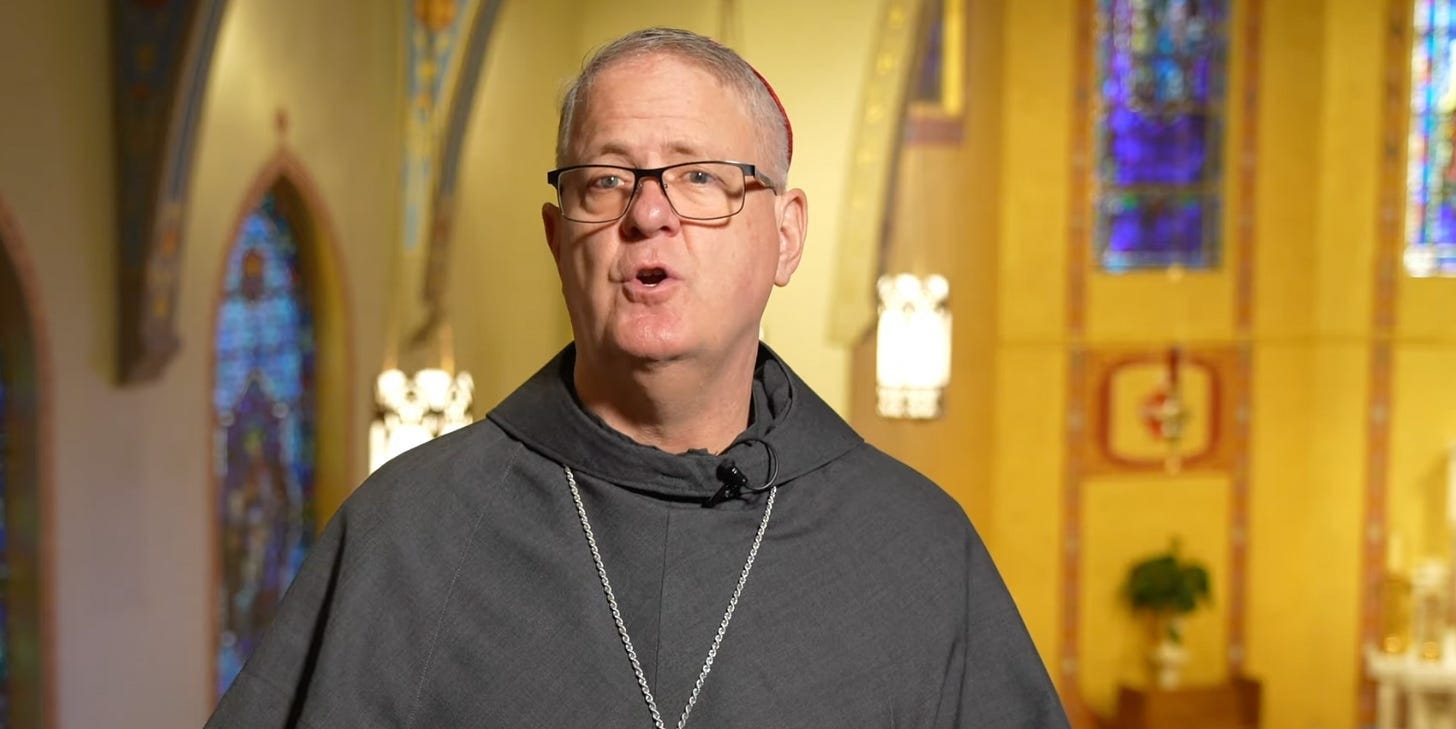
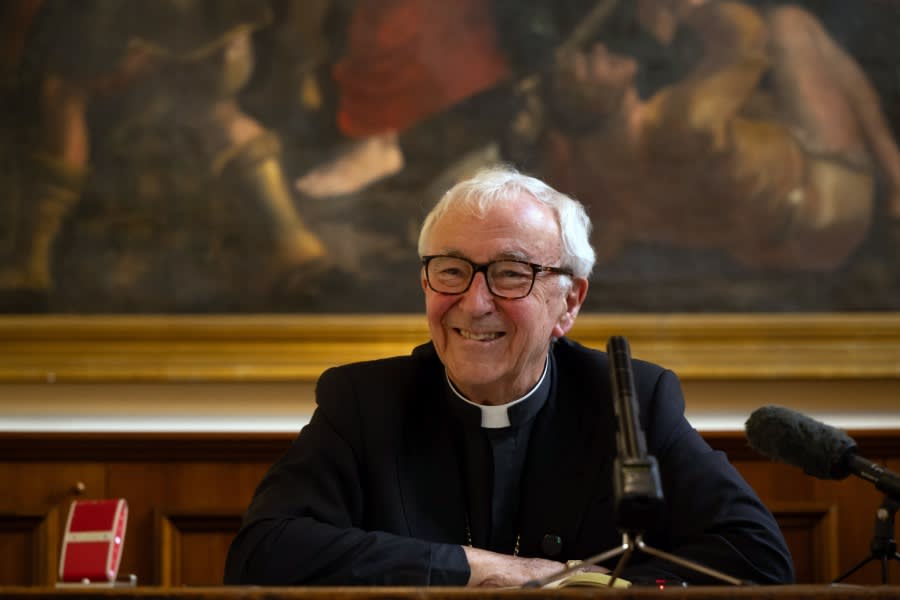
On Saturday, Nov. 8, Cardinal Vincent Nichols celebrates his 80th birthday, but he looks little different from how he did 16 years ago, when he became the Archbishop of Westminster, head of England’s most prominent diocese.
Apart, that is, from his black-rimmed glasses, which give him a veteran film director look.
Not long after Nichols celebrates his milestone birthday, the Vatican is expected to announce the name of his successor. The next Archbishop of Westminster will assume responsibility for a sprawling archdiocese that covers London north of the Thames and stretches into the county of Hertfordshire. He will also by tradition succeed Nichols as the president of the Bishops’ Conference of England and Wales.
Much has changed during Nichols’ tenure at Westminster. When he followed Cardinal Cormac Murphy-O’Connor in 2009, the New Atheists like Richard Dawkins were in the ascendant and Catholics were on the backfoot. In his installation homily, Nichols preached about the need for God, highlighted the Church’s role in building community, and stressed the compatibility of faith and reason.
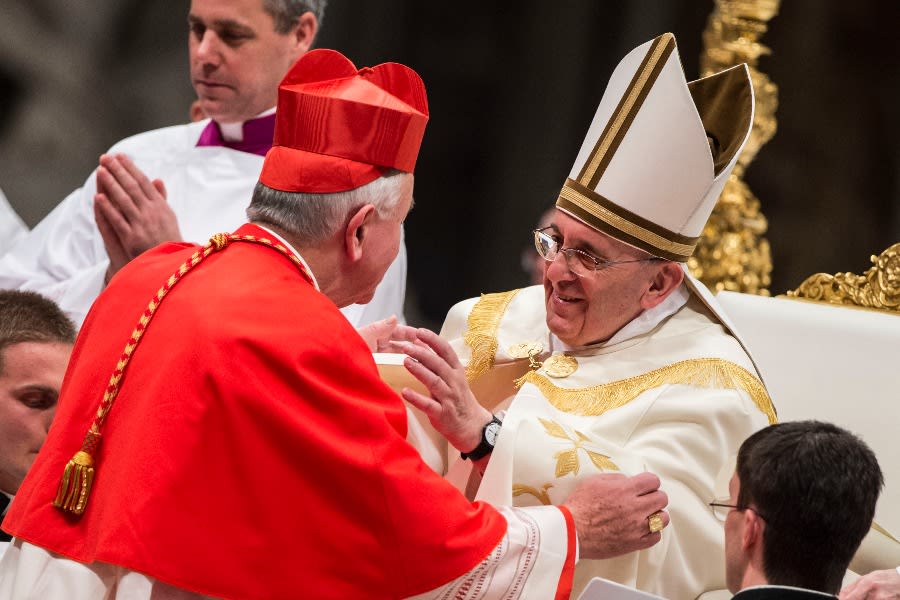
A year later, he welcomed Benedict XVI to London during the German pope’s visit to Britain — an unexpected success that sapped the momentum of aggressive atheism. In 2014, Nichols received the red hat from Pope Francis, who later rarely bestowed the honor on heads of Europe’s customary “cardinalatial sees.”
A low point came in 2019, when the government-commissioned Independent Inquiry into Child Sexual Abuse criticised Nichols’ actions in his previous role as Archbishop of Birmingham. In 2020, IICSA issued another highly critical report, focused more broadly on the Catholic Church, prompting calls for Nichols to resign as Archbishop of Westminster.
But Nichols insisted he had no desire to “walk away” from the challenge of reforming safeguarding procedures, remaining in place long after his 75th birthday, when diocesan bishops tender their resignations to the pope.
His endurance allowed him to witness a remarkable change of fortunes for English Catholicism. British media that once pilloried the Church have begun to speak of a Catholic revival, driven especially by young men. The monarchy, once deeply suspicious of Catholicism, has reached out, seeking to heal old Reformation wounds.
The Pillar spoke with the cardinal Nov. 6 about why adult baptisms are rising, the perils facing British society, and what advice he has for the next Archbishop of Westminster.
This interview has been edited for length and clarity.
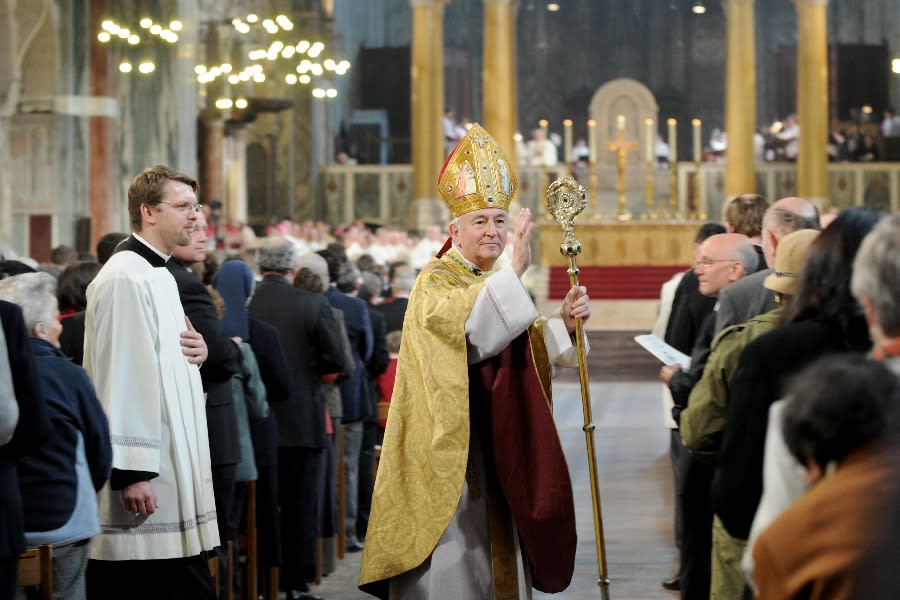
In 2025, you’ve had the unforgettable experience of participating in a conclave, witnessing a British monarch and a pope pray together in the Sistine Chapel, and seeing an Englishman, St. John Henry Newman, proclaimed a Doctor of the Church.
Has 2025 been an annus mirabilis for you?
Breathless and astonishing. It’s been something that, in many respects, I never would have dreamt of. To start with the end: St. John Henry Newman. I was present for his beatification. I was present for his canonization. The then-Prince Charles came to that and spoke eloquently about the gifts and the tradition of St. John Henry Newman, insisting on the importance of the spiritual in an age that tends to forget that.
Then, of course, Newman’s declaration as a Doctor of the Church, becoming only the third English person in history to be so declared. The last one, I think, was the Venerable Bede, and that’s some time ago [in 1899].
But then also, the pope declared Newman to be co-patron of Catholic education across the world, with St. Thomas Aquinas. Now that’s a bit breathtaking. We have a quintessentially English man who traveled a difficult journey into the Catholic Church paired up now with the great St. Thomas Aquinas. From a Catholic point of view, this is a huge moment, and I hope it can lead to a lot of renewal in Catholic education.
Over my time, the relationship between the royal family, the monarch of this land, and the Catholic faith has changed quite dramatically. I was just looking back to the visit of John Paul II in 1982. There’s a lovely photograph of him walking along in Buckingham Palace alongside quite a young-looking Queen Elizabeth II. There was clearly a rapport.
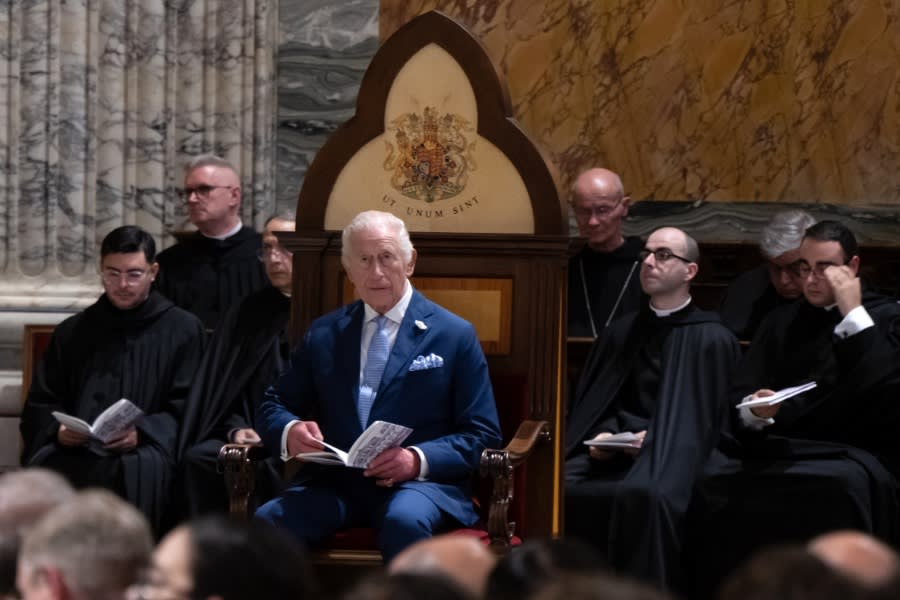
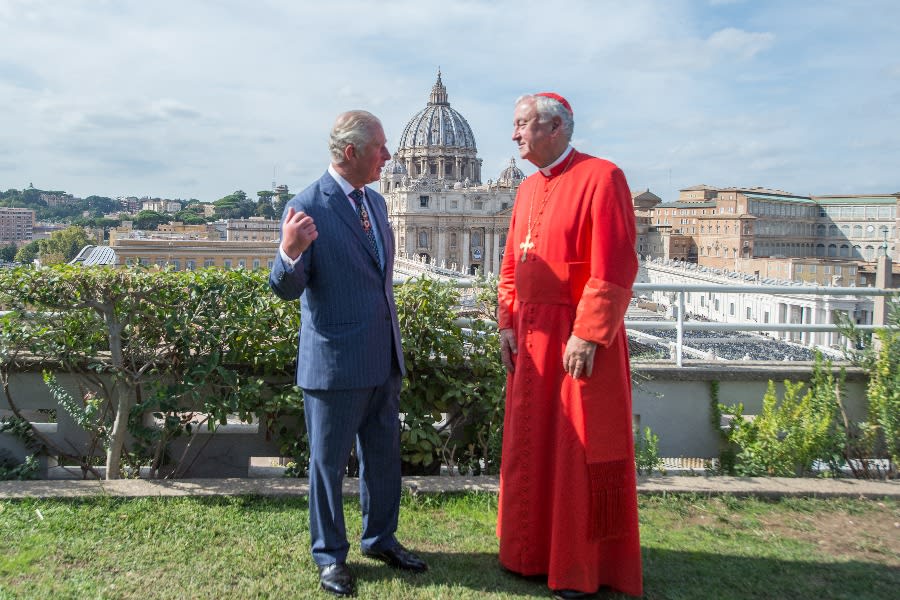
So there’s been this personal rapport. But what we saw on King Charles III’s state visit to Rome was that that was moved into a really formal ending of any remaining historical antagonism or suspicion. It was not just a visit, but a visit that included at its heart the act of praying together, of saying “Amen” together.
There was another part of that visit, in St. Paul Outside the Walls, which to me was equally dramatic, because what that did was to reach back with a long arm way beyond the Reformation to the Middle Ages, when the king of this country was the protector of St. Paul Outside the Walls and its Benedictine community. That was recaptured and recast when the King accepted the title of being a “royal confrater,” a brother with the basilica and the monastery, with a specially constructed chair — very dignified —with his coat of arms and the Latin words Ut unum sint, that we may be one, having a permanent place now in the apse of the basilica. These things are just quite remarkable.
Then I had the great privilege of being the first Catholic bishop to take an active part in the coronation. When Queen Elizabeth II was crowned, the apostolic nuncio was in the street outside Westminster Abbey. At King Charles III’s coronation, I was on the sanctuary saying a prayer, as a central part of the act of the dedication, the anointing, of the king for his office as the monarch of the land.
Those things have changed beyond recognition, certainly in my lifetime, and I’ve been really privileged to have a part in those events. They’re unforgettable.
Another bit of the good news in 2025 has been the growth in the number of new Catholics, adults seeking baptism.
This year, the Westminster archdiocese had the highest number of new Catholics since 2018. There is talk of a “quiet revival” of Christian faith in the U.K.
Is this a passing phenomenon — a fashion for Catholicism, if you like — or something deeper?
Oh, I think it’s something deeper. Let me put it this way. I think one of the great challenges in Western society, certainly in this country, is the whole notion of belonging. To whom do we belong? To whom are we precious? With whom is our life intertwined?
Now, in one sense, the sharpest attack against that sense of belonging is the assisted suicide bill, with its philosophy of the utter autonomy of the individual. But of course that’s a heresy. We are not autonomous individuals. We are born into a context. We live in a context. And we die in a context. To pluck the human person out of all that sense of belonging is really a very dangerous and demeaning process.
Over and against that, we have this increasing sensitivity to the importance of the inner life, of the spiritual. If I were to pick one moment of my years as a Catholic priest and a bishop, it would probably be the 15 minutes of silent prayer in Hyde Park with 80,000 people when Pope Benedict came.
The response to that is very telling. I had two letters that I recall. One was from an elderly woman in Ireland, who said: “I never thought that I would see the Blessed Sacrament on my television screen, without comment, just there for my silent prayer.” And she said: “I knelt in my room and wept.”
Then there was another letter from the mother of two teenage boys. And she said: “My boys learnt more about prayer in those 15 minutes than I’d ever been able to teach them.”
I think it’s this deepest inner sense of belonging to Christ, the inner sense of being in a community of faith, that can give rise to and strengthen other human contacts and contexts in which we live.
There’s something very deep in us. People no longer want to deny it. They want to find something deeper in their lives that gives it a direction, a context, a purpose, a meaning, and most of all a relationship. That, I think, is what’s happening. People are looking for: how do I find and establish relationships that go beyond all the normal things of excitement and success, and this and that? The deepest root of that is our relationship in prayer with Christ and therefore with our Father. I think that’s the frontier in which there’s so much promise and so much growth for us.
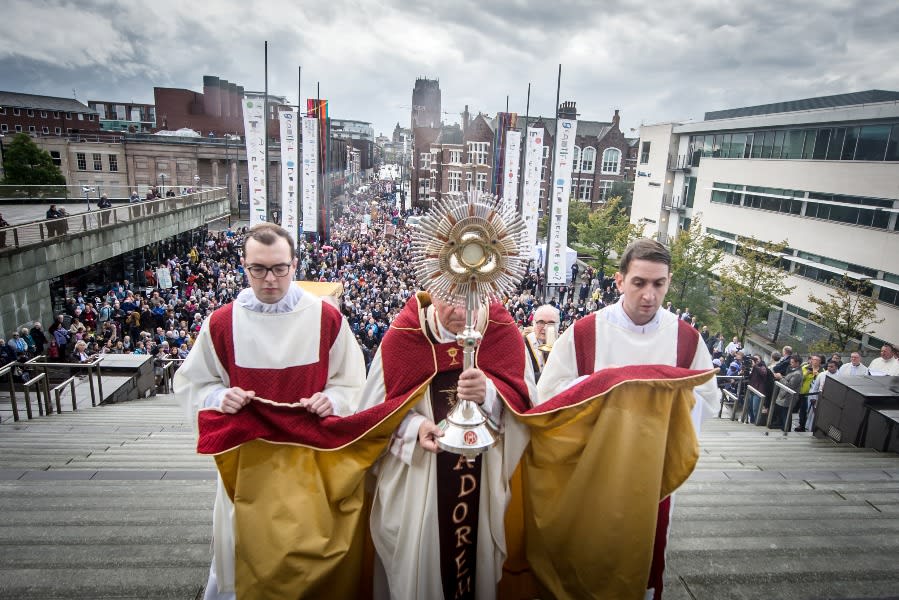
I think not only of that event in Hyde Park, but also the Eucharistic congress we had in Liverpool, in the pouring rain, when thousands of people walked with the Blessed Sacrament. And also the recent canonization of Carlo Acutis, for whom this was the center of his life. He said: “If you want to get a tan, go and sunbathe. If you want the holiness of life, sit before the Blessed Sacrament and let the Lord touch you, and speak to Him.”
That, to me, is a sign of real hope and a frontier that is opening up more and more for us. I think it’s that search for the inner life that is what is bringing people.
As you prepare to retire as Archbishop of Westminster, the country is on the verge of legalizing assisted suicide, as you mentioned, and permitting women to perform abortions at home up to birth.
Worshipers have been attacked at a synagogue in Manchester. Protests have taken place outside of hotels hosting migrants.
What’s happening to British society?
To continue that theme of belonging and its contrary, the autonomous individual, I think that we’re losing a cohesiveness.
Somebody said to me the other day that one of the biggest changes they’ve seen is that it’s not uncommon now for people to believe and practice that they may speak what they like about who they like, and bear no responsibility for it.
Of course, freedom of speech is hugely important. But it’s freedom with responsibility. It’s freedom exercised as a growing adult, somebody who’s growing in the context of the relationships in which they have to live. But when that’s forgotten, when I’m just an isolated individual, I can mouth off, shout, and abuse people verbally with no consequence, because they don’t belong to me. They have no relationship with me. They’re just an object for my fury or my sport.
There’s a lack of cohesiveness because we don’t know quite who we are and who we belong to. That’s when the foreign, the alien, becomes an easy target.
Now, there are real issues around managing immigration around the world, and they’ve been neglected for too long. I can remember campaigning — it must be 15 years ago — for the recognition of people who’ve been working in this country and living in this country for more than 10 years but still don’t have papers. Maybe it was manageable then, at that time. Now it’s almost unmanageable without drastic responses.
So it’s a lack of purpose and a lack of cohesion that worry me the most.
What’s the Church’s role when the social fabric is fraying?
Sometimes I think that we speak a lot about tolerance, of being tolerant toward each other and leaving each other space. It always seems to me that tolerance is a fruit. It grows out of something. It grows out of respect. It grows out of a sense of the dignity of the other person. It grows out of a sense of their rights, maybe.
That tree needs nurturing. One of things that we tend to do at the moment is pick the fruit and ignore the roots. I think that’s partly the job of the Church. It’s to say: where are we rooted? What is it that feeds the deepest sense of who we are and how we live together?
The story of original sin echoes through so much of life today, and that we can begin by acknowledging that we’re flawed and that we don’t get things right. So where does our sense of direction come from? How do we deal with failure? How do we deal with sin? Those are the things that the Church brings.
Often it’s practiced more in charity than in speeches. I’m proud, for example, of the amount of work that goes on supporting people in difficulties, whether they’re victims of trafficking or they’re homeless, or the drug issues that are more and more common on our streets. There’s a response from the Church, together with many others.
We have, for example, a food bank in Borehamwood [a town in Hertfordshire] and it brings together Muslims, Jewish people, and Christians. It doesn’t just hand out food. Their slogan is, we don’t just want to do handouts, we want to give hands-up, helping people up. So they work hard at food resilience: helping people to make better use of what they do have. That kind of work goes on enormously. At its best, it’s motivated by a vision of the person as a child of God, and therefore as my brother and sister.
Have there been personally challenging times during your 16 years as Archbishop of Westminster?
The biggest challenge was the long journey we’ve had trying to understand and respond to the abuse of children. For me personally, the IICSA inquiries were extremely painful, for all sorts of reasons which I don’t need to go into.
What’s much more important is the progress we’ve made in understanding the dreadful, long-term, far-reaching effects of the abuse suffered in childhood. It’s 20 years ago that I first sat down with a group of men who’d been abused in a residential home in Birmingham. That’s been a constant pattern in my life over these years, sitting and talking with survivors of abuse. In early October, I spent a whole day with a group.
I think we’ve learnt a lot and we’ve put in place systems and oversight, and we’ve put in place objective accountability too. Now every diocese and religious order in England and Wales has been audited and a public report made. And we learn as we go.
The archbishops of Westminster have had England and Irish surnames. Do you think one day, they will have Chinese, Indian, Nigerian, or Polish surnames?
We’ve had Frenchmen and Italians before [as bishops in England]. I’m guessing, but I suspect we’ve also had somebody from the Middle East. I’m not sure.
I doubt if there’s a parish in this diocese that is purely British-Irish. Most of our parishes have people from 30 different nationalities in them. We have some priests coming from those communities. Not as many as I would like. But we have priests serving in the diocese from many different countries now.
And that [the appointment of archbishops from other backgrounds] will happen, and by the time it happens, it’ll be the right thing to do.
What to me is very reassuring is that the appointment of bishops is done kind of at arm’s length by the Holy See. I think that’s much better than having it too close at home, where all sorts of cultural ebbs and flows might have an influence that isn’t really deserved.
What advice would you give the next archbishop of Westminster?
Be yourself and stay close to the Lord, no matter what.
You wrote a well-received book about St. John Fisher and have a clear interest in English Catholic history. What do you think future historians will say about the Catholic Church in England in the early 21st-century?
When I was doing those studies on John Fisher, the professor of history at Manchester University said to me: “I want you to understand that writing history is the most speculative of all academic disciplines. As long as you’ve got evidence, you can say whatever you’d like.”
So it’s impossible to predict what a historian would make of the huge changes that have taken place. It would depend partly upon the historians’ point of view, what kind of evidence they’re actually looking for, and that’s then how they will construct their story. But it’s not for me to predict.
Will you be writing about it yourself?
Contemporary history, or history of the recent past, is probably the most difficult history to write because there’s too much evidence. Whatever you say, somebody will contradict it because they will remember and it’s all still fresh. I think history needs a bit of time to develop objectivity.
Will I be writing memoirs and all of that? No, I don’t think so.
How do you see your retirement then?
Oh, there’s so much that can be done. I suppose the experience of these last 16 years is that there’s never enough time. There’s so many expectations and, I must admit, being made a cardinal brings a very considerable extra burden. It has been for me, because some of the tasks I’ve been asked to fulfill in Rome as a cardinal have been demanding and quite time-consuming.
So I’ll have time to think, time to rest. I’ll have time, I hope, to pray more than anything, and to follow that instinct for much greater intimacy with the Lord. I scrabble a bit at the moment, but it would be lovely to have more time for that.
The most important place in the house where I’ll go to live will be the chapel. And it’s from there that things will come and flow.