





A test case, what would Benedict say, and cheating tossers

Pillar paid subscribers can listen to Ed read this Pillar Post here: The Pillar TL;DR
Happy Friday friends,
Today is the feast of St. Januarius, he of the vial of miraculously re-liquifying blood in the Naples cathedral.
There’s plenty interesting to discuss about that triannual event, which sometimes takes minutes or hours, and sometimes doesn’t happen at all, and which appears to be treated by the local Neapolitans as something between an object of sincere pious devotion and Catholic Magic 8ball.
In fact, Neopolitans are a pretty singular bunch in my experience, and we could easily spend a while just talking about them and their idiosyncrasies.
But the thing is, there are a few things I want to talk about this morning — about Benedict XVI, about China, and about the World Stone Skimming Championships — so we’re going to have to just skip the initial pleasantries this week and get right to the news.
Here we go.
The News
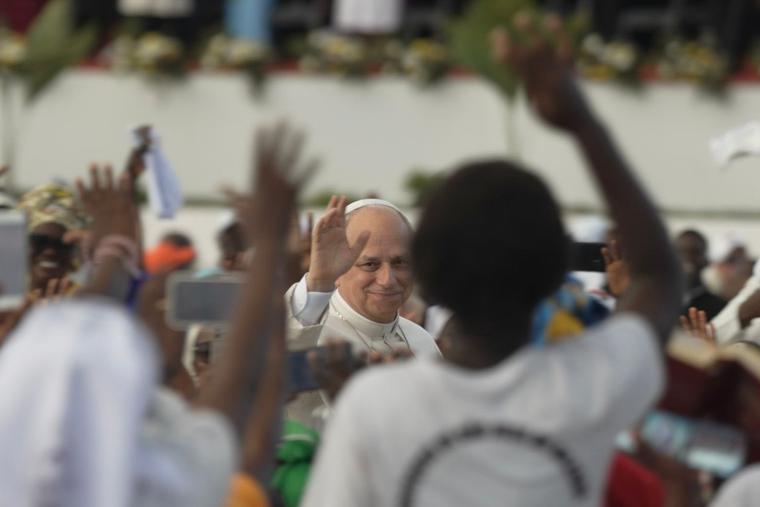
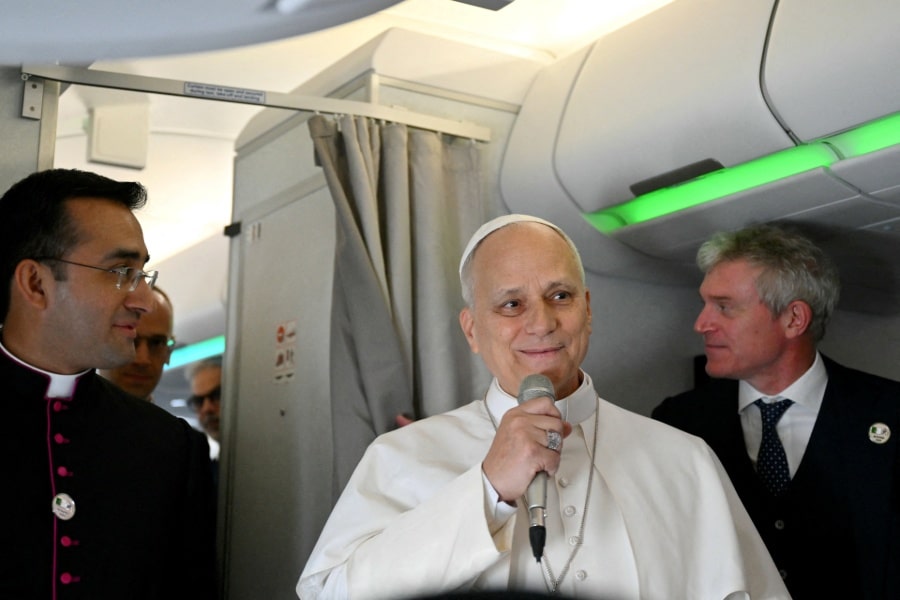
In his first major interview since his election, Pope Leo XIV has said he wants to send a more positive message about Vatican finances.
In the interview with Crux, the pope downplayed the Vatican’s budget deficit and pension black hole, saying he didn’t “lose any sleep” over the state of the crucial finances. On first reading, there’s a concerning whiff of “Crisis? What crisis?” about the pope’s remarks because the simple facts of the matter are deadly serious.
But, as I said in an analysis this week, Leo isn’t wrong in his assertion that you can’t expect people to give generously to the Vatican if all they hear is bad news. And, looking at the slate of meetings he’s had just in the last two weeks, it seems to me like he might be taking a “duck on water” approach to it all — serene above the water line and paddling furiously below.
You can read the whole analysis here.
—
An Irish journalist who was targeted in an anthrax scare this week said he believed there was an “anti-Catholic motivation” behind the incident.
David Quinn, a columnist for Ireland’s Sunday Independent and Irish Catholic newspapers, opened a suspicious package Sept. 16 at the Dublin offices of the Iona Institute, a thinktank he founded in 2006.
He told The Pillar that he’d “be amazed if it’s not somebody with a big dislike of the Church.”
The scare comes as Maria Steen, a decidedly and publicly Catholic lawyer also affiliated with the thinktank, is in the midst of a presidential run.
—
The fallout from the assassination of Charlie Kirk continues to be at the center of public conversation in the United States this week, though one body has remained silent on the event — the U.S. bishops’ conference.
The USCCB has a fairly well-oiled comms machine for getting statements from the conference out on a range of subjects, including those of political moment, so the silence on Kirk’s killing is notable, and almost certainly deliberate.
But why?
In an analysis this week, JD looked at the makeup of the conference leadership, and the ordinary means by which it generates and approves statements for public release and considers why on this issue the USCCB is the dog that won’t bark.
His conclusions are very interesting. Read the whole thing.
—
The Catholic Church in Austria saw “significant increase” in Mass attendance, a decline in formal disaffiliation, and a rise in Church tax revenue in 2024.
The landlocked Central European country has a population of around 9 million, roughly half of whom are Catholic. While the 2024 figures suggest Mass attendance is recovering after a sharp drop caused by the COVID-19 crisis, the numbers remain below pre-pandemic figures, when around half a million people attended Mass.
But despite the increase in Mass attendance, and a slowdown in formal defections from the faith, the Church in Austria still shrank last year — though, curiously, receipts from the Church tax went up.
Why is that?
Luke Coppen and Brendan Hodge crunched the numbers.
—
After months of speculation, the Holy See announced Monday the appointment of Archbishop Piero Pioppo as apostolic nuncio to Spain.
The Pillar had reported last month that Pioppo was the Vatican’s pick for the position, but that the government was delaying the process in protest over recent tensions with the Spanish bishops’ conference.
Those tensions, present for months, had escalated in June, when Archbishop Luis Argüello, president of the Spanish bishops’ conference, publicly urged Prime Minister Pedro Sánchez to call early elections over recent corruption scandals involving government officials — a suggestion many bishops endorsed.
Argüello’s call was widely seen as a vote of no confidence in the Spanish government. Ministers accused the Church of siding with the “far right.”
Amid all that, Pioppo was widely reported to be the Vatican’s pick as ambassador to Madrid, but his formal nomination was being pocket-vetoed by the Spanish government.
So, what changed? Read the whole story.
—
Chinese authorities issued new rules governing the online conduct of religious leaders in the country this week, banning unauthorized streaming of liturgies, children’s catechesis, and “collusion with overseas forces” through any online activity.
The new regulations follow other recent legal restrictions on religious practice on the mainland, but the new code also applies to religious leaders in Hong Kong, Macau, Taiwan, and overseas — if they “commit online acts in China.”
Clerics in China told The Pillar that the new rules were a “natural development of the Sinicization policy.”
“If you are a mainland bishop and you have any kind of ordinary communication with the Vatican which acknowledges Rome’s jurisdiction on ecclesiastical affairs, if you do it by email you could be found guilty of ‘foreign collusion,’” one said.
“If any cleric was caught having anything to do with a missionary, that’s ‘infiltration.’ As always with these regulations, the aim is to criminalize anything from outside China.”
“We’re getting to the point where ordinary expressions of communion could be a national security breach.”
—
Just months into his pontificate, Leo XIV has an opportunity to refresh the leadership of the Catholic Church in Belgium, with three of the country’s eight territorial dioceses awaiting new bishops.
It’s rare for a pope to be able to appoint bishops to almost half of a nation’s dioceses so early in his reign. But that’s the prospect facing Pope Leo.
The appointments could give a clearer idea of what the first U.S.-born pope is looking for in episcopal candidates, as well as offering new direction to the Belgian Church.
You can read Luke’s overview of the vacancies, and the state of the local Church right here.
—
In a Pillar column this week, Eve Tushnet considered the legacy of the Synod on the Family, which opened 10 years ago next month.
In a conclusion I did not see coming, and which I was very interested to read, she concluded that that synod produced “pastoral wisdom that could transform the Church’s approach to ministry with gay and same-sex attracted people – but nobody noticed, because the most relevant synod documents didn’t address ‘LGBT’ questions at all.”
According to Eve, the submissions from several African bishops on the subject of polygamy “offer a series of insights which, if applied to ministry with gay and lesbian people, would be a huge leap forward, because the bishops are asking all the right questions.”
Eve notes, and I think she’s probably right about this, that the wider applicability of the African pastoral experience of polygamy has been missed because people tend to view it as a “window onto what Africa is like, not what pastoral care is like.”
You can read the column here, and I recommend you do.
But before you do, I have to say something about it.
Since we started The Pillar, we’ve had a simple policy for our comments sections — that everyone conduct and express themselves with Christian charity, and presume the good faith of everyone in the conversation.
For nearly five years, the results have been the single greatest validation of our work I could hope to see — Pillar readers have shown themselves to be as insightful, thoughtful, and charitable as I could hope we are as a publication.
Sadly, though, this has started to visibly slip — in particular in discussions about human sexuality, with some comments being nothing short of vitriolic and personally nasty.
We’ve now got to the point where we are trying to come up with a formal comments policy, and looking at having to commit time and resources away from our newsroom — our actual reporting job — to monitor the comments sections.
I will be honest with you, it breaks my bloody heart.
For this reason, we turned the comments off when we published Eve’s column yesterday, with a note explaining we were taking a 24-hour period to give people the chance to hopefully think long and hard about how they want to say whatever they want to say, and be their best selves in doing so.
We’ll be opening them up this evening when the 24 hours is up. But before we do I would like to make a personal plea:
You don’t have to agree with every column or analysis we publish. WE don’t have to agree with them all, and we publish them. JD and I don’t agree with half the things the other one thinks half the time.
The Pillar’s opinion page is not meant to be a hothouse of consensus, it's a place where sincere people can discuss ideas in good faith. Feel free to disagree with what you read, and to voice your disagreement. But in doing so, as always, exercise the kind of Christian charity which has always defined our comments sections, please.
I’d ask especially that you consider that Christ is to be seen reflected in the other, whom we are called to love as Christ. So, if you have a strong opinion to give, fine and dandy. But ask yourself if you would use that tone and those terms to address Christ personally.
There’s no group I have more faith in than Pillar readers. Don’t let me down guys.
What would Benedict say?
This week marked the 15th anniversary of Pope Benedict XVI’s state visit to the United Kingdom, during which he celebrated the beatification of Cardinal Newman. A lot has changed since then — after decades of “Venerable” status, JHN has advanced from Blessed through to (nearly) Doctor of the Church at serious speed.
The wheel has turned a few times for me, too, though without bringing me any closer to sanctity that I can tell. While I went to the beatification, and it was lovely, Benedict’s visit for me centered on his address to the Houses of Parliament in Westminster Hall, the site of Thomas More’s trial.
You can watch that speech here and it is worth every minute of your time.
Benedict addressed the role of religion in public life and politics. I was there and, as a young political staffer, listening attentively. Benedict was addressing the aggressive secularism of that moment.
The pope referenced in particular “Saint Thomas More, the great English scholar and statesman, who is admired by believers and non-believers alike for the integrity with which he followed his conscience, even at the cost of displeasing the sovereign whose ‘good servant’ he was, because he chose to serve God first.”
“There are those who would advocate that the voice of religion be silenced, or at least relegated to the purely private sphere… And there are those who argue – paradoxically with the intention of eliminating discrimination – that Christians in public roles should be required at times to act against their conscience.”
From where I sat in the ninth row, I was deeply struck by the pope’s words.
Despite my ringside seat, I wasn’t a rising star among my cohort by any means, but I was playing the game well at a reasonably high level, having paid my dues, working patiently up through party HQ, affiliated think-tanks, and a slew of big campaigns.
I’d found “my guy” among the ranks of candidates and, ahead of his election earlier that year, had the movie-scene moment in his kitchen, helping to plot out his political future, agreeing to run his office and expecting to make my career by his side as he rose through the ranks.
But, after a good number of years in the political machine, I knew well as I sat in Westminster Hall what was coming from the new coalition government. And I knew the ways in which I would be expected to act against my conscience, toeing and defending the party line.
All of this occurred to me as I listened to Benedict voice “the perennial question of the relationship between what is owed to Caesar and what is owed to God.” What was my conscience going to serve: my career, or my faith?
In the end, “my guy” stuck to the plan and made it to the cabinet, but I wasn’t along for the ride.
Instead, I moved to Washington, DC, to study canon law with the strong but vague intention of serving the Church with the same enthusiasm I’d previously poured into politics.
The gradual sharpening of that intention eventually pointed me here, and the work we’re trying to do at The Pillar — and plenty of different questions for my conscience to wrestle with.
But thinking about Benedict’s speech again, 15 years on, I wonder what the great prophet against moral relativism and secularization would make of our current state of affairs, in which public and political figures speak freely about their Christianity, but bind it up seemingly inextricably with their political positions.