











After statement from Paprocki, Cardinal Cupich defends award for Durbin
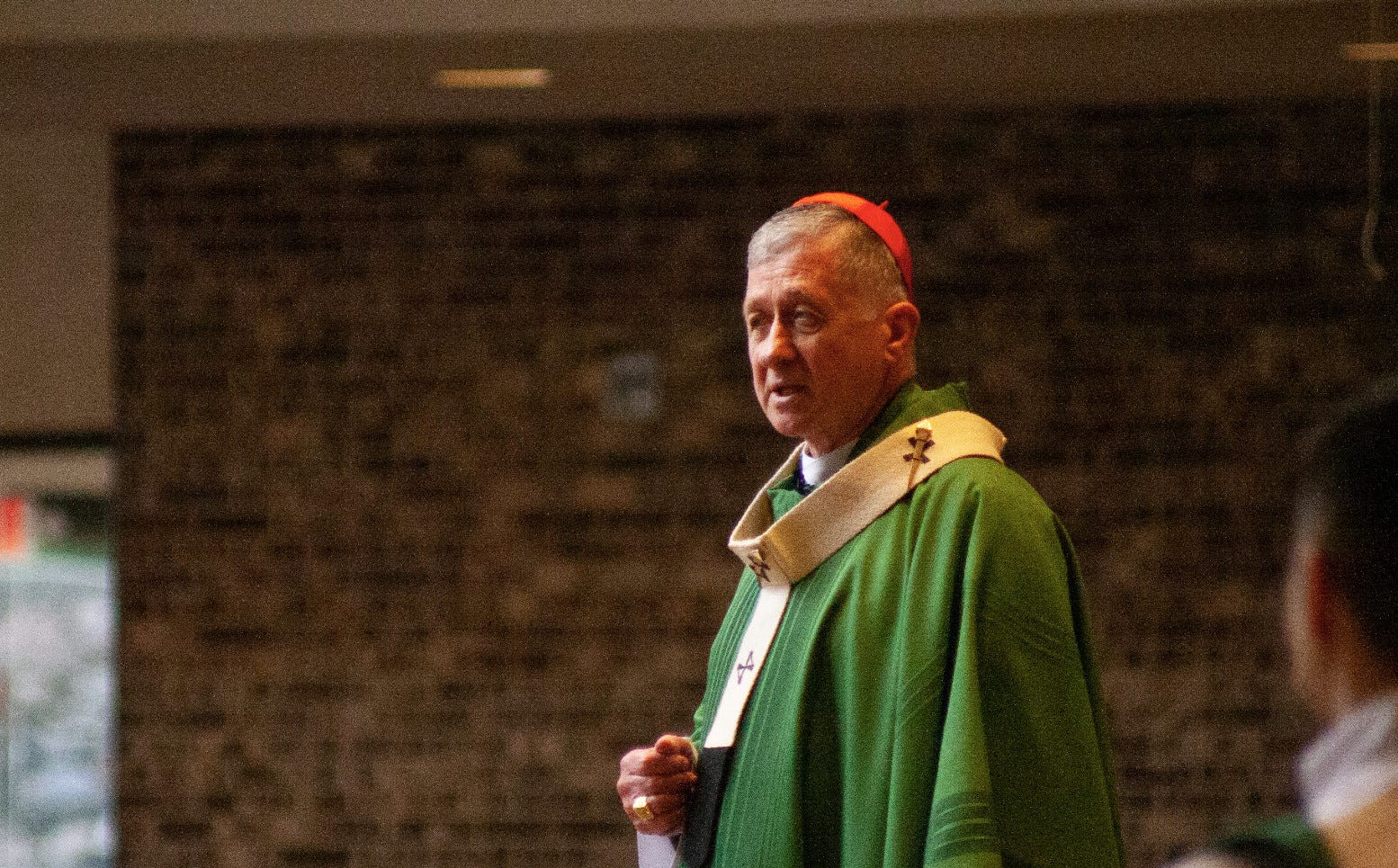
After criticism from a fellow Illinois bishop, Chicago Cardinal Blase Cupich on Monday doubled down on the archdiocese’s decision to honor U.S. Senator Dick Durbin, a longtime supporter of legal protection for abortion.
In a Sept. 22 statement, the cardinal said his decision to confer an award on Durbin is in line with Vatican guidance on the need for dialogue with politicians who oppose Church teaching on abortion.
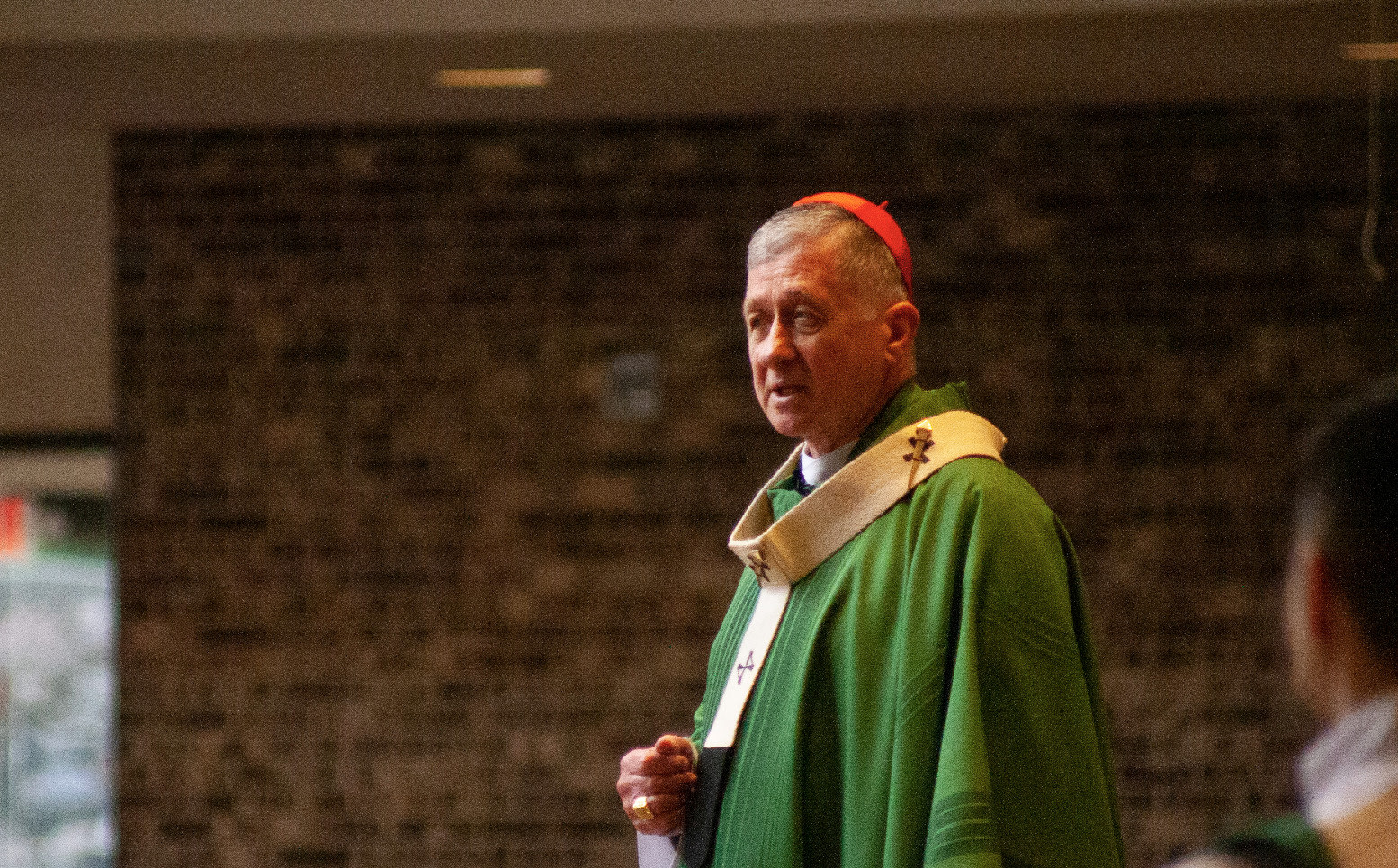
Cupich acknowledged criticism of the recent announcement that Durbin will be given a lifetime achievement award by the Archdiocese of Chicago’s office of human dignity and solidarity in November. In particular, he seemed to respond to comments Friday from Bishop Thomas Paprocki of Springfield, Illinois.
The cardinal defended the archdiocese’s decision to grant the award, which will be bestowed at a Nov. 3 fundraiser for the archdiocesan immigration ministry.
“Senator Durbin informed me some years ago that he has taken up residence in Chicago, registered in a parish of the archdiocese and considers me to be his bishop,” Cupich said.
“Accordingly, I have remained faithful to the May 2021 instructions of the then-Congregation for the Doctrine of Faith, advising bishops to ‘reach out to and engage in dialogue with Catholic politicians within their jurisdictions...as a means of understanding the nature of their positions and their comprehension of Catholic teaching’.”
On Friday, Bishop Paprocki expressed “shock” over the news of the award, explaining that Durbin is prohibited from receiving the Eucharist in the Springfield diocese, where he resides, because of his advocacy for legal protection for abortion.
“Given Senator Durbin’s long and consistent record of supporting legal abortion — including opposing legislation to protect children who survive failed abortions - this decision risks causing grave scandal, confusing the faithful about the Church’s unequivocal teaching on the sanctity of human life,” Paprocki said.
“Honoring a public figure who has actively worked to expand and entrench the right to end innocent human life in the womb undermines the very concept of human dignity and solidarity that the award purports to uphold.”
Paprocki voiced concern that the decision to honor Durbin runs contrary to a June 2004 statement from the U.S. Conference of Catholic Bishops, which says that “Catholic institutions should not honor those who act in defiance of our fundamental moral principles. They should not be given awards, honors or platforms which would suggest support for their actions.”
He added that the award appears to violate Chicago’s own archdiocesan policy, which prohibits “awards or honors” to “individuals or organizations whose public position is in opposition to the fundamental moral principles of the Catholic Church.”
To explain its policy, the archdiocesan policy manual notes that “Many organizations and presenters that do ‘good work’ in some areas are misguided in others, particularly in the areas of human life and sexuality. In the past some honorees, speakers or organizations presenting at gatherings for Catholic organizations have publicly advocated viewpoints that are in opposition to the faith, causing confusion and division within the Church.”
Paprocki said the planned award for Durbin “sows confusion about the seriousness of abortion and the integrity of Catholic witness in public life.” He urged Cupich to reconsider the granting of the award.
Durbin, 80, has been a U.S. Senator since 1997 and was before that a member of the U.S. House of Representatives.
While he initially supported restrictions on abortion, he became in the U.S. Senate a supporter of Medicaid funding for abortion, and has opposed the prospect of legal restrictions on the practice.
In 2007, the senator said that he personally opposes abortion, but believes decisions about the practice must be made by a woman and her doctor.
In his statement defending the award, Cupich made reference to the social justice rhetoric of former Chicago Cardinal Joseph Bernardin, by arguing that “[a]t the heart of the consistent ethic of life is the recognition that Catholic teaching on life and dignity cannot be reduced to a single issue, even an issue as important as abortion.”
Cupich said the award is intended to honor Durbin’s efforts “to advance Catholic social teaching in the areas of immigration, the care of the poor, Laudato Si', and world peace.”
“The recognition of his defense of immigrants at this moment, when they are subjected to terror and harm, is not something to be regretted, but a reflection that the Lord stands profoundly with both immigrants who are in danger and those who work to protect them,” he said.
But in a Sept. 22 interview with The Pillar, Paprocki also cited Bernardin, who popularized the term "consistent ethic of life” in the 1980s.
The bishop argued that Cupich’s approach was an incorrect reading of the idea of a “consistent ethic of life,” which downplayed the significance of abortion.
Paprocki quoted Bernardin at length, recalling the cardinal’s 1988 lament that once said in an interview, “some people on the left … have used the consistent ethic to give the impression that the abortion issue is not all that important anymore, that you should just be against abortion in a general way but there are more important issues, so don’t hold anybody’s feet to the fire just on abortion. That’s a misuse of the consistent ethic, and I deplore it.”
Paprocki also noted that while Durbin has a residence in Chicago, he has a domicile in Springfield, giving Paprocki jurisdiction over relevant canonical matters.
Durbin’s Senate webpage states that he lives in Springfield, and does not make mention of Chicago.
It is rare for bishops to publicly criticize one another. Asked about whether doing so is damaging to the unity of the bishops, Paprocki responded, “What’s violating unity is not speaking out, it’s that something has been done contrary to Church teaching.”
“I don’t think I'm violating unity by pointing out a violation of our USCCB statement and policy. It’s the violation of the USCCB statement that is acting contrary to our unity,” he said.
“I think what we have to do is speak the truth, and when we see something that is wrong taking place, I don’t think that we should be silent or say, ‘Well, I don't want to say anything because that will violate unity.’