







Appeal hearings begin in Vatican financial trial

The appellate court of Vatican City began hearings this week in the case of the London financial scandal which resulted in the 2023 conviction of Cardinal Angelo Becciu and eight other defendants.
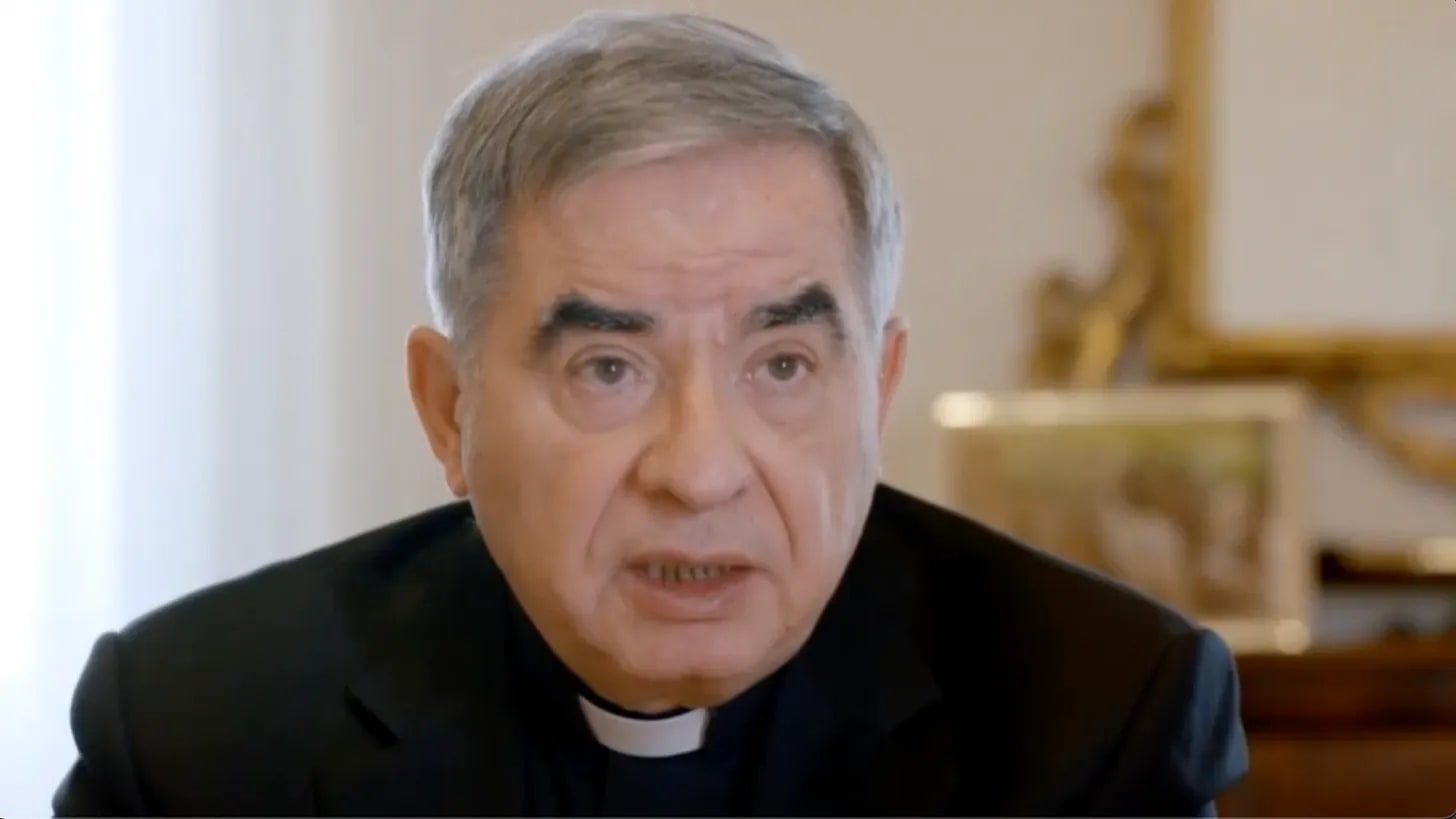
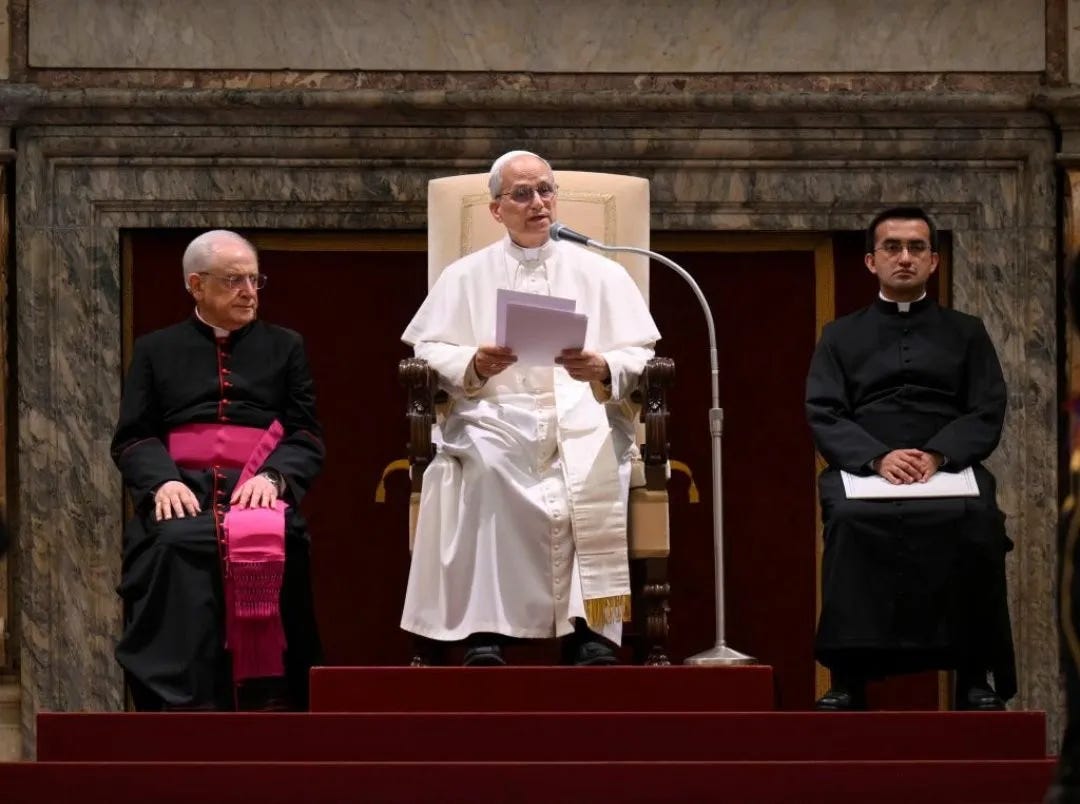
Opening proceedings on Sept. 22, city state judges led by Archbishop Alejandro Arellano Cedillo were asked to consider appeals by parties from all sides of the case — both from those convicted and from the prosecution.
The case, the latest chapter in a financial scandal which has made headlines since 2018, initially began as an investigation into the Vatican Secretariat of State’s investment in a London building, but expanded to include allegations of fraud, embezzlement, and various other financial crimes against several individuals connected to the secretariat.
The complexity of the allegations and evidence, and the sometimes extraordinary behavior of the parties, leaves the appeal court looking ahead to months of hearings and the likelihood of continued international scrutiny for Vatican City’s judicial system.
—
The appeal hearings opened Monday with defense lawyers motioning for the Vatican City chief prosecutor, Alessandro Diddi, to recuse himself from the proceedings, following the publication of a cache of text messages between two women accused of coaching the prosecution’s star witness, Msgr. Alberto Perlasca.
The exchanges between Genoveffa Ciferri and Francesca Chaouqui show them discussing the cooperation of Perlasca with Vatican investigators. Perlasca was, for years, the head of the administrative office of the Secretariat of State and a chief deputy of Cardinal Angelo Becciu, the star defendant in the trial.
Perlasca’s decision to cooperate with prosecutors led to some of the most headline-grabbing accusations against Becciu before and during the trial, during which the priest also claimed that Chaouqui — through Ciferri, a personal friend of Perlasca — had unwittingly encouraged him to cooperate with prosecutors.
Chaouqui’s involvement in the case made headlines and caused a stir in court, since she was at the center of the last Vatican financial scandal and trial, and convicted in 2016 of leaking classified Vatican information in the so-called “Vatileaks 2.0” scandal and has a longstanding public feud with Cardinal Becciu.
Cardinal Becciu maintains the exchanges prove attempts by the prosecution to frame him and taint the investigation and trial.
Diddi told the appeal court on Monday that he would consider the motion for his recusal and respond in writing before the end of the week. He is not expected to recuse himself, in which case his continued involvement could become subject to a separate procedural appeal process, further delaying proceedings.
The motion for Diddi’s recusal is only one of several procedural objections likely to feature in the appeal hearings. Lawyers for the defence lodge multiple complaints about alleged violations of due process during the initial trial.
Other defendants launched international appeals against the Vatican City proceedings. Raffaele Mincione, the investment manager from whom the Secretariat of State purchased the London building which triggered the trial, appealed to the office of the Special Rapporteur on independence of judges and lawyers at the United Nations.
In nearly 750 pages of argumentation, the judges at first instance addressed numerous criticisms of the city state’s judicial process and institutions raised by defense lawyers over the course of the trial, as well as laying out the evidence and argumentation which resulted in the convictions handed down last year.
“The Vatican [City] legal system recognizes the principles of due process, the presumption of innocence and the right of defense, which are in fact expressly provided for under the current rules,” the judges wrote.
—
Despite the prosecution securing convictions against nine of the 10 defendants in the initial trial phase, Diddi’s office appealed the final verdict after judges broadly dismissed the prosecution’s central thesis of a single unified criminal conspiracy among the defendants.
Instead, the judges at first instance found what they called “complete and irrefutable” evidence of criminal wrongdoing across a range of either loosely connected or separate allegations among the defendants.
Cardinal Becciu, the first cardinal to be tried as an ordinary defendant in the city state’s court following judicial reforms by Pope Francis in 2021, has insisted he is the victim of a conspiracy to frame him and maintained that his funneling of hundreds of thousands of euros to members of his own family did not benefit either his family or himself — though members of the cardinal’s family have faced separate indictment by Italian authorities over the same allegations.
Becciu has also insisted that some half a million euros paid to a self-described private secret agent, Cecelia Marogna, were approved personally by Pope Francis — though the late pope denied any such approval in a phone call with Becciu secretly recorded by the cardinal. In a letter to Becciu, Francis suggested the money went “to satisfy [Becciu’s] personal voluptuous inclinations.”
The judges at second instance may, in line with the previous court’s approach, choose to reexamine the evidence on all the charges separately, raising the possibility of some convictions being affirmed and others overturned.
Among those convictions most likely to come under close judicial scrutiny is the case of Raffaele Mincione, whom the Secretariat of State used as an investment manager for 200 million euros of high interest loans taken out from Swiss banks, and from whom the Secretariat of State later purchased the London building at Sloane Avenue after separating from Mincione.
Mincione was convicted by the Vatican City court of embezzlement — charges he has vigorously denied.
In a lengthy interview with The Pillar, Mincione said that he had abided by the contract he signed with the secretariat, and that investments he made — branded “speculative” and “self interested” by the Vatican — were well within the discretion granted to him by the contracts.
The Vatican City court ruled that he was legally culpable as the beneficiary of embezzled funds — Vatican money being used for illegal purposes by Becciu — and should have, as a matter of professional due diligence, sufficiently familiarized himself with Vatican City law and realized he was participating in an illegal operation.
Mincione, for his part, has insisted that he signed contracts which were legal under the jurisdictions under which he was operating.
Prior to the filing of criminal charges against him in Vatican City, he filed a lawsuit in the UK seeking a court judgment that he acted in good faith in his dealings with the Vatican — including a 2018 separation agreement which transferred ownership of the London building at 60 Sloane Avenue to the Secretariat of State’s designated proxy, Mr Gianluigi Torzi, who was also convicted of financial crimes in the case.
Judges in the UK court found that Mincione and his companies “have the benefit of a number of findings in this judgment… which reject very serious allegations levelled against them… including particular allegations of dishonesty and particular allegations of conspiracy.”
The UK court found that the Vatican also “had reason to consider itself utterly let down in its experience with [Mincione and his companies]. [They] made no attempt to protect the [Vatican] from fraudulent bad actors. They took no care towards the [Vatican] and they put their own interests first.”
However, Mincone and his lawyers noted at the time of the decision that these findings concerned the period after the Vatican had initiated a separation from Mincione, after which he “had no obligation whatsoever” to look out for the Vatican’s interests against the actions of other parties.
In addition to facing a five year prison sentence in Vatican City, Mincione has in the past noted that he has the most substantial assets of all of the nine convicted defendants and, as party to a combined liability set by the Vatican City court, is being held responsible for meeting the bulk of the hundreds of millions of euros ordered to be forfeited by the judgement.
Speaking to The Pillar in February, Mincione said that “In the Vatican, even today, nobody is looking for the truth. Everybody is after revenge.”