





Being happy, break the mould, and back to school
Pillar paid subscribers can listen to Ed read this Pillar Post here: The Pillar TL;DR
Happy Friday friends,
I say that, and of course I mean it. Though it is an awkward thing to say, after what happened at Annunciation church.
I am a father of a young child who attends a local Catholic school. The images of the grieving families are all too easy for me to transpose myself into. I am called to mourn with those who mourn, and I do.
But, for the Christian, all mourning is meant to be transformed. Of all passages of scripture, the one I find comes to my mind most often is Paul’s plea: “I want you to be happy, always happy in the Lord. I repeat, what I want is your happiness.”
The Latin is actually rather stronger — gaudete is the imperative. But while I want it as much as Paul, where is the joy to be found, still less proclaimed, in Minneapolis?
We are all “public Christians.” With something like what happened in Minneapolis, our reactions, individually and cumulatively, give a public witness to the faith we profess — for good or ill.
The world watches Christians as we process and react to the killing of the innocent, and it despises the apparent futility of our prayer. “Where is your God?” is the question written apparently on the weapon of the killer, and echoed on MSNBC.
What is our answer? It should be clear: our God hangs dead on the cross, lies buried alongside the victims of Wednesday’s attack, and weeps with the families, too, as he did over the body of his friend Lazarus.
But the Christ who died on the cross rose from the dead; the man who wept for Lazarus raised him, too. Our God is among the families today, but he is with their children in heaven. Our God is alive and so are they; he is a God of the living, not the dead.
Do we believe this? Can we announce it — through tears, yes, though not through gritted teeth but from our hearts? Can we rejoice at all times? Ultimately, this is the measure of our faith — of my faith.
What is certain is that this answer to the question “Where is your God?” — and it is the only answer we can give — will not persuade anyone if it is merely spoken. The Gospel, this Good News, must be lived to be proclaimed with any authenticity or authority.
And so I say again: happy Friday, friends. May our mourning turn to joy.
Here’s the news.
—
The News
The main story this week was, of course, the terrible shooting during a school Mass at Annunciation parish in Minneapolis on Wednesday.
FBI Director Kash Patel posted on twitter.com that the shooting is being investigated “as an act of domestic terrorism and hate crime targeting Catholics.”
—
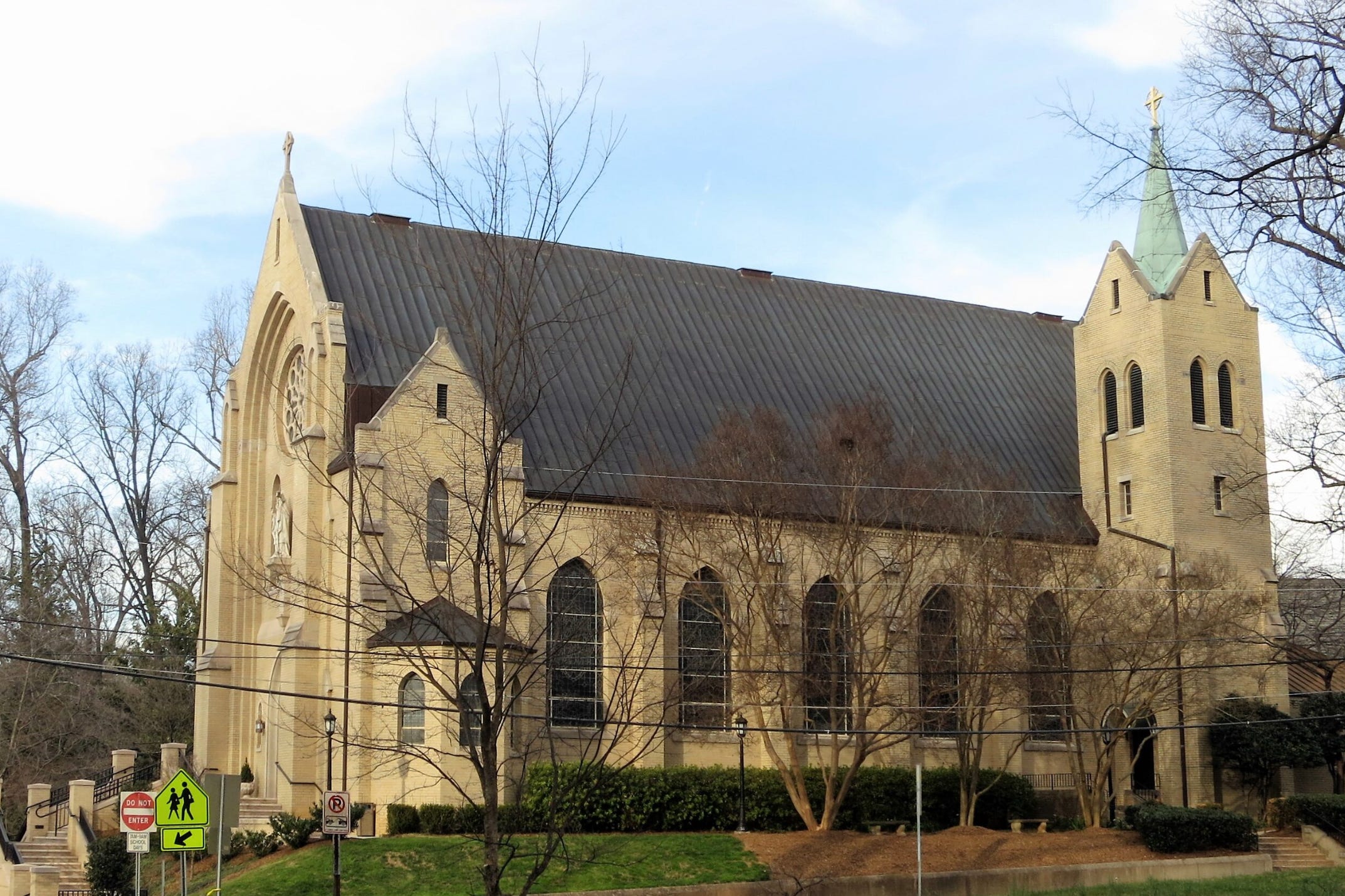
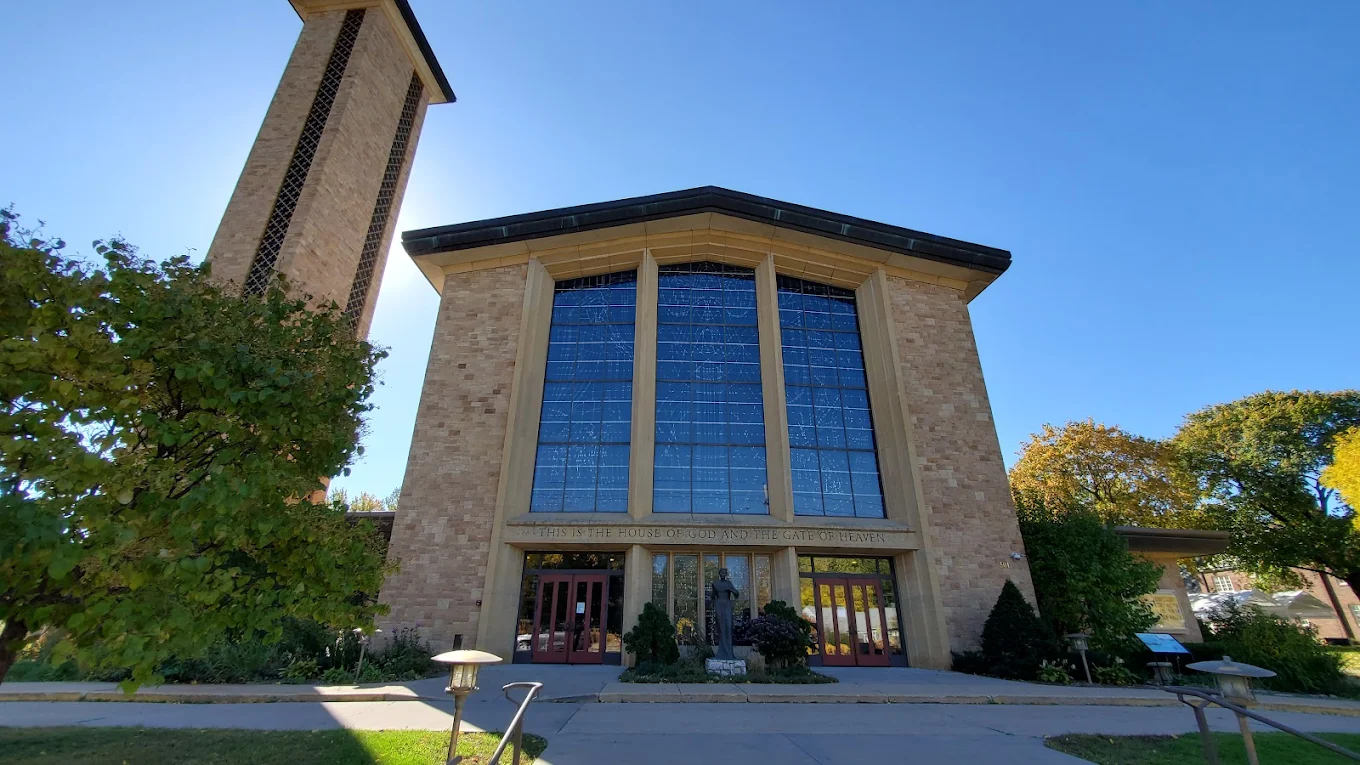
Annunciation Church in Minneapolis, where the shooting took place, will be the center of a federal investigation, as the FBI has said it will investigate the Aug. 27 shooting as an act of domestic terrorism and a hate crime.
But as the community moves forward, the Archdiocese of St. Paul and Minneapolis will eventually address the church at Annunciation Parish itself — and that will likely mean making use of a rite aimed to address the spiritual harm of Wednesday’s shooting, including the desecration of the church building.
So what does that actually entail? The Pillar explains.
—
In the wake of Minneapolis, politicians, cable newsreaders and professional commentators have engaged in immediate debate on issues including gun control, school safety, transgender mental health, and the efficacy of prayer.
In a column this week, Jeff Pojanowski took a step back from the take-making, and offered a person reflection on attending school Mass with his own family on the feast of St. Augustine, where he heard the reading proclaimed “Beloved, let us love one another, because love is of God.”
“What struck me is how much worse we can be than even Augustine’s wretchedness. His unhappiness was a restlessness stemming from misdirecting his heart’s love. Our public culture, or at least the way I perceive its effects on my heart, hardly even seems to rise to that level.
The anxiety of our age resembles less a frenetic, fruitless pursuit of temporary happiness than it does a dark dance of rage, vindication, isolation, and despair. And this shows whenever tragedy strikes.
If we focus only on the violent character of American culture or its broken moral anthropology, we miss something more foundational. We ignore that we are at risk of becoming people incapable of loving, even poorly.”
This is very, very much worth your time to read.
—
The Church is still unpacking the Francis pontificate, and it may take decades to see with full clarity its lasting effects on ecclesiastical life.
But one key piece of Francis’ legacy turns 10 years old this month and it has not been as broadly discussed: Mitis iudex dominus Iesus, a reform of the process for adjudicating marriage nullity petitions in ecclesiastical tribunals around the world.
In an analysis this week, JD unpacks the post Mitis decade, and assesses what was considered a seismic reform to tribunals at the time, and asks if the changes are working — and for who.
—
Police in Clintonville, Wis., arrested a priest of the Diocese of Madison on Sunday on charges of attempted child sexual abuse.
According to a statement from the police, Fr. Andrew Showers, 37, was arrested in the evening of Aug. 24 after officers “received information” that the priest had “made arrangements to travel to the City of Clintonville and meet with a 14-year-old female to engage in sexual activity.”
Fr. Showers was arrested on charges of child enticement, use of a computer to facilitate a child sexual offense, and attempted second degree sexual assault of a child.
Showers remains indefinitely suspended from ministry while the police investigation continues, and pending criminal charges.
However — as I considered in an analysis this week — regardless of the outcome of the criminal process, securing any kind of definitive canonical action against Fr. Showers could prove very difficult for the diocese.
In fact, whatever evidence emerges against Showers, the absence of an actual victim in this case presents a very real canonical conundrum.
You can read the whole analysis here.
—
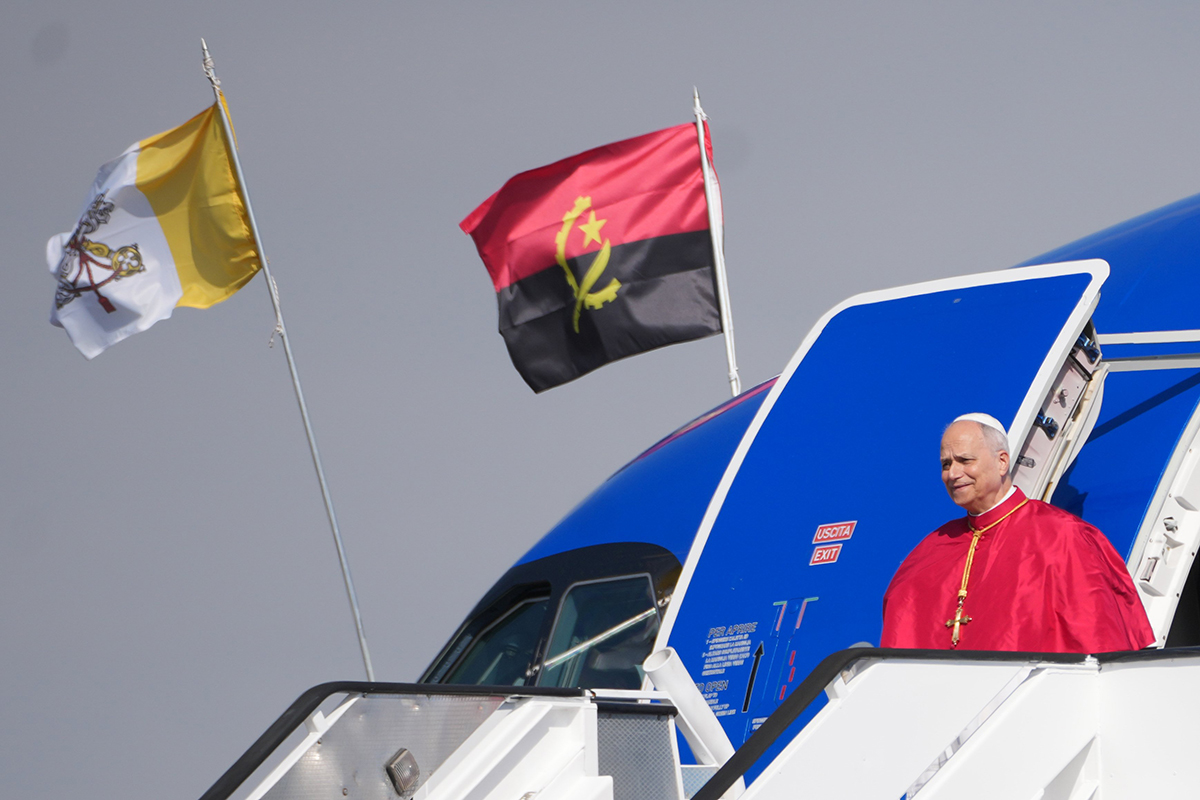
As Pope Leo returns to Rome for the end of summer, and as the working year begins in earnest next week, one of the key announcements expected will be the new pope’s first slate of international travel.
Some of the trips are near certainties — Leo seems sure to keep Francis’ plan to mark the 1,700th anniversary of the Council of Nicea in Turkey with the Patriarch of Constantinople. Others, like a stop in Lebanon, are the subject of confident local speculation. Other trips, though, remain very much at the level of theory and guesswork, for the moment.
In an analysis this week, I took a look at how papal travel plans could be used by Leo to dramatic diplomatic effect in place like Israel, Russia, Ukraine, and the United States — and how where Leo chooses to go and when could tell us a lot about what kind of pope he aims to be.
You can read the whole analysis here.

This newsletter is sponsored by Fr. Jay Buhman of the Diocese of Lincoln, who would like to share with Pillar readers the Masses and Tears devotion, created to encourage parents who are praying for their children to return to the practice of the Catholic Faith. The devotion is based on the life and prayer of St. Monica and is built around an image of her at prayer before the Lord. Learn more at massesandtears.org
Break the mould
A thought occurred to me as I was writing the analysis of the various possibilities for Pope Leo’s diplomatic schedule.
As I considered the eventuality of a papal visit to America, I got caught up a bit wondering how he could possibly walk the tightrope across the culture wars and partisan divide which runs through the middle of our country and, just as deeply, through our dioceses and our parishes.
I thought about how Pope Francis was relentlessly pelted with questions before the last presidential election, aimed at forcing him into some kind of endorsement for one or other candidate.
I wondered how an American pope could possibly hope to avoid being painted into a corner.
Surely, I thought, no matter how studiously Leo tried to present himself in speaking to the nation and the nation’s Catholics, there is simply no way he would be accepted as a neutral figure — the “best” he could hope for would be a grotesque fight to bend his words and claim him for either side.
Then something occurred to me.
There is something Leo can do that no other pope could.