





Bishops and Catholic politicians: old debate, new ending?
The US bishops are visibly divided over the issue of Catholic politicians and abortion.
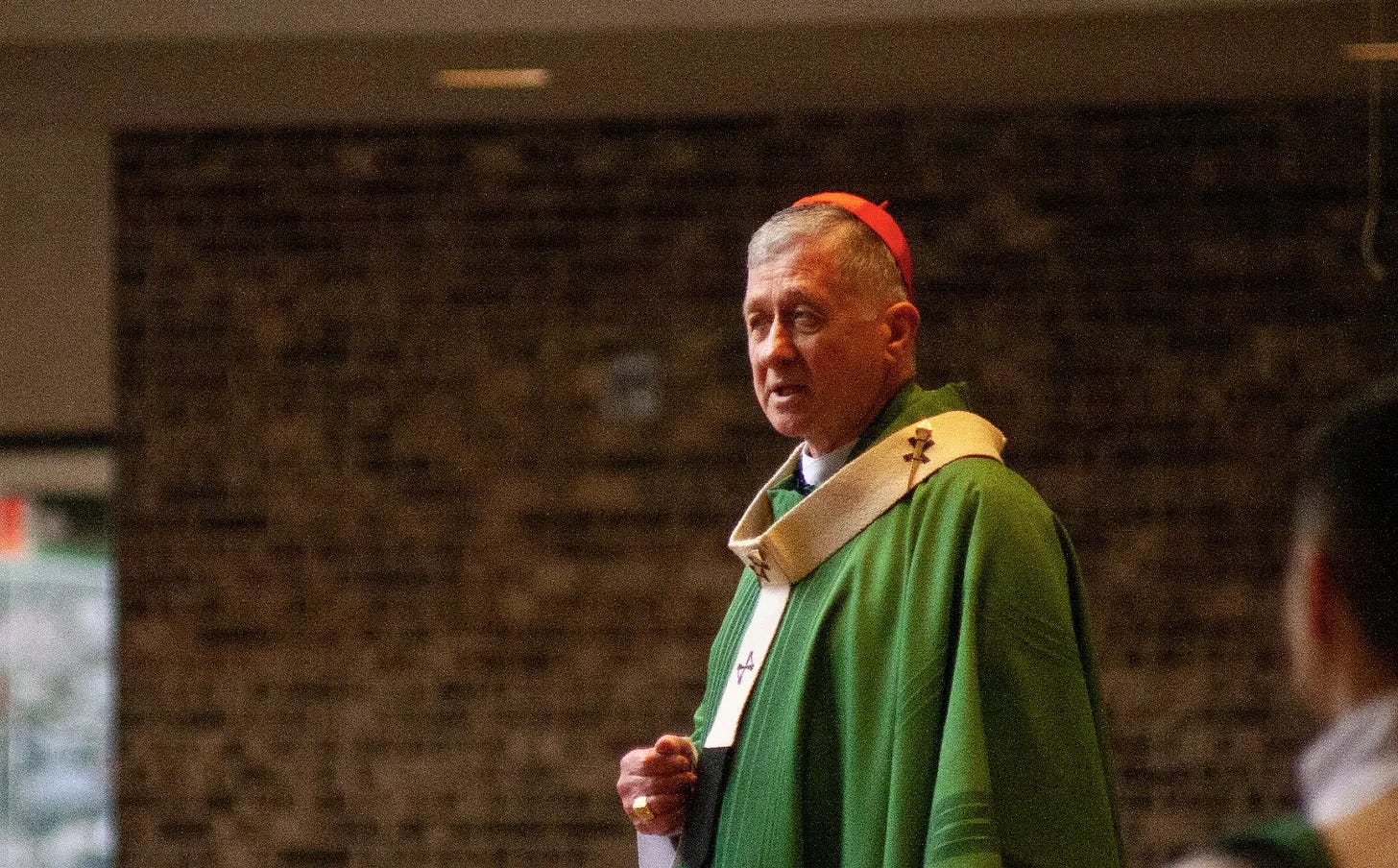
Cardinal Blase Cupich of Chicago, after breaking ranks and conference policy by offering a lifetime achievement award to Sen. Dick Durbin of Illinois last month, drew criticism from across the episcopal map, before the senator stepped back from the plans yesterday.
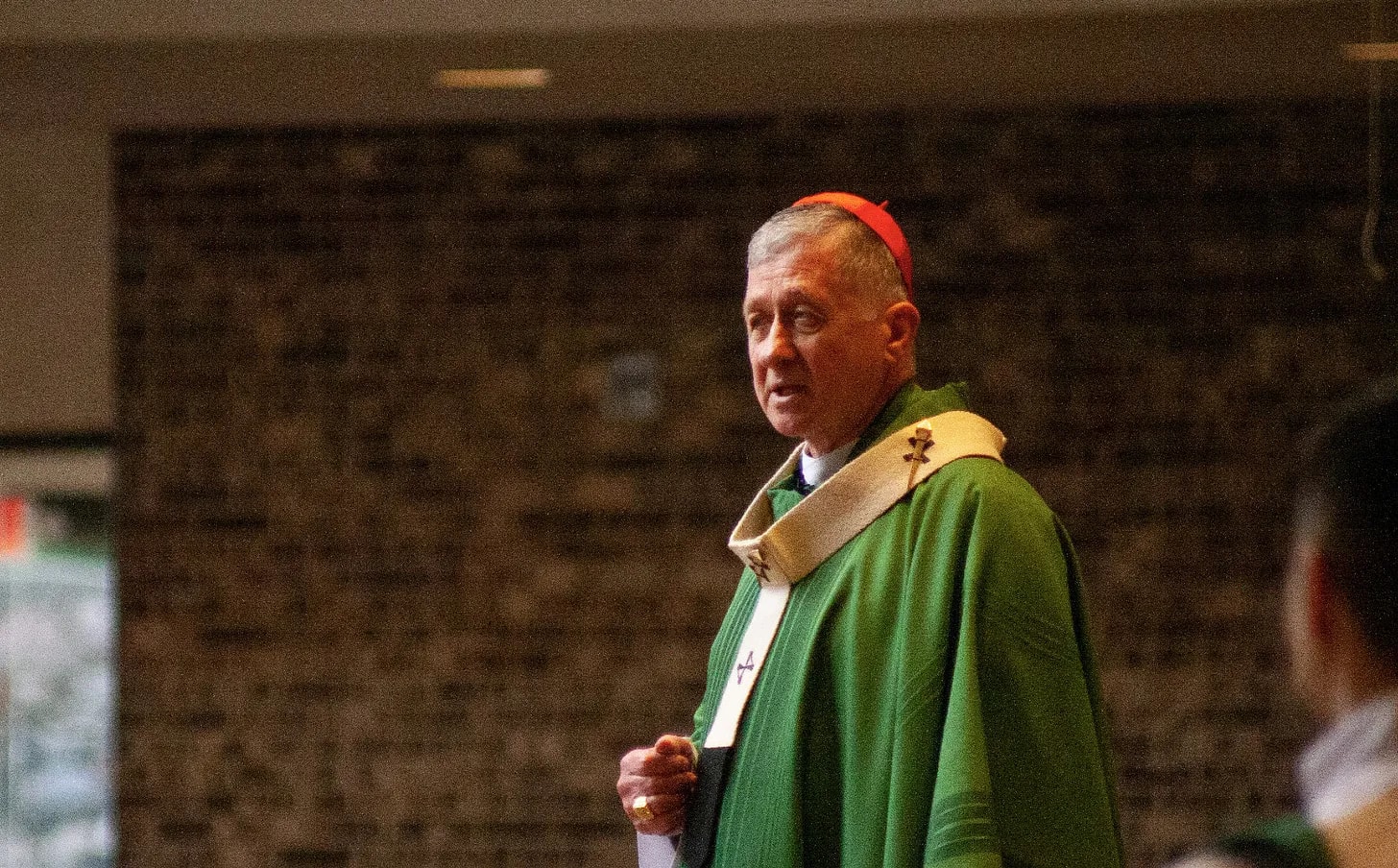
The cardinal then issued a lament about division both within civil society and the Church, and called for a round of synodal meetings. This was followed today by a previously scheduled reflection on polarization from the USCCB president, Archbishop Timothy Broglio, on the anniversary of Pope Francis’ document Frattelli Tutti.
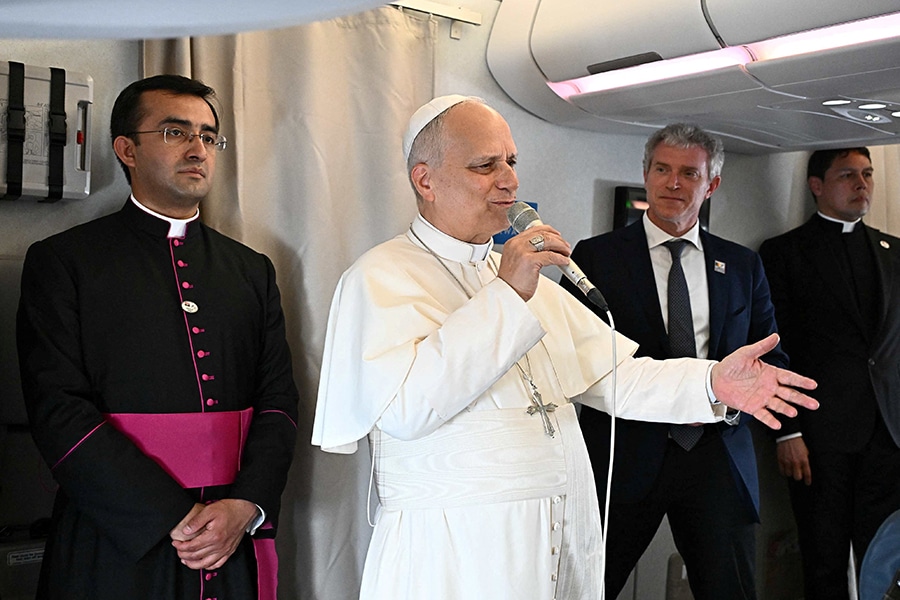
As all this was happening, the pope gave an off-the-cuff answer to a question about the situation, the subtext of which is now being fiercely litigated by Catholics online.
So far, the situation will strike many American Catholics as distinctly familiar — deja vu, even.
But, of course, the situation is different. Leo XIV is the pope now, not Francis. And while the pope prefaced his remarks on Tuesday by saying he wasn’t up to speed on all the details, the first American pope, a Chicagoan no less, cannot be expected to remain so for very long.
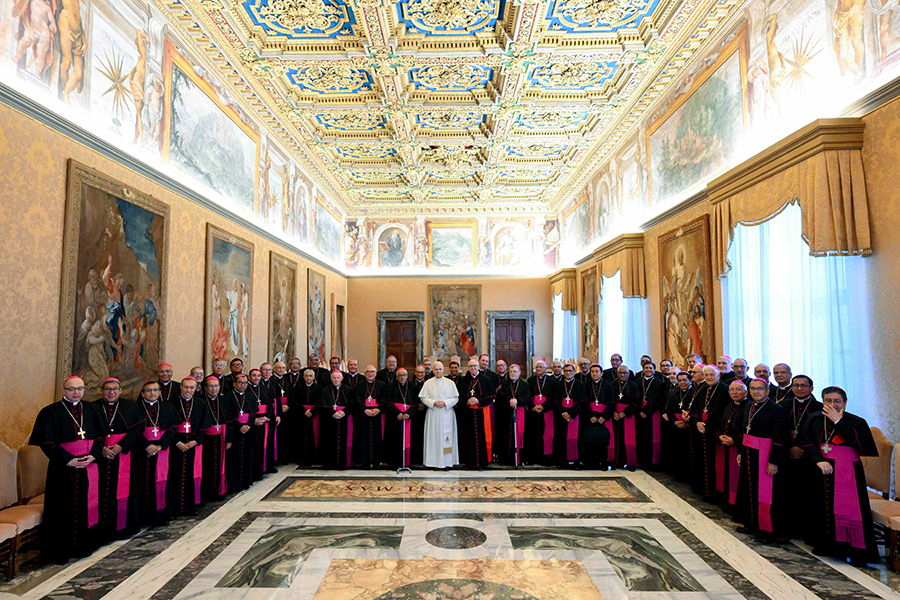
And, with the US bishops’ conference set to gather next month for their first business meeting since Leo’s election, what happens next seems sure to set the terms and tone of episcopal discourse for the foreseeable future.
—
Superficially, the fracas over the now-aborted award from the Chicago archdiocese for a committed “pro-choice” politician will have struck many Church watchers as a near-repeat over recent disputes among the bishops over figures like former-New York governor Andrew Cuomo, former president Joe Biden, and former House speaker Nancy Pelosi — even down to the question about the reception of Communion and who the responsible diocesan bishop is.
Similarly, the pope’s remarks — noting that “pro-life” is a designation defined by more than just opposition to abortion — have kicked off a familiar round of discussions about the preeminence of the killing of the unborn as a social issue versus the importance of neither dismissing nor minimizing other issues of fundamental human dignity, like the death penalty and the treatment of immigrant communities.
But looking past the familiar chords of the news cycle, several important things have changed since the election of Leo, though it is not yet clear what their lasting significance or eventual resolution will be.
The initial statement criticizing Cardinal Cupich’s decision to offer a lifetime achievement award to Durbin came from the senator’s home bishop in Springfield, Bishop Thomas Paprocki.
Given Durbin has been for years barred from the Eucharist there over his legislative record and public statements, and given Paprocki’s known disposition to speak his mind forthrightly, the bishop’s opening comments were, if not predictable, not especially surprising. But what followed was a marked departure from past similar cases.
For a start, unlike a pastoral assessment of an individual’s suitability to receive Communion, Cupich’s offer of an archdiocesan award to a famously pro-abortion politician appeared in obvious contravention of a clear conference policy on such matters.
Of course, USCCB policies aren’t law, and cannot bind bishops beyond their standing moral commitment to act in solidarity along agreed lines.
But Cupich’s decision to first announce the award for Durbin and then double-down on defending it as a form of “dialogue” appears to have triggered a much broader and deeper wave of criticism and resentment among his colleagues, prompting public statements from some unlikely conference members, alongside more habitual commenters.
Moreover, as The Pillar reported, scores of bishops called and wrote to the conference president privately, demanding some public reassertion of its policy — with a statement having been prepared, vetted through the apostolic nunciature, and ready for release at the time Durbin decided to decline the award.
In his own public statement announcing Durbin’s decision, Cupich made a heartfelt call for unity and for mutual respect and dialogue, while stressing that “it would be wrong to interpret the decisions regarding the [event and Durbin’s nomination as honoree] as a softening of our position on abortion.”
The cardinal’s call for recognizing political polarization within the Church, and his stated openness to real, respectful mutual dialogue could yet prove a significant starting point for real conversations.
Nevertheless, for many bishops, Cupich’s controversial move wasn’t having a different opinion about a sensitive subject, but appearing to flout a commonly agreed norm on how to engage that subject.
To some, at least, the cardinal appeared to be stress-testing the bishops’ willingness and ability to come together around their own policies.
Given Durbin’s decision to decline the award before the USCCB could speak on the matter, and given that Cupich has made no concessions to the unsuitability of the nomination in the first place, that issue remains, for some at least, unresolved.
—
Another key difference between the current controversy and previous iterations is, of course, the Leonine factor.
Under Pope Francis, figures like Cardinal Cupich — indeed Cupich especially — were comfortable asserting a kind of de facto role as chief papal interpreter, if not outright spokesman, on domestic American affairs.
This reality led sometimes to serious clashes between the conference leadership and the cardinal, but also to a general hesitancy among individuals to challenge soi dissant “Pope Francis bishops and cardinals” too directly or too publicly. That hesitancy appears to have dissipated.
And, less remarked upon than the breadth of criticism of Cupich over the Durbin controversy, but perhaps equally remarkable, was the lack of bishops coming to the cardinal’s defence as it unfolded.
There is as yet no clear “voice of Leo” among the U.S. bishops, and given the American pope may naturally find it easier to make his own mind known on domestic affairs, there may not be one. That in itself could seriously alter the dynamics among the conference.
What tone Leo chooses to strike, and encourage his American brothers to echo, remains to be seen — but the traditional papal greeting to open the conferences’ meeting next month will be closely scrutinized.
Between then and now, however, the significance of Leo’s comments on the Durbin debate will certainly be picked over and spun in opposite directions.
When questioned about the nomination of an archdiocesan award for the senator, the pope noted he wasn’t “terribly familiar with the particular case” but understood the “difficulty and the tensions” while saying the “overall work” a politician has done over decades should also be looked at.
The pope then pivoted to reiterating that “pro-life” is not merely an interchangeable term with “anti-abortion,” and that politicians who champion the death penalty or support the inhuman treatment of migrants are also not pro-life, even if they oppose abortion.
It’s not entirely clear if Leo was endorsing Cardinal Cupich’s rationale of awards-as-dialogue while noting the same difficulties and tensions arise with other politicians over other life issues, or if he was warning against such endorsements across the political aisle. Both possibilities have been argued already.
Others have expressed regret that Leo appeared to brush past the issue of abortion all together and immediately turn to issues like the death penalty and immigration, with a fringe few insisting this was tantamount to moral equivocation and proof of papal indifference.
Of course, for many — perhaps not least Leo himself — the pope’s unqualified horror at abortion might be taken as stipulated. But the reality is a new pope who kept a relatively low profile as a bishop and cardinal does not have a reservoir of past public statements with which listeners can contextualize his comments.
Pope Francis, for example, might have given the same answer as Leo to a similar question, but it would have been framed by his having repeatedly described abortion as murder, abortionists as contract killers, and the abortion agenda as Nazi-like eugenics.
Leo, as yet, has not set the rhetorical levels for how he thinks and speaks about many moral issues. Until he has, Catholics will impute his words with their own expectations and assumptions, and at least some with their prejudices, too.
What seems certain is that, as the US bishops continue to work through the fallout of the Durbin debate, Leo will soon become “terribly familiar with the particular case” even if he might wish he didn’t have to. What is not certain is whom he listens to on the particulars.
It might yet prove to be Cardinal Cupich, of course, or a different one of the American cardinals, none of whom publicly came to Cupich’s side during the debate. The pope might also choose to take the temperature of the conference leadership directly, which would be a marked change from the Francis era.
Leo seems sure, though, to hear from his soon-to-be outgoing nuncio in Washington, Cardinal Christophe Pierre, who turns 80 years old in January. Pierre enjoys the distinction of having had a strained and sometimes fractious relationship with both the USCCB and with Cardinal Cupich over the years of his tenure, and he is perhaps uniquely placed to offer the pope a balanced assessment of the current situation.
Where Leo eventually lands, and how active a voice he wants to have in American ecclesiastical affairs remains to be seen. But what seems certain is that however familiar the current situation might feel, things are not the same as they were for anyone involved.