















Defending the Gospels’ Human Authors


How many of us have heard a priest or professor claim that the four Gospels of Matthew, Mark, Luke, and John were probably not written by those men but were merely products of the early Christian community? Those promoting this view are often well intentioned, but given an environment of post-Enlightenment suspicion, it can be easy for doubts to be sown about the Faith.
Questions naturally arise given the framework of skepticism we have all been taught by the wider world: “How can we know that the things recorded in the Gospels are true? If they were not written by those named, has the Church been duped?”
These claims should not shake our faith.
First, we should recognize that the Church has no official teaching on the precise human manner by which the Biblical books were composed, which gives Catholics a wide freedom in this matter. Along with the texts being Divinely inspired, we must hold that the content of the Gospels originates with the apostles, but the writing and composition need not be direct. Indeed, one notices in Church documents like 1964’s Instruction on the Historical Truth of the Gospels or Vatican II’s Dei Verbum that they are worded carefully to leave direct authorship an open question, neither affirming nor denying it.
As such, one is free to hold a range of views, from the Gospel texts being directly written and edited by the hand of those named, to being a more or less collaborative project which represent a “school” of apostolic associates. Indeed, literary convention differed from our own day, and it was not unheard of in the ancient world for the followers of a teacher to publish under that teacher’s name. This was generally acceptable so long as the writers accurately conveyed the substance of the teacher’s thought. It was not considered plagiarism. While people certainly wrote under their own name, the name sometimes denoted the origin of the ideas rather than indicating the person who put pen to parchment.
However, it should be said that arguments over authorship are speculative, often resting on a tower of philosophical and literary assumptions, and hypotheses built on them, and so highly disputed. Arguments against traditional authorship are often far weaker than the usual matter-of-fact expression these theories indicate. Every argument which attacks the traditional authorship of a book of Scripture has serious scholars familiar with the data who vehemently disagree—and not all of them believers, it should be said.
Now, I happen to hold to a traditional, direct authorship of the Gospels. I believe that there are strong reasons to hold to direct authorship by those named, such as those given in the introductions of The Ignatius Catholic Study Bible. Still, let us assume that the collaborative community transmission idea is true for the sake of argument, in order to show that it is not necessarily a threat to the Catholic Faith.
First, we need to rid ourselves of the almost unconscious idea that the Christian religion arose from the written Gospels. Rather, it arose from the words and deeds of Christ extended via the preaching and sacramental ministry of the apostles. Catholicism existed for decades prior to a single book of the New Testament being written. St. Paul’s letters were the earliest New Testament documents, and he is writing to Churches which already exist.
Now, the apostles were the authoritative teachers and guardians of Christ’s life and teaching. We see this role in St. Paul’s Letter to the Romans, dated around 57 AD, which has wide agreement among skeptics and believers alike as coming directly from him. His view of Christ is the same as the later Gospel texts, and in the opening of this Epistle, verses 1-4, he quotes (and so approves) a formulation of Christ’s resurrection which is earlier than the letter itself. Paul repeatedly tells us in his letters that he is merely handing on what he has been told by the other apostles, as in 1 Corinthians 15:11.
We also have a non-Christian witness to the authoritative leadership of the apostles. The ancient Jewish historian Josephus, in his Antiquities of the Jews, recounts the martyrdom of the apostle James in Jerusalem. This serves as an external, likely hostile witness to the role of the apostles in the early Church and the danger they faced in proclaiming their message. The fact that the letters of the apostles are the first written documents of Christianity should serve as a brake on anxieties about the Gospels being the product of free-floating, unverified stories, legends, and rumors which circulated and were embellished for decades in oral tradition within the early Christian community before being stitched together.
Given the evidence, we can say that the Gospels are written and received in a controlled environment under the guidance of apostles who are eyewitnesses, their successors, or close collaborators with direct eyewitnesses like Paul. Indeed, the Gospels were written within living memory of those who knew Jesus, with internal textual evidence showing signs of being written by locals familiar with the customs and geography of ancient Palestine. They were at the very least the product of near eyewitnesses in Christian circles, making claims that could be challenged and disputed.
Mark and Luke, for instance, were not apostles but “apostolic men.” According to Papias, a very early Christian who learned Christianity from the Apostle John or one of his closest collaborators, Mark was a secretary of St. Peter, and his Gospel was based on Peter’s preaching, which explains the frequent focus on Peter in Mark’s Gospel. Luke was a companion of St. Paul, and he himself tells us that he drew from a variety of sources, opening his Gospel in the style of Ancient Greek historians like Herodotus and Thucydides.
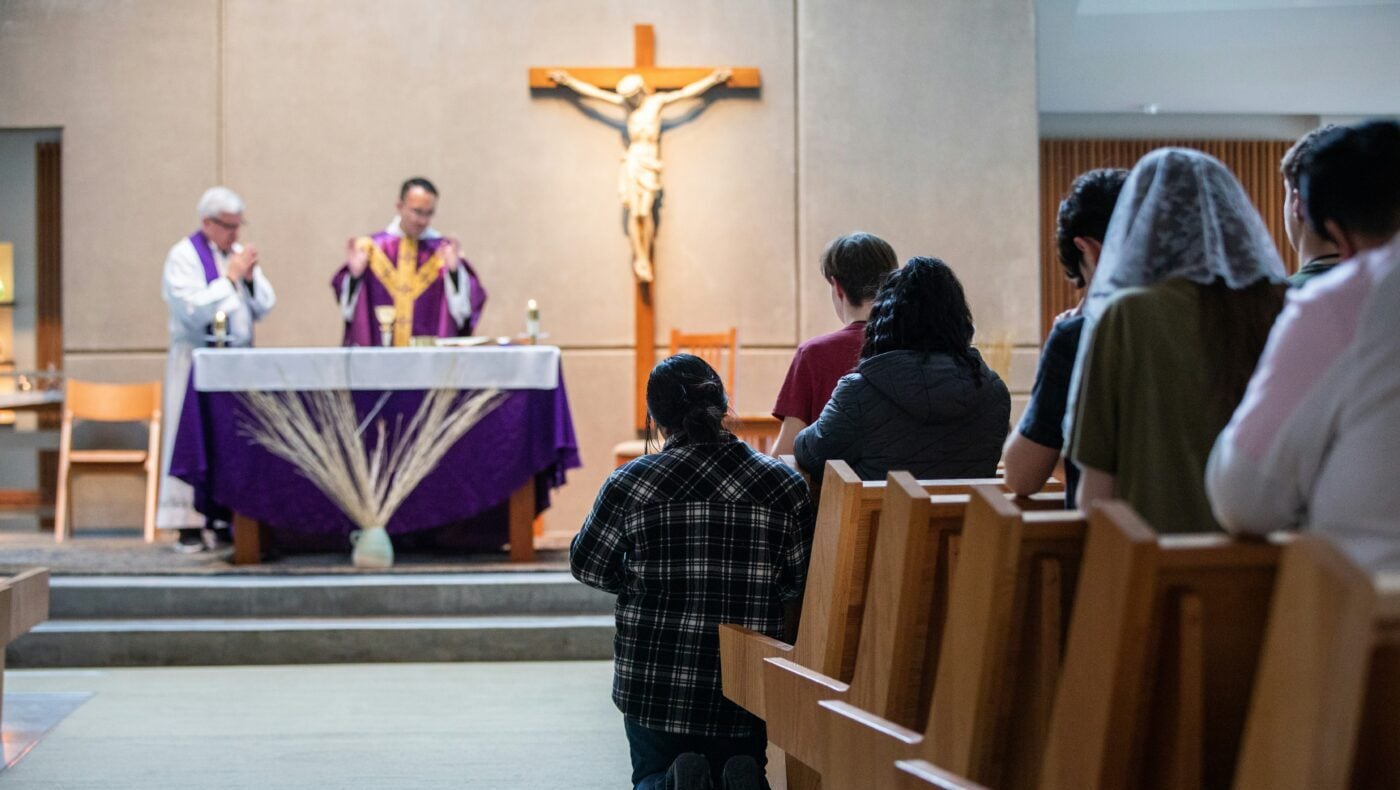
Finally, we can trust the oral traditions that were crystallized in the inspired Gospel texts because, as biblical scholar Denis Farkasfalvy argues, the Gospels show signs of being based on oral traditions which were expressed publicly and repeatedly in the sacred context of the Eucharistic Liturgy, what we call in the Roman Rite, “the Mass.” One can imagine the apostles preaching about Christ in front of a congregation after a reading of the Old Testament, polishing their accounts over time into the familiar Gospels and emphasizing those words and deeds of the Son of God especially germane to their locales, as living witnesses and subjects of these events were likely in attendance in those early days.
Ultimately, the Gospels, like all the inspired New Testament books, were delivered to the Church by God primarily to be read during the Eucharistic Liturgy. Therefore, even as collaborative efforts by congregants of local Churches founded by them, the Gospels reflect the preaching and guardianship of apostles within the universal Church founded by Christ and were received by them and their immediate successors as authentic witnesses to the apostolic preaching of the historical Christ.
So let us have confidence in the historical reliability of the Gospels. These are not merely nice stories that we read in our Bible or hear proclaimed at Mass. They are historical truths which have a claim on our lives, and of which we are heirs. As Henri de Lubac wrote in his Catholicism:
God acts in history and reveals himself through history. Or rather, God inserts himself in history and so bestows on it a “religious consecration” which compels us to treat it with due respect […] [f]or there is no authentic spiritual life which does not depend on the historic fact of Christ and the Church’s collective life.
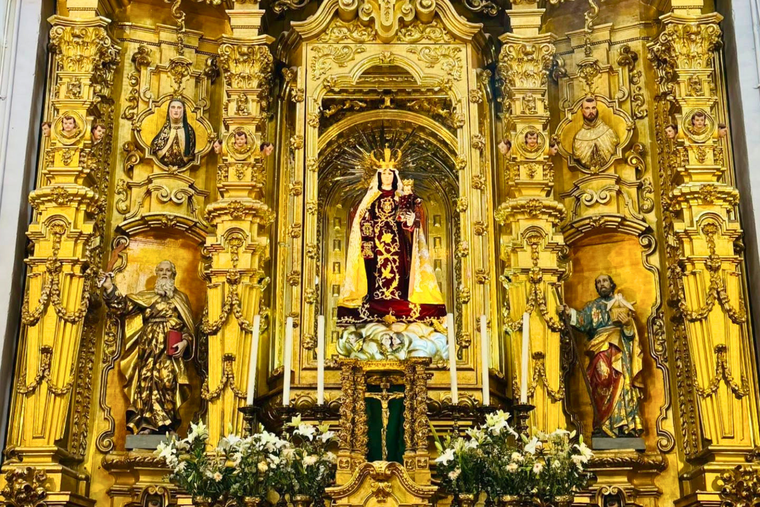
Image from Wikimedia Commons