











Defense of Mary: A Sacred Fugue


Imagine listening to a Bach fugue in which one of the opening voices introduces the theme but never returns. The subject is stated, the music unfolds, the harmony advances—yet a register of the composition seems strangely incomplete. The structure of a fugue depends on voices entering and reentering, echoing and developing the original motif until the full harmony of the piece becomes clear.
For much of my spiritual life, Mary occupied precisely that absent register.
Raised in an Italian Catholic world where la Madonna quietly inhabited the rhythm of family and church life, I later moved through Protestant and evangelical traditions where Mary remained in the biblical text but largely disappeared from theological reflection. Only gradually did I realize that the Gospel narrative itself contains a Marian line woven into the Incarnation story.
She appears first in the infancy narrative—an opening voice that introduces the mystery of God entering human history—and then reappears at decisive moments: the Nativity, Cana, Calvary, and the prayer of the early Church. Each entry deepens the harmony of the Incarnation. Christ remains the central subject of the symphony, but Mary’s presence forms one of the human voices through which the theme first enters the world (see Caryll Houselander, The Reed of God, Ave Maria Press, 2020).
Mary in Sacred Scripture
The primary motif of this sacred fugue is Scripture.
Luke’s Gospel begins the Marian voice with the angel’s greeting: chaire, kecharitōmenē—“Rejoice, one who has been filled with grace” (Lk. 1:28, NRSV-CE). The Greek participle kecharitōmenē suggests not a momentary favor but a completed and abiding state of grace. Elizabeth then recognizes Mary’s role with the words mētēr tou Kyriou mou—“the mother of my Lord” (Lk. 1:43). Mary herself responds with the Magnificat, announcing that “all generations will call me blessed” (Lk. 1:48).
The Evangelists return to her repeatedly. She treasures the mysteries of Christ’s life in her heart (Lk. 2:19). She stands at Cana where her quiet instruction—“Do whatever he tells you”—precedes Jesus’ first sign (Jn. 2:5). She remains faithful beneath the Cross when most disciples scatter (Jn. 19:25–27). And she is present in prayer among the first believers awaiting the Holy Spirit (Acts 1:14).
The Gospel narrative does not elevate Mary above Christ, but it repeatedly situates her in the closest proximity to the decisive moments of His mission. In the structure of the fugue, her voice enters whenever the Incarnation theme is most clearly heard.
Protestant readers often point to passages that appear to diminish Mary’s significance. When told that His mother and brothers are looking for Him, Jesus asks, “Who is my mother, and who are my brothers?” before declaring that those who do the will of God are His true family (Mt. 12:48–50; Mk. 3:31–35).
Yet the wording clarifies the point: “Whoever does the will of my Father” (Mt. 12:50). Far from excluding Mary, this description perfectly captures her role in the Annunciation. She is the first person in the Gospel narrative to accept the divine will with complete trust: “Behold the servant of the Lord; let it be done to me according to your word” (Lk. 1:38).
The Church therefore reads this passage not as a dismissal of Mary but as the universalization of the obedience she already embodies. She becomes the model disciple—the one who hears the Word and receives it fully (Lk. 11:27–28).
A fair discussion must also acknowledge the questions Protestants raise regarding certain Marian doctrines. Matthew records that Joseph “knew her not until she had borne a son” (Mt. 1:25). Many Protestant interpreters read the phrase as implying that Mary and Joseph later lived a normal married life.
Catholic theology interprets the passage differently, noting that the Greek word heōs (“until”) often describes what happens up to a point without implying a change afterward. As biblical scholar Brant J. Pitre explains in Jesus and The Jewish Roots of Mary (Image Books, 2018), the expression functions similarly elsewhere in Scripture and does not necessarily indicate a later reversal. Early Christian writers overwhelmingly affirmed Mary’s perpetual virginity, yet the biblical text itself leaves room for interpretive discussion. Recognizing that tension allows a more balanced conversation between traditions.
The Catholic claim is not that every Marian doctrine is explicitly spelled out in Scripture, but that these teachings grow organically from the biblical witness when read within the living tradition of the Church.
Mary in Sacred Tradition
This leads to the secondary motif of the fugue: tradition.
From the earliest centuries, Christians recognized that Mary’s identity was inseparable from Christology. When the Council of Ephesus affirmed the title Theotokos—“God-bearer”—in 431, the intention was not to elevate Mary independently but to protect the truth that the child she bore is fully divine (see John McGuckin, Saint Cyril of Alexandria and the Christological Controversy, St. Vladimir’s Seminary Press, 2004).
As theological reflection deepened, Marian doctrine developed around this central mystery. The Catechism of the Catholic Church explains: “The Virgin Mary’s role in the Church is inseparable from her union with Christ and flows directly from it” (964). It also describes her as the Church’s “preeminent and wholly unique member” (967).
In other words, Marian doctrine does not compete with Christ’s role. It reflects on the human context through which the Incarnation entered history.
In a fugue, the beauty of the music appears when the voices converge—subject and counterpoint woven together into a final harmony. Scripture and tradition function in precisely this way within Christianity. The New Testament itself urges believers to “stand firm and hold to the traditions” handed down by the apostles (2 Thes. 2:15).
The real question is not whether Christians interpret Scripture through tradition, but which tradition best preserves the fullness of the Gospel narrative.
From my own vantage point—after revisiting the question through Protestant theology, biblical scholarship, and Catholic reflection—Mary’s voice continued to return like the subject of a fugue. Each reappearance revealed how inseparable she is from the story of Christ: present at His birth, attentive at the beginning of His ministry, steadfast at the Cross, and prayerful at the birth of the Church (see Joseph Ratzinger and Hans Urs von Balthasar, Mary: The Church at the Source, Ignatius Press, 2005).
The symphony of salvation history does not revolve around Mary. Yet without her, the harmony is incomplete. The Gospel’s music resolves most clearly when every voice—including hers—enters the composition.
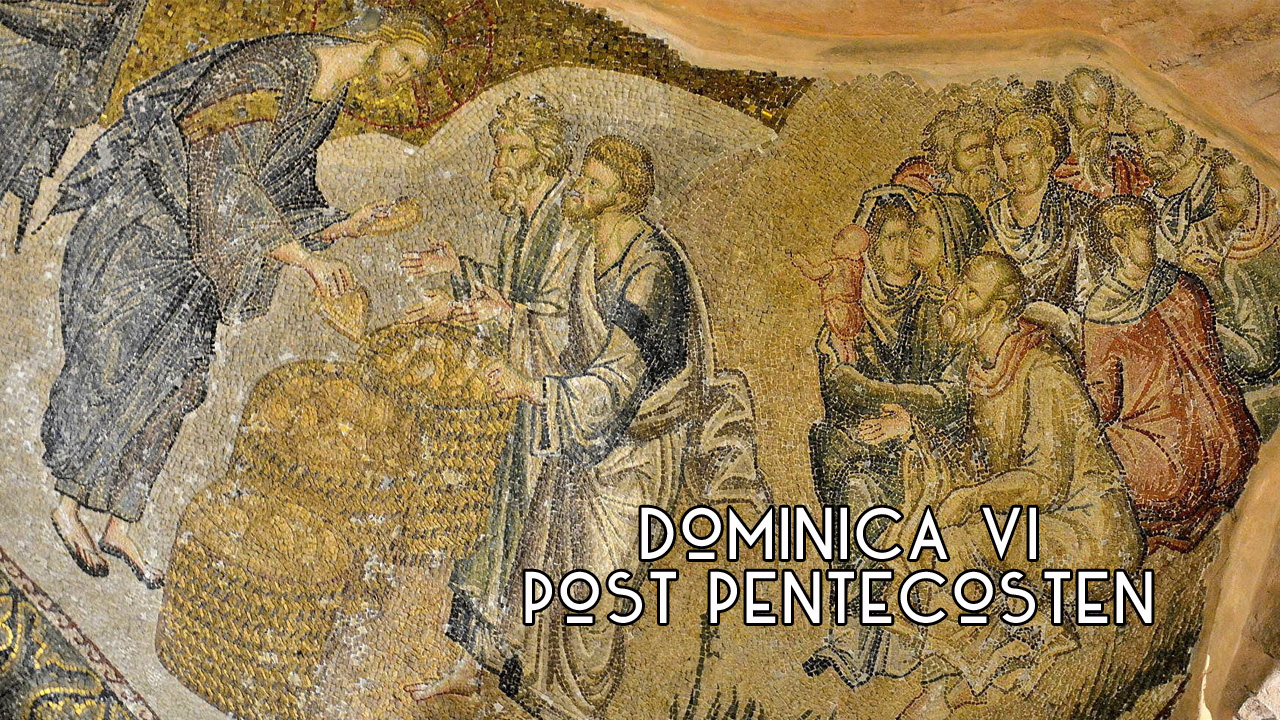
Image from Wikimedia Commons