









The Resurrection Is Not Myth


Something strange is happening, there is a great stillness on earth today, a great silence and stillness.
So states an ancient sermon regarding Christ’s descent into the netherworld.
The earth trembled and is now still because God has fallen asleep in the flesh and he has raised up all who have slept since the world began. God has died in the flesh and hell trembles with fear.
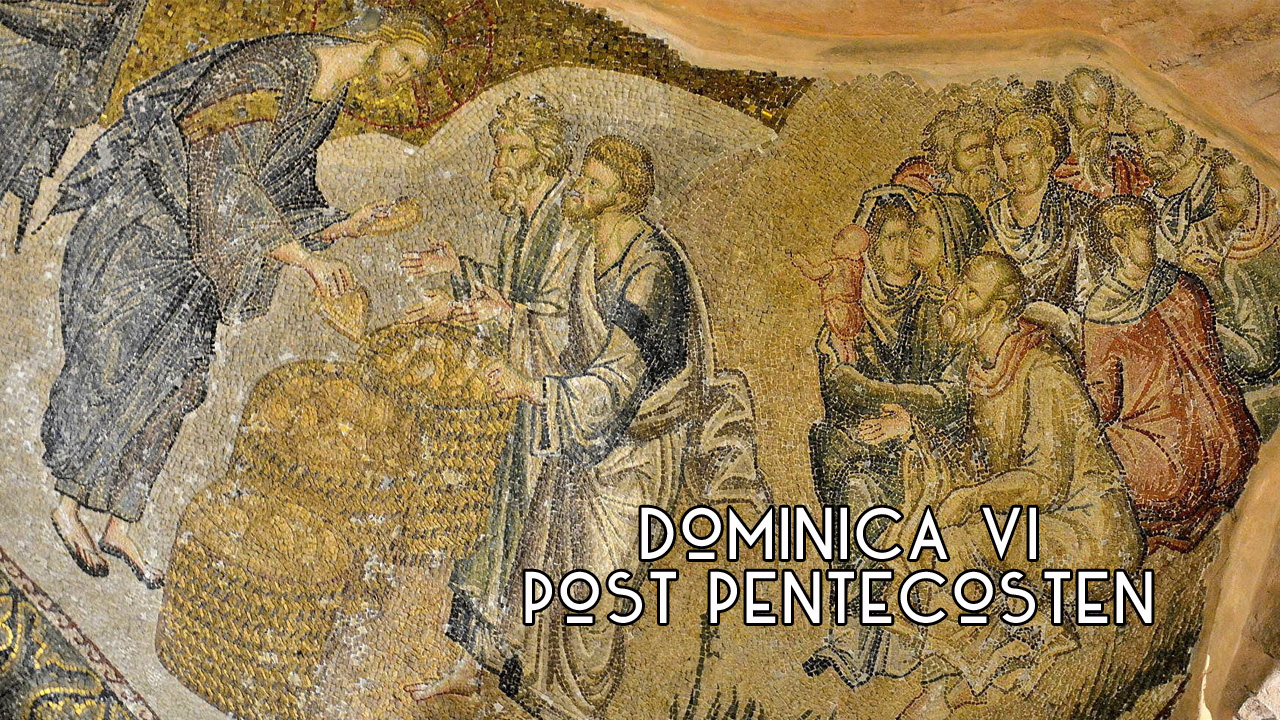
The sermon tells us that Christ has gone to look for our first parents and for those who live in the shadow of darkness and death:
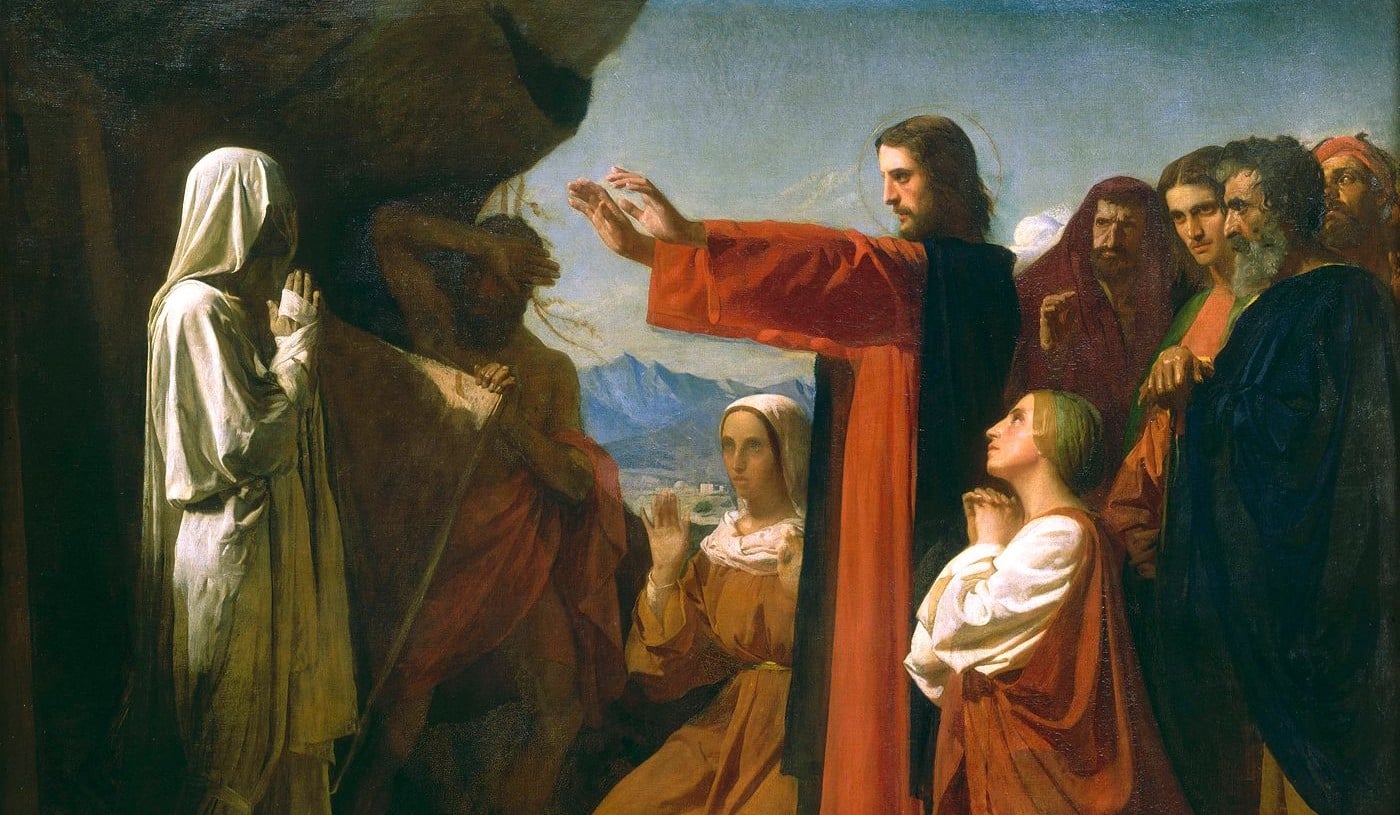
He has gone to free the captives Adam and Eve, he who is both God and the son of Eve. The Lord approached them bearing the cross, the weapon that had won him the victory. At the sight of him Adam, the first man he had created, struck his breast with terror and cried out to everyone: “My Lord be with you all.” Christ answered him: “And with your spirit.”
Christ commands all those held in bondage to come forth from the darkness:
I did not create you to be held a prisoner in hell. Rise from the dead, for I am the life of the dead… For your sake I took the form of a slave. I endured scourging to remove the burden of sin that weighs upon your back. See my hands, nailed firmly to a tree, for you who once wickedly stretched out your hand to a tree… Rise, let us leave this place. The enemy led you out of the earthly paradise. I won’t lead you back to that one; I’ll enthrone you in heaven.
That is a very neat story, but is it true? The late Pope Benedict XVI wrote that the Christian Faith stands or falls on the truth of the testimony that Jesus Christ rose from the dead. As St. Paul put it: “If Christ has not been raised then our preaching to you is in vain.”
Benedict wrote that, without the resurrection, we could still piece together some nice ideas about Christianity—a kind of religious worldview—but what would we be left with? Just a failed religious leader. Jesus would still be a great man, but that is all He would be.
And if that were the case, Christ’s authority would extend only as far as we would be interested. Christ would no longer be the criterion. That means we would become the criterion. We and our own judgments. We would pick and choose what strike us as useful from Christ’s teachings.
There of course is nothing new in this. At the beginning of the Bible, Adam and Eve chose to become the criterion. In doing so, they thought they could “be like God.”
So there is nothing new in people thinking that in sinning they can be like God. The only new thing that came into our world is Christ and His resurrection. Benedict wrote: “Only if Jesus is risen has anything really new occurred that changes the world and the situation of mankind.”
In my first year in theology school, a Dominican religious sister taught the Pentateuch, the first five books of the Bible. The consensus soon arose in the class that she really did not believe Christ was God. She continually cited a man named Rudolf Bultmann, a Lutheran scripture scholar from Germany who was one of the early 20th century’s major forces in biblical studies. One of his famous quotes is this:
It is impossible to use electrical light and the wireless and to avail ourselves of modern medical and surgical discoveries, and at the same time to believe in the New Testament world of spirits and miracles.
So, because Edison invented the light bulb, and we found a vaccine for measles, it became foolish to believe in the supernatural events connected to Christ?
This heretical thought process was featured in seminaries for a good portion of the 20th century. In a later work by Pope Benedict, he cited Bultmann’s book New Testament and Mythology. Bultmann argued that the “natural event of the resuscitation of a dead man doesn’t really help us in our faith.” This famous and influential scholar then appeared to argue Christ was not resurrected, but merely resuscitated.
Pope Benedict answered that the coming back to life of a clinically dead person wouldn’t have changed anything. Something like that would not have transformed our human existence. Did Christ appear to His Apostles beaten, bloodied, and bruised and tell them, “Somehow I pulled out of it”? Would that have inspired them to go to their bloody deaths proclaiming that Christ was God? Of course not.
We then have to use our reason and intellect to help us get to the truth. The late Pope Benedict, one of the Church’s great theologians and Scripture scholars, bottom lined it by stating this: “I trust the Gospels.”
Pope Benedict wrote that the Apostles were so overwhelmed by the reality of seeing Christ alive that, after initial astonishment and hesitation, they could no longer ignore the reality: “He’s alive. He’s spoken to us; he’s allowed us to touch him, even if he no longer belongs to the realm of the tangible in the normal way.” Christ was different, but He was no mere resuscitated corpse, nor was He an hallucination. He no longer belonged to the world, but yet He was there present to it. Pope Benedict wrote it was an utterly unique experience for the Apostles, something that surpasses all experience, yet it was utterly real and present.
But is it true? Our modern, enlightened world that “trusts the science” says it is a myth. Yet Pope Benedict argued that the resurrection does not contradict scientific data. The resurrection accounts certainly speak of something new, unprecedented, a new dimension of reality. It shows us there is a further dimension, beyond what was previously known.
Does that contradict science?
Can there really only ever be what there has always been? Can there not be something unexpected, unimaginable, something new?
If there really is a God, is he not able to create a new dimension of human existence, a new dimension of reality altogether? Is not creation waiting for this last and highest evolutionary leap, for the union of the finite with the infinite, for the union of man and God, for the conquest of death?
My friends: Something strange is happening; something strange and new, but real nonetheless. God has died in the flesh, but He is risen—and hell trembles with fear.
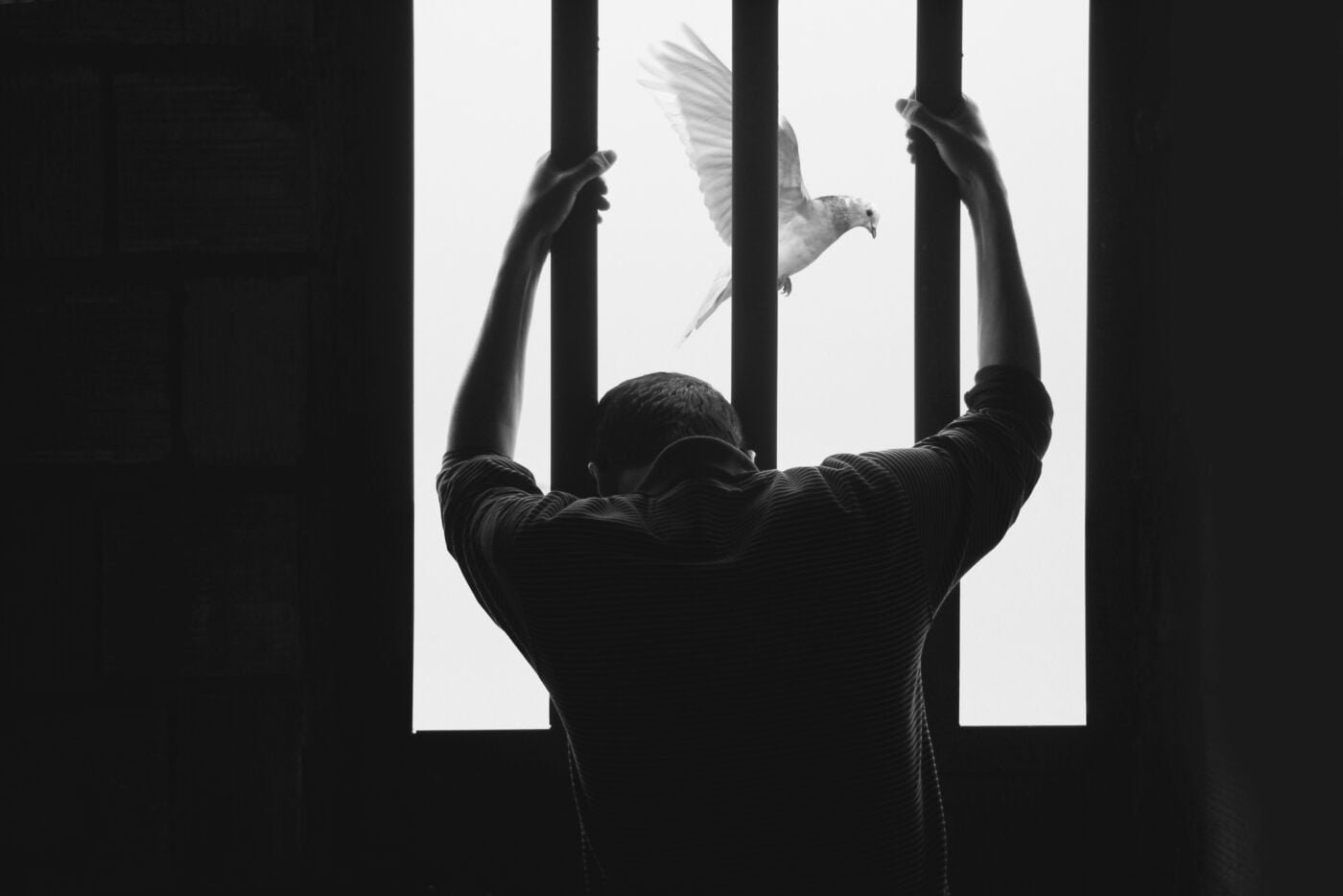
Photo by Jonny Gios on Unsplash