







Welcoming Our Brothers and Sisters with Disabilities into Church


“There are among us so many who are poor and elderly, in need of our understanding, respect, love and compassion, especially if they are sick, handicapped, helpless or alone.” – Mother Teresa
As I sat down to write this article, I had an interesting realization. In my 40+ years as a Catholic, I had never seen a single person in my parish with a disability. No parishioners with Down syndrome. None with cerebral palsy. I’d never even seen a child in a wheelchair in Mass. Although my home parish is in a very small, rural community, I realized the same held true for the large city parishes I attended while in college. Even as an adult, it is still very rare for me, personally, to encounter someone with a disability at Mass.
I found myself wondering, why isn’t my church home to more of our brothers and sisters living with disabilities? After all, the Gospel teaches inclusion, love, and acceptance. Even the saints had disabilities—namely, St. Margaret of Castello (dwarfism), Blessed Hermann of Reichenau (cerebral palsy), and St. Joseph of Cupertino (learning disabilities).
With a wide range of diagnoses affecting American children, including ADHD, autism, and mental illness, “challenges” is an understatement when it comes to what families face when seeking support. Furthermore, with one-fifth of Americans reportedly living with some type of disability, it is evident that the Church has a difficult task at hand to nurture this growing population.
Perhaps you’ve watched your child or loved one with a disability go through a negative experience at church. Maybe you felt devastated when they were denied communion based on a misunderstanding. Or maybe you found church downright stressful rather than peaceful and fulfilling, all because of a disability. What should be an abundance of grace, love, and understanding is sometimes a source of unnecessary heartbreak and additional weight to carry.
So how do we counter these negative experiences?
Charleen Katra, Executive Director of the National Catholic Partnership on Disability (NCPD), has nearly 3 decades of experience supporting dioceses and parishes in ministering Catholics who have disabilities. Although the organization has been around since 1982, and awareness is increasing, there is still a lot of work to be done with changing perceptions. And in some ways, she says, it comes down to looking inwardly.
“Those who can’t see past a disability—who really has the disability?” says Charleen. “The one who is pure love, pure joy? Who couldn’t do harm if they wanted? These are the gifts that someone with a disability has. I see them as gifts. They have a closer connection with Christ. Blessed, broken, and given.”
The NCPD is focused on helping “parishes see barriers that may be invisible—even attitudinal—and removing them,” says Charleen. It’s about helping Catholics understand how to better respond and include our fellow parishioners who might walk, talk, or act differently than us.
“How you perceive someone changes how you receive someone,” Charleen says. It’s about seeing Christ in everyone, regardless of diagnoses.
In addition, she advocates for parishes to have “creative outreach” through collaboration with secular organizations. Churches might be surprised to find Catholics with disabilities who are in need of support when they partner with non-Catholic groups. Especially because millions of Americans live with “invisible” disabilities, such as mental and neurological disorders, that aren’t visibly obvious to others.
Something as simple as assistive listening devices can support parishioners who are hearing impaired. Charleen tells the story of attending Mass with her father, a devout Catholic and father of seven, who, with the help of an assistive listening device, was able to hear the homily for the first time in years.
Charleen and the staff of NCPD work diligently to ensure that support and resources are available nationwide in the Church for persons living with a wide range of disabilities or diagnoses. From a free course on Responding to Suicide to Faith Formation Strategies for Learners with Disabilities, NCPD offers a growing library of online courses and numerous other resources to help parishes and schools support the disability community.
“Families can get very discouraged in the Catholic Church,” says Charleen. “But I wish they could see the other side of the coin, sometimes. There are so many people who are working so hard to advance this ministry of belonging.”
With accessibility and awareness growing, even Masses are evolving to be more inclusive.
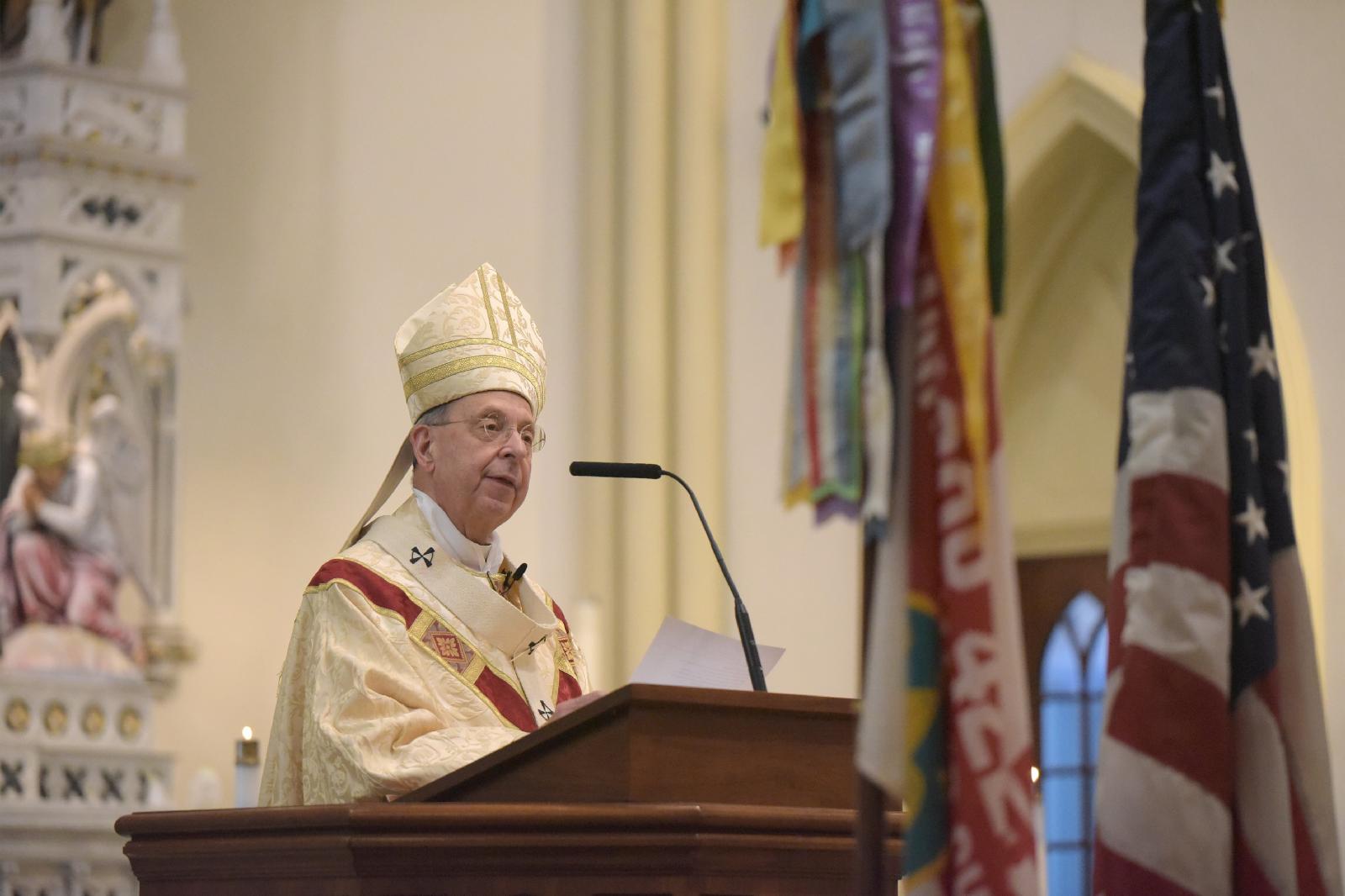
Fr. Sam Citero, O. Carm., is a priest at St. Thérèse of Lisieux parish in Cresskill, New Jersey. He’s been at St. Thérèse’s for 20 of his 41 years as a Carmelite priest. Fr. Citero is passionate about making Mass more accessible and welcoming for people with disabilities. His parish hosts a special Mass once a month.
Fr. Citero says that persons with special needs are not a burden, but a gift to the Church. “The gift that I’ve received is I’ve gotten to know some of these folks,” says Fr. Sam. “And it’s amazing how deeply spiritual and holy they are; even if they are nonverbal, they emanate something special.”
Every year since 2014, Fr. Sam and a group from the American Special Children’s Pilgrimage Group have been traveling to Lourdes during Easter week. The event includes a Trust Mass at the end of the week where attendees wear some type of representation of their country.
“All different nations come together dressed in their colors,” says Fr. Sam. “Kids paint their faces with flags.”
Uncle Sam and the Statue of Liberty are just a couple examples of the attire worn during the Trust Mass.
In an effort to bring the spirit of this pilgrimage back to Newark, Fr. Sam started the monthly Mass where everything from altar servers to lectors is done by parishioners with disabilities. What started as a Mass with about 25 attendees has grown to approximately 90. “People took to it very quickly,” says Fr. Sam.
Mass is followed by hospitality that is often themed based on a monthly holiday, such as St. Valentine’s Day or St. Patrick’s Day.
“This,” Fr. Citero says, “takes the liturgy into another phase of agape,” where the parishioners are “sharing and having fun together.”
Parishioners won’t find a cry room at this church either. Fr. Citero aims to create an environment of acceptance, love, and fun and requests that parents not take crying babies out of church. This, he says, is how they pray. Similarly, those with disabilities are not shushed if they cry out or need to move around during Mass. The atmosphere dissolves any worry of unwanted stares or judgment.
It is through this type of ministry that we welcome all God’s children into the Church, regardless of diagnoses or abilities. It is the works of persons like Charleen and Fr. Citero where we truly begin to feel what it means to be the Body of Christ. And every day that we are fortunate enough to stand alongside our brothers and sisters with disabilities in Mass is a blessing that brings all of us closer to Christ.
Author’s Note: If you are interested in expanding this outreach in your own parish, you can find more information here and here.
Photo by Nathan Anderson on Unsplash