
















Revenge of the Slaves or Victory of Christ?


In an earlier article, I wrote about Satan’s temptation of our ancestors which conducted them upward to become “like gods,” resulting in the master and slave polarity “so rooted in our human condition that when God became man, He had to choose between one of them.” St. Paul declared that Christ chose “the form of a slave” (Phil. 2:7).
Friedrich Nietzsche was alert to the master-slave polarity among us and wrote extensively about it as it applied to Christian morality. He identified the source of the polarity, however, not in the human condition of a sinful body “infecting” the soul post lapsum, but in social conditions giving rise to hatred among slaves against the masters.
One author summarized the German philosopher’s view:
Christianity is the religion of the downtrodden, the bullied, the weak, the poor, and the slave. And this, precisely, is why it is so filled with hatred. For there is nothing quite as explosive as the sort of bottled-up resentment that the oppressed feels towards their oppressor.
Nietzsche said it this way:
Only those who suffer are good, only the poor, the powerless, the lowly are good; the suffering, the deprived, the sick, the ugly, are the only pious people, the only ones saved, salvation is for them alone, whereas you rich, the noble and powerful, you eternally wicked, cruel, lustful, insatiate, godless, you will be eternally wretched, cursed and damned. (On the Genealogy of Morals 1:7)
Nietzsche understood Christian morality as giving rise to slaves full of ressentiment toward masters, whose superiority they could not match and so looked to take down.
There is great power in the resentment of slaves. The Marxist revolutions against the status quo during the 20th century would not have succeeded without it.
The revolutionaries gained great power by stirring up waves of hatred and resentment among the slaves, the proletariat, against the masters of the status quo, whether conceived as bourgeois nobility or as greedy capitalists. The revolutions failed, however, since a new class of masters emerged to oppress the slaves. The liberators turned and began piling up corpses by the millions once the slaves began demanding their promised payday after the revolution ran its course.
But the revolutions failed altogether because it was not a social condition that was crying out for remedy, but the human condition. The very atheism of the revolutionaries thought to be a pre-condition of their freedom doomed their efforts because it deprived them of the sole remedy for the master and slave polarity within our human condition, namely, Christ, the Son of the living God.
This was a truth lost on the atheism of Friedrich Nietzsche as well. He was a sharp thinker who exposed the weaknesses and flaws of Christian morality. When slaves become full of resentment against the masters, it is because they secretly wish to be masters. But becoming a master was never a remedy proposed by Christ to His followers.
In fact, Paul sought to remind the members of the Church at Corinth of their calling, declaring that “not many of you were wise by human standards, not many were powerful, not many were of noble birth” (1 Cor. 1:26). He did not then proceed to instruct them on how to conduct a Marxist-style revolution, strategizing to overtake the Romans, impose their will, and finally become the new masters of the realm. This would have been contrary to the attitude of Christ.
Christ freely “emptied himself, taking the form of a slave, coming in human likeness” (Phil. 2:7), thereby offering a way out of the master-slave polarity within the human condition. Christ is “the Way” (Jn. 14:6), becoming a slave among slaves and thereby placing love on offer among equals since love only exists between equals. As stated earlier,
Christ is love on offer for the salvation of the world. Yet “He was in the world…but the world did not know him” (Jn. 1:10), meaning that the world in not knowing God does not know love since “God is love.” As a result, the world stays stuck within an endless script of master and slave…
Nietzsche could only know the master and slave polarity as an echo chamber from which he would never escape, given his atheism and lack of faith. For someone like him, even though highly intelligent and a great thinker and philosopher, the only foreseeable path of escape for the slaves of Christianity was to take down the masters, and he resented them for it. Their ubiquity was holding back the entire human race, and he despised the Judeo-Christian moral tradition as a result. He understood it as giving rise to slaves revolting against masters and dampening the emergence of the Ubermensch or “Superman” whose “will to power” was a “will to excellence.” How much better the world would be without these resentful Christian slaves holding it back!
There was likely no shortage of Christians in Nietzsche’s day whose resentment against the masters reflected the spirit of the anti-Christ in their secret desire to ascend in becoming masters.
For Nietzsche’s analysis of this dynamic, we owe him a debt of gratitude, even though the way of the Ubermensch itself would soon become infected with the same resentment afflicting the slaves of Christianity. It is no secret that Adolf Hitler favored the philosophy of Nietzsche, along with many of his followers, even though Hitler’s resentment and less subtle mind led to a reinterpretation of Nietzsche’s “will to power” to become a “will to dominate.” The same “will to dominate” marked every Marxist-style revolution of the 20th century and today marks much of the civil and moral discourse when deciding questions like who shall live and who shall die within our hospitals.
Clearly there is something missing here, but what is it?
It may sound too simplistic, but love is missing, which can only exist between equals. Love is the remedy for the master and slave polarity, and we do not make it, as in “make love, not war.” No, “God is love” (1 Jn. 4:8), and, despite the charge of Karl Marx and Sigmund Freud that God is little more than a projection of the human mind, we do not make God.
“God is love,” into Whom we are initiated through Baptism, from Whom we are sent through Confirmation, and Whom we receive in Holy Eucharist. The love of Christ dwelling in us through the Holy Spirit is the remedy of human suffering resulting from the prevailing animosity that obtains between masters and slaves: “forgive us our trespasses as we forgive those who trespass against us.”
St. Therese of Lisieux, a contemporary of Friedrich Nietzsche, found her way out of the polarity of master and slave. She not only became a saint but was later declared a Doctor of the Church under the title, doctor scientiae amoris or Doctor of the “science of love.”
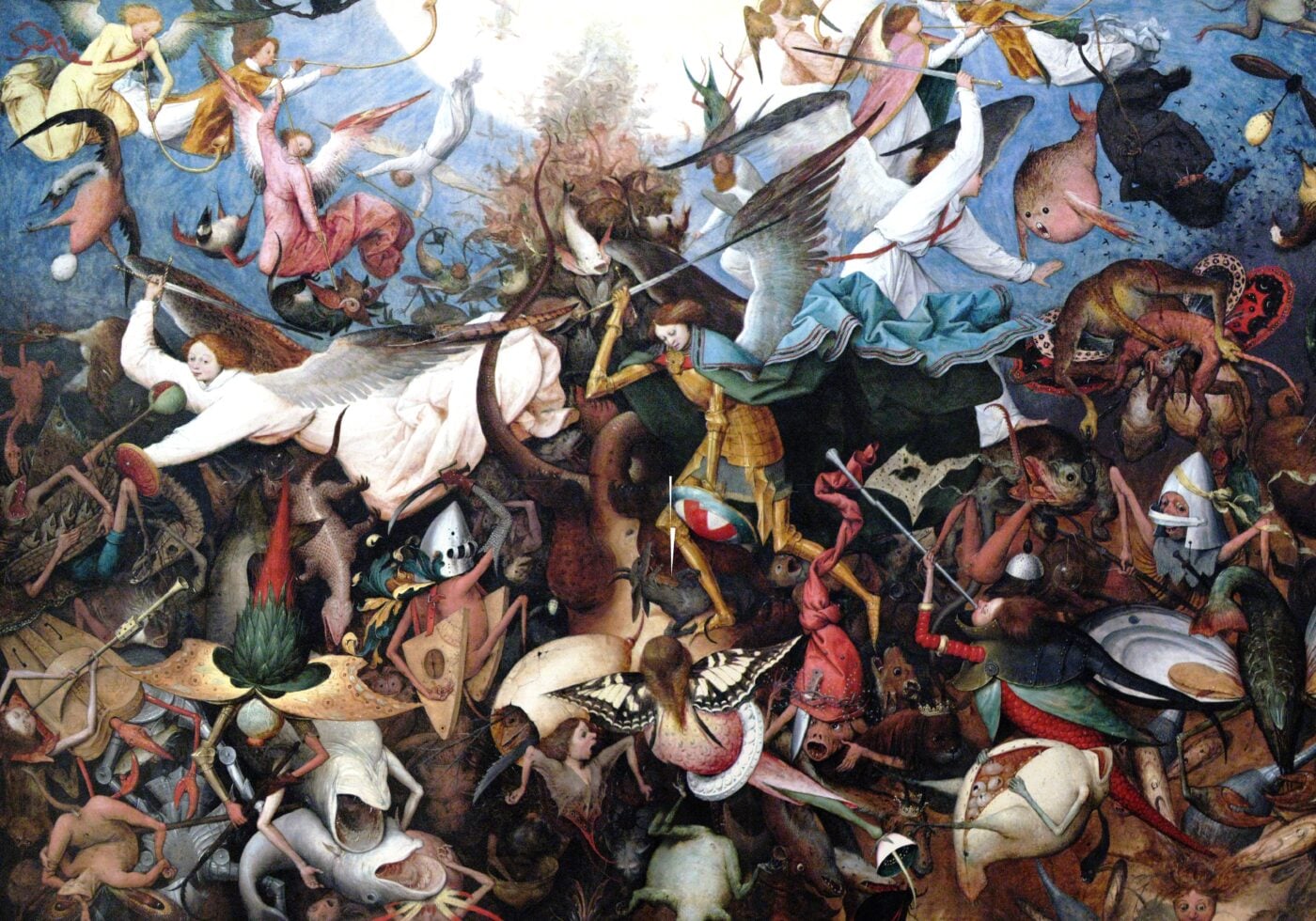
Apart from love, what is there? The only foreseeable way out of being a slave for the Godless, like Nietzsche or resentful Christians secretly wishing to be masters, is the upward thrust of Satan who deemed equality with God something to be grasped. This is the spirit of the anti-Christ since Christ did not deem equality with God something to be grasped. Rather, “He emptied Himself, taking the form of a slave, coming in human likeness” (Phil. 2:7) as an equal to begin a revolution, not of the Marxist variety, but of love.
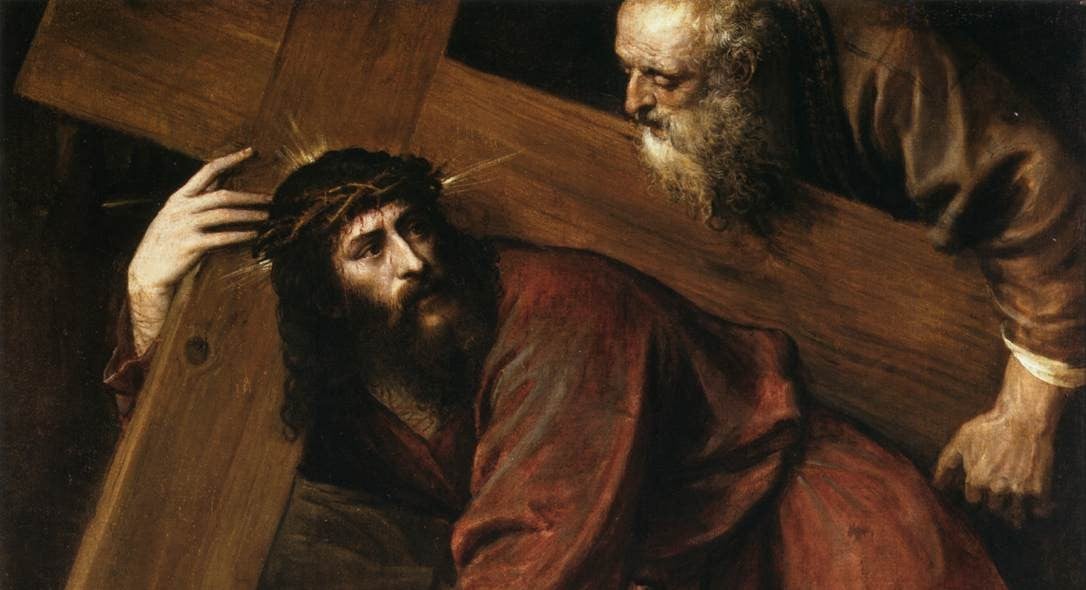
Image from Wikimedia Commons