





















The Apparent Hypocrisy of Christ: A Tribute to Messori


Beloved and influential Catholic journalist and apologist, Vittorio Messori, passed away on the evening of Good Friday 2026. It was a fitting day for this stalwart brother in Christ and son of the Church to leave this world. In addition to being a devoted Italian husband, Messori was an avid defender of the Faith who authored over twenty books. Sophia Institute Press, the parent company of Catholic Exchange, published three of them: Hypothesis About Jesus, Hypothesis About Mary, and A Wager on Death.
In Hypothesis About Jesus, a book that is now 50 years old, Messori explained the “hypocrisy” of a Messiah who drank wine, turned copious amounts of water into wine for the wedding guests at Cana, and dined with a prostitute at the house of a Pharisee named Simon. In hindsight, we know that these seemingly scandalous occasions pointed toward something greater. They pointed toward His compassion and mercy.
Jesus drank wine with tax collectors and sinners because He wanted to enter their lives and fill them with hope in the one, true God. He didn’t come for the holy, but for the sick (Matthew 9:12). He turned water into wine because He wanted to reveal His power to turn one type of matter into another, a miracle that prepares us to understand the changing of bread and wine into His body and blood. And He dined with a prostitute so that He could show us His power to forgive sins.
The last story is of particular importance when it comes to the “hypocrisy” of Christ. Here, Jesus asks Simon, the Pharisee, “A certain creditor had two debtors; one owed five hundred denarii, and the other fifty. When they could not pay, he forgave them both. Now, which of them will love him more?’ Simon answered, ‘The one, I suppose, to whom he forgave more.’ And he said to him, ‘You have judged rightly.’” Then, Jesus turns and forgives the woman her sins.
The point is that no one could ever pay back God for the sins one commits. Instead, God came to us and endured the hardships that we face so that He could save us. The other point is that no matter how big our sins are, God can forgive them and even turn our great love for sin into great love for Him. He uses our perverse love as fertile ground for true and properly ordered love. Messori rightly picked up on this “hypocrisy,” and he became one of those with whom Jesus dined in his heart.
The following is an excerpt from Messori’s book, Hypothesis About Jesus.
A Messiah Who Eats and Drinks
The personality described by the Gospels eludes above all our models of interpretation, violating in a shocking way the laws which sociologists define “role-imposed behavior” (Holl).
One of the roles that Jesus ought to have interpreted was that of ascetic. A prophet in the Jewish world had to authenticate his credentials as a “man of God” with the rigorous austerity of his way of life, beginning with severely restricted eating and drinking habits. Matters are much the same today: asceticism is among the essential conditions that every society requires of its religious role models.
The most frequent reproach given to Jesus is, on the other hand, that of “eating and drinking” without inhibitions; moreover, in ambiguous company, adding scandal to scandal. He and His disciples were often reprimanded for the opposite example offered by His relative and friend, John the Baptist: he lives in the desert, eating grasshoppers and dutifully respecting the behavior asked of his role. Jesus, on the other hand, is often seen at table eating with evident gusto, without hypocrisy.
Once, as He replies to those accusations, Jesus seems to reveal that He is not only a connoisseur of wines but even an expert on enological techniques: “no one puts new wine into old wineskins. If he does, the wine will burst the skins—and the wine is destroyed, and so are the skins. But new wine is for fresh wineskins” (Mk. 2:22). Luke attributes to Him another clarification which confirms his attention to the quality of what he drinks: “no one after drinking old wine desires new, for he says, ‘The old is good’” (5:39).
The Greek text often describes Him not as “seated” but literally “reclined at table,” while He honors the food and drink served Him. This was a scandalous situation for any prophet in Israel.
But something even worse is added. That time when He was “reclined” at a well-laden table in the home of a pharisee, a woman comes in, a “sinner.” Naturally, her sin is the quintessential sin, that against chastity: a prostitute.
This woman, Luke narrates, “standing behind him at his feet, weeping, she began to wet his feet with her tears and wiped them with the hair of her head and kissed his feet and anointed them with the ointment” (7:38). All are scandalized, including the host, who receives a harsh scolding by the surprising guest, while the woman is sent off affectionately: “Your faith has saved you. Go in peace” (7:50).
Here we see violently infringed that obsession with sex that torments every vision of life that one believes to be “religious.”
For now, we are interested above all in this man of God who does not leave indignant from the already unseemly banquet, not even if the circumstances add a clearly erotic touch like that brought by the sinful woman.
It seems evident for ancient culture (but really for religious culture of every time and nation) to mistake for God, or to invent as God, a character like this one. He lacked all the characteristics imposed on one who would play the role of Messiah, as we have seen.
But His way of living was not austere, and He had not the least prudent hypocrisy to escape the public accusations of being a “glutton and a drinker.” Nor is there any trace in the evangelists of an attempt to overlook characteristics so embarrassing to their protagonist.
To the contrary, precisely the most “spiritual” Gospel, that of John, tells us that the “first of the signs” by which “Jesus manifested his glory,” such that “his disciples believed in him,” was the miracle at Cana (2:1–11). This miracle had seriously ambiguous motivations for the religious ideal: the divine power inconvenienced itself to furnish more wine for a group of partiers already drunk. And it was exquisite wine, according to the observation of the steward of the feast to the groom. A miracle on the verge of blasphemy, with a heavy suspicion of scandal. It had no other motive than earthly, bodily enjoyment; and therefore, dubious according to the religious mentality of all times. And would it be with this feat at Cana that a text put together piece by piece by religious fanatics, avid for ascetical penitence, would have its hero appear on the scene?
Editor’s Note: This article was adapted from a chapter in Vittorio Messori’s Hypotheses About Jesus, available from Sophia Institute Press.
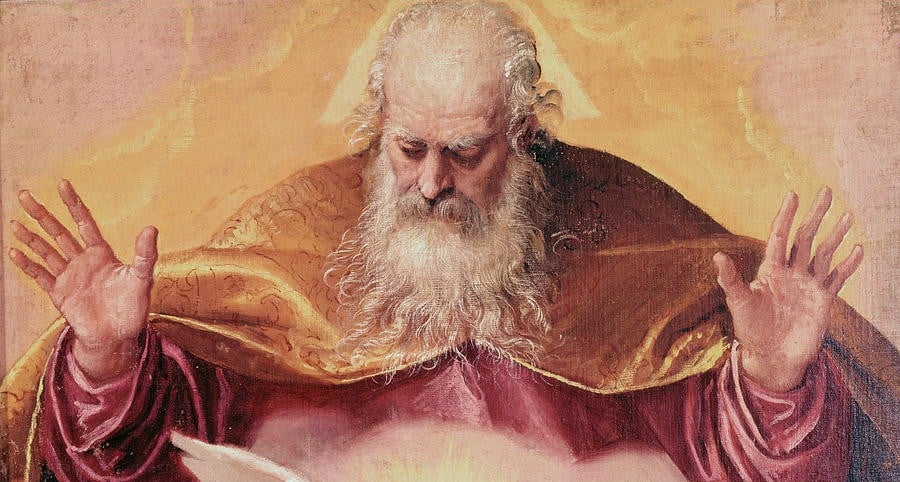
Image from Wikimedia Commons