









Critics question Vatican-Azerbaijan interfaith pact
The Vatican signed last month a memorandum of understanding on interreligious dialogue with Azerbaijan, alarming critics who accuse the Azeri government of ethnic cleansing and practicing “caviar diplomacy” by exerting cultural and economic influence to shape Vatican policy in the South Caucasus region.
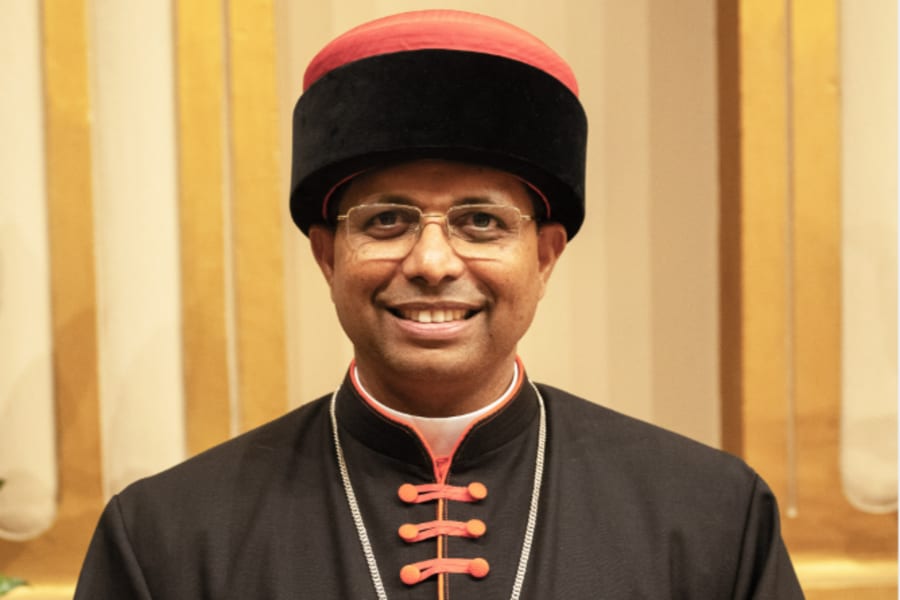
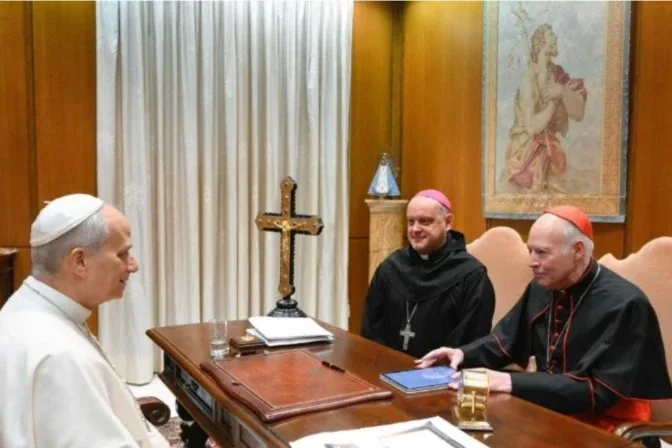
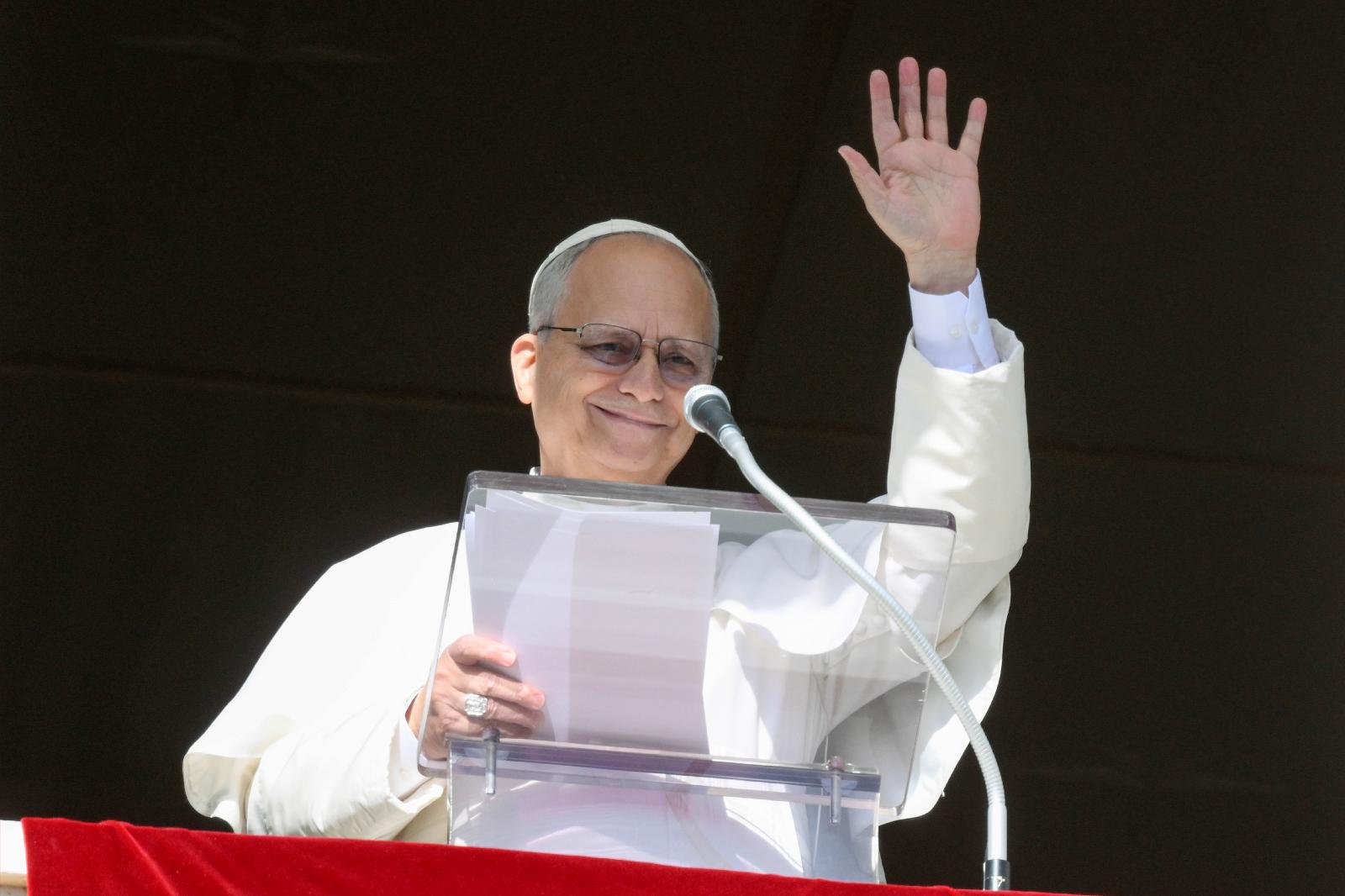
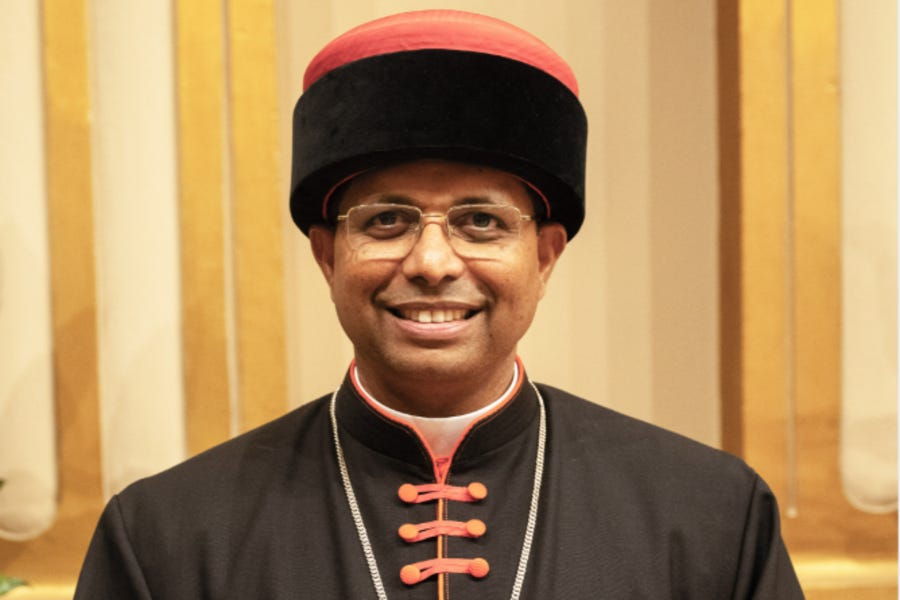
The agreement was signed July 25 by Cardinal George Koovakad, prefect of the Dicastery for Interreligious Dialogue, and Azeri authorities.
The memorandum commits the signatories to hosting joint events that promote interreligious and intercultural dialogue, and cooperating in the field of religious education.
The development comes less than two years after a military offensive by Azerbaijan led to the dissolution of the self-declared Republic of Artsakh in the disputed Nagorno-Karabakh region, an area internationally recognized as part of Azerbaijan but historically populated and controlled by ethnic Armenian Christians until 2023.
The 2023 offensive prompted the flight of more than 120,000 ethnic Armenians and left hundreds dead. Human rights groups and Armenian leaders have described the exodus as a case of ethnic cleansing.
In his remarks to Azeri authorities at a July 28 ceremony, Koovakad referred to a landmark 2011 bilateral agreement between Azerbaijan and the Holy See. He described the agreement as “a valuable instrument for promoting the principle of religious freedom,” which demonstrated “respect for a minority religious community and how Christians and Muslims can live together in harmony.”
Referring to the 60th anniversary of Nostra aetate, Vatican Council II’s declaration on religious freedom, Koovakad said that “new areas of shared commitment have emerged, such as the desire to care for and protect the environment and the need for an ethical use of artificial intelligence.”
“Concrete gestures of cooperation on such important issues will contribute to the construction of a more peaceful world, a desire that resides in the heart of every man and woman of good will,” said the cardinal, who was appointed prefect of the interreligious dialogue dicastery in January.
Despite the conflict with Armenia, Koovakad praised the Azeri government for fostering interreligious cooperation, and thanked President Ilham Aliyev — widely regarded as an authoritarian ruler — and Ramin Mammadov, the country’s commissioner for religious affairs, for supporting the dialogue initiative.
Azerbaijan, a Muslim-majority country of about 10 million people, has long disputed control of Nagorno-Karabakh with neighboring Armenia, a Christian-majority country with fewer than 3 million citizens.
Historically, Armenia has deep Christian roots. In 301, the Kingdom of Armenia was the first country to become an officially Christian nation.
Fighting over Nagorno-Karabakh, which is internationally recognized as part of Azerbaijan but had been governed by ethnic Armenians since the 1990s, has erupted frequently since the end of the Soviet Union.
Many churches, religious sites, and cemeteries were reportedly destroyed or desecrated in the aftermath of the 2023 offensive.
Church watchers have expressed concern about the Vatican’s willingness to engage publicly with the Azeri government, suggesting it could be falling prey to “caviar diplomacy,” a term used to describe the Azeri approach of using cultural restorations, economic investments, and other strategies to curry favor with foreign officials.
Orthodox Archbishop Vicken Aykazian, ecumenical director of the Eastern Diocese of the Armenian Apostolic Church of America, told The Pillar in April: “The Vatican has been receiving money from Azerbaijan for some time — the main example being the restoration of St. Paul Outside the Walls, which was funded by Azerbaijan.”
In contrast, Azeri officials present their outreach to the Vatican as an effort to strengthen bilateral relations and demonstrate Azerbaijan’s commitment to interreligious and intercultural dialogue. They characterize the country’s support for Vatican restoration projects as an expression of respect for humanity’s common heritage.
This is not the first time the Vatican’s links to Azerbaijan have drawn attention.
In August 2024, L’Osservatore Romano published an article that repeatedly described traditionally Armenian regions, churches, and monasteries as “Caucasian Albanian,” a term referring to an ancient Christian culture in the region, used by Azerbaijan to justify its historical claims over Nagorno-Karabakh.
“The article denied the fact that there were any Armenian churches in Karabakh, which is simply a lie. Armenians, including Armenian Catholics, got furious, but things haven’t changed,” Bishop Aykazian told The Pillar.
Months before the 2020 offensive in Nagorno-Karabakh, Azerbaijan’s First Lady Mehriban Aliyeva was awarded the Order of Pope Pius IX at the Vatican.
Ilqar Mukhtarov, Azerbaijan’s ambassador to the Holy See, received the same distinction on April 3, 2025.
Critics claim that Azeri money flows to the Vatican as a way of garnering papal support and diffusing Catholic objections to Azeri activity in Nagorno-Karabakh, in a practice that critics term “Church-washing.”
The Heydar Aliyev Foundation, run by Azerbaijan’s First Lady and the president’s top political aide, is considered by critics to be the “caviar diplomacy” arm of Azerbaijan. It lists the Vatican Apostolic Library and the Vatican Museums among its partners.
The foundation’s website lists several restoration projects that it is supporting at the Vatican.
The list includes the Roman Catacombs of Marcellinus and Peter, the Catacombs of Commodilla, and the Catacombs of San Sebastiano, the restoration of a statue of Zeus in the Vatican Museums, the restoration and translation of more than 3,000 books and 75 manuscripts in the Vatican Apostolic Library, the restoration of a bas-relief with the encounter between Pope Leo the Great and Attila the Hun in St. Peter’s Basilica, and the restoration of the Basilica of St. Paul Outside the Walls.
According to Italian outlet Irpi Media, the donations amounted to 640,000 euros (around $730,000). But an Azeri official said publicly in 2020 that the figure was “over 1 million euros.” Many of the restoration works came after 2020, suggesting the actual sum could be even higher.
One of the largest restoration projects was unveiled in 2024, when the Vatican City State Governorate announced an agreement between the Basilica of St. Paul Outside the Walls and the Heydar Aliyev Foundation.
Observers suggest links between the Vatican and the former Soviet republic were strengthened thanks to Cardinal Claudio Gugerotti, who is now prefect of the Dicastery for Eastern Churches.
Gugerotti was the apostolic nuncio to Azerbaijan, Armenia, and Georgia from 2001 to 2011.
The 2011 bilateral agreement between the Holy See and Azerbaijan was negotiated by Gugerotti. Azerbaijan then appointed an ambassador to the Holy See.
During Gugerotti’s service as nuncio, Azeri authorities began to have frequent meetings, both in Azerbaijan and the Vatican, with Holy See officials, among them then-Secretary of State, Cardinal Tarcisio Bertone, and Cardinal Gianfranco Ravasi, the then-president of the Pontifical Council for Culture.
According to Irpi Media, Ravasi is another central figure connecting Azerbaijan and the Vatican.
Ravasi opened the doors to Azeri-funded restoration projects in the Vatican with a 2012 agreement to restore Roman catacombs, as well as another to translate and restore manuscripts in the Apostolic Library.