











Dressing Well for Mass: A Matter of Humility, Not Vanity
Jim, Jim, I wore a tie today,
The first one that I ever wore.
You’d have said I looked like a dummy,
Down at the dry goods store.
That was country music legend Willie Nelson circa 1985. It was a duet with fellow legend Johnny Cash, who sang the second verse:
Jim, Jim, the preacher said a lot of things,
But I didn’t hear a word he said.
My mind kept wanderin’ back down the trail,
Back to the good times we had.
The song is about two humble and simple men burying their friend, with whom they once rode the trails and panned for gold.
Near the end of the song the words are gently spoken:
We did everything we could do for you, Jim.
But your fever just wouldn’t go down.
So we put you in the wagon, Jim.
And this mornin’ we got you back to town.
But when we got here, you were gone, Jim.
And there wasn’t anything anybody could do.
They dressed you up in a fancy suit and a necktie,
So, today we wore one too.
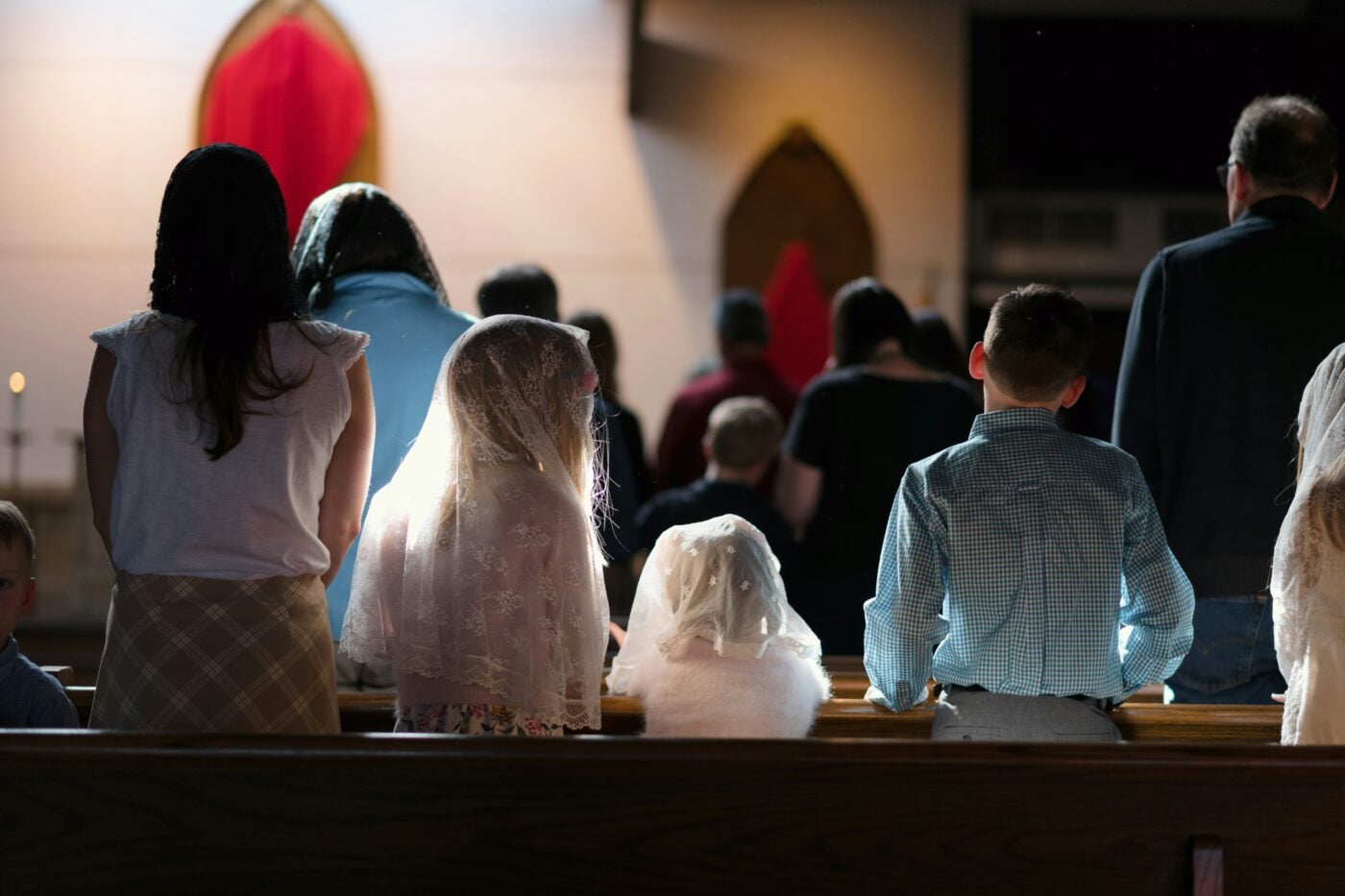
Now, here is a question: Why did those two old cowboys wear ties to the funeral? Did they dress up in order to call attention to themselves? Were they saying, “Look at me in my fine clothing”? No. The two men wore ties out of humility. They dressed formally out of respect and honor for their friend.
“What should I wear?” That was the title of Bishop Johnston’s column some years back in our Diocesan paper, the Catholic Key. Growing up, the bishop remembered his mother frequently asked that question when preparing for different occasions.
In it, the bishop cited a recent article he read on the “Casual Revolution” of the 1970s. Written by a fashion editor, it was about the change in dress spawned from the Cultural and Sexual Revolutions of the late 1960s. The casualization expressed (and expresses) individual freedom over and above the “sense of occasion.” The fashion editor writes: “Occasions are shared public realities, rituals, in which we recognize something other than private expression.”
Occasions are also communal in that we give ourselves over to something bigger than ourselves. Occasions cause us to be humble, and our dress is a sign of that. The bishop wrote, “Wearing one’s Sunday best, as much as kneeling, was a visible sign of a humble heart.”
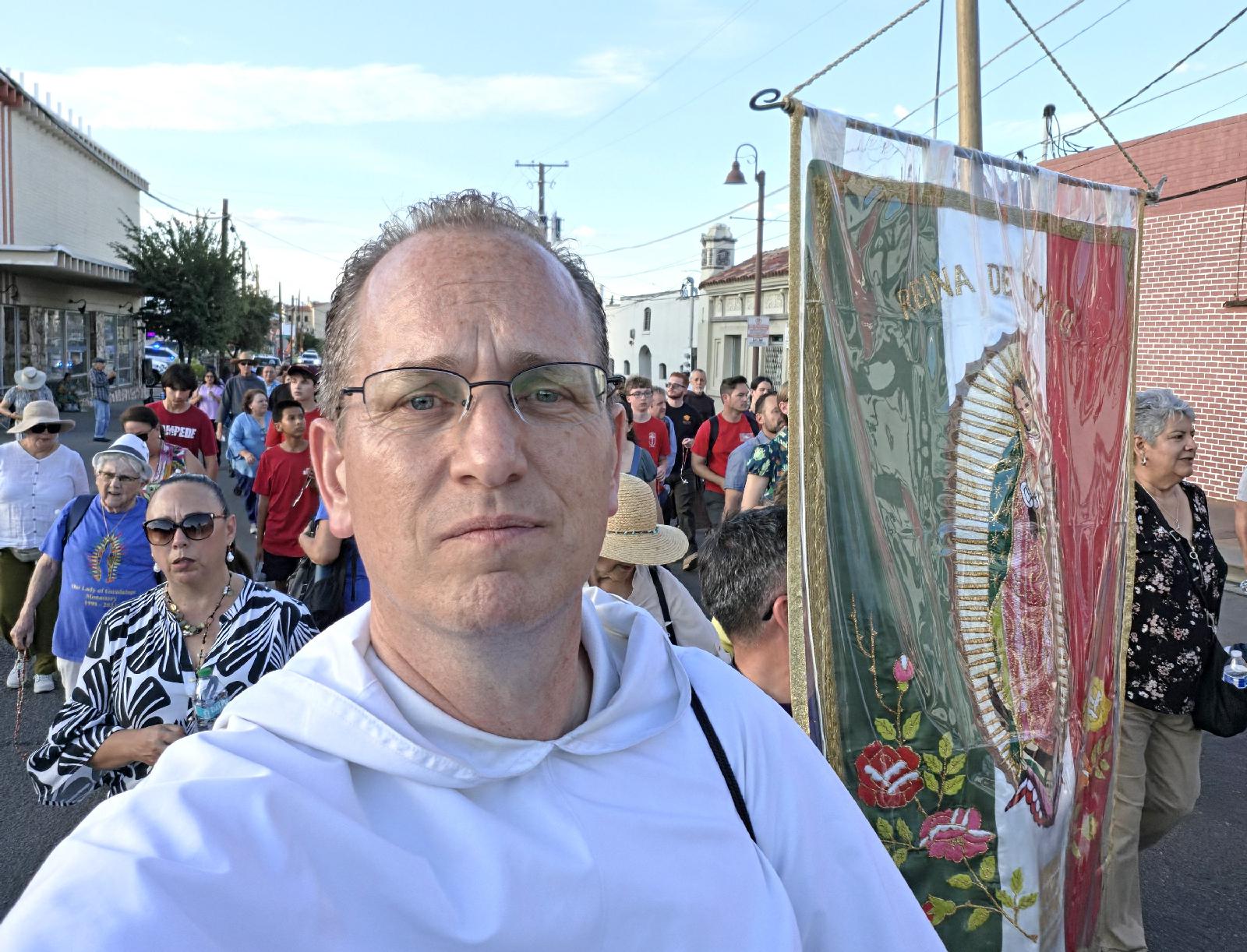
At Mass, and most everywhere else, you see me dressed in a cassock, a long, black vestment that covers my whole body. The word cassock most likely comes from the Turkish word for “nomad,” or “adventurer.” History knows these adventurers as the Cossacks. They were Slavic soldiers and horsemen who wore long vestments.
For centuries priests wore cassocks, but in late 1800s American priests were instructed to wear frock coats instead. The idea was to protect them from anti-Catholic violence. The coats would help the priests fit in with the age by being more “Americanized.”
However, in the 20th century, Catholics started taking over American culture, and the cassocks went back on the priests. But with the sexual revolution, the Church lost what it had gained. And here’s something ironic and sad: As part of the casual revolution of the 1970s, priests stopped wearing their cassocks. Not, mind you, out of fear of violence, but so they could fit in with the age.
What kind of age is it? It is an age when individual freedom trumps occasions; when contraception, fornication, abortion, pornography, and sexual perversion are now mainstream and protected by law.
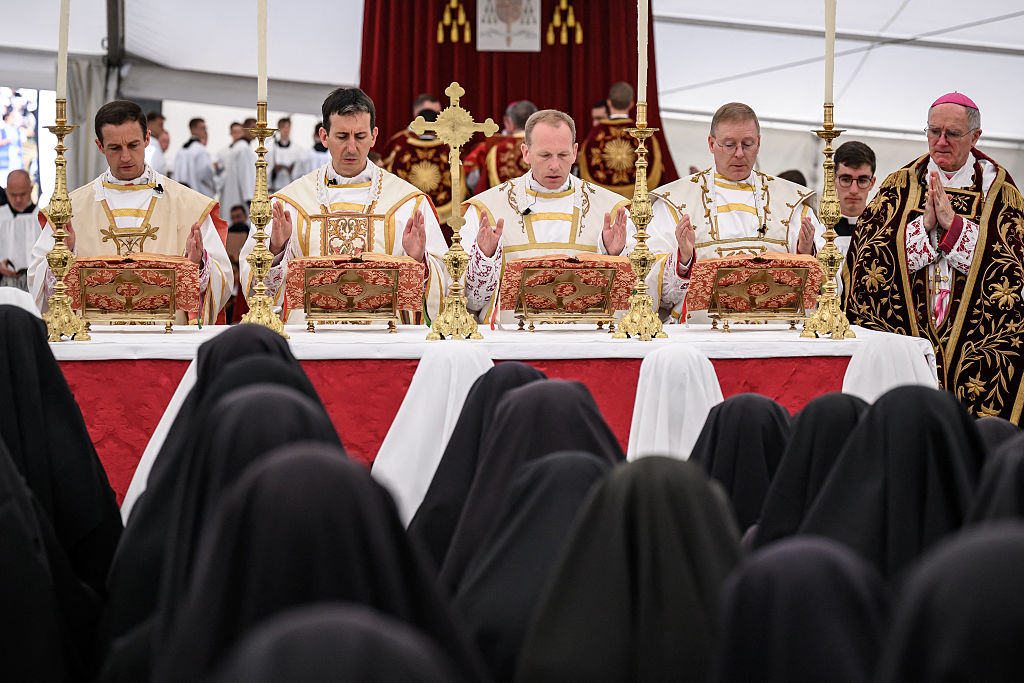
Younger priests (and not-so-younger priests, like me) are wearing cassocks again. Why? Are we out to tell the world, “Look at me in my fine clothing”? No. We are saying “Look at me. I’m dead.” Yes, to drape a large, black cloak over one’s entire body is to say, “I am dead to the world.”
What about you? Are you dead? Are you humble? Does wearing casual clothing like tee shirts, shorts, and blue jeans to Holy Mass speak to the occasion? The knee-jerk reaction to that question, conditioned by a culture that no longer fears God, a culture that thinks the only person in hell is Adolph Hitler, is this: “God doesn’t care what I wear to Mass.” Well, how do you know that? Where is that written?
Citing C.S. Lewis, Bishop Johnston wrote: “The modern habit of doing ceremonial things unceremoniously is no proof of humility.” The bishop reminded us that the only time Christ mentioned proper dress was when the man who did not bring his wedding garment to the wedding got kicked out into the darkness, where there was wailing and gnashing of teeth.
You could argue that was just a parable, symbolism. That may be so. But the wedding to which Christ referred was His marriage to the Church. That was not a parable. It was a reality. And it still is a reality; the marriage supper of the Lamb that ransoms us from hell. That reality then, we can reasonably deduce, calls for a proper wedding garment, clothing appropriate for the occasion.
Most Catholics today smirk at what I just preached. And why not? For much of their lives, they’ve attended Mass in stripped-down, de-beautified churches and were taught out of watered-down catechisms.
Am I being a rigid fundamentalist on this? That is a term the late Pope Francis applied several times to people like me; people who don’t particularly care to get with the times.
Pope Francis also used the term “peacock” in regards priests that “wear their Sunday best” for Holy Mass. In April 2017, he even applied the term “peacock” to laypeople who wear their best clothes to Mass. He called it “vanity” and a source of division.
Many found the pope’s observations bizarre. Their experience has been that, generally speaking, the people in the wealthy suburban parishes are the ones improperly dressed, whereas the poor in the inner cities, generally a humbler species, dress for the occasion.
My two grandfathers were unskilled laborers. My Grandad Schmidt made bricks. Every morning he hitched up a horse that would walk around a large round vat of mortar to keep it stirred up. He manually made bricks all day, for years. My Grandad Drew, a smaller man, like me, delivered coal and blocks of ice all day. Those two men, dressed in work clothes, got dirty all week. But on Sunday they went to Mass in a tie and a white shirt that their wives had pressed.
Were my grandads peacocks?
If some of you men put a tie on for Mass, well, you might look like a dummy in a dry goods store, and that would be a beautiful thing. It would be humility, not vanity, to hang a tie around your neck in honor of Him who was hanged on Calvary. It would show God and others that you are giving yourself over to something bigger than yourself. Who then will you love more? Your father or mother, son or daughter—or Christ?
I’d say it’s time to start getting a little uncomfortable at Holy Mass. It’s time to start having some fear of the Lord. You should dress then in the proper wedding garments for the shared public reality, the ritual that is Holy Mass. Yes, humbly dress formally out of respect and honor for your friend, the truest friend and family member you will ever have—Jesus Christ, your Lord and Savior.
Photo by Josh Applegate on Unsplash