






German bishops’ leader to pro-lifers: Shun nationalism

Bishop Georg Bätzing said Friday that Germany’s pro-life movement must not be co-opted by “political, demographic, nationalistic, or even ethnic interests.”
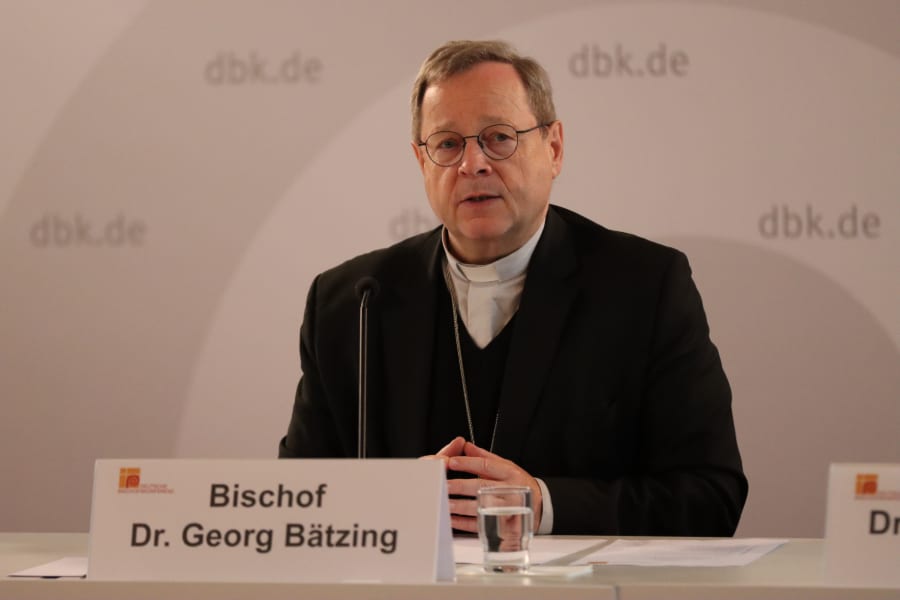
The chairman of the German bishops’ conference made the remark in a Sept. 19 message to participants in this weekend’s March for Life in Cologne.
Bätzing’s intervention highlighted the Church in Germany’s ambivalence toward the event, which has been held annually since 2008. While individual bishops strongly support the initiative, Catholic organizations have criticized alleged links with right-wing extremists. The event’s organizers reject the criticism, insisting the March for Life is independent and non-partisan.
In his statement, Bätzing said: “From a Christian perspective, life is a gift from God the Creator. Human beings do not acquire life themselves; they cannot and do not have to earn it first. Rather, life is placed in their hands as their responsibility. They should regard it as a precious gift and treat it with the same care that one would treat a precious gift: cherishing it, nurturing it, allowing it to flourish, and protecting it to the best of their ability and means.”
“This also includes protecting life for its own sake and not for any other interest. The concern for the protection of life must therefore not be exploited, neither for purely personal interests nor for political, demographic, nationalistic, or even ethnic [völkische] interests, or any other interests that are alien to life.”
He added: “In this sense, the Church is grateful to all those who, by fair means and without hostility or bitterness, work to protect human life for the sake of people in all their needs and concerns.”
The bishop’s statement comes amid rising support for the Alternative for Germany party, which is described as far-right by other major parties but disputes the term.
The party — known by its German initials, AfD — performed strongly in the Sept. 14 local elections in North Rhine-Westphalia, Germany’s most populous state. The AfD gained 14.5% of the vote, compared to 5% at the previous election in 2020.
A poll published in August suggested the AfD is the country’s most popular party, though it came second in a federal election in February 2025.
Germany’s bishops unanimously declared in 2024 that the AfD is “dominated by a racial-nationalist attitude” that is incompatible with Christian teaching. They also argued that Christians should play no role in “right-wing extremist parties” or vote for them.
The AfD says it rejects “all efforts to declare the killing of unborn children a human right,” and its supporters claim it is Germany’s most pro-life major party. Senior AfD members have expressed support for the March for Life and taken part in it.
In 2023, the Cologne archdiocese branch of the Federation of German Catholic Youth called for a boycott of the March for Life, arguing that there was “no clear distinction” between the march’s organizers and “the right-wing milieu.”
The umbrella group for Catholic youth organizations, known by its German acronym BDKJ, said it was “unacceptable that Christians take to the streets side by side with right-wing extremists or even work together with them.”
Germany’s March for Life will take place Sept. 20 with simultaneous events in Cologne and the capital, Berlin. Around 5,000 people have registered to attend each event.
Approximately 1,000 people are registered to take part in a counter-demonstration in Cologne and 2,000 in Berlin.
Bishop Rudolf Voderholzer of Regensburg and Berlin auxiliary Bishop Matthias Heinrich are expected to attend the march in the capital.
Cologne’s Cardinal Rainer Maria Woelki and Passau’s Bishop Stefan Oster have joined Bishop Bätzing in sending messages to marchers.
Several Masses associated with the march will be celebrated Sept. 20 in Cologne, including a 9 a.m. Mass at Cologne Cathedral offered by auxiliary Bishop Dominik Schwaderlapp.
Germany permits abortion in the first 12 weeks of pregnancy, though later abortions are allowed in certain circumstances.
Women seeking an abortion must undergo counseling at a state-approved center, followed by a three-day waiting period. Women are required to present a certificate issued by the counseling center before having an abortion.
The German Church previously operated counseling centers, but in 1999, Pope John Paul II ordered it to withdraw from the system, saying that cooperation indicated “a lack of clarity in the matter of the Church’s unequivocal no to abortion.” The German bishops agreed to the change.
In 2023, the most recent year for which statistics are available, there were 106,218 abortions in Germany, which has a population of around 84 million people. This marked a 2.2% increase from 2022.
German media argue that the pro-life movement demonstrated its growing influence in August when law professor Frauke Brosius-Gersdorf withdrew her candidacy as a judge at Germany’s constitutional court amid an outcry over her views on abortion.
While Germany’s March for Life has taken place annually since 2008, its roots date back to 2002, when a pro-life initiative called “1,000 Crosses for Life” was launched.
The German March for Life, which draws inspiration from the annual March for Life in Washington, D.C., is organized by the Federal Association for the Right to Life, an alliance of pro-life organizations.
The association says the march is Germany’s largest pro-life demonstration and is “for those committed to protecting life and who want to send a clear message in support of it.”