





Has Leo XIV ushered in a new era for Syro-Malabar Catholics?
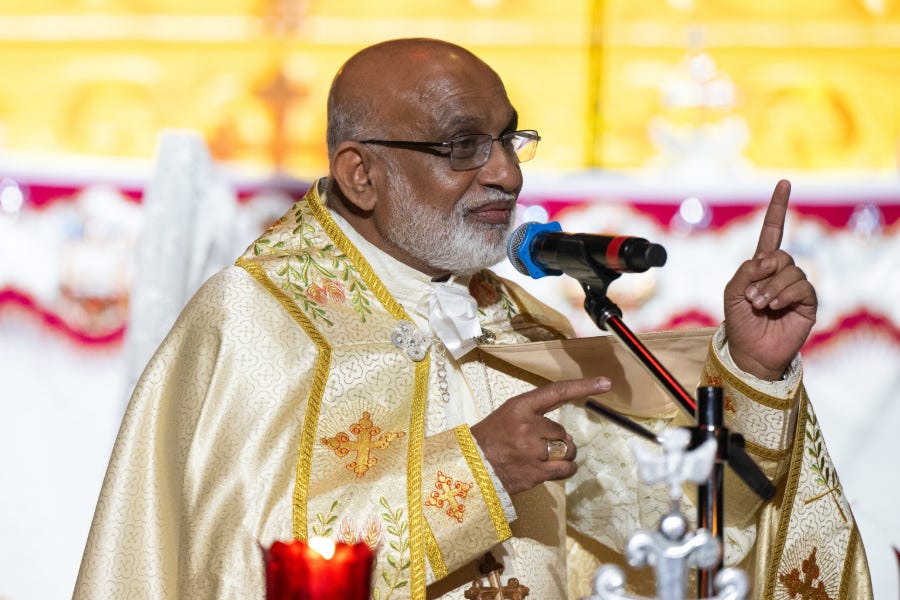
The opening months of Leo XIV’s pontificate have featured significant changes in the Syro-Malabar Catholic Church.
Is that a coincidence — or is the first U.S.-born pope taking an active interest in the affairs of the largest of the 23 Eastern Catholic Churches in full communion with Rome after the Ukrainian Greek Catholic Church?
To answer that question, let’s review the notable developments in the Syro-Malabar Church since Pope Leo’s election and then consider the role he has played in them.
Liturgical peace?
For decades, Syro-Malabar Catholics have clashed over the celebration of the Eucharistic liturgy, known as the Holy Qurbana.
Tensions escalated following efforts in 2021 to introduce a single “uniform” way of celebrating the Holy Qurbana in the Syro-Malabar Church’s eparchies (dioceses) worldwide.
Resistance to the change was strongest in the Indian Archeparchy of Ernakulam-Angamaly, the largest Syro-Malabar diocese in terms of population and the see of the major archbishop, or head, of the Eastern Church.
During Pope Francis’ tenure, the leadership of the Syro-Malabar Church sought to impose the new liturgy on the Ernakulam-Angamaly archeparchy, but met resolute opposition.
Following the failure of numerous ultimatums and amid fears of a split in the Church, the Syro-Malabar leadership abandoned its confrontational approach. In June 2025, the bishops reached a tentative agreement with representatives of the priests and people of the Ernakulam-Angamaly archeparchy.
Under the agreement, the archeparchy’s priests could continue to celebrate the Holy Qurbana in their preferred style (facing the congregation throughout), as long as they offered at least one new uniform Eucharistic liturgy on Sundays and major feast days.
This “inclusive formula” was ratified at an Aug 18-29 meeting of the Syro-Malabar Church’s Synod of Bishops, the Eastern Church’s supreme authority, potentially bringing the damaging liturgy dispute to an end.
A big reorganization
On Aug. 28, the Syro-Malabar Church announced a major reorganization of its eparchies in India.
To understand its significance, it’s essential to recognize that Syro-Malabar Catholics are concentrated in the southern Indian state of Kerala and more thinly spread in the country’s remaining 27 states.
The new changes center on the Eparchy of Shamshabad, a unique Syro-Malabar jurisdiction established by Pope Francis in 2017. Its first bishop was Mar Raphael Thattil, who led the eparchy until he was elected head of the Syro-Malabar Church in January 2024.
The eparchy initially covered 23 Indian states and four union territories (areas directly ruled by the central government), making it the country’s largest Catholic diocese in terms of geographical extent. It bordered an astonishing 75 dioceses while serving only 25,000 Catholics.
Under the reorganization, 11 neighboring eparchies have absorbed parts of the Shamshabad eparchy, which now spans 14 states and three union territories.
Syro-Malabar authorities described the changes as a “long-awaited territorial realignment to ensure greater pastoral efficiency, administrative clarity, and ecclesial harmony across India.”
As part of the reorganization, the Eparchy of Shamshabad was elevated to an archeparchy, as were three other eparchies.
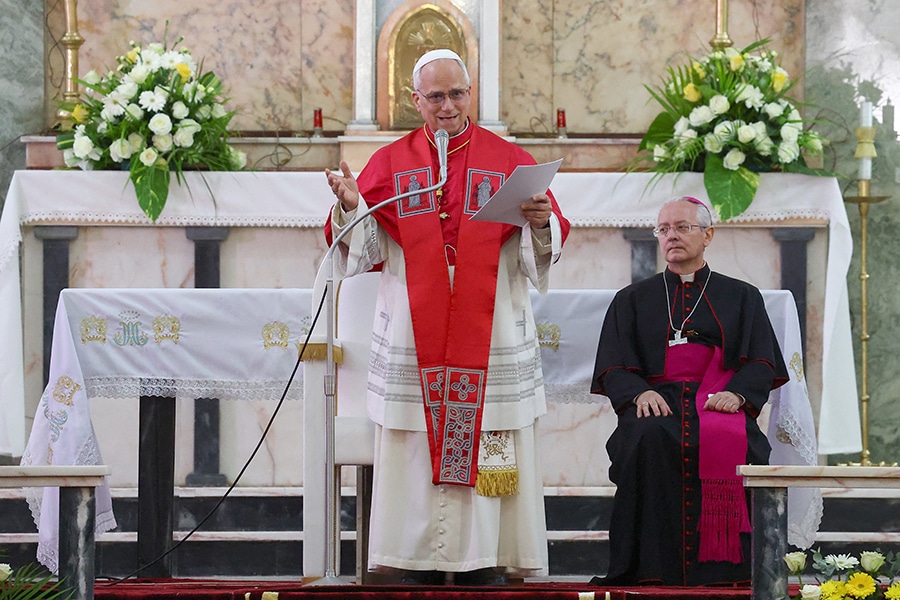
Major Archbishop Thattil said the moves would help the Syro-Malabar Church “to further give new vitality to its missionary aspirations.”
What’s Pope Leo’s role?
The Eastern Catholic Churches featured prominently in the opening days of Leo XIV’s pontificate.
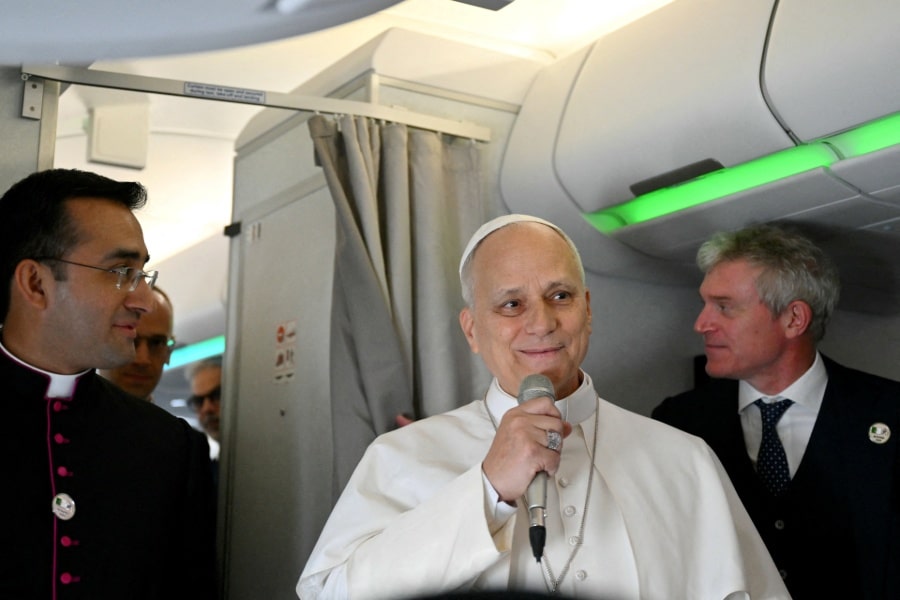
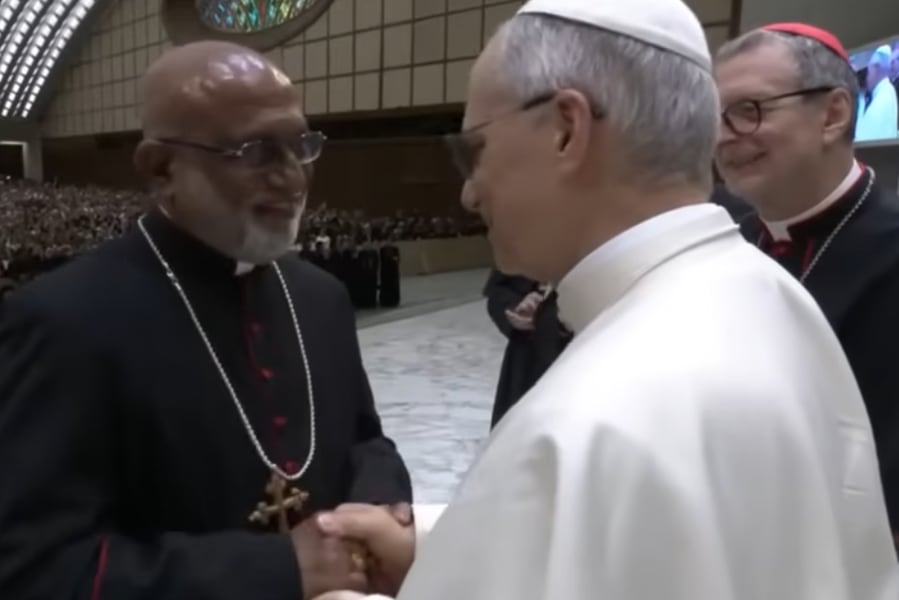
The Jubilee of the Eastern Churches happened to fall just days after his May 8 election, giving Eastern Catholic leaders a prime opportunity to meet with the new pope.
In a May 14 address, Leo XIV expressed his deep appreciation for the 23 autonomous Churches, highlighting their diversity, “glorious history,” and “bitter sufferings.” The speech went down well with Eastern Catholic bishops, who have sometimes felt they were of marginal interest to Rome.
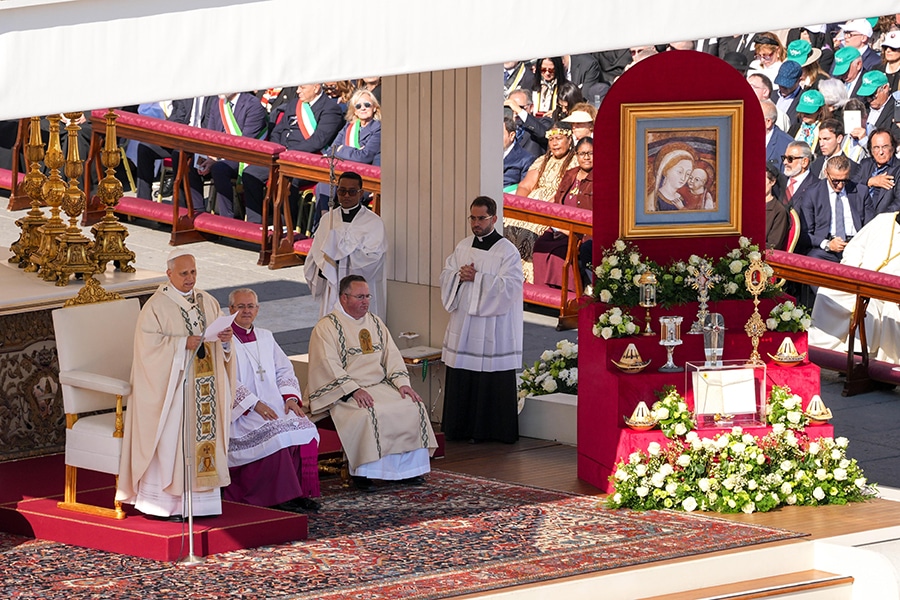
Pope Leo further underlined his esteem at his May 18 inaugural Mass, which began with him standing before St. Peter’s tomb flanked by the Eastern Catholic patriarchs.
Perhaps Leo was simply following papal protocol, but Eastern Catholic bishops seemed to leave Rome after the papal transition with a new spring in their step.
Did Pope Leo’s election pave the way for a resolution of the Syro-Malabar Church’s “liturgy war”? It’s possible.
The Syro-Malabar leadership unveiled a major change in its approach to the liturgy dispute after the election. Yet it’s unclear whether the shift took place in response to events in Rome.
While Pope Francis personally intervened in the crisis, in the form of letters and video messages, Pope Leo has taken no public stance on the dispute, leaving his views and wishes something of a mystery.
It seems likely that, instead of a behind-the-scenes papal intervention, the Syro-Malabar leadership was simply worn down by the resistance in the Ernakulam-Angamaly archeparchy and realized its strategy of seeking to impose the new liturgy with ultimatums had failed.
Efforts to negotiate an end to the liturgy crisis began under Pope Francis, suggesting that the Syro-Malabar Church’s leadership changed course steadily rather than suddenly in reaction to changes in Rome.
But it’s still possible that the election of a new pope who stressed peace and unity encouraged the Syro-Malabar Church’s leadership to accelerate its efforts to end the dispute.
Regardless of how much he contributed to the liturgy agreement, Leo XIV will no doubt be relieved that one of the items in his crowded inbox seems to be resolved — at least for now.
What role did Pope Leo play in the sweeping reorganization of Syro-Malabar dioceses?
It couldn’t have happened without his final approval, so he was certainly involved at the final stage. But there’s no clear evidence to suggest he played a larger role.
According to the Syro-Malabar Church, the proposal to shake up the Shamshabad eparchy was first presented in July 2020, when Pope Leo was still a bishop in Peru.
Over the next five years, there were “multiple rounds of consultations” with the apostolic nunciature in India and the Vatican’s Dicastery for the Eastern Churches, which oversees Rome’s relations with Eastern Catholic communities.
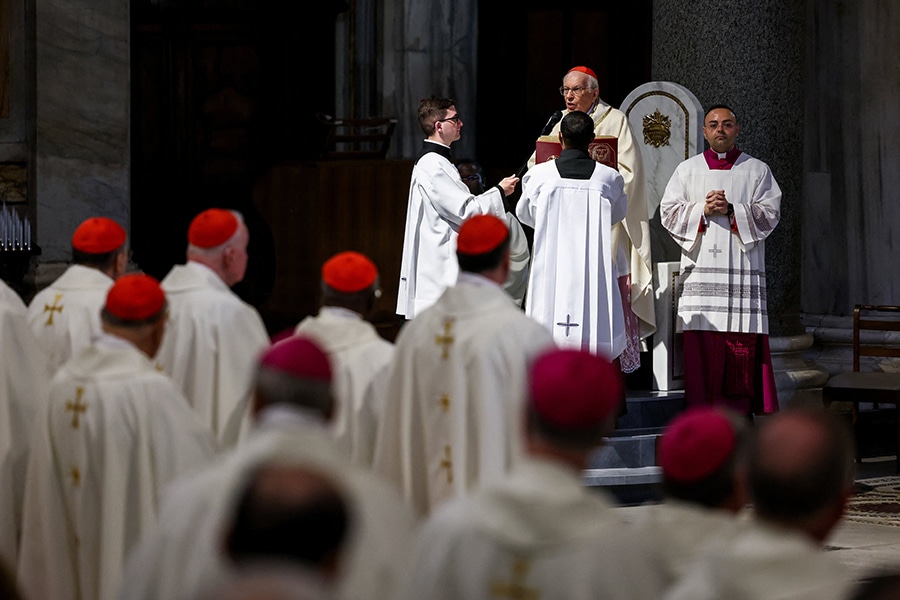
The decision to reorganize the eparchy was finalized at the Aug 18-29 meeting of the Syro-Malabar Synod of Bishops.
The timeline suggests Pope Leo did little more than rubber-stamp a decision that was years in the making. But as a missionary himself, he probably appreciates its rationale of helping to direct the Syro-Malabar Church’s missionary energies more effectively.
Since he was elected, Major Archbishop Thattil has traveled the world encouraging Syro-Malabar communities to be outward-looking and find new ways to share the Gospel.
India remains the Syro-Malabar Church’s heartland, but in the 21st century it is an international force, with a dynamic presence in the U.S., U.K., Australia, and the Middle East.
With the liturgy controversy on the back burner and Indian dioceses reorganized, the path finally seems clear for the Eastern Church to leave its internal disputes behind and enter a new missionary era.