





In canonizations, Venezuelan government sees opportunity

Archbishop Edgar Peña Parra and Cardinal Baltasar Porras rejected on Friday claims that the Venezuelan government will use the canonizations of the first two Venezuelan saints to whitewash itself against complaints of human rights violations and a rampant economic crisis.

And while the Venezuelan government is funding and organizing major events to celebrate the canonization in Venezuela, Nobel Peace Prize award winner María Corina Machado has called for the release of political prisoners as an act of goodwill.
Blesseds José Gregorio Hernández and Carmen Rendiles will be canonized along with five other blesseds in Saint Peter’s Square on Oct. 19. But what might be one of the most joyful moments in the embattled South American country has become instead a source of controversy there.
With the looming threat of American warships along Venezuelan coasts, critics say the country’s ruling political regime has has tried to quell popular unrest by its investment and support toward the canonization of “José Gregorio” and “Madre Carmen,” as the future saints are usually known in the country.
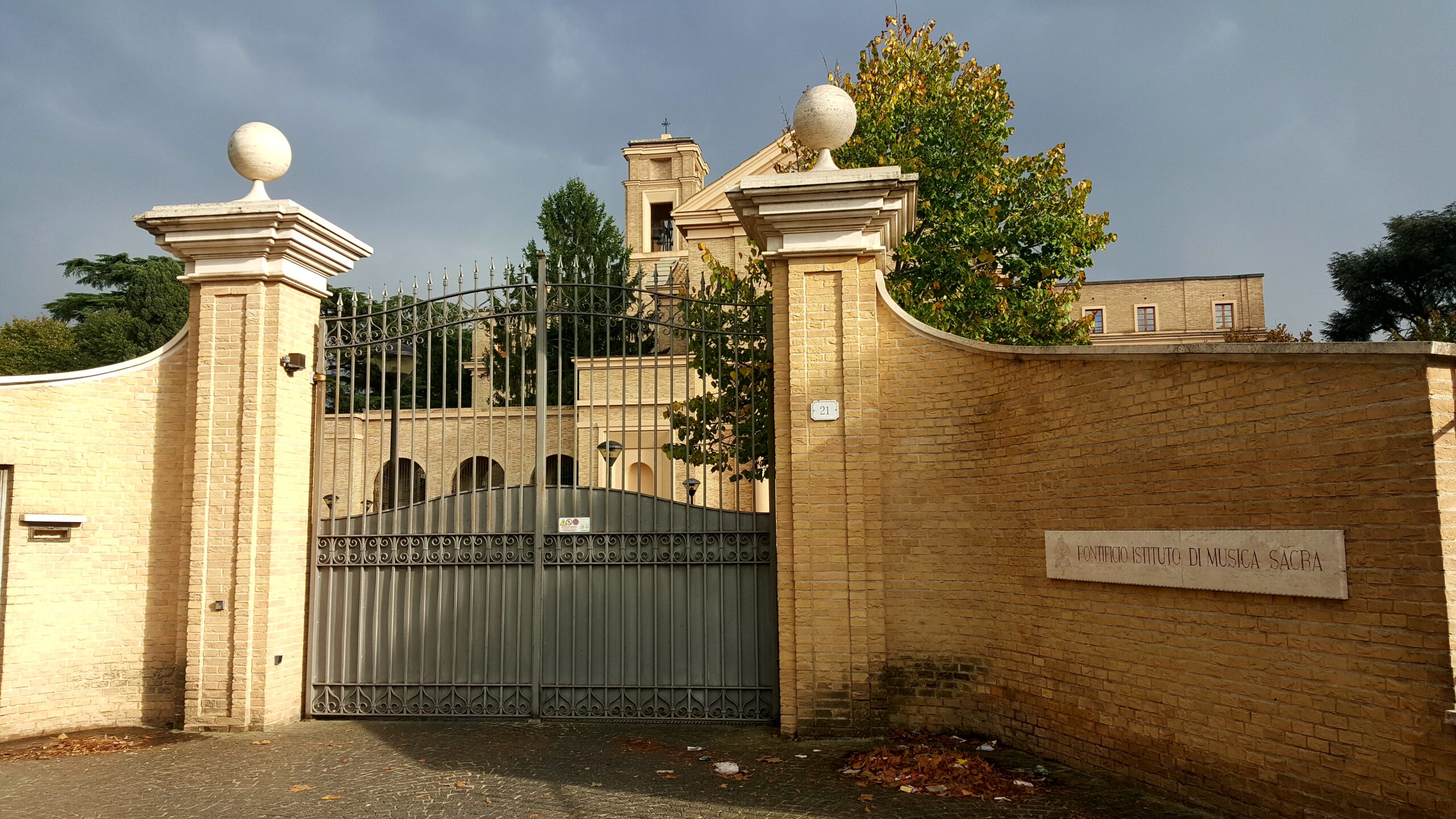
Still, “the [risk]” of politicization “is always present,” Cardinal Baltasar Porras, archbishop emeritus of Caracas, told The Pillar after an Oct. 17 event commemorating the canonizations at the Pontifical Lateran University in Rome.
“But there’s a clear conscience of the situation, people know the distinction. No one owns or controls the canonization, and it is evident that people know this, because they reject certain initiatives that don’t lead us anywhere.”
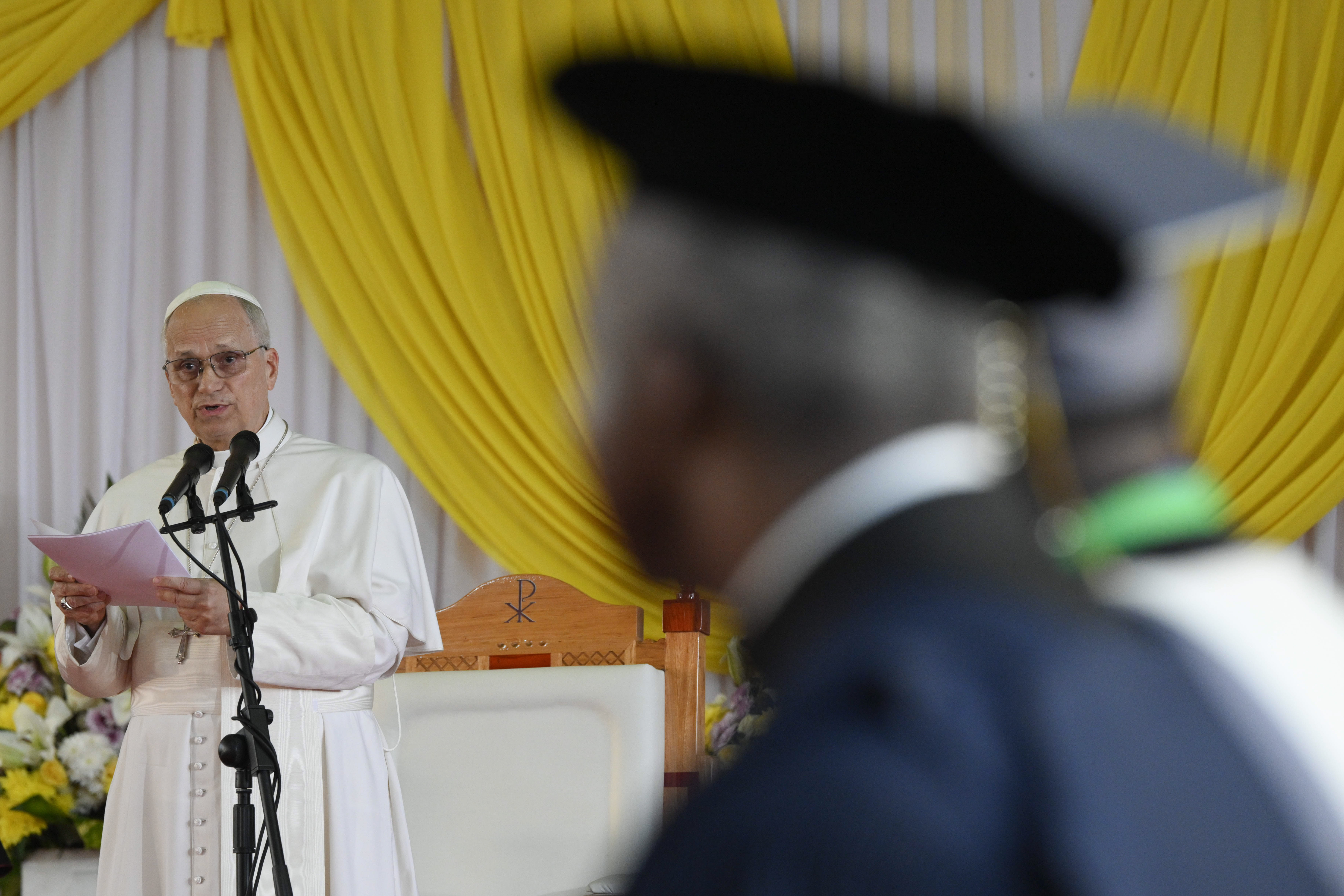
At the same event, The Pillar asked Archbishop Edgar Peña Parra, sostituto for General Affairs of the Secretariat of State, about the risk of the canonization’s politicization.
But as The Pillar asked questions of Peña Parra, a Venezuelan man who did not identify himself interrupted the interview, insisting that questions pertaining to the Venezuelan government were not acceptable, shoving The Pillar’s reporter and grabbing a recorder from his hand, and shoving him. After order was restored, Peña Parra resumed answering questions.
“There’s always a risk in this kind of act,” Peña Parra told The Pillar. “I remember that when we held the beatification, a lot of people said the same thing but it ended well.
It’s difficult that something like [politicization] happens, because José Gregorio is a saint of the Venezuelan people, the Venezuelan people love him.”
“Holiness calls us to the encounter, to share, to do things rightfully. This is what José Gregorio and Madre Carmen call us to do,” he added.
The Church is generally regarded as the most credible public institution in Venezuela, and bishops are widely respected for strong public stances in favor of human dignity and freedom in the country throughout recent years of political instability.
But after a 2024 presidential election in which Maduro’s victory in the election was internationally denounced as a manipulated result, the Venezuelan bishops had gone almost silent.
The opposition party claimed that its candidate, Edmundo González, won the election with 68% of the vote — and published online more than 80% of the country’s voting station tally sheets to back its claims. The regime has not published full voting station results.
But the elections were followed by perhaps the most radical crackdown on political dissent during Maduro’s time in power, with thousands of political prisoners and exiled activists, politicians and journalists.
Venezuelans have been arrested for sharing memes or criticizing the government in private conversations on WhatsApp.
The leader of the opposition is 2025 Nobel Peace Prize Award recipient María Corina Machado, who launched a “world prayer for freedom” campaign in early October, calling on the government to release all political prisoners in Venezuela amid the canonization.
That campaign seemed to have caught the attention of the Venezuelan bishops, as they wrote a pastoral letter on Oct. 8 in which they asked the government to “issue pardons that would allow those imprisoned for political reasons to regain their freedom,” because “it would promote peace and harmony not only for their families and loved ones, but for society as a whole.”
The letter has been taken in Venezuela as a reassertion of the bishops’ call for human rights reforms.
“The bishops are still doing their thing, but the situation means they have to be more prudent. But it’s not like they suddenly became government supporters,” said a senior source in the Archdiocese of Caracas, who request anonymity because of the country’s political situation.
“I think it’s important to differentiate between the bishops as a whole and specific bishops, such as Archbishop Biord, who are overtly friendly with the government,” the source added.
Biord’s predecessor, Cardinal Baltasar Porras, spent four years as the apostolic administrator of Caracas because a concordat in Venezuela allows the government to veto episcopal appointments.
Porras is widely perceived as a strong opponent of the regime, going as far as writing a letter calling for civic resistance against the Maduro government.
In his Oct. 17 address at the Lateran University, Porras said he could not forget “political prisoners, deprived of their freedom for reasons that are not always clear. This breaks the family and everyone suffers, without no one to go to.”
Porras’ speech received a thunderous standing ovation – with the exception of the government officials in the hall – with applause lasting almost two minutes.
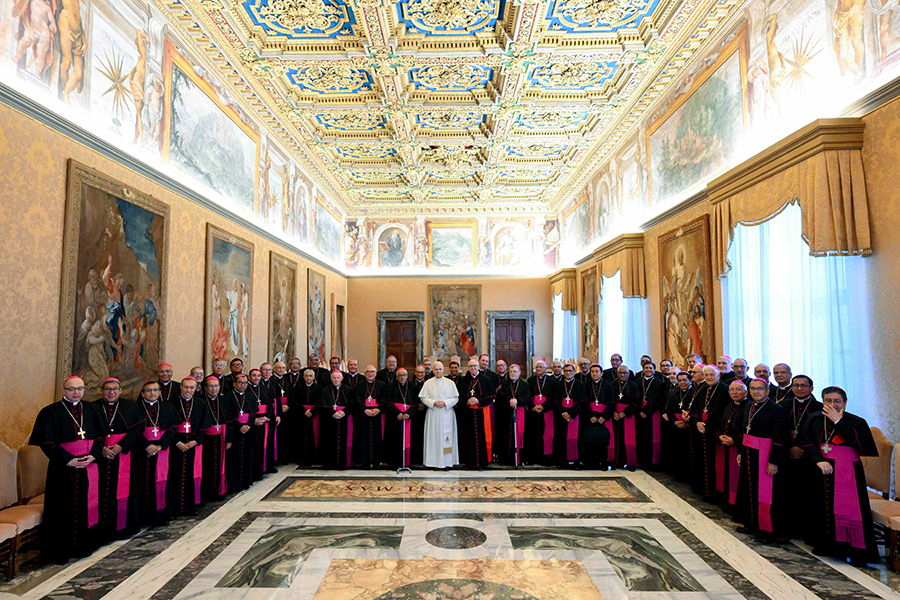
But since his election as Archbishop of Caracas in 2024, Archbishop Raúl Biord has come under fire due to a perceived excessive complacency in dealing with the Venezuelan government.
Biord’s appointment was viewed in the country as a compromise, to avoid the prospect stalemate over a more outspoken candidate.
The archbishop is not a friend of the regime, which pleases Venezuelan Catholics, but he has a less confrontational approach, which pleases the regime.
“He’s the best we could do, considering the circumstances,” a Vatican source told The Pillar back when he was appointed.
On Aug. 8, Biord met publicly with Maduro – something that Porras never did outside of official occasions – alongside the president’s son, Nicolás Jr., who serves as the government’s liaison for religion-related matters. Biord could be seen smiling alongside him in pictures.
The Venezuelan government has worked closely with the Archdiocese of Caracas to organize massive events to commemorate the canonization, including a Mass at Caracas’ largest baseball stadium.
While officials have not been publicly critical, some have expressed private concern about that collaboration.
“It seems some Venezuelan bishops are forgetting the prophetic dimension of their ministry,” a Vatican official with close knowledge of the Venezuelan situation told The Pillar.
“This can’t be. You always need to talk with everyone, but you have to be careful so as not to appear publicly complacent nor make it look like they’re buying your silence, which is what seems to be happening sometimes.”