





John Henry Newman: Doctor of Christian friendship

-
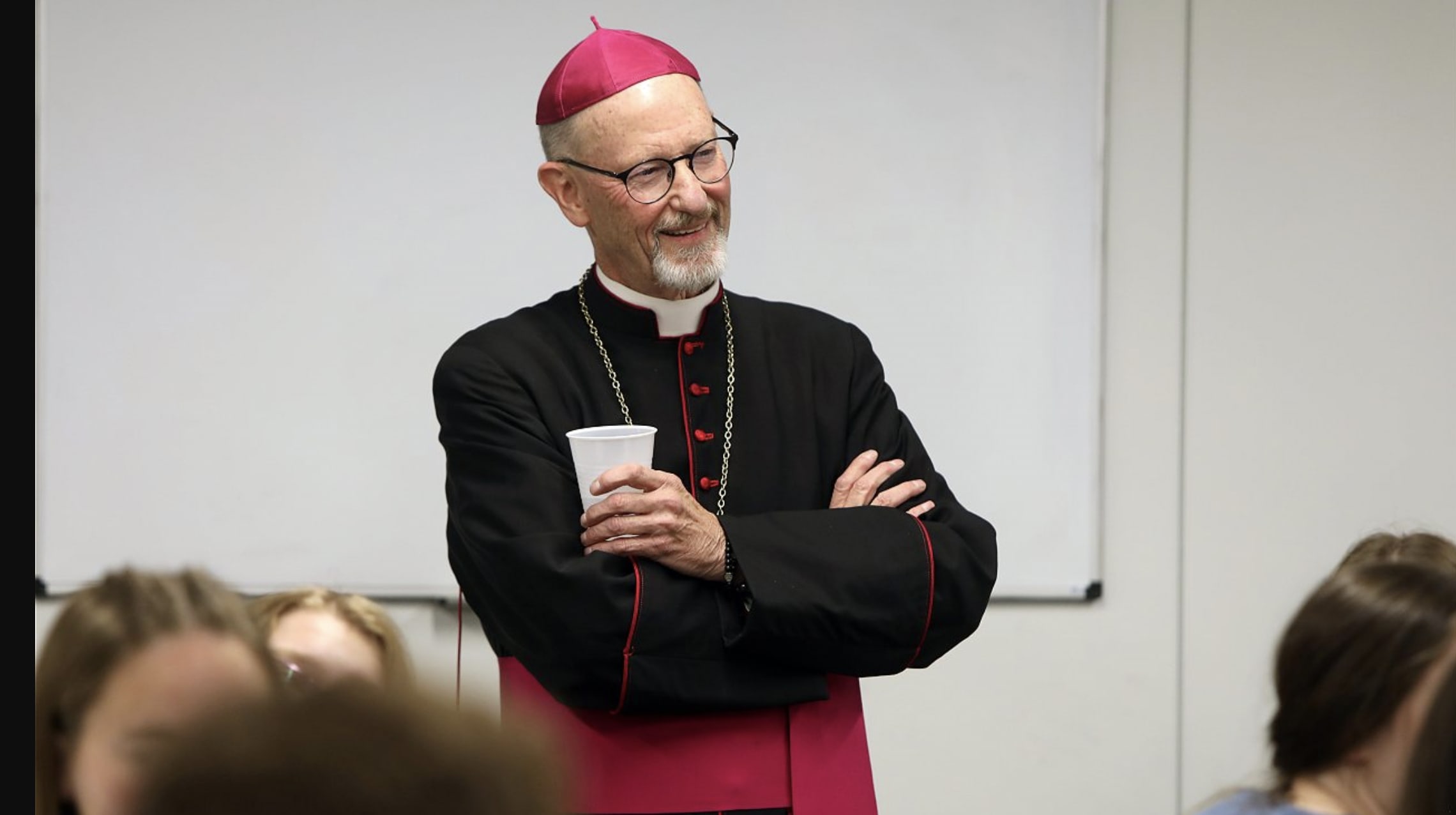
Pope Leo XIV declared on July 31 St. John Henry Newman will be the 38th Doctor of the Church.
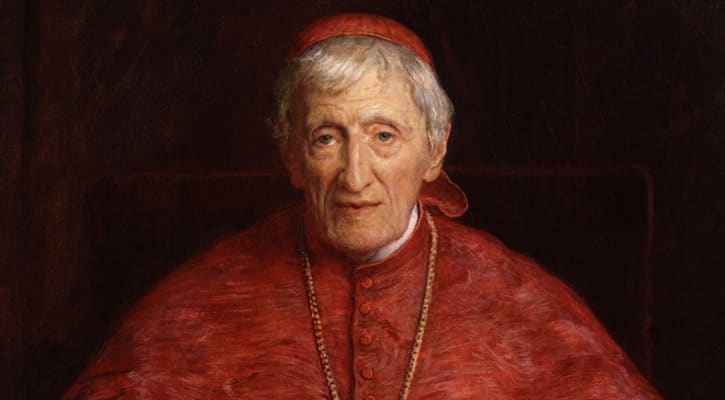
The 19th century English convert to the Catholic Church, sometimes referred to as the “silent father of Vatican II” because his writings anticipated and influenced many of the teachings of the Second Vatican Council, was named a cardinal in 1879 by another Leo — Pope Leo XIII.
Newman was the first cardinal created by Leo XIII. In fact, Leo XIII referred to Newman as “my cardinal.”
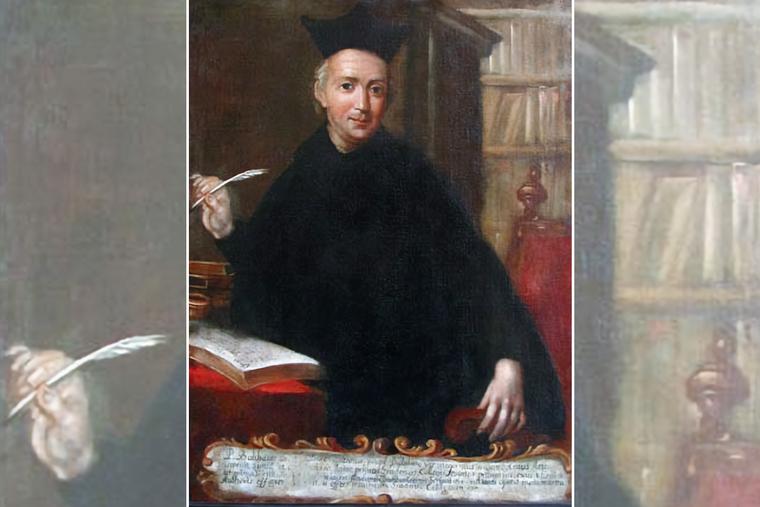
Before he became pope, when he was apostolic nuncio in Brussels, the future Leo XIII had become familiar with the Oxford Movement, of which Newman was the foremost leader. In 1845, he had met Blessed Fr. Dominic Barberi in Belgium, immediately after Barberi had received Newman into the Catholic Church.
It is a beautiful, bookended irony that Pope Leo XIV, in one of his first acts as pope, would elevate Newman to yet a higher rank, Doctor of the Church.
—
The first time I ever read anything by St. John Henry Newman was during my sophomore year of college at the University of Kansas. I was a student in a “great books” program, and we read short selections from Newman’s “Discourses on the Idea of University.”
The voice that came off the pages immediately captivated my imagination; it was unlike anything I had ever read. Up until that time, I had never heard of Newman and had not yet become a Catholic.
In my junior year I took a course entitled “Major British Authors after 1800,” a requirement for English majors, where I came across his name again in an anthology textbook assigned for the course.
Again, I heard that voice.
Victorian authors are not always easy to read — with their inordinately long sentences, endless subordinate clauses, and very ornate language — but Newman’s prose was mesmerizing to me.
One of his biographers, Muriel Spark, put it like this: “if there is one comprehensive thing that can be said about Newman’s writings, it is that he has a ‘voice’; it is his own and no one else’s.”
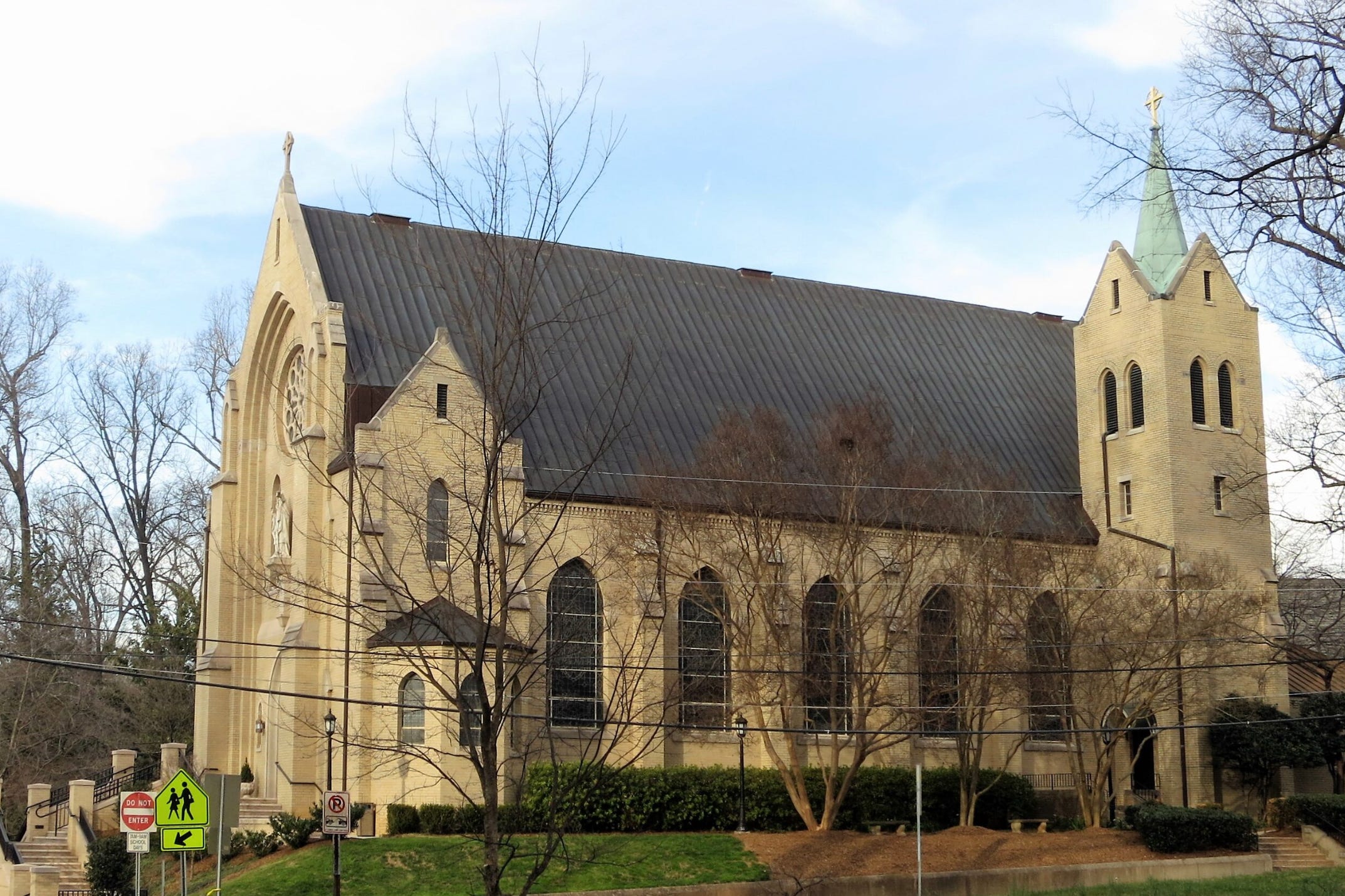
In addition to his academic duties as a fellow of Oriel College at Oxford, Newman, in his Anglican days, was also appointed vicar — or chaplain — of the university chapel, St. Mary the Virgin.
From that church’s pulpit, undergraduates came to hear the voice that I heard, as they listened to him preach at Evensong on Sunday afternoons.
Newman’s preaching became so popular that the dining halls on campus had to move the evening meal back an hour, because so many students were going to the university chapel for afternoon services.
Those college sermons were eventually published in eight volumes entitled “Parochial and Plain Sermons,” arguably the most famous compilation of sermons in the English language.
While Newman’s preaching in St. Mary’s became legendary, he was not a very dynamic speaker.
His voice was soft and melodious, full of subtle inflection as he read his sermons from the written page, making very little eye contact with the congregation.
To hear his voice, the students had to quiet themselves and listen very attentively as he preached from the high pulpit at St. Mary’s.
Matthew Arnold, the English poet and cultural critic, once wrote of Newman’s preaching, “the charm of that spiritual apparition, gliding in the dim afternoon light through the aisles of St. Mary’s, rising into the pulpit, and then, in the most entrancing of voices, breaking the silence with words and thoughts which were a religious music, subtle, sweet, mournful.”
It was quite common for students to remark that when Newman would preach, it was as if he were speaking to them personally, addressing something very deep in their own hearts.
—
Back to my junior English class, I ended up writing my final paper that semester on Newman. I remember asking my mother, who had worked as a secretary, to type my paper for me!
It was also around that time that I started doing a bit of church-hopping. I was reading a lot of CS Lewis, so I ended up frequenting the Episcopalian church. I figured if it was good enough for Lewis, it was certainly good enough for me!
But as I began looking into the origins of the Episcopalian church, I was led back to the origins of Christianity itself.
At that point in my spiritual journey, Newman’s famous words became real to me, “to be deep in history is to cease to be Protestant.”
I was a Catholic by Christmas of that year.
Discovering Newman as a mildly agnostic undergraduate, l did not expect that this once obscure Victorian writer would be beatified (2010) and canonized (2019) and become a Doctor of the Church, all in my lifetime.
For a saint to be declared a Doctor of the Church, he or she must be recognized as having made a significant contribution to theology or religious teaching through research, study or writing.
The range and volume of Newman’s writings is breathtaking. While perhaps he is best known for his writings on the development of Christian doctrine, the primacy of conscience, and the important role of laity in the Church, Newman wrote prolifically on history, philosophy, apologetics, social thought and political commentary. Considered by some to be the greatest English prose writer of the 19th century, Newman also composed beautiful poems, hymns and prayers, as well as publishing two fascinating novels.
But more important than his literary and theological contribution was his voice.
It was his unique and singular voice, a manifestation of his holiness of life and his personal influence, that moved my heart.
Not unlike two other great converts, St. Paul and St. Augustine, when one reads Newman, you hear a distinctive voice, and by that are given a window into his life and into the events that shaped his thinking.
Newman was not a systematic theologian or an author one could fit into any kind of neat literary genre or theological category.
In fact, Newman thought of himself as an “occasional writer.” By that, he did not mean that he would only “occasionally” write things. Instead, Newman insisted that all his works were “occasioned” by real events that were happening in his life, very often the trials and tribulations he was facing.
—
The Oxford Movement was a religious and intellectual movement within the Church of England in the mid-19th century which emphasized the Catholic heritage of Anglicanism and sought to restore traditional practices and beliefs. It was also an attempt to counter liberalizing and rationalist trends within the church and society, and to reaffirm the Church of England’s connection to early Christianity.
When Newman realized that the movement he was leading provided no pathway other than toward conversion to the Catholic Church, he was received into the Catholic Church on October 9, 1845.
With Newman’s conversion, scores followed him into the Church — for decades. Newman’s conversion dealt such a blow to the movement that some have said the Anglican Church has never recovered from the defection of John Henry Newman.
In 1846, the year after his conversion, Newman traveled to Rome seeking holy orders.
It soon became obvious to the Jesuit professors who were instructing Newman that he was prepared to be ordained a priest. Many thought that Newman would become a Jesuit or a Dominican, given his academic background at Oxford — but instead he was drawn to the Oratory of St. Philip Neri.
As a community of secular priests living under a rule — but not under vows — the Oratory of St. Philip Neri offered a middle way between a religious order and the diocesan priesthood.
The Oratorians did not take vows, but were bound together by friendship.
And indeed, friendship was always very important for Newman. Victorians were great letter writers, and Newman wrote over 17,000 letters which are now compiled, along with his diary entries, into 32 volumes.
One might say Newman’s life was a treatise on the human and supernatural virtues of friendship.
Newman was ordained a priest on May 30, 1847, and returned to England where he established the first Oratory of St. Philip Neri in Birmingham. The community was composed of his students and fellow members of the Oxford Movement.
—
When I was named a bishop in 2008 by Pope Benedict XVI, I was told I had to come up with an episcopal motto.
I was having a hard time picking something, when a good friend suggested that since I had such a great admiration and devotion to Newman, I should take his motto: Cor ad cor loquitur — “heart speaks to heart.”
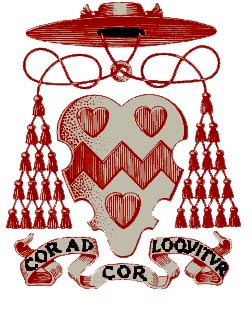
This made great sense to me. But I wondered if it was permissible to take someone else’s motto, so I called my good friend, now of happy memory, Fr. Ian Ker, the definitive biographer of Newman, who told me that Newman himself stole the line from St. Francis de Sales — so no worries!
—
I’d like to end with one last Newman story.
In the summer of 1990, I was a student in Rome, and I attended a two-week summer conference at the University of Oxford on the 100th anniversary of the death of Newman. Fr. Ian Ker, who had just published his biography of Newman, was directing the conference.
I met so many friends at that conference, some of whom I am still in contact with today.
After the conference my parents came to visit me in England, and they traveled with me back to Rome before they returned home to Kansas.
During their visit to England, we travelled for an overnight to Littlemore, the little village outside of Oxford where Newman retreated when he left Oxford.
He and several of his students and colleagues lived in a home they called “The College” from 1842 to 1846, making it a place of quiet prayer and study where they could discern a pathway forward.
It was there, on October 9, 1845, that Blessed Dominic Barberi received Newman into the Catholic Church.
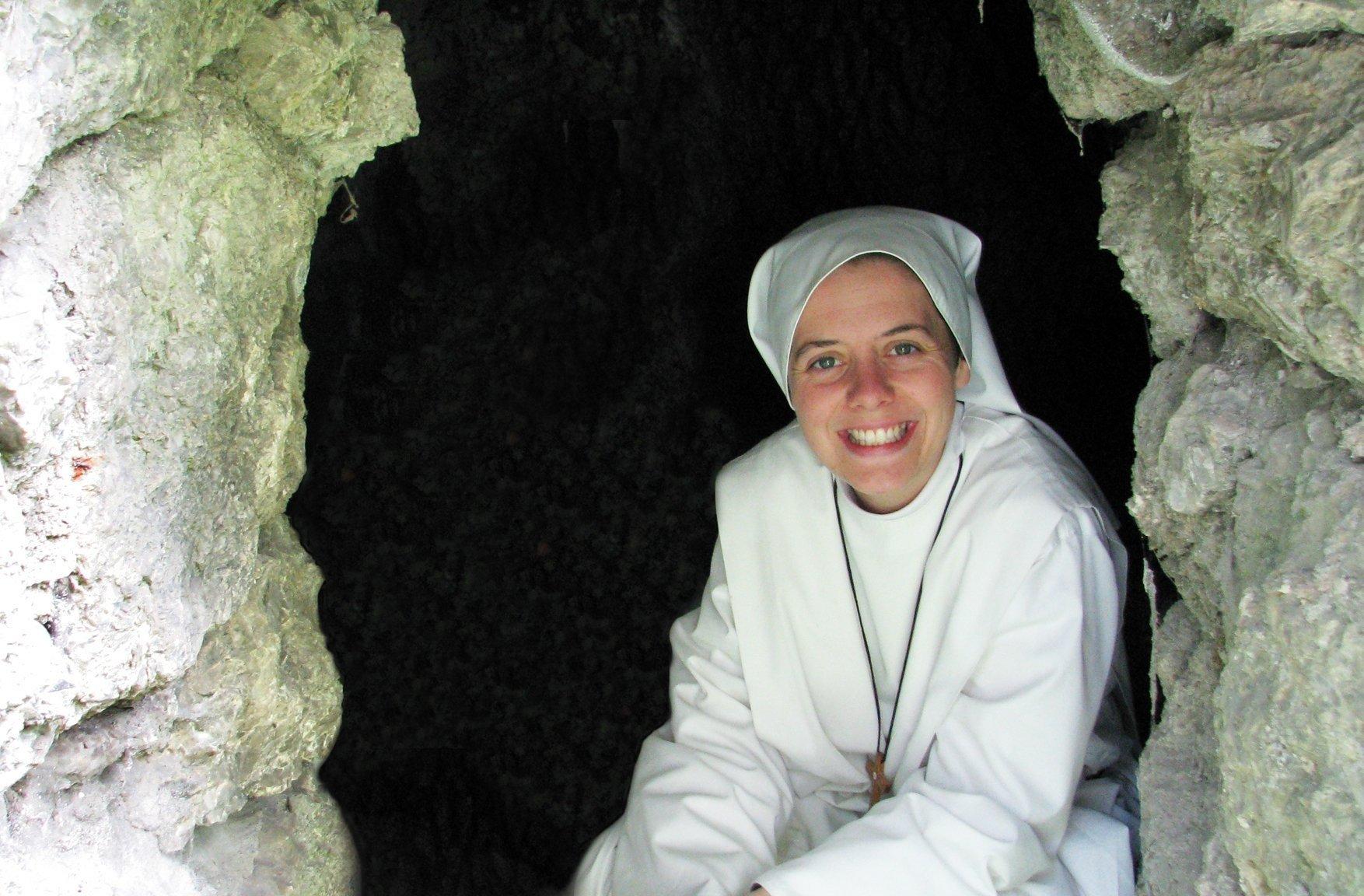
The College is now entrusted to a wonderful community of religious sisters who played a significant role in the process for the beatification and canonization of Newman.
Knowing that my parents were not Catholic, the sisters invited them to lodge in the rooms that were occupied by Blessed Dominic Barberi on the night he arrived in the pouring rain to receive Newman into the Church.
After my parents went to bed, the sisters suggested that we pray to Blessed Dominic for their conversion. We left the next day and made our way through France and to Rome.
Sometime the next spring I received a letter from my mother informing me that she and my father would like to be received into the Catholic Church.
On August 1, 1991, I had the honor and privilege of baptizing, confirming and administering first holy communion to my mother and father.
I can’t help but think that God and the good cardinal were smiling from heaven, when I asked my mom to type that English paper for me, 50 years ago this fall.