






‘Justice to the poor’ - The priest helping Americans get lawyers
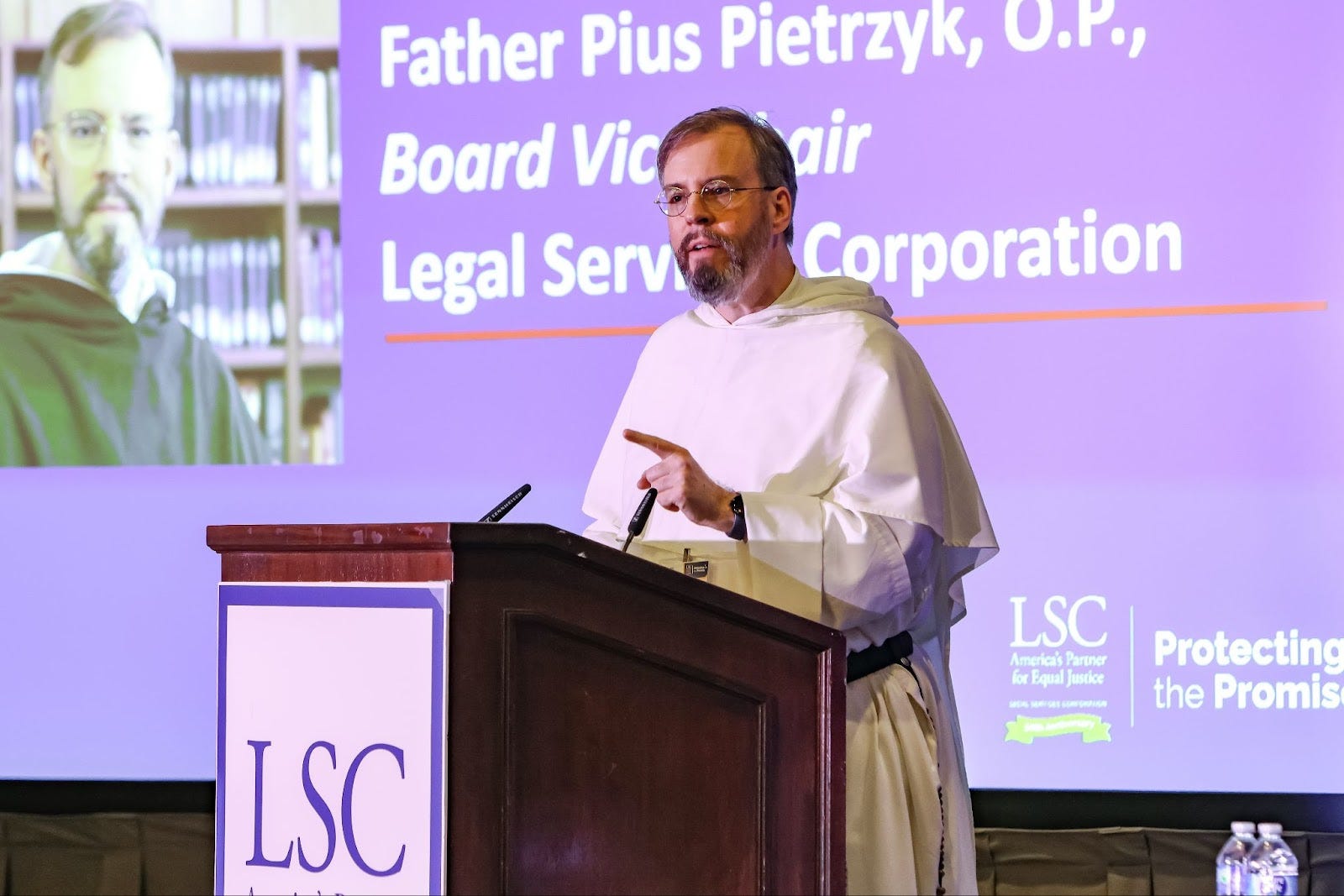
Father Pius Pietrzyk, OP, is used to turning heads when he walks onto Capitol Hill.
After all, it’s not every day that a habited Dominican priest walks through the halls of the U.S. Capitol.
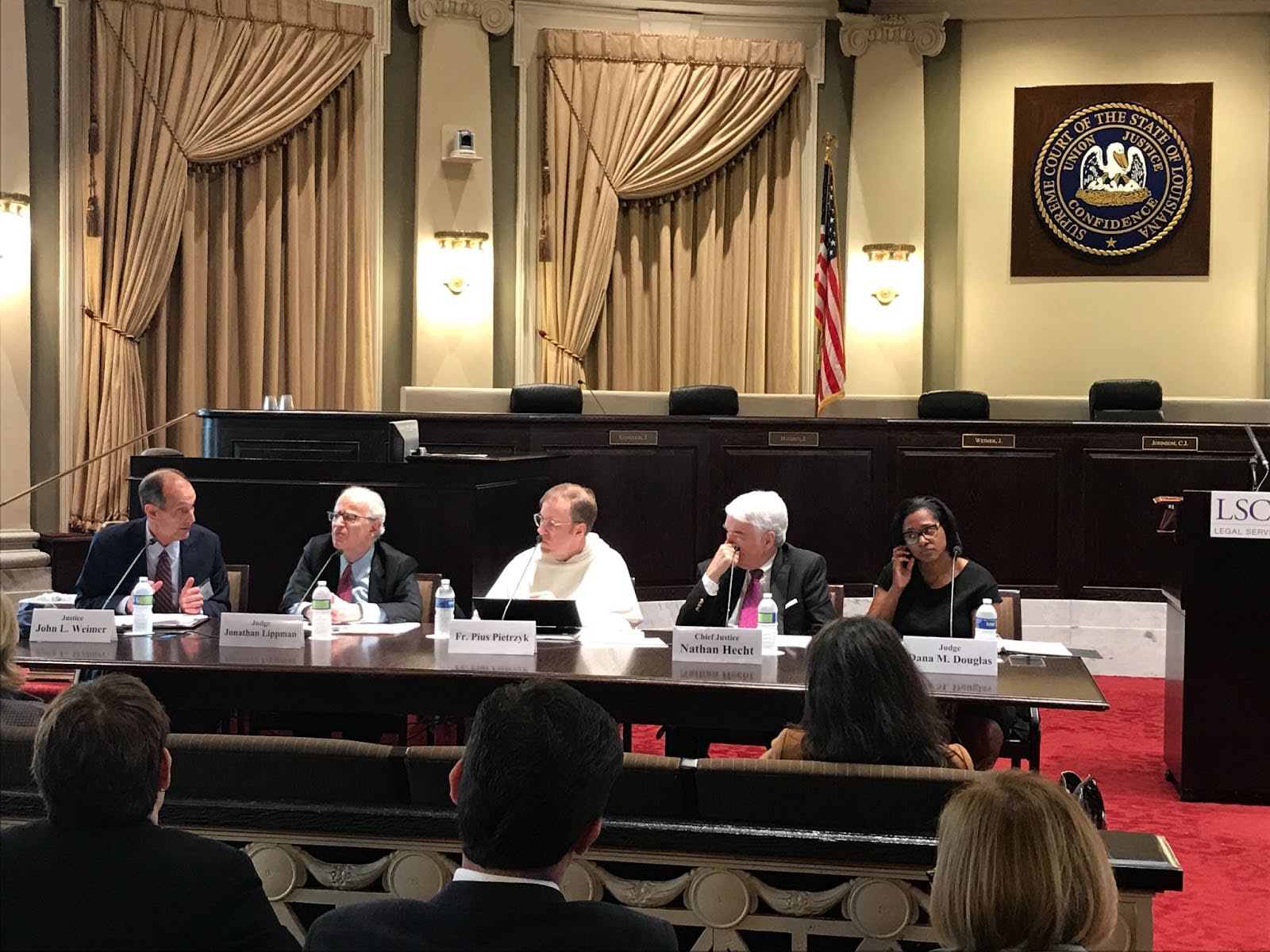
But Pietrzyk does so on a regular basis.
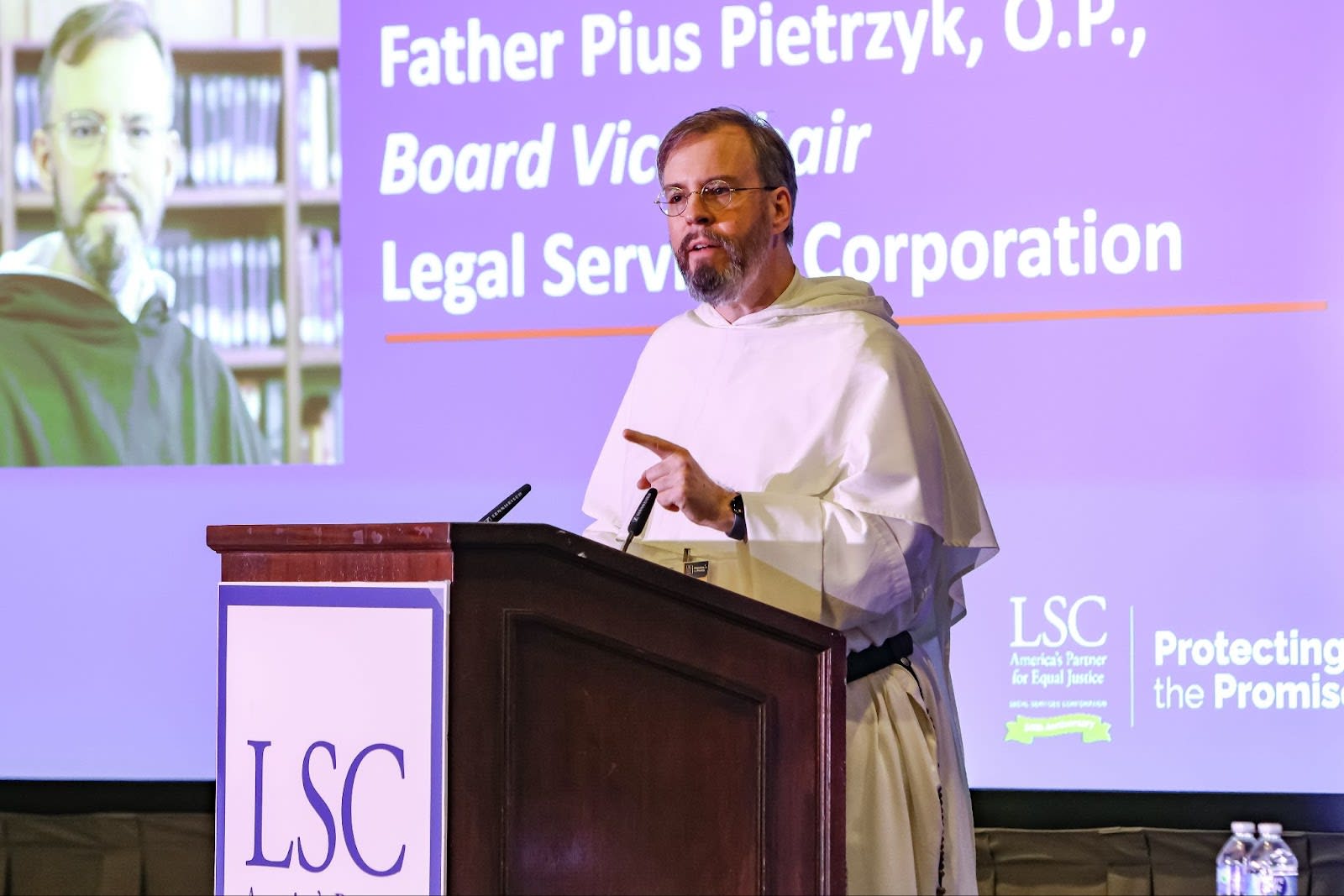
For 15 years, he has served on the board of Legal Services Corporation, a publicly-funded nonprofit founded by Congress, which works to provide low-income people with legal services across the country.
Board members of the Legal Services Corporation are appointed by the U.S. president.
After more than a decade as a board member, Pietrzyk said that many people see him as a familiar figure when he walks through the Capitol complex to meet with members of Congress and staffers.
“When I first arrived, they hadn't really dealt with a priest or religious before and especially because I wear the habit, it just got questions like ‘Who are you? Why are you wearing this? What are you doing?’” Pietrzyk said. “But I've been involved for so long now that basically everybody in the legal services community knows who I am.”
—
In 2010, Pietrzyk got a call from a staffer working for Senator Mitch McConnell, (R-Kentucky), then-House Minority leader. The staffer wanted to know if Pietrzyk would be interested in serving on the board of the Legal Services Corporation.
Pietrzyk responded that he was. His superiors approved the unusual assignment, and shortly after the White House gave him the nod, the Senate confirmed him in the role.
Today, Pietrzyk is one of few priests - perhaps the only one - to hold a presidentially appointed office that requires Senate approval.
In this role, he has had to balance his priestly ministry and civic responsibilities.
“I do realize that I walk a thin line,” he said.
“I don't want to be accused of proselytizing and I don't want to proselytize,” Pietrzyk said. “At the same time, I'm not shy about my own religious views and using religious imagery in my rhetoric and the way I talk about things.”
“I am always introduced as Father Pius, they always know that I'm a priest.”
“That balance has always been well regarded and well received. I try not to be overbearing about my religious views, but to balance between the witness of my own life and avoiding heavy-handed comments.”
—
Long before Pietrzyk started hanging out on Capitol Hill, he was already a Dominican friar. Before that, he was a lawyer working at a firm in Chicago, after graduating from the University of Chicago’s prestigious law program.
But after working practicing law for three years, Pietrzyk discerned that God was calling him to become a priest. He soon after discovered the Dominican friars, and entered the novitiate in 2002. He was ordained a priest in 2008.
Pietrzyk was parochial vicar in a rural Ohio parish when he was invited to be one of 11 members on the LSC’s board.
He’s since gotten a doctorate in canon law, been a professor in Rome and the U.S., and is now his province’s vicar for administration. Among a priesthood filled with changes, the legal services work has been a constant.
—
As a board member for the Legal Services Corporation, Pietrzyk helps oversee the allocation of government funds to grantee organizations, which provide legal services to low-income individuals and households.
Grantees provide people help sorting though legal issues, often connected to housing, child custody, and domestic violence.
Founded in 1974, the organization provides civil legal services only, not criminal ones. But according to data shared by the Legal Services Corporation, grants assist more than 5.2 million people every year.
“The Legal Services Corporation is part of America's commitment to provide justice for the poor,” Pietrzyk said.
“A lot of people don't realize that if somebody wants to take your house or your kids away from you, you do not get a free lawyer for that, you have to get your own. And a lot of people are too poor to be able to pay for it.”
People living at or below 125% of the federal poverty line - $40,188 for a family of four - are eligible to receive LSC services.
Some 52 million Americans, or 16% of the U.S. population, qualify.
“People realize that we have a commitment in the United States to the common good of justice, but our society is structured in a way that access to that justice means access to the courts, and access to the courts means access to a lawyer,” Pietrzyk said.
“Essentially, if you are too poor to afford a lawyer in these cases where you are losing your home and it's being unfairly taken from you, then where is your justice?”
The priest said he measures the organization’s success by its commitment to the poor.
“We should look at ourselves as an institution and determine our success in the way in which we help the poor,” he said. “I have always been insistent on keeping the image of the poor forefront in all of our work.”
Ronald Flagg, president of the Legal Services Corporation, told The Pillar that Pietrzyk brings a valuable perspective to the work of the organization.
“We help people out with their housing issues or their child custody or their domestic violence or rebuilding their homes after natural disasters. These are not political issues, these are issues that really should unite us and be nonpartisan,” Flagg said. “Father Pius' involvement embodies that non-partisanship and really underscores the point that we are trying to help people.”
“Certainly, from where I sit, that's very helpful.”
Pietrzyk said he tries to use his religious networks to find input and support for the work that LSC does.
“One of the things I try to do, particularly because I am a religious, is to get involvement from religious figures,” he explained.
“For example, on our task force for veterans, I had one of the bishops from the Archdiocese of the Military Service become involved in that. Then recently, for our task force on serving rural America, Bishop Paprocki from Springfield, Illinois was involved in that.”
The Legal Services Corporation has made national headlines as President Donald Trump and leading Congressional Republicans have proposed slashing the organization's funding, or even eliminating it.
Since the pandemic, the group’s funding has increased by 35%. In both fiscal year 2024 and 2025, LSC operated with a $560 million budget.
But the House Commerce, Justice and Science Subcommittee has proposed to cut the Legal Services Corporation budget to its 1999 funding levels, a 46% decrease. And in May, the White House proposed a budget that would shutter the organization.
If approved, Congressionally proposed budget cuts would have a significant impact on the organization's work.
“Our grantees already turn away half of the people who come to them because they don't have enough resources to help,” Pietrzyk said. ‘If our budget is cut, that's going to happen a lot more. Already there are some of our grantees who just struggle to stay open, so it would really hurt a lot of the people we serve.”
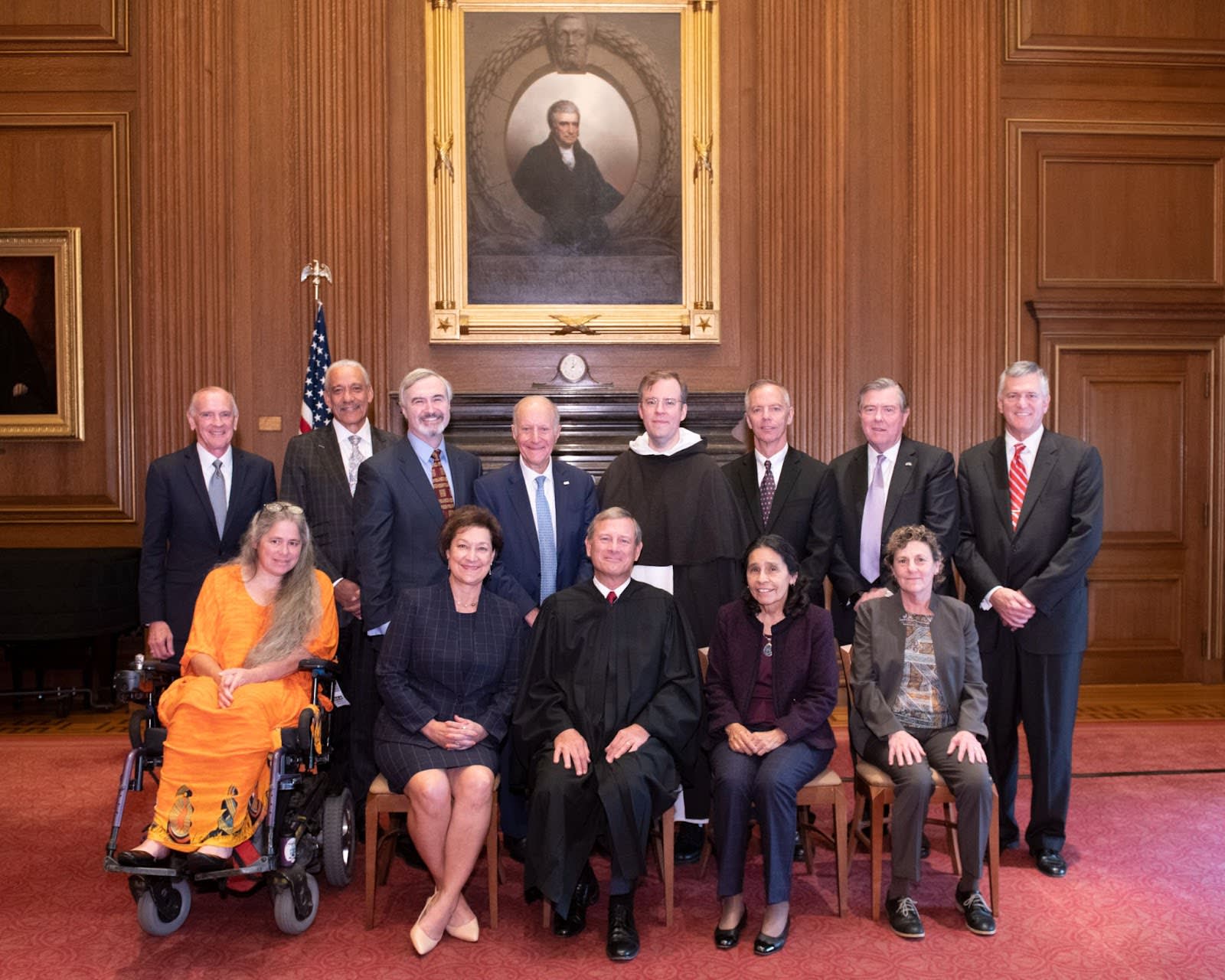
For his part, Pietrzyk is one of few Catholic priests serving in a role like his, in a publicly-funded, Congressionally overseen organization.
As far as he knows, he is the only priest to hold a position that requires Senate confirmation.
But he believes that there is room for more Catholic priests to serve in government roles.
“I think it would be great to have not just priests and religious, but people who have a religious identity to bring the values of religion into the public sphere because of the deep rooted morality that undergirds society,” Pietrzyk said. “Especially for Catholics, the tradition of our social teaching, the tradition of our approach to virtue and morality, it would be great to have that much more in the public sphere.”
For priests that do have the opportunity to work in government, Pietrzyk noted that Canon 285 lays out a stipulation: “Clerics are forbidden to assume public offices which entail a participation in the exercise of civil power.”
“You have to be careful because the law does prevent priests from doing that,” Pius said.
“Now being on a board of directors, I don't exercise civil power, so I'm fine,” he said. His superiors, who permit him in the position, agree.
Pius explained that the “civil power” provision of canon law was included in the 1983 Code of Canon Law in response to a few priests who served in Congress in the 1970s, creating controversy and drawing the ire of the Vatican by holding positions - such as support for legal abortion - that go against Church teaching.
“It's basically to prevent that from ever happening again,” Pietrzyk said.
From the government’s perspective, the priest noted, the free exercise of religion is protected in the Constitution, as is the idea that the United States cannot establish a state religion.
“The Supreme Court, particularly under Chief Justice [John] Roberts, is restoring a better balance and understanding that while we do not have an established religion in the United States, that nonetheless religious people are part of society,” Pietrzyk said. “They can be involved as religious people in society, and there's more space for them to be involved than in just religious society.”
“That's a good thing, so long as you are not using civil power to force membership in a church or the like on others. Even the Church would be opposed to that.”
Several of Pietrzyk’s colleagues said they appreciate the priest’s presence and the unique perspective that he brings to the workplace.
“The overall mission of legal services is to make sure that the low-income folks in our communities have fair access to our civil justice system,” John Levi, board chair of LSC, told The Pillar.
“Father Pius has the legal background, so he understands the complexity of the cases and the consequences. Having someone who has that training together with the priesthood, so he has a well formed conscience and love for the poor, my goodness, that's a powerful combination.”
Flagg agreed.
“The Catholic Church is known for serving people, particularly those who are in need. So it resonates with people when Father Pius is talking about how legal aid helps people in need with their sort of most basic human needs, whether it's shelter or food or safety,” Flagg said.
“Those are not political issues. Those are human issues.”
From Pietrzyk’s perspective, the work with LSC has enhanced his priesthood - and his priesthood has enhanced his work with LSC.
“I have become aware of the needs of the poor and the difficulties of the poor, which I think really informed my priesthood,” he said. “Hopefully my own priesthood helps to inform the way in which we approach the service that we do for the poor.”