







Pope Leo approves reordering of Chinese dioceses, appoints new bishop
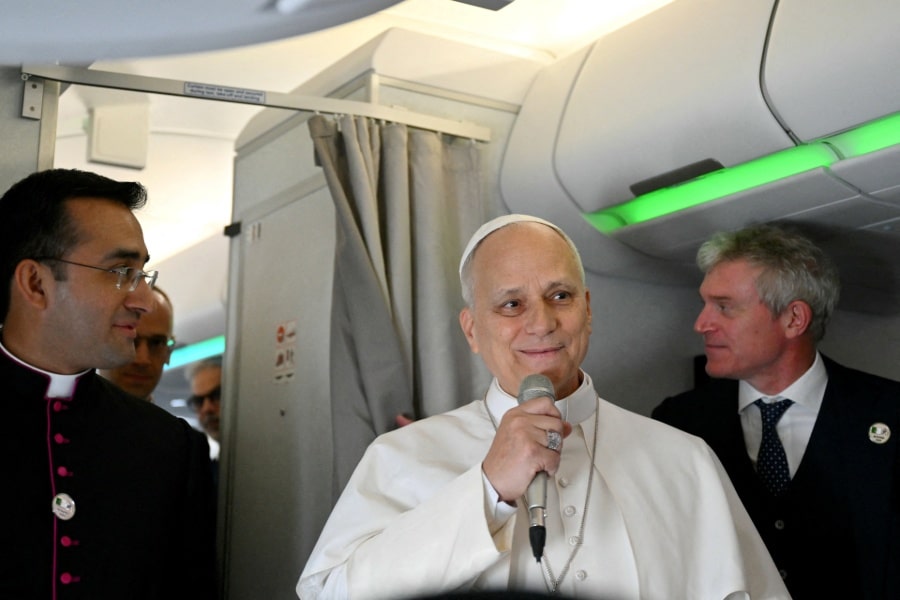
Pope Leo XIV has suppressed two dioceses in mainland China, and erected a new diocese with a new bishop, the Vatican announced September 10, a move suggesting a new level of cooperation between China and the Vatican on mainland Church affairs.
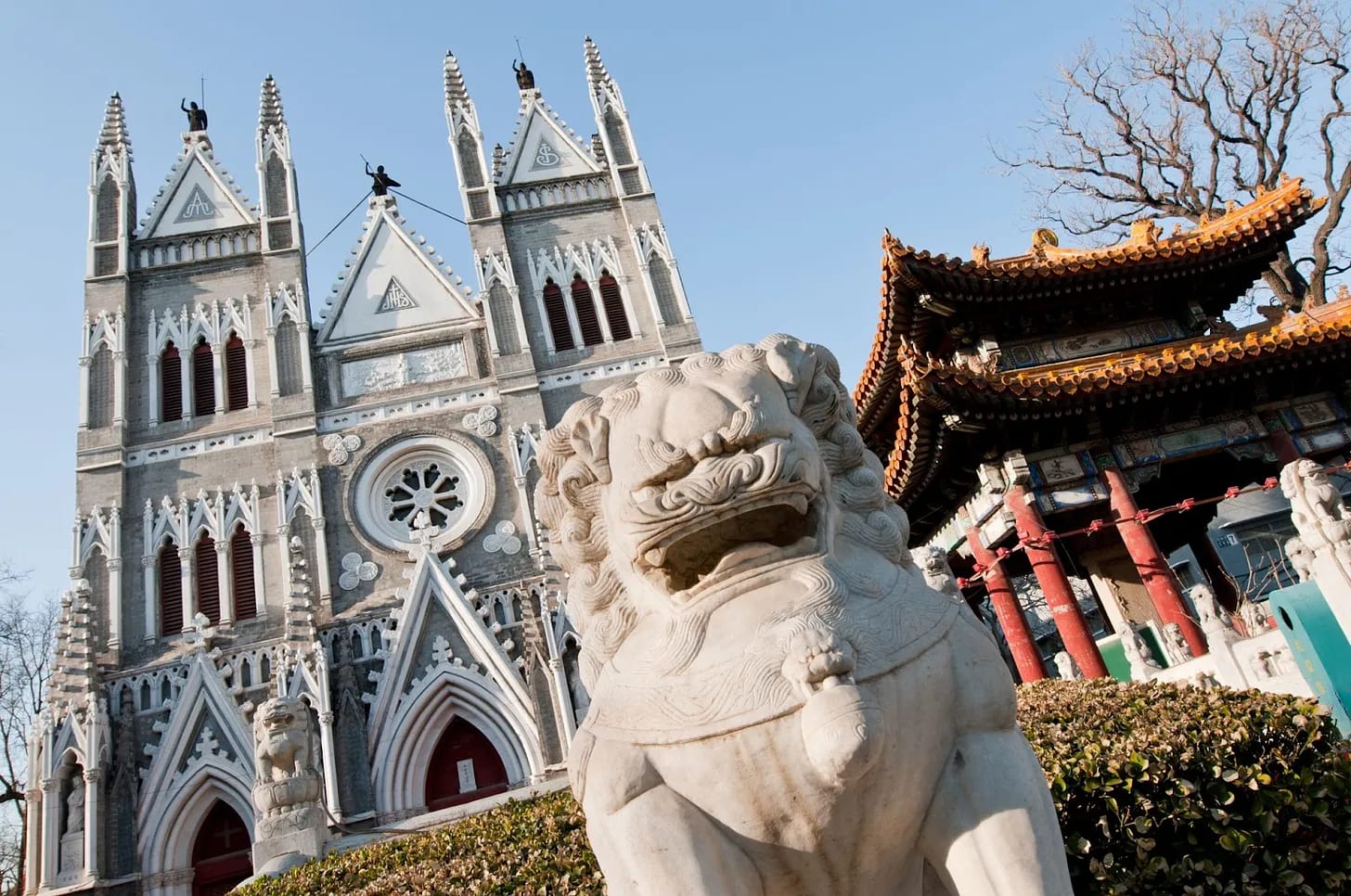
The announcement represents the first occasion under Pope Leo in which the territory of mainland Chinese dioceses has been altered to reflect civil jurisdictions, and the first time such alterations have received papal approval since the 2018 Provisional Agreement between the Vatican and China on the appointment of bishops, signaling a possible renewed level of cooperation between Rome and Beijing.
Several previous instances have seen Chinese state authorities attempt to invalidly create and suppress dioceses without papal involvement.
The Vatican press office announced Wednesday that the pope had “decided to suppress the dioceses of Xuanhua and Xiwanzi,” which had been erected in 1946, and “at the same time to erect the new Diocese of Zhangjiakou, suffragan of Beijing,” in order to “promote the pastoral care of the Lord’s flock and to attend more effectively to its spiritual good.”
Unmentioned in the official announcement is the future of the two bishops of the now-suppressed dioceses, both of whom were members of the underground Church in China, and refused to join the Chinese Patriotic Catholic Association, the state-sponsored body which oversees sanctioned Catholic practice in the country.
According to reports, Bishop Augustine Cui Tai of Xuanhua, 75, who has been subject to several rounds of state sanction, including house arrest, is now identified as “retired,” while Bishop Joseph Ma Yanen of Xiwanzi has been appointed as auxiliary bishop of the new Diocese of Zhangjiakou.
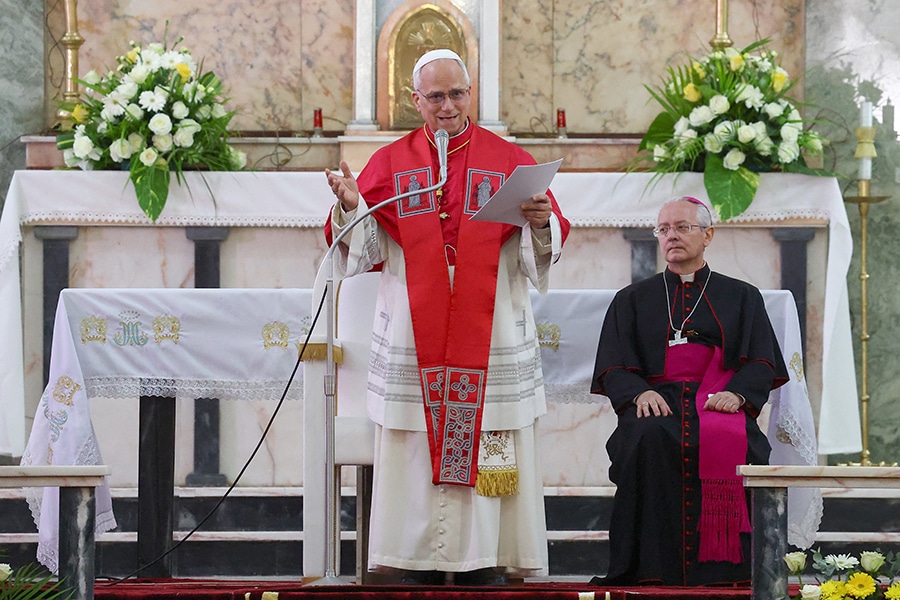
Pope Leo made the decision to suppress the dioceses on July 8, according to the Vatican statement, which was released Sept. 10 to coincide with the consecration of Rev. Giuseppe Wang Zhengui as the new diocese’s first bishop, whose candidacy received papal approval “within the framework of the Provisional Agreement between the Holy See and the People’s Republic of China.”
The territory of the new Diocese of Zhangjiakou substantially conforms to the civil jurisdiction of its principal city of Zhangjiakou, with several other regions of the two suppressed dioceses being transferred to the sees of Jining and Beijing.
The announcement represents a significant development in Vatican-China relations for several reasons.
It is the second occasion since Leo’s election that Rome and Beijing have cooperated on the appointment and announcement of a mainland bishop under the terms of the Vatican-China deal.
The announcement signifies the first time that China and the Vatican have mutually agreed to the restructuring of mainland diocesan territory, to see diocesan boundaries conform to civil jurisdictions.
Many Catholic mainland dioceses predate the 1949 Communist Revolution, which restructured the civil boundaries of city and territorial governments. Because diocesan boundaries often cross civic territorial lines, Chinese government authorities have for several years pushed to see diocesan boundaries reordered to align with contemporary civil jurisdictions.
While that has been a priority for state authorities, boundary restructuring is not a topic covered by the norms of the 2018 Vatican-China agreement, which concerns only the appointment of bishops.
Still, senior sources in China have told The Pillar repeatedly that Chinese officials have attempted to reconfigure diocesan territories on their own authority, without awareness or concern for the canonical and ecclesiological problems those moves create, since a diocese can only be erected or suppressed or otherwise altered by the pope.
The Vatican’s Sept. 10 announcement — that the suppression of the dioceses of Xuanhua and Xiwanzi and the creation of the Diocese of Zhangjiakou were approved by the pope in July — suggests renewed cooperation between the Vatican and Chinese state authorities, given that news of the changes was withheld on the mainland until a candidate for bishop of the new diocese had been approved by Leo.
Previous instances of unilateral episcopal selection and diocesan restructuring have not involved coordinated announcements with Rome, and been conducted without papal approval.
That move followed previous occasions on which Chinese authorities have unilaterally acted to redraw the mainland diocesan map, including the transfer of the Bishop of Yujiang, Bishop John Peng Weizhao, to become auxiliary bishop of Jiangxi, a diocese created by the state by the combination of the five dioceses in the metropolitan province of Nanchang.
Those moves created new dioceses which, according to Vatican statements at the time, are “not recognized by the Holy See,” nor are the slates of episcopal appointments and transfers made by the government to lead them.
Those moves by state authorities remain unresolved with Rome and, analysts have noted, the continued creation of unsanctioned mainland dioceses has threatened to create an effectively parallel Church in China, unrecognized by Rome.
While reconciling previous state actions to create new dioceses remains a problem to be solved, Vatican-China watchers have noted in recent weeks that halting further invalid diocesan restructuring would be a key test of Vatican-China relations during the new pontificate.
The news Wednesday that Leo had approved the reconstitution of several dioceses is the latest sign of a reset in cooperation between the Vatican and China under the new pope.
Following the death of Pope Francis, and while the College of Cardinals was gathered in Rome during the sede vacante period, Chinese authorities announced the “election” of a bishop to the mainland Diocese of Xinxiang, despite there being no pope to actually make the appointment or confirm any such nomination.
The Vatican-China deal was last renewed in October of 2024, for a period of four years.