









President of Germany’s ZdK re-elected
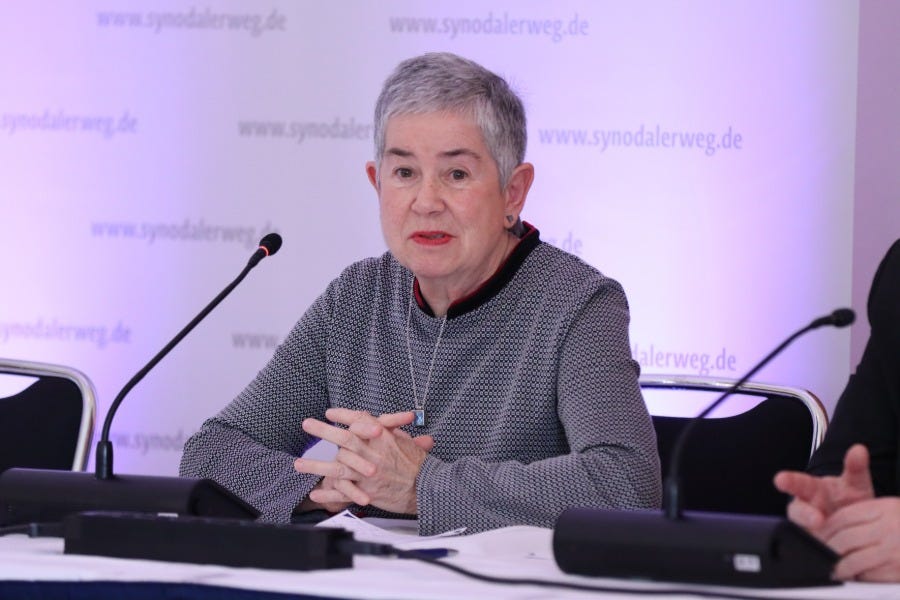
Irme Stetter-Karp, a key architect of Germany’s controversial synodal way and one of Europe’s most outspoken progressive Catholics, was re-elected Friday as president of the lay Central Committee of German Catholics.
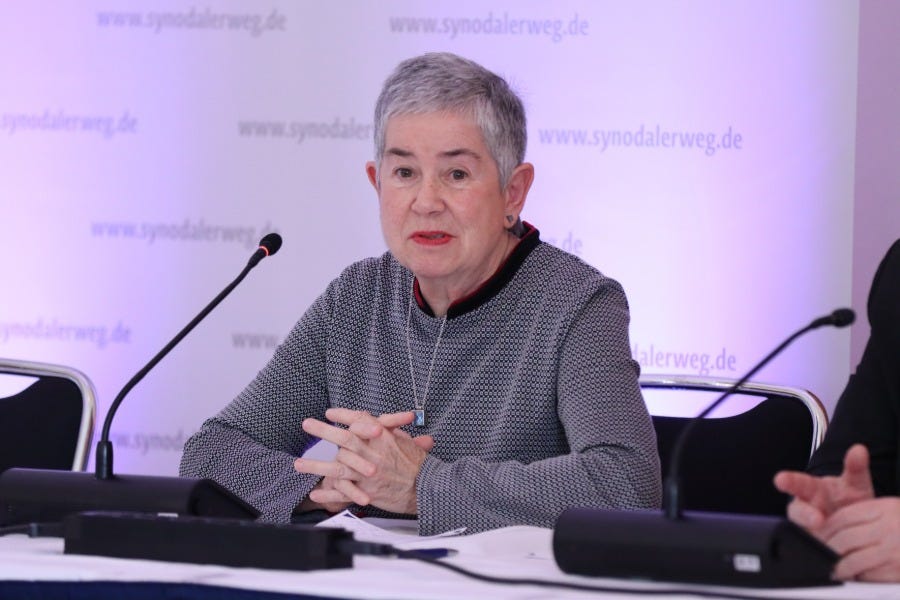
Stetter-Karp, who is also at the forefront of a push to establish a permanent new synodal body in Germany, won a second four-year term at the organization’s helm by 127 votes in favor to 31 against, with 11 abstentions.
Stetter-Karp, 69, said she intended to lead the body known by its German initials, ZdK, in the years 2025-2029 “with energy and passion.”
“Together with the ZdK, I stand for the belief that democracy and Christianity belong together — in times when the enemies of democracy are growing stronger. We take a stand — for a just society, for cohesion, for the renewal of our Church,” she said in her acceptance speech at the ZdK’s plenary assembly in Berlin.
Stetter-Karp, a social scientist by background, was first elected ZdK president in 2021, succeeding the politician Thomas Sternberg. She ran against the theologian Ulrich Hemel, winning by 149 votes to 41. In 2021, she gained 78% of votes. In the new vote, in which she stood unopposed, she won 80% of votes cast.
Participants in the ZdK’s plenary assembly were also due to vote on whether to approve the statutes of a new national synodal body, known as the synodal conference, consisting of bishops and lay people.
The statutes were finalized Nov. 22 at a meeting of Germany’s interim synodal committee in Fulda. Following their approval by the ZdK, they must be endorsed at a plenary assembly of the bishops’ conference.
If the statutes clear all the hurdles in Germany, they will be submitted to the Vatican for recognitio ad experimentum, or approval on an experimental basis.
Pope Leo XIV was asked if he intended to approve the synodal conference during the flight from Rome to Turkey Nov. 27, at the start of his first foreign trip. According to German media, he replied: “We shall see.”
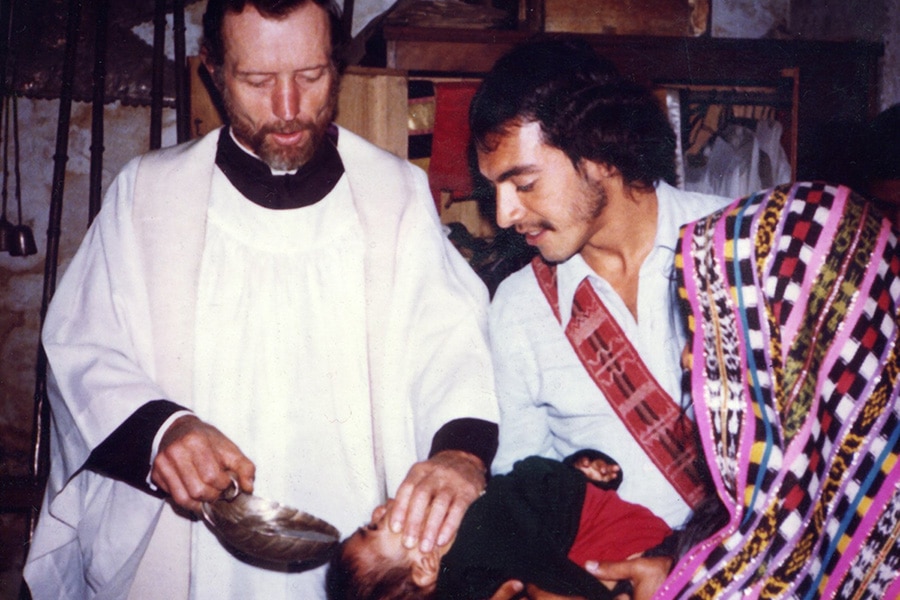
Stetter-Karp was born in Ellwangen, a town in southern Germany, in 1956. She was the 12th child of a family of innkeepers and farmers. One of her older brothers, Karl (Carlos) Stetter, served as Bishop San Ignacio de Velasco, Bolivia, from 1995 to 2016.
A mother of two children, Stetter-Karp worked for the Diocese of Rottenburg-Stuttgart for many years, becoming director of the diocesan Caritas association in 2000.
When the Vatican ordered the Catholic Church in Germany to withdraw from the state-run system of pregnancy counseling in 1999, Stetter-Karp and other ZdK members helped to found the association Donum Vitae, with the intention of preserving “the Catholic element” in the state-approved counseling system.
Her stance on abortion provoked an outcry in 2022 when she wrote a newspaper article responding to the German Bundestag’s decision to approve the deletion of a section of the country’s criminal code prohibiting abortion advertising.
Stetter-Karp said the ZdK believed that abortion should not be considered a “regular medical service.” But she added that “it must be ensured that the medical intervention of an abortion should be made possible nationwide.”
The German bishops’ conference sought to distance itself from her remarks.
Following her election as ZdK president in 2021, Stetter-Karp became co-president of the synodal way, alongside German bishops’ conference president Bishop Georg Bätzing.
Bätzing is himself due to stand for re-election in March 2026. If he is re-elected, he will serve for another six years as bishops’ conference president, until 2032.
As ZdK president, Stetter-Karp led a drive to exclude members of the Alternative for Germany party from holding lay offices in the Church.
She argued that the AfD had “moved further and further to the right” since it was founded in 2013 and said “it is clear that antisemitic, racist, inhumane attitudes and statements have no place in a Catholic organization.”
Germany’s bishops unanimously declared in 2024 that the AfD and similar parties “cannot be a place of political activity for Christians and cannot be voted for.”
The proposal to create a new national synodal body in Germany emerged during the 2019-2023 synodal way, an initiative that brought together bishops and select lay people to discuss far-reaching changes to Catholic teaching and practice.
A synodal way resolution passed in September 2022 called for the establishment of a permanent “advisory and decision-making body” composed of bishops and lay people. It said the new organ would “take fundamental decisions of supradiocesan significance on pastoral planning, future perspectives of the Church, and financial and budgetary matters of the Church that are not decided at diocesan level.”
But in January 2023, the Vatican told German bishops that neither they nor synodal way participants had the authority to establish the body.
The Vatican argued it would represent “a new governance structure of the Church in Germany which … would place itself above the authority of the German bishops’ conference and would in fact appear to replace it,” undermining episcopal authority as outlined in the documents of Vatican Council II.
Following a series of talks with Vatican officials, German bishops agreed not to establish the new organization without Rome’s approval.
The synodal conference’s statutes, which consist of 12 articles, seek to allay Vatican concerns that the new body would undermine the authority of the country’s bishops’ conference and diocesan bishops.
The text says the synodal conference “respects the constitutional order of the Church and preserves the rights of diocesan bishops and the German bishops’ conference, as well as diocesan procedures and bodies.”
The new body would consist of all 27 diocesan bishops and 27 ZdK representatives. A further 27 members are due to be elected at a final synodal way assembly in Stuttgart on Jan. 29-31, 2026.
According to the statutes, episcopal and lay members of the synodal conference will “deliberate and make decisions together to fulfill the Church’s mission.” All members would have equal voting rights.
Stetter-Karp has insisted that the synodal conference will not be a “paper tiger.”
“Bishops and lay people unanimously adopted the statutes for the synodal conference, with the formula that has always been important to us as lay people: that we deliberate and decide together,” she said in an interview after the statutes were finalized.