




Slovak bishops: State funding changes will harm Church schools

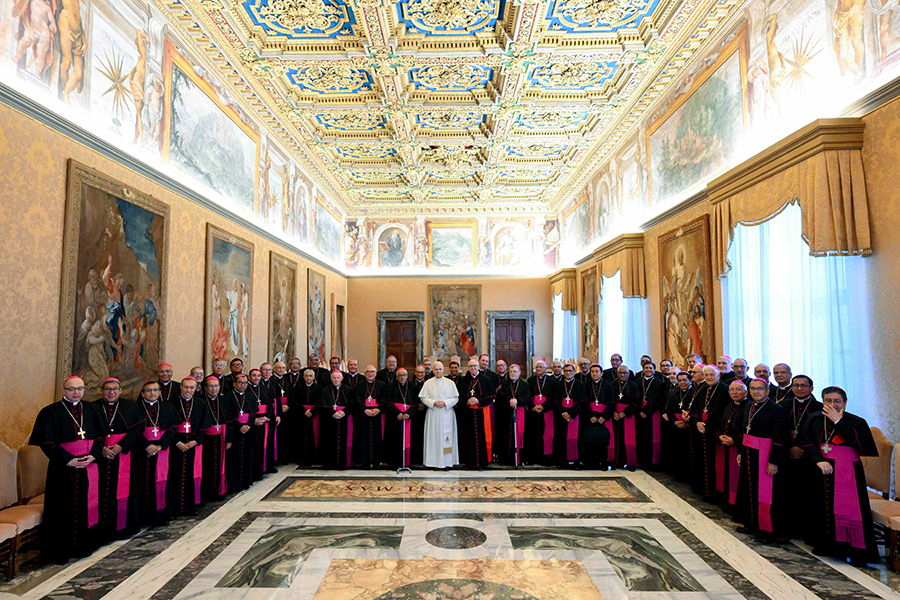
Slovakia’s bishops said Wednesday that a proposal to reduce state funding for schools that fail to meet strict new government criteria poses “a serious risk of weakening the character and financial stability of Church schools.”
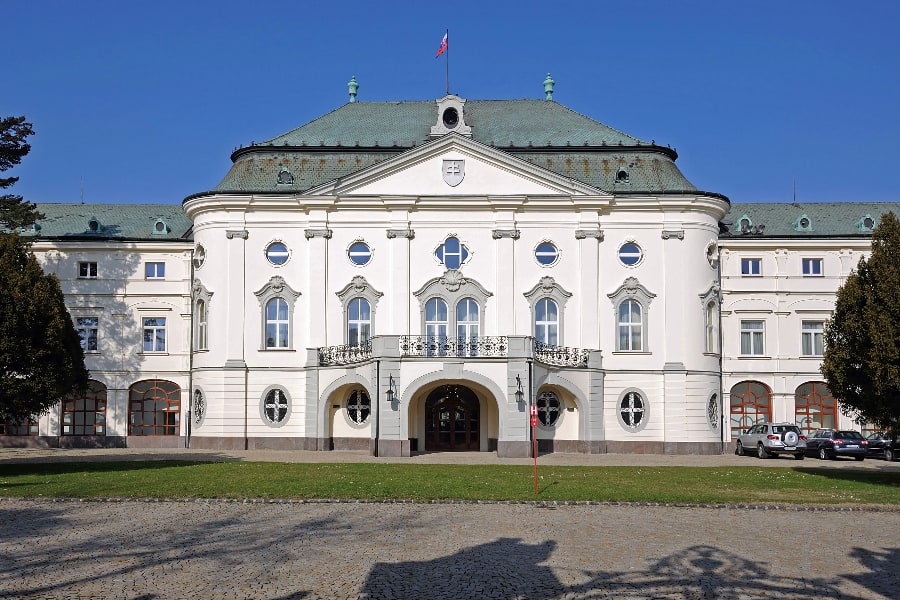
The bishops called “unequivocally” Sept. 10 for changes to government plans to cut subsidies to private and Church schools by 20% if they do not meet the new criteria for operating as “public providers of education and training.”
The bishops, who are in ongoing dialogue with the Ministry of Education over the proposal, stressed that “the free choice of school based on religious beliefs is one of the fundamental rights of parents and children.”
They urged the ministry “to take these principles into account and prepare a solution that is fair, balanced, and sustainable.”
“Without a clear and fair amendment to the law, it will not be possible to guarantee equality in education or to preserve the fundamental rights of parents in the upbringing of their children,” the bishops said.
Slovakia is a Central European country bordering Austria, the Czech Republic, Hungary, Poland, and Ukraine. It has a population of 5.4 million, but is experiencing demographic decline, with a record-low number of births in 2024. Around 56% of the population identifies as Catholic.
The Slovak government is a coalition of three parties led by Prime Minister Robert Fico, a Catholic who advocates a mixture of left-wing and nationalist policies.
The government says that its changes to school financing are aimed at standardizing funding rules for the various types of schools in Slovakia. It argues that the present system — in which non-state schools receive the same funding as public schools but may also collect tuition fees — favors pupils from higher-income households and could undermine the public education system.
Under the government’s proposal, private and church schools will only be able to receive full state funding for their students if they abolish tuition fees, join local school districts, and accept at least 70% of pupils from their neighborhoods.
Schools that choose to remain “non-public providers” could charge fees but only receive 80% of the full subsidy.
The government approved the proposal in August and hopes it will enter into force in January 2026, with the 20% reduction introduced in 2027. But Slovakia’s parliament must first approve the changes.
Associations of private schools and Church schools have criticized the move, and a petition against the changes has gathered more than 15,000 signatures.
The opposition Christian Democratic Movement, a center-right party, has said the changes would discriminate against children at religious institutions.
The Slovak bishops also objected Sept. 10 to government plans to abolish a public holiday on Jan. 6, when the country’s Latin Rite Catholics celebrate the Solemnity of the Epiphany of the Lord.
Slovakia’s finance minister Ladislav Kamenický announced plans to abolish three public holidays, Jan. 6, May 8 (marking the end of World War II in Europe), and Nov. 17 (marking the end of communism). The changes are part of a package aimed at improving the country’s strained public finances.
The bishops said: “Holidays are associated with the experience of faith and traditions within the family and the wider community, which deserves deeper discussion.”
“The abolition of holidays, as well as the lifting of the ban on sales during holidays, with the aim of achieving economic gain should not be the only criterion for assessing the benefit to society as a whole.”