





‘The Church of the sheaves’ — preparing priests for the re-evangelization of the West
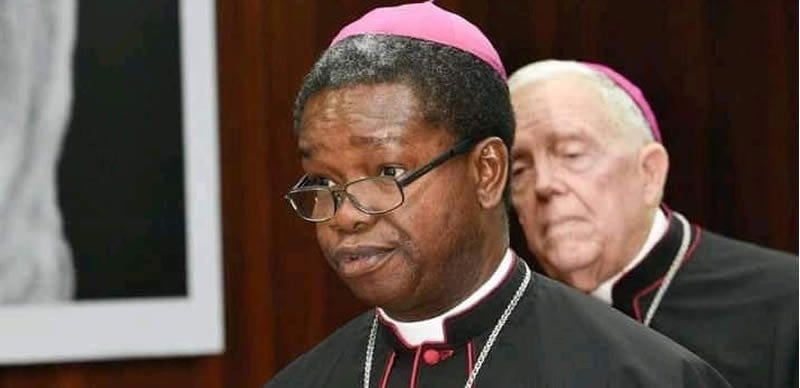
As the number of non-western clergy, religious, and laypeople serving in dioceses in the West continues to grow, so too is the need for resources to help them adapt to local cultures. At least, that’s the view of Archbishop Fortunatus Nwachukwu, secretary of the section of first evangelization and new particular churches of the Vatican’s Dicastery for Evangelization.
In a speech earlier this month, Nwachukwu proposed creating “missionary welcoming centers” for foreign priests arriving in western countries, in which “incoming clergy from Africa and other younger Churches could learn the language, culture, sensitivities, and pastoral expectations of their host dioceses.”
The Pillar spoke with Archbishop Nwachukwu, appointed to his Vatican role in 2023, about his proposal, the legacy of western missionaries, the broader challenges of non-western missionaries in a secularized West, and the priorities of the Dicastery for Evangelization at the onset of Pope Leo’s pontificate.
Born in Ntigha, Nigeria and ordained a priest in 1984, Nwachukwu entered the Vatican diplomatic corps in 1994, serving in nunciatures around the world and in the section for relations with states of the Secretariat of State, until he became chief of protocol of the Secretariat of State in 2007.
In 2012, he was appointed as apostolic nuncio to Nicaragua, a position he held until 2017, when he was made the apostolic nuncio to the English Caribbean, Suriname, and the Netherlands Antilles. In 2021, he became the Holy See’s Permanent Observer to the UN in Geneva, Switzerland, and has held his current office since 2023.
The interview was edited for clarity and length.
You recently made a proposal for creating missionary welcoming centers for African priests in the West.
Where did this idea come from?
Everything comes from Pope Francis’ idea of a synodal church.
A synodal church has three main elements: communion, participation, and mission. But I decided to think of them in a different order: mission, communion, and participation, because the Church itself begins with a mission, because Jesus sends the disciples out.
But before he sends them out, he calls his disciples to be together, to be with him. So they are together (‘syn’ in Greek) on the way (‘hodos’ in Greek). That’s where “synod” comes from.
But you can’t think of a syn-hodos, a synodal Church, without thinking of an ‘ex’ (out), ‘hodos’ (way, road, path), an “Exodus” Church. A Church that walks together is a Church that is sent out on the road.
And this, of course, leads us back to the Israelites during the Exodus. They weren’t merely walking somewhere, they were on the way together. Their journey implied being together, doing things together and working together or even running together, when they crossed the Red Sea.
So all these things about being together on the way, journeying together, got me thinking of the Church as an exodus community.
We also find this “togetherness” of the Church in the New Testament. The disciples are together before the Resurrection with Jesus himself, they are together with each other on Pentecost. They were together on the way.
So these are all elements that help to understand what is meant by this “being together.” And Pope Francis gave us the key word: communion. It has to be a communion with participation of everyone in the community.
But of course, the image of the people journeying together brings to mind the idea of a pilgrimage. In the Old Testament, after God’s chosen people arrived in the promised land, they kept reliving this experience of journeying together during the pilgrimages they made to Jerusalem, so the concept of pilgrimage gained importance in the mind of the people of God.
For example, Isaiah 2:2-5 talks about the pilgrimage of the nations. People prayed and sang hymns to God during their pilgrimages to Jerusalem, giving rise to what we call the psalms of ascent, which are Psalms 120 to 134.
Psalm 126 recalls the joy of the people when the Lord delivered the people from bondage, “When the Lord delivered Zion from bondage, it seemed like a dream”, but then verse six, says that “they go out, full of tears carrying seed for the sowing: they come back, full of song, carrying their sheaves.”
And then I came to see the synodal missionary Church here. Who are those who went out in tears carrying seed for the sowing? The missionaries that left the West to go to Africa and other places. They left in tears.
Back then, we didn’t have the technology and means of transportation we have today. So becoming a missionary in foreign lands was like dying. It was unlikely a missionary would ever return. So, they went out full of tears, but they didn’t go empty handed. They carried the seed of the Gospel with them for the sowing.
We should try to pay more attention to the sacrifice of the missionaries in the Church today. Sometimes we almost forget that sacrifice, especially when people start focusing on their mistakes, talking about the destruction of cultures, or the looting of cultural artifacts. Why are we devoting all of our time talking about the negatives?
These are people that sacrificed everything, they gave away the best moment of their lives. They used to have a more comfortable life in their countries but decided to leave as missionaries just because they had faith, just because they loved their neighbor, and some of them went and sacrificed their lives.
In spite of that, all of them embraced this mission. We need to give special recognition to all missionaries, and to the families that did not fight to discourage them to go, the local churches and the towns that supported them. We need to give them due recognition and respect in the Church,
When I look at the young churches in Africa, Asia, the Caribbean, Oceania, even Latin America and people are clapping and saying, we have a blooming Church. But I tell people that we shouldn’t forget the missionaries, they are the people who sowed.
Now, the second part of that verse in Psalm 126 says “They come back full of songs carrying their sheaves.” This is the time of the sheaves. This is the Church of the sheaves. A person that goes to the farm to plant, when it is time for harvest, he goes to bring in the fruits to enrich the base, the house, the family, and that is what we have with the Church of the sheaves.
I try to imagine what the missionaries that sacrificed their lives in Africa, in Asia, in Latin America, in Oceania would be saying today if they were still alive and saw so many young priests, sisters and Christians coming from these young churches to study or to help out in the West. They would be finding themselves leaping of joy and thanking God for the fruit of their sacrifice.
And that is why when I find people, whether they are laypeople, clergy members, or religious that turn against these young priests, sisters, or faithful coming from the young churches, with xenophobia, discrimination, prejudice or any sort of mistreatment, I tell these people that they’re also disrespecting the memory and the sacrifice of their own missionaries.
They are shooting themselves on the foot. So, honoring a person from the young churches is nothing but honoring the sacrifice of western missionaries.
The West should welcome the fruits of their sacrifices. But this is happening at a moment when there is a downturn of the number of Christians and the number of vocations in the West. This could be God himself wishing to create a situation of need that will help to encourage the Church in the West to freely accept the arrival of the fruits of their own sacrifices.
The Lord has created or is creating conditions that will help all the churches in the West to welcome the sheaves and to integrate them, but to do so, you also have to prepare them.
What would this proposal look like in practical terms?
The missionaries that went to plant in the field were prepared before they went. Their preparation was not always perfect, and that is why they made mistakes. They were going to unknown territories.
Now, the people from the young churches are coming to known territories. But we should not allow them to make mistakes that were made in good faith by the missionaries. That is why we need to prepare them before they come to the West. How do you do it?
It is not enough that a person has finished studying in Rome so you immediately take him and put him in a parish. He does not know the sensibilities of the people, every local culture has got its own taboos. In Africa, you go and embrace everyone and it’s normal, in some parts of Europe you embrace someone you don’t know and they feel you’re violating their personal space.
So, we need to prepare priests to fit in with the language, with the food, and the broader culture, so they can be well integrated into the family.
Now, this process of integration should be done in a systematic way, not in a haphazard way. Of course, it is possible to get the priests once they arrive in a parish, especially where we have bilateral agreements between dioceses — the priest comes, you assign some particular priest to stay with him and he will learn on the go.
But it’s better to bring them first for at least six months in full immersion learning the language, the culture, the local church, you get people from the different apostolates and departments of the diocese to introduce them to these aspects, then they begin to visit a parish every Sunday, and at the end of the period of formation, they could receive a pastoral assignment.
The chances of creating situations that are uncomfortable for the priest or the faithful will be reduced drastically.
These formation centers can be organized regionally. Dioceses could join together and establish a common reception center, so these priests can live together and start their formation together for six months or a year before they go into ministry.
I know it can work because we’ve had similar experiences in the past. When I was studying in Rome, MISSIO Aachen in Germany agreed to bring substitute priests during the summer while most of the local priests were on vacation.
But they would not bring the priests and throw them into the parishes. They organized a language course for us for two months and introduced us to parish life progressively. I did this in 1987 and 1988. Two months was not enough, but it helped a lot.
Where would you have these centers? Many big dioceses have diocesan centers that are half empty and could be put to better use. Even this dicastery could help in liaising with the department in question with the Italian Bishops’ Conference, or the Church in Germany, in the Netherlands, wherever it’s needed.
This dicastery covers countries booming with vocations, such as many African countries, Indonesia, Vietnam, India, so instead of staying put and crying about the vocation crisis, we see that the Lord is making us hungry so we can eat fresh food.
But in the end, this whole idea of establishing reception centers is a way of enhancing what Pope Francis presented as communion and participation in the synodal Church.
Even though there’s a vocation boom in many parts of the world you mentioned, in many of these places the priest-to-baptized Catholic ratio is still high, there’s a need for more priests.
So how would you balance out this missionary attitude while still tending to the local needs?
When the West sent out missionaries, they did not send them out because they had no place to assign their priests to. They sent out missionaries because they knew they had brothers who were in need.
They did not send out missionaries, as some people unfortunately say, to loot gold and steal the wealth of other countries. And now we find some people who now say that priests coming from the younger churches are here only for money or to get a better life.
But just as we had some missionaries at that time that allowed themselves to be attracted by commercial interests and their dependence on colonial powers, we today have priests who only come because they’re interested in money and a better life. That is inevitable. But we can also change that with reception centers, where people are told what is expected of them and avoid such mentalities.
The local churches in the southern hemisphere should also pay attention to better formation because a lot of people are under the impression that when they send out priests, even as fidei donum, they are sending those priests to go hunting for money.
We have local communities in Asia and Africa that are so well-to-do that they could support their own missionaries, but there’s a problem with the mentality. There’s no mentality of self-sustenance in these local churches.
How many bishops’ conferences or dioceses in our territories have created funds for their missionaries, especially for those who go on mission within Africa or Asia? Many Nigerian priests go to other African countries such as Chad or Niger, but before the dioceses go to Aid to the Church in Need or similar institutions, they have to ask themselves what they are doing to give basic support for their own missionaries.
We have to remove what I call the “beggar mentality” from the young churches, and replace it with a mentality of solidarity, in which you share according to your strengths in your missionary endeavor.
And look, I'm not saying that priests should become businessmen or sisters should become businesswomen, but we perhaps could learn from Saint Paul, who did not abandon his occupation. You could be a priest and during your free time you also have a garden and then if it is working, you get one or two people to help you in taking care of it.
If we have priests who have time to write books, why can't we have priests who have time to do some things that will help sustain themselves? We need to change the mentality of the people in the West who monetize evangelization, who think of missionaries coming from these countries as people who are coming for money, and we also need to change the beggar mentality in the young churches.
You also mentioned that we should eliminate the idea that missionary priests from the Global South are the solution to the lack of vocations in the West.
What is the solution, then?
There is no single solution.
Some dioceses in the West are using this opportunity to be creative in giving more space and empowering the laity, but the laity has its place in the Church. You cannot replace the priestly role with the laity, we always need priests.
But the worst thing you can do to a tree is to allow its trunk to die in the winter.
You have to do everything you can to keep the trunk alive, because when the dry season is over and the rainy season comes again, the trunk will again have new shoots coming from it. The Church in the West should keep the trunk alive.
So, sometimes we can learn from the world of business. When I was in Germany, Siemens didn’t have enough programmers, so they went out to India to look for them. They didn’t fire their German programmers, but they brought them, trained them, integrated them, so that they would strengthen their base.
But how ready are we to live communion and participation if we see things that look like xenophobia, discrimination or stereotyping in our churches? I don’t want to think they’re indeed these things, I don’t want to believe that they are in my Church, but there are people with mindsets that go in that direction.
It is often said that the Church in Africa has been baptized but not catechized, and a Nigerian bishop recently said that faith was superfluous to many Catholics.
What do you think is the greatest challenge for the church in Africa in this regard?
Formation. Formation is our greatest challenge.
I think the missionaries did an excellent job. They gave birth to a child, the child is growing and bearing fruit. But quite often, the child has remained childish. In our churches, we have to move from a childish to a childlike mentality.
Jesus told his disciples to be childlike, like little children. But he didn’t tell them to be childish. In fact, Christ condemned childishness, in Matthew 11:16 he says “To what shall I compare this generation? It is like children who sit in marketplaces and call to one another, ‘We played the flute for you, but you did not dance, we sang a dirge but you did not mourn.”
But he said we should be childlike. That means we should be humble and not try to take the place of God. To get to that childlikeness, we need formation. There is some truth to the idea that people’s faith is superficial and there’s a need for better catechizing.
We should take up from where the missionaries stopped and now deepen the faith. But for that we need better catechists and formators. But we need to form them in this mentality of childlikeness, to be poor in spirit, to remove an excessive materialistic inclination, and enhance a mentality of detachment and service, which are elements of childlikeness.
We need to remove the mentality of childishness. The young Churches often suffer from the syndrome of the cry in the crib. We need to come out of the crib. The younger churches are no longer a baby, so they need to mature into an adult mentality.
The focus of formation to strengthen this church is going to be in the area of enhancing the qualities of childlikeness and removing the mentality of childishness. We should come out of the crib.
The missionaries have helped to give birth to this child, but we need to realize that the child is now grown.
What can the Church in the West learn from the Church in Africa?
The Church we received from the West, the Church that was brought to us by the missionaries, was a Church full of joy, full of festivity. When you think of Handel’s hymns or Mozart’s Mass, they were an explosion of joy; a pontifical Mass would leave you in absolute awe, you felt joy for experiencing such a solemn liturgical celebration.
Today it seems that the liturgy is a routine, you move on quickly and then just finish it. But the Church in Africa is cultivating what we received from our missionaries. That joy of the Gospel, as Pope Francis called it in his first apostolic exhortation, the joy of the faith. And thanks to God, it has found reception in the joyous mentality of Africans.
Communities in the West need that joy, and many communities in the West are getting that back. I think of the Neocatechumenal Way as a good example.
There’s something about Pope Leo that struck me the most from his first appearance. He said we need to put Jesus in the center, not social work or anything else. Bring Jesus back to the center. When Jesus is at the center, all these things begin to flourish again.
Your section of the Dicastery for Evangelization covers most episcopal appointments in the Global South and even some in the northern hemisphere.
What is the dicastery and the pope looking for in bishops in these regions and especially in Africa?
We cover most of the southern hemisphere with the main exceptions of Australia and most of Latin America, but we still cover the apostolic vicariates in Latin America. Practically all countries in Latin America but Brazil and Argentina have at least one apostolic vicariate.
We cover most of the Caribbean, all of Asia except for The Phillippines, where we cover only a handful of vicariates. In the Northern Hemisphere we still have Mainland China and also all of the “-tans”: Kazakhstan, Turkmenistan, Uzbekistan, etc.
So, we’re looking for bishops with this childlike mentality I told you about. Not childish, childlike. Bishops that are open to their flocks.
We have serious challenges in Africa and Asia coming from tribalism and caste systems. So it’s very important to have bishops that are open, that are truly Catholic in their mentality and in their faith. We can’t have tribalistic bishops. That’s an important element.
Now, we’re also looking for bishops with the best formation possible. Pope Francis called to renovate the Pontifical Urbaniana University, and he had this in mind because a significant number of bishops study in Rome at some point before becoming bishops. So we need to reinforce the formation we’re providing here.
We’re also looking for bishops who are uncomplicated men that can relate well with their clergy and their faithful. And also bishops with personal integrity, that can live the basic principles of priesthood well.
What would you tell Pope Leo his message to the Church in Africa should be?
The same he’s said so far: Put Jesus Christ at the center. Not ourselves, not our interests, but Christ. This is what He wanted.
In the Old Testament, the focus of human beings went from God to ourselves after original sin.
Augustine’s conversio ad se — turning in on oneself?
Exactly, that’s just Pope Leo going back to Augustine, to move us away from the incurvatus in se or conversio ad se back to Jesus Christ. That’s the conversion we need, not only in Africa, but in the universal Church.
So, when I heard him lead with that I said “Wow, we have it. We have it.” With original sin there’s this turn to the self, Adam and Eve realize they’re naked and run away from God. They get themselves thrown away from the presence of God from Eden. And once that happened, violence came. Chapter four of Genesis: brother kills brother.
And we had this problem until Jesus came, Jesus came as the way, the truth that leads us to new life with God. So, getting back from original sin means putting back the focus on Christ. Bringing Jesus back to the center and getting everything to focus on him. As long as this Pope pushes this, we’ll see him doing marvelous things for the Church.