





The news, the [papal?] chefs, and the [murder] hornets
![The news, the [papal?] chefs, and the [murder] hornets](https://substackcdn.com/image/fetch/$s_!yOsq!,f_auto,q_auto:good,fl_progressive:steep/https://substack-post-media.s3.amazonaws.com/public/images/da3e818e-4dd5-4a60-a786-f3ca62733bd0_799x533.png?#)
Hey everybody,
It’s the Feast of Our Lady of Częstochowa (and my mom’s birthday), and you’re reading The Tuesday Pillar Post.
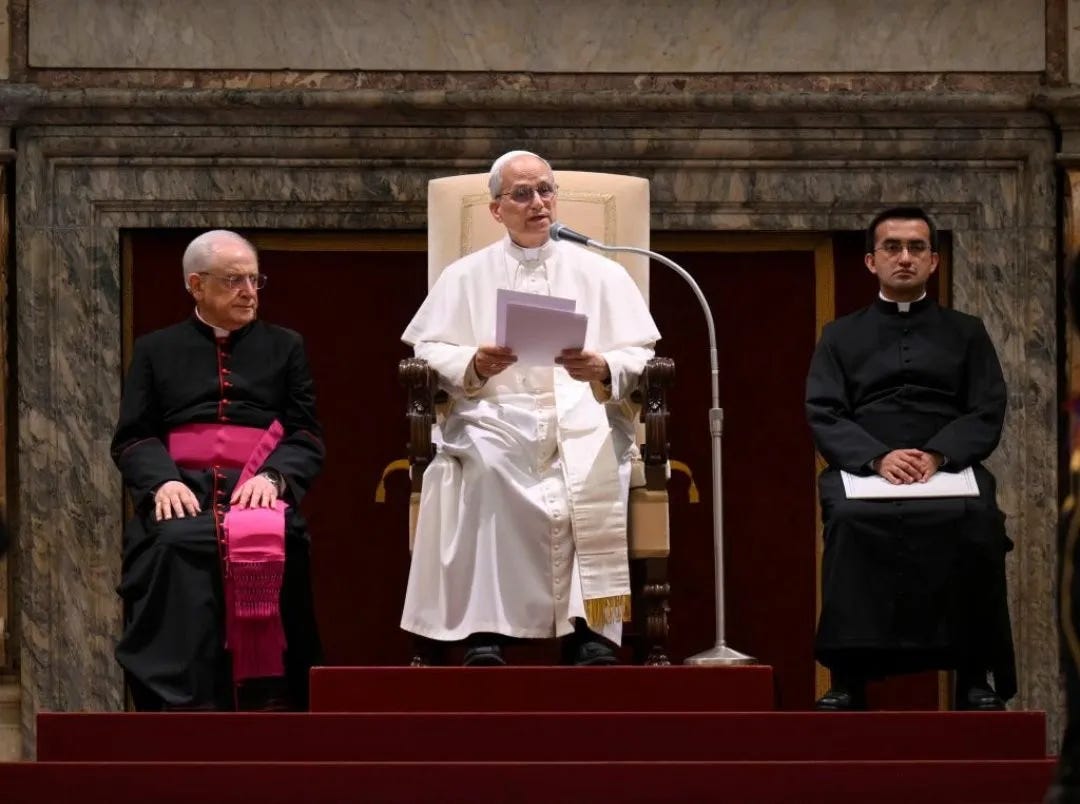
Before the news, I want to share with you this reflection that Pope Leo gave yesterday to altar servers who traveled to Rome on pilgrimage from France.
The pope encouraged the servers to be open to the priesthood, to “little by little, from Sunday to Sunday, discover the beauty, the happiness, and the necessity of such a vocation.”
And he reflected on the liturgy, in words I think worth reading.
“From the first day of her existence, and then for centuries, the Church has celebrated Mass, from Sunday to Sunday, in memory of what the Lord did for her. In the hands of the priest and at his words: ‘This is my Body, this is my Blood,’ Jesus still gives his life on the altar. He still sheds his blood for us today,” the pope said.
“The celebration of the Mass saves us today! It saves the world today! It is the most important event in the life of the Christian and in the life of the Church, because it is the meeting where God gives himself to us out of love, again and again. The Christian does not go to Mass out of duty, but because he needs it – absolutely – we need the life of God who gives himself without awaiting return!”
—
I’m not a French altar server on pilgrimage, but I nonetheless have need of that reminder.
The news
But it turns out that Pittsburgh’s National Institute for Newman Studies played a huge role in getting a massive study conducted ahead of the declaration on Newman.
And they did it in record time – to help officials at the Vatican’s Dicastery for Causes of Saints meet the goal of seeing Newman declared a Doctor during the Jubilee Year.
This is a how-it-happened story you just don’t want to miss. It’s awesome, in fact.

You are called to grow in your Faith and to evangelize. Deepen your understanding of the biblical roots of Catholicism and confidently share your Faith with others by becoming a St. Paul Center Member. Know Christ. Share Christ. Visit https://stpaulcenter.com/pillar to get started for free.
Next, you’ve all read the statistics. In most Western nations, including the U.S., the number of priests is declining, and the average age of priests is climbing. We are increasingly missionary territory.
So The Pillar talked this week with Archbishop Fortunatus Nwachukwu, a secretary in the Vatican’s dicastery for evangelization, about the reality, and future, of missionary ministry in the West.
The archbishop has some important insights.
“The worst thing you can do to a tree is to allow its trunk to die in the winter.
You have to do everything you can to keep the trunk alive, because when the dry season is over and the rainy season comes again, the trunk will again have new shoots coming from it. The Church in the West should keep the trunk alive.
So, sometimes we can learn from the world of business. When I was in Germany, Siemens didn’t have enough programmers, so they went out to India to look for them. They didn’t fire their German programmers, but they brought [others from India], trained them, integrated them, so that they would strengthen their base.
But how ready are we to live communion and participation if we see things that look like xenophobia, discrimination or stereotyping in our churches?”
The pope aims for the discussion to be a “dialogue.” But how does that happen? How do kids get selected to ask questions? How do organizers make sure the questions are decent, without stage-managing the whole thing?
In short, how do you make something like this work?
We talked with NCYC to find out. Here’s what we know.
The papal chefs?
I have been thinking the past few days about personal chefs. Not because we’re getting one – that’s not in the budget for editors at The Pillar, and if ever it is, we should do penance for our sins and give away our money as fast as we possibly can.
Instead, the idea of a personal chef has been on my mind because of a new Manhattan restaurant, Casasalvo.
According to news reports I’ve read in the NY Post, the BBC, ABC, CBS, and in several Catholic media outlets, the restaurant was opened by a man who is dubbed the “papal chef,” and is widely known for, apparently, spending 10 years cooking for Pope St. John Paul II and Pope Benedict XVI “at the Vatican.”
I tracked the origin story for all of these news pieces to an early August press release which framed Chef Salvo Lo Castro as the “personal chef” of the pontiffs.
Profiles of the chef tend to depict him slaving away in some sleek Vatican kitchen, day-in-and-day-out, for one very special client – the bishop of Rome, with whom, according to most media reports on the subject, the chef developed a very special, and very personal relationship.
And of course, that would stand to reason. If you’re cooking for someone every day, you probably do come to know him well – to develop the kind of familiarity one finds at the family dinner table, or at least in the sort of diner where regulars have become so well-known they can order “the usual” and get a breakfast to their liking.
It might be the case that Chef Lo Castro had that kind of relationship with pontiffs, but I doubt it.
See, I was surprised by the chef’s profiles this week, because I remember at least two other chefs who have found their 15 minutes of fame in the exact same way — celebrated as the personal pontifical chef of recent popes, in some of the very same news outlets to carry the latest version of the same tale.
For Benedict, this is perhaps most remarkable – that a man who spent less than eight years on the chair of Peter could have had three personal chefs so quickly!
It turns out, there’s a kind of consistent pattern to these papal chef stories. A chef – usually opening a restaurant or selling a cookbook – talks to a reporter about the times when he had occasion to cook for some event attended by the pope.
There is usually something real there – the chef owned a restaurant or worked for a catering company, and really was contracted to cater some Vatican-adjacent events with a pope in tow, maybe even a lot of them
But the stories are never content to say: “This guy was a vendor at some events.” Nor is the chef’s publicist, who seemingly assures his client that the quickest way to make money on food is to claim the Vatican equivalent of a royal warrant.
So the publicists puff up their subjects as intimates of the pontiff, and there becomes, inevitably, a reciprocity of exaggeration between the cooks and the media.
The chef says something small about a pope, the media blows it up, and the next time the chef tells the story, it’s bigger.
Anecdotes are developed, in which the pope seems to be choosing the food himself, popping into the kitchen to check for fresh tomatoes, with the clear impression given that the pontiff dispensed along the way some folksy wisdom to his close culinary collaborator.
The thing snowballs, and before you know it, a guy who catered some papal events (nothing to sneeze at, by the way) is being uncritically reported as the person responsible for every morsel ever masticated by a set of pontifical incisors.
He even gets a cool nickname, like “the papal chef.”
Of course, these stories are always light on facts and details, and no one bothers to check whether there really is some singular institution called “the Vatican” and whether it really employs an executive chef to begin with.
And no one even bothers to remember whether their own publication has already heralded someone else as the “papal chef” of the same popes.
It should be clear, the celebrity chefs are not always in lockstep agreement. There is one who says that Benedict XVI ate a lot of mushrooms, and another who insists that the pontiff disliked them.
And when they do agree, it’s usually on stuff that’s not too hard to claim, like that an ailing JPII didn’t eat much in his last days, or that the Bavarian Benedict XVI couldn’t resist a slice of German cake. Real behind-the-scenes stuff, I assure you.
So what’s the lesson?
Well, there is a whole cottage industry of people willing to claim a special relationship to the pontiff to sell books or fill restaurant seats, and most of them — curiously – wait until the pontiff in question is deceased before story time gets underway..
So don’t believe everything you read – especially when it comes to popes, and the prospect of making money from the perception of being close to them.
And if you’re the kind of reporter who scurries to write this sort of story, just because everyone else is doing it, well, don’t believe everything you write, either.
—
But it’s worth remembering the people who actually spent years cooking for pontiffs, growing to know and to love them, becoming close enough even to be family.
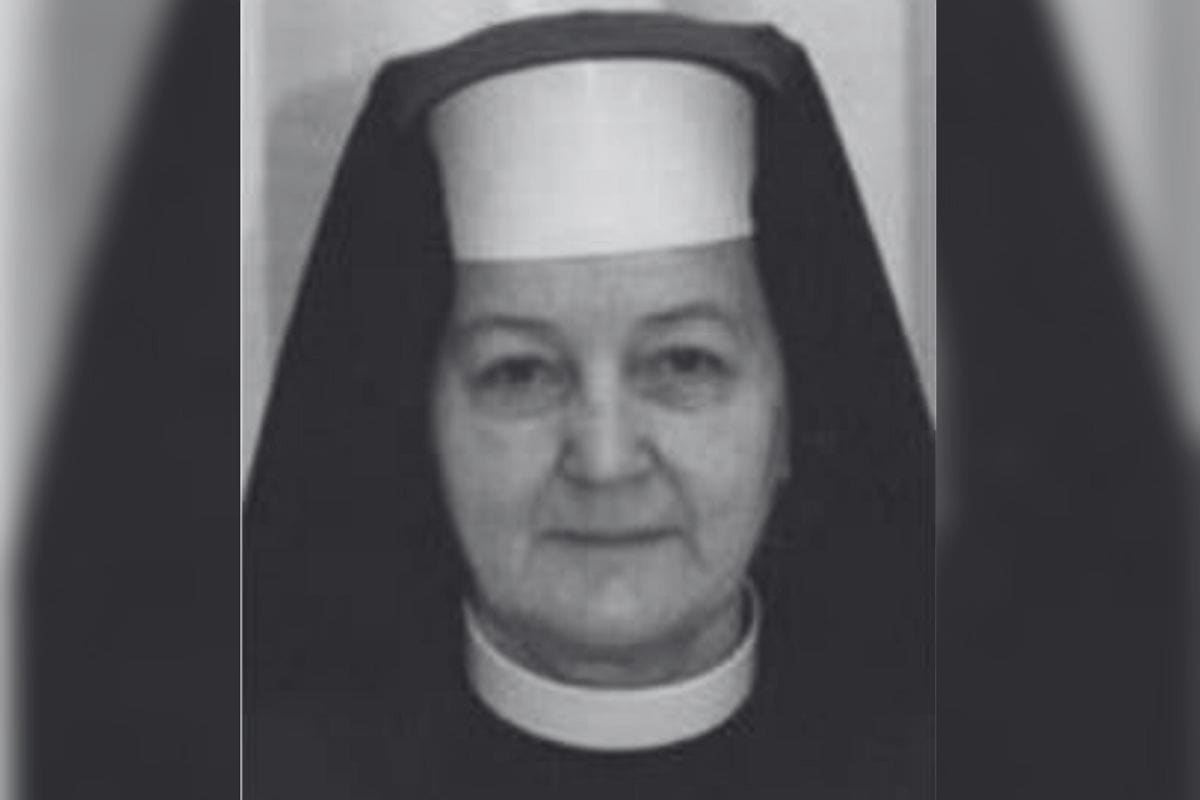
For Pope St. John Paul II, that was Sister Germana Wysocka, who kept the kitchen for Cardinal Karol Wojtyla in Krakow, moved with him to the Vatican’s Apostolic Palace in 1978, and remained there until the JPII died in 2005.
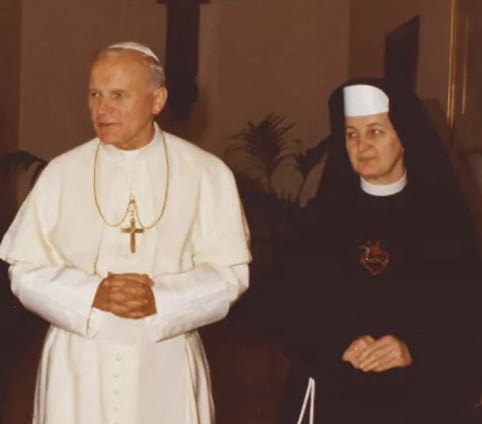
When JPII died, Sister Germana didn’t go on a book tour. She was instead sent by her religious superior back to Krakow, to cook again for the household of the city’s cardinal archbishop. She quietly moved to her congregation’s retirement home in 2016, and she died in 2023, at 92 years old.
For Pope Benedict XVI, it was Loredana, a member of the Memores Domini lay association, who spent decades cooking in the Ratzinger kitchen, first at the Apostolic Palace, and then later in Benedict’s home in the Vatican gardens.
Loredana has been described as like a sister to Benedict; she prayed the office with him, she celebrated with him, she mourned with him. She was one of five women, all of whom kept his household, who followed Benedict’s body into St. Peter’s Basilica, where it lay in state before his 2023 funeral.
She has not written a tell-all. Nor have the Italian staff of the Domus Sancta Marta, who ran the cafeteria where Pope Francis took his meals, every day, for years.
Those are the “papal chefs” worth noting. None of them has Emeril’s charisma, or Gordon Ramsey’s gift for self-promotion. None of them has a flashy restaurant opening for you to attend, or even a perfectly rehearsed, camera-ready papal anecdote for the morning chat shows.
But each of them likely covets your prayers.
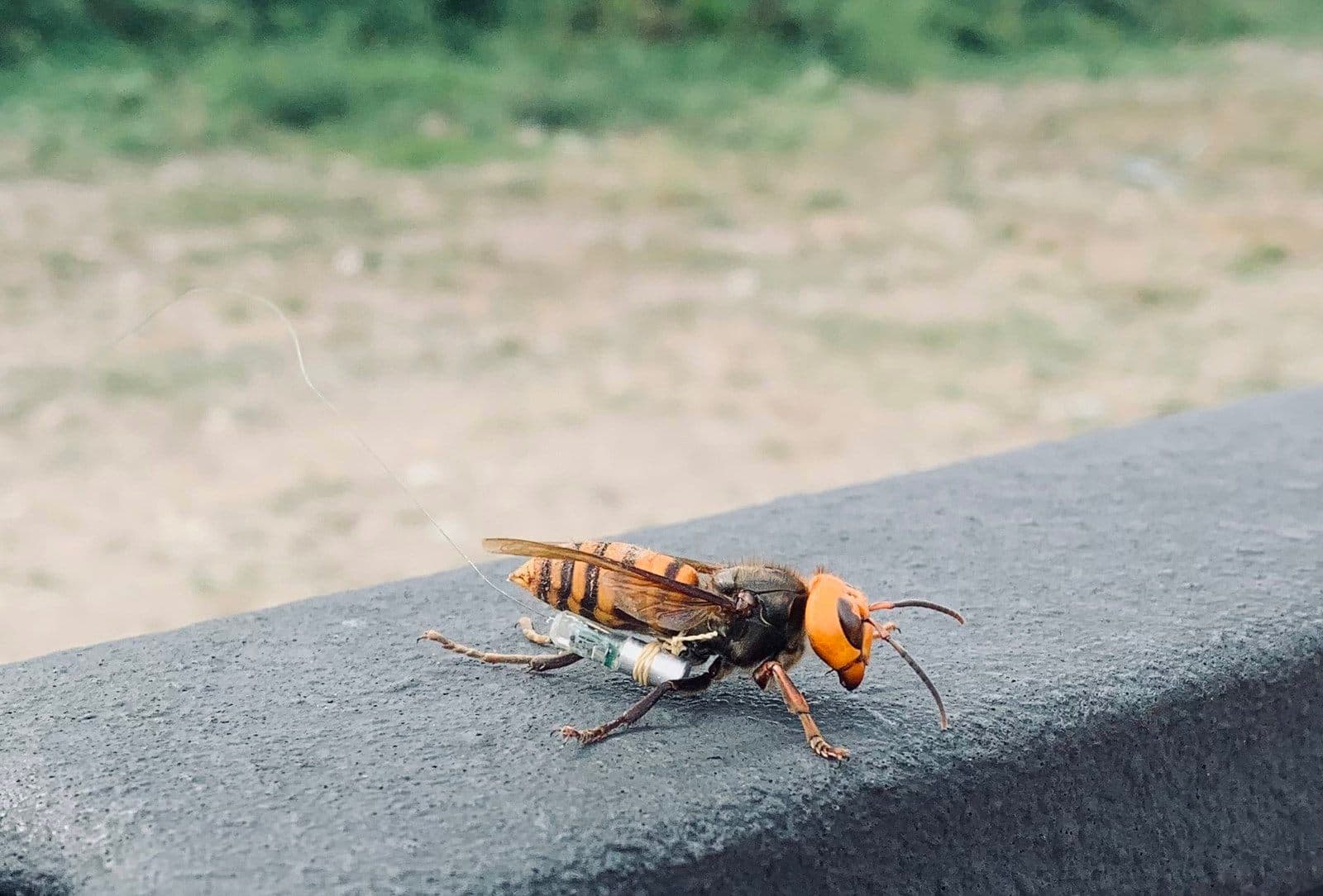
Remember the hornets
Five years ago this month, an unknown hornet was reported in Birch Bay, Washington – an invader who would help set off one of the most outrageous subplots of 2020, and one that we’ve by now mostly forgotten.
He was an Asian giant hornet, and he wasn’t alone. Before he was found, a lone queen was seen in the same area, of the same species. And by October 2020, an entire nest of Asian giant hornets had been discovered and destroyed in the Pacific Northwest, setting off a panic that made us forget for a while about the supply chain crisis, America’s racial strife and ensuing riots, and even the covid virus itself.
Because none of those things were as scary as the Asian giant hornet.
We called him the Murder Hornet.
And I’ve got a big update for you.