





The race to make Newman a Jubilee Year doctor
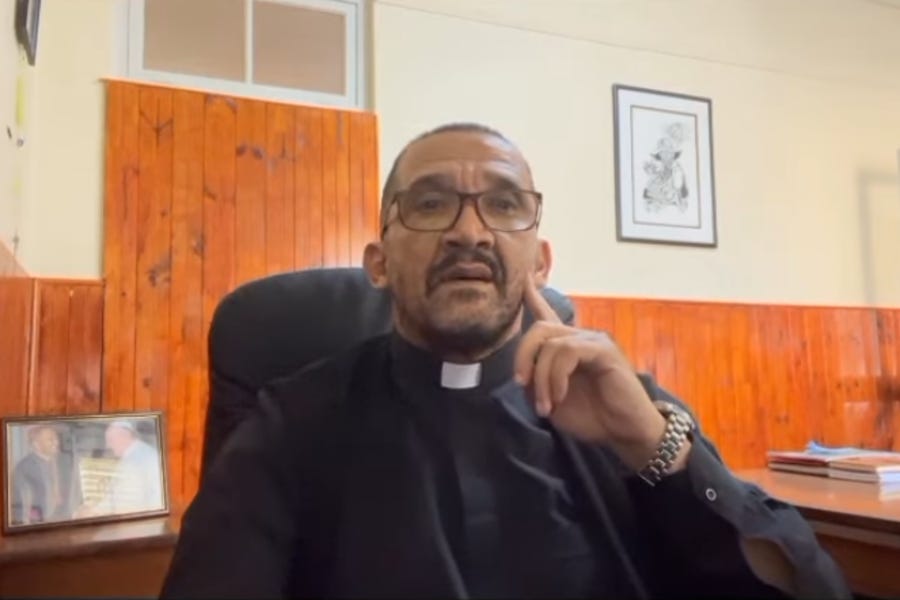
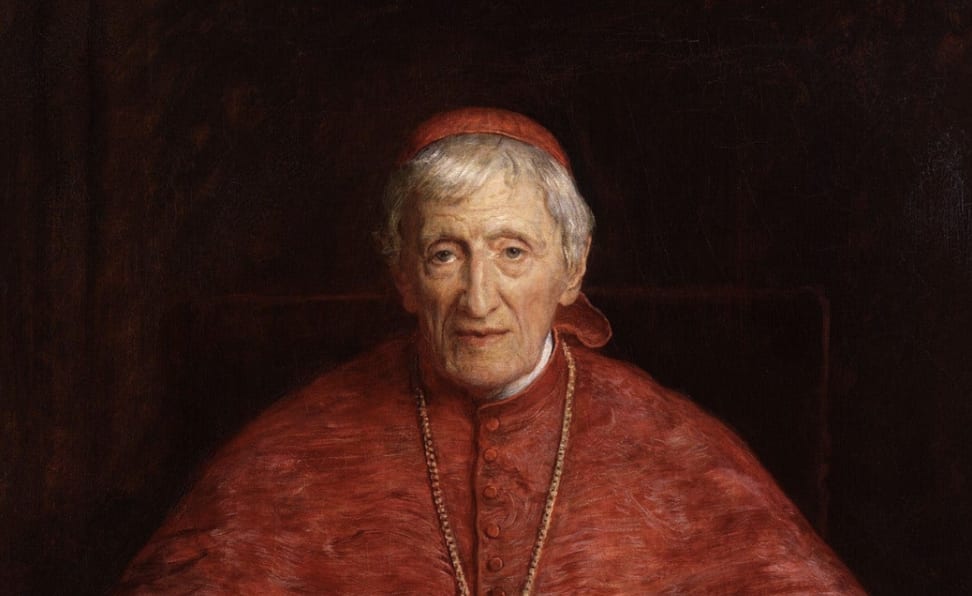
Kenneth Parker learned that St. John Henry Newman was going to be declared a Doctor of the Church before most people did.
The Vatican announced the decision last month — but Parker found out in May 2024, more than a year ago.
When he learned about the plan, he wasn’t surprised.
“We expected it to happen at some point,” said Parker, who is editor of the Newman Studies Journal, a publication of the National Institute for Newman Studies in Pittsburgh.
The title Doctor of Church recognizes a saint’s substantial contribution to the body of Catholic thought and teaching. In Parker’s view, Newman clearly met the criteria.
What was surprising to Parker, however, was the timeline. Vatican officials were eager to have the pronouncement take place during the 2025 Jubilee Year, dedicated to hope.
That meant officially required preparatory writings, which usually take five or six years to pull together, would need to be assembled in a period of less than six months.
Soon, Parker and his colleagues were racing the clock to pull together a 500-page summary of Newman’s thought on a wide variety of topics, and how the saint’s thought has left a lasting mark on the Church.
—
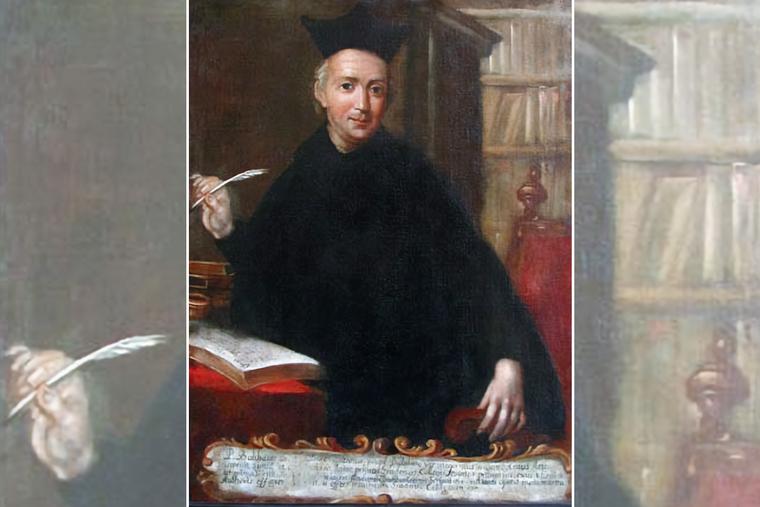
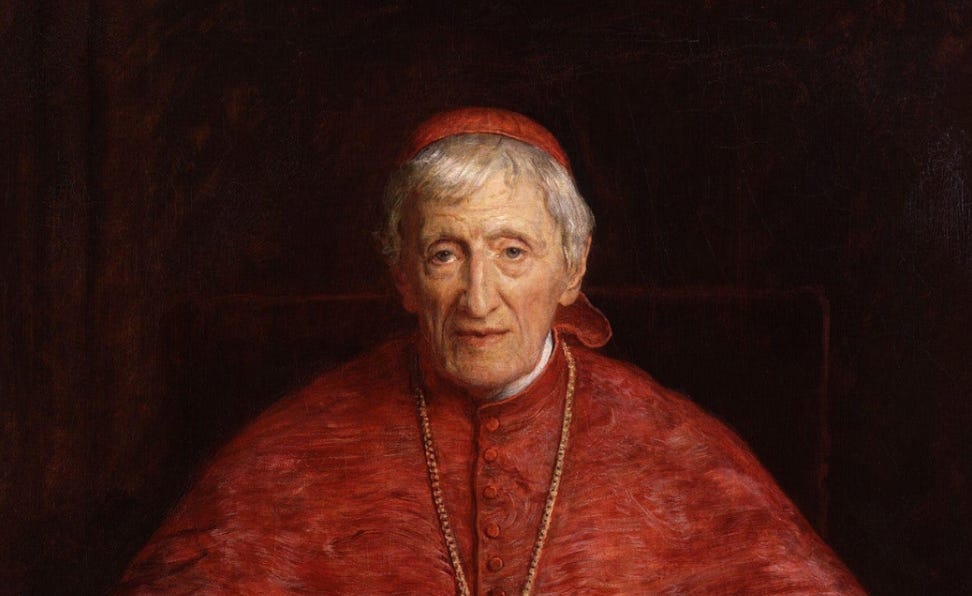
Born in 1801 in London, John Henry Newman was an Anglican clergyman before his conversion to Catholicism in 1845. His entrance into the Catholic Church led him to be ostracized by family members, friends, and academic colleagues at Oxford.
A prolific writer, Newman authored dozens of books, letters, and essays that have continued to be influential in Catholic thought. He was named a cardinal by Pope Leo XIII in 1879.
Newman died in 1890 in Edgbaston, Birmingham, England. He was beatified by Pope Benedict XVI in 2010 and canonized by Pope Francis in 2019.
While Newman will be officially proclaimed a Doctor of the Church by Pope Leo XIV, the process was initiated by Pope Francis and Cardinal Marcello Semeraro, prefect for the Dicastery for Causes of Saints.
Parker said the National Institute for Newman Studies was contacted in May 2024 by Vatican authorities, who said they urgently needed copies of all Newman’s written works.
“I don't know whether you've seen Newman's works on the library shelf – it’s many multiple shelves,” he laughed.
“But the Newman Institute has become this clearinghouse for all kinds of…resources for Newman studies. So in less than a week, we had a digital compilation and everything available to the relevant authorities through a link that was created.”
The collection was submitted to the Dicastery for the Doctrine of the Faith, one step in the process of moving forward a candidate for the title Doctor of the Church.
Days later, Vatican officials reached out again, asking if scholars at the institute could contribute to the positio – the formal document that makes the case for a saint to be named a Doctor of the Church.
That would require assembling a group of scholars to write sections of the document, summarizing parts of Newman’s thought and tracing its lasting influence in the Church.
Parker and his colleagues reached out to their network of Newman scholars in the U.S., U.K., and Europe, and asked them if they wanted to contribute to the document.
In the end, the Newman Institute assembled a team of 20 scholars, both from within their team and outside of it, each specializing in different areas of Newman’s thought.
Each person was assigned a topic from an outline provided by the Vatican, based on their specialties.
All of that took place at the end of July 2024, Parker said.
The 500-page text was due in early November, giving them just over three months to work on it.
Most of the contributors are lay people with active academic careers and families, Parker said, meaning they had to squeeze their work on the positio into their free time outside of their professional and family obligations.
“It was a minor miracle, but we all put our shoulders to the wheel and everyone got their contributions in on time,” he said. “We produced a camera-ready version by the 15th of November.”
—
Among the scholars selected to contribute to the positio was Dr. Jennifer Newsome Martin, director of the University of Notre Dame’s de Nicola Center for Ethics and Culture.
A systematic theologian who has given lectures and written papers on Newman, Martin was assigned to write a chapter on Newman and the sensus fidei – the sense of the faithful.
“They asked if I could write a piece that would be theologically serious, but also presumed no pre-awareness of Newman or the sort of niceties or particularities of his thought,” Martin told The Pillar.
The goal, she said, was “to demonstrate the eminence of Newman's teaching and the way that Newman is still speaking to the contemporary Church, what is it about not only his thought, but his personal holiness and sanctity that can still speak to the contemporary Church and still inspire believers.”
“And so that's what I did. I sort of looked at some of the history there. The way that Newman is using the term, the way that the term got picked up … Newman's fingerprints are all over Vatican II,” she said. “It's been extraordinary tracing those ripple effects of the way that Newman thinks about the sense of the faithful and the role of the laity.”
Martin was contacted in August 2024 and had to be finished with her contribution – some 4,500 words – in just a couple of months.
She had previously given talks on adjacent topics, so she had a basic framework to use as a starting point.
Still, she said, it was a tight timeline by academic standards, especially given that she was fitting it into her free time, and not able to give it her exclusive attention.
Martin said the whole process has been exciting.
“As a theologian, it's not often that your expertise is called upon,” she said.
“With Newman, there's this kind of excitement around him. He's only the 38th Doctor of the Church, and there's an excitement about this, and a kind of joy that I find palpable.”
“It's one of the coolest things I've ever been part of, as a professional theologian for sure.”
—
After the full text of the positio was submitted, there were a few weeks of back-and-forth with the Vatican to address some of the finer points, Parker said. But by December 15, the document had been sent for review and comment by the Dicastery for Causes of Saints.
There, it was reviewed and commented on first by a panel of theologians, who unanimously affirmed the validity of the cause, and then by the full dicastery, which made its official recommendation to Pope Leo XIV.
A few weeks later, the pope announced his intent to proclaim Newman a Doctor of the Church, just the 38th saint in history to receive this title.
The Vatican announced its intention July 31 of this year. It did not say when the official proclamation would take place, only noting that it would be “soon.”
The positio covering Newman’s work is confidential, Parker said, and contributors were given strict instructions not to share its contents or quote from it.
But the scholars who contributed will soon be involved in creating a public version of the document, with guidance from the Vatican, with work set to begin in the next year or so.
It’s not clear how the public document will differ from the positio that has already been drafted, but Parker said the public document is intended to be a fair representation of what was presented to the Vatican.
A person who is not familiar with Newman should be able to pick up that document and find “a fair summary” of his thought and theological contributions, Parker explained.
—
Parker’s own role in the positio was to summarize Newman’s writings on doctrinal development – what Newman taught, how he arrived at those views, and how the popes and the Church since then have embraced his teaching.
Newman wrote that the Church does not change her teachings, but that they instead develop or grow over time, much like a seed grows into a mature plant, and always in a way that is faithful to what came before.
He offered criteria to distinguish between healthy doctrinal development and what he terms “corruption” of the original doctrine.
Of all Newman’s theological contributions, Parker believes his writings on doctrinal development have been particularly influential for the Church.
“It's very clear from really just the first few years of his life as a Roman Catholic, his teaching on development was already influencing the magisterium in Rome,” Parker said.
“They were particularly interested in his theory of development of doctrine because they were struggling with the question of whether to define the [dogma of the] Immaculate Conception. And Newman's theory of development offered them a key to the line of theological argumentation that they felt that they needed to justify the definition that occurred,” he said.
“We can also see how his theory of development helped reconcile bishops who were on the fence at Vatican I to the definition of papal infallibility. And then we see it clearly written into the documents of Vatican II that development [of doctrine] is a concept that is to be embraced.”
Cardinal Joseph Ratzinger, who would go on to become Pope Benedict XVI, referenced Newman’s statements on the development of doctrine as the quintessentially Catholic view on the subject, he noted.
Condensing all of that information into some 20,000 words was a “pretty tough” task, Parker said.
“There are lots of nuances that one would want to include in something like that, but that would've crowded out every other topic,” he reflected, noting that Newman is known for his writings on a wide variety of topics – education, conscience, and the role of the laity, just to name a few.
“Newman's contribution as a teacher of the Church is just vast. And as the first major theologian in the modern era to be made a Doctor of the Church, his thought and his works had become really seminal for not just the First and Second Vatican Councils, but also for a whole range of theologians, including Joseph Ratzinger before he became Pope Benedict XVI. It's very clear that Pope Francis felt very connected to and influenced by Newman's thought. It just goes on and on. It's amazing, just incredible.”
—
Martin said she learned a lot during the writing process, and particularly grew in her appreciation for Newman’s scope – with major contributions to Catholic thought on a vast range of topics.
“Newman is so important and increasingly so… he's got this very full-bodied, very coherent, integrated, very Catholic ability to write in all these different genres and speak in all these different voices. And I think there's something so natively compelling about that,” she said.
“I think I gained a greater appreciation for his range and his ability. He's very Victorian and…his prose, in certain of these texts, it's impenetrable or seems impenetrable at first glance. But I think through the process of writing it, I kind of got an internal ear for his rhythm of thought. And so it was like feeling connected to Newman as a living presence in the Church.”
Writing her share of the positio, she said, left her feeling “like this was a live intervention in a live moment in the Church. So it's not simply that this is of historical import or this happened to be interesting, like any other historical thing was interesting. This felt like, ‘how do you receive these saints anew?’”
Martin hopes that the Doctor of the Church designation will lead to Newman being more widely read and studied.
Some people may be hesitant to pick up Newman’s writings, which can be dense and academic, she acknowledged.
“He is a spiritual genius and an intellectual and moral genius,” she reflected.
However, she said, with the Doctor of the Church designation, “the Church is sort of elevating him in this way and saying, ‘No, there's something here for every believer, this is not something simply for theologians or philosophers or people who are interested in epistemology’.”
For those who feel intimated by Newman’s more scholarly works, Martin recommended reading his homilies.
“His homilies are extraordinary. They're luminous, they're spiritually sensitive. They are so full of grace,” she said.
She also recommended his devotional work, “Meditations on the Litany of Loreto,” for the Month of May.
Martin also sees Newman as a powerful figure for unity at a time when the Church is experiencing stark divisions – and a pope who has emphasized bridging divides and bringing people together.
“He totally sidesteps any of the crass binaries between conservative and progressive,” she said. “He gives us livingness and dynamism, but he gives us the conservation of the past at the same time.”
“I think Newman is being used by a lot of ecumenical groups as well,” she added. “Obviously he had a very famous conversion from Anglicanism to Catholicism.”
“I think he…gives resources for everyone, in the intra-Catholic disagreement, but also with other Christian confessions as well.”
From Parker’s perspective, this is a particularly exciting moment for the Church in the United States. Both the first and second miracles needed for Newman’s canonization occurred in the United States, he noted, and the first pope from the U.S. will make the official proclamation.
He also pointed out that Newman will be the first anglophone Doctor of the Church, so English-speaking Catholics can read his writings in their native tongue, without the need for translation.
Ultimately, Parker believes the forthcoming Doctor of the Church pronouncement solidifies the importance and value of Newman’s works.
“I think it validates the kind of attention that he's attracted,” Parker said.
And he hopes the designation will lead to a renewed effort to unpack the thought of Newman – an effort that he believes to be a worthwhile pursuit.
“I know that among some, there's a feeling that the Newman field is thoroughly plowed. I think what we can safely say, I would certainly affirm, is that there's a whole new layer of investigations that this now opens up.”