











Vatican releases synod report on women’s role in Church leadership
ROME (OSV News) — The Vatican has published the final report of the synod study group examining women’s participation in the Church, which calls for expanded roles for women in Church governance and leadership in roles not including ordained ministry.
The 75-page document, published in English and Italian on March 10, discusses women’s leadership in the Church, but not the specific question of a possible female diaconate.
It is the third of 15 final reports expected from the study groups of the Synod on Synodality in the coming weeks. Cardinal Mario Grech, the secretary general of the Synod of Bishops, has characterized these reports as “working documents” which will be used to form proposals submitted to the pope for consideration.
A ‘charismatic path’ for women
In the document, the study group calls for “new spaces” for women to exercise leadership in evangelization and administration in collaboration with ordained ministers.
“Alongside the sacramental path and distinct from it, there is also a charismatic path that can be fruitfully pursued to open new spaces of participation for the lay faithful, particularly for women,” it states. “It follows that even in the exercise of governance within a Diocese, opportunities of this kind may arise and should be employed.”
The report argues that laywomen possess distinct charisms from the Holy Spirit that demand recognition.
“Today laywomen have the right to affirm their participation in the mission of the Church not only on the basis of their equal human and Christian dignity but also on the basis of the charisms given by God,” it says.
“A new evangelization has become urgent,” it adds, “One that depends less exclusively on priestly resources and is enriched by the presence and contributions of women.”
‘New forms of exercising authority’
The synod study group calls for theology and canon law to “explore new forms of exercising authority grounded in the Sacrament of Baptism and distinct from those deriving from Holy Orders, so that adequate canonical forms may be found to make effective the participation of women in roles of leadership within the Church.”
“There is no reason or impediment that should prevent women from carrying out leadership roles in the Church,” the report states.
The document also recommends a “reformulation of the areas of competence of the ordained ministry,” suggesting that redefining those boundaries “could open the way to recognize new spaces of responsibility for women in the Church.”
Female diaconate not addressed
Notably, the report does not address the specific question of a possible female diaconate, a controversial topic of debate within the Synod on Synodality. During the second session of the synod, Pope Francis reactivated a commission studying women’s access to the diaconate under Cardinal Giuseppe Petrocchi. That commission’s conclusions, published in December 2025, stopped short of recommending the female diaconate but approved by a wide margin a proposal to broaden women’s access to instituted ministries, like that of catechist.
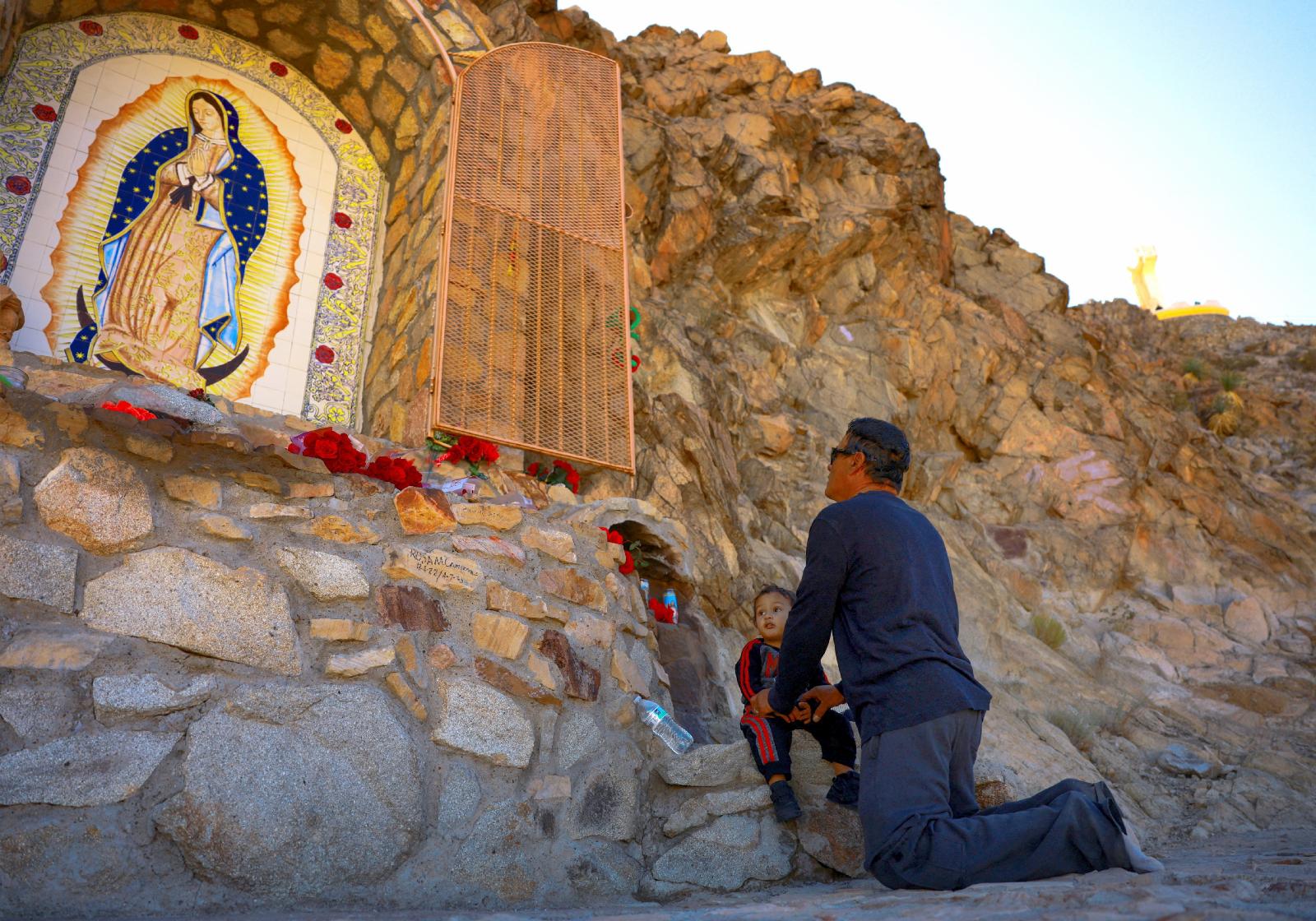
The Virgin Mary as a model
Drawing on Scripture and Church tradition, the report invokes both the Virgin Mary and St. Mary Magdalene as paradigms for female authority in the Church.
“Mary is the supreme model of the charismatic dimension. Though she does not belong to the hierarchical structure, she possesses within the Church a unique authority and spiritual fruitfulness,” it states.
The document also notes that Christ chose a woman, Mary Magdalene, to first announce the Resurrection, “The Apostles themselves received this proclamation from her.”
Pope Leo’s appointments of women to Roman Curia
The report outlines appointments made by both Pope Francis and Pope Leo XIV as evidence that women can and already do lead at the highest levels of the Church.
It cites the Apostolic Constitution “Praedicate Evangelium,” which allows the possibility for a laywomen to head a Vatican dicastery, “depending on the power of governance and the specific competence and function of the Dicastery or Office in question.”
At the same time, the report states that women working in the Roman Curia have indicated “that certain attitudes marked by clericalism persist” in which “women, even in positions of responsibility, sometimes struggle to be involved and listened to on equal footing with male colleagues, particularly in interactions with ordained ministers.”
The study group highlighted Pope Leo XIV’s appointments of Trappistine Mother Martha Elizabeth Driscoll, and Sister Iuliana Sarosi, a member of the Congregation of the Mother of God, as consultors to the Dicastery for the Clergy and of Cristiana Perrella as president of the Pontifical Insigne Academy of Fine Arts and Letters of the Virtuosi al Pantheon.
The report also cited Pope Leo’s comments in an interview in July 30 in which he said that “the role of women in the Church has to continue to develop” and expressed his intention to continue “in the footsteps of Francis, including in appointing women to some leadership roles at different levels in the Church’s life.”
Women in the Bible and Church history
The synod final report is organized in three parts. The first recounts the history of the study group and the second offers a “synthesis of the themes” emerging from the synodal process.
The third part is an extensive appendix containing six sections: female figures in the Old and New Testaments; significant women in Church history; contemporary testimonies of women in Church leadership; the Marian and Petrine principles; ecclesial authority; and the contributions of Pope Francis and Pope Leo XIV.
Among the examples of women highlighted by the document are St. Catherine of Siena, St. Joan of Arc, St. Elizabeth Ann Seton, Maria Montessori, and Servant of God Dorthy Day.
Courtney Mares is Vatican editor for OSV News. Follow her on X @catholicourtney.
The post Vatican releases synod report on women’s role in Church leadership first appeared on OSV News.