






‘We have got to say something’ - Bishops make special immigration statement as sign of ‘unity’
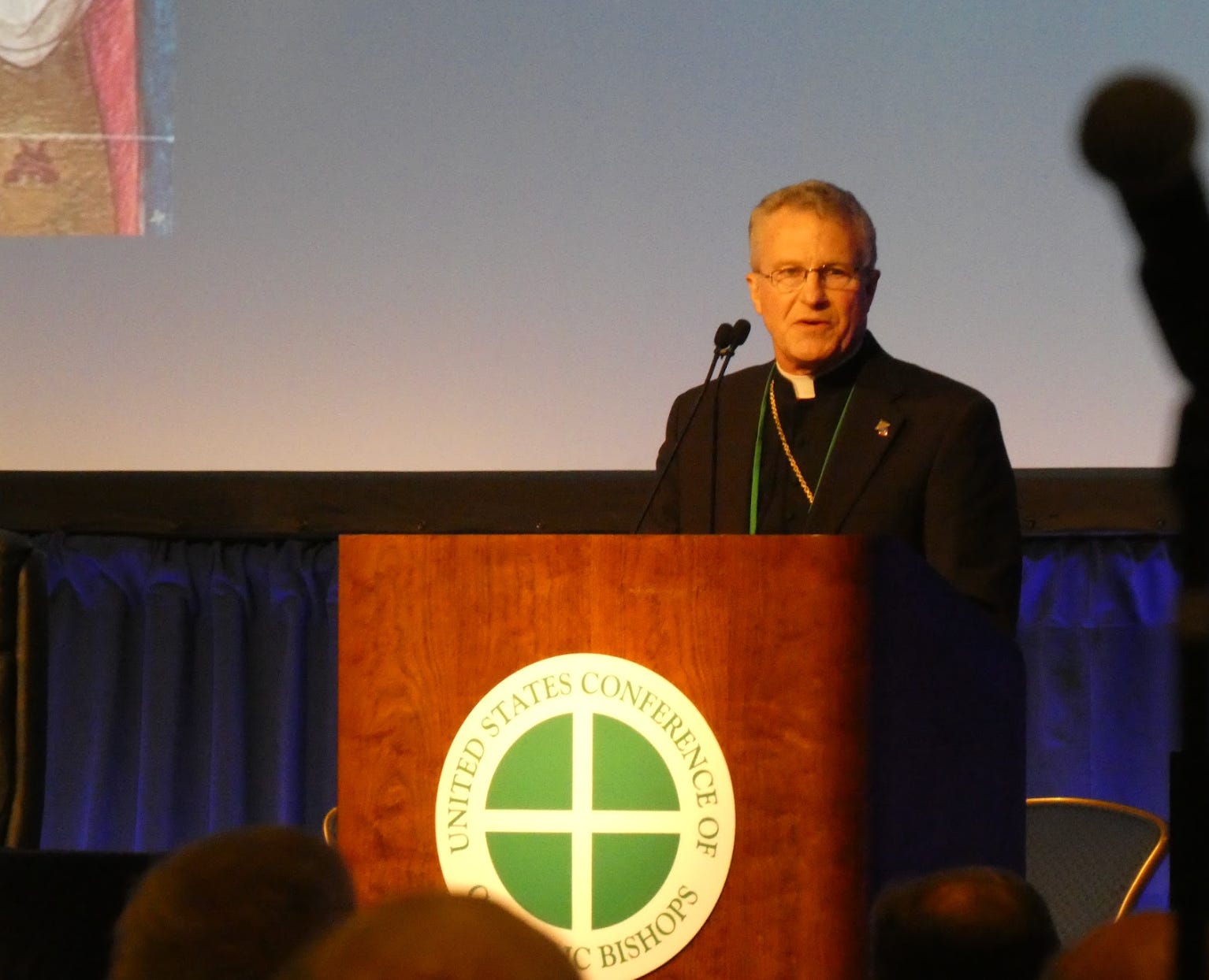
Bishops gave a standing ovation Wednesday, after they voted overwhelmingly to approve a special statement on immigration during the fall plenary assembly of the United States Conference of Catholic Bishops.
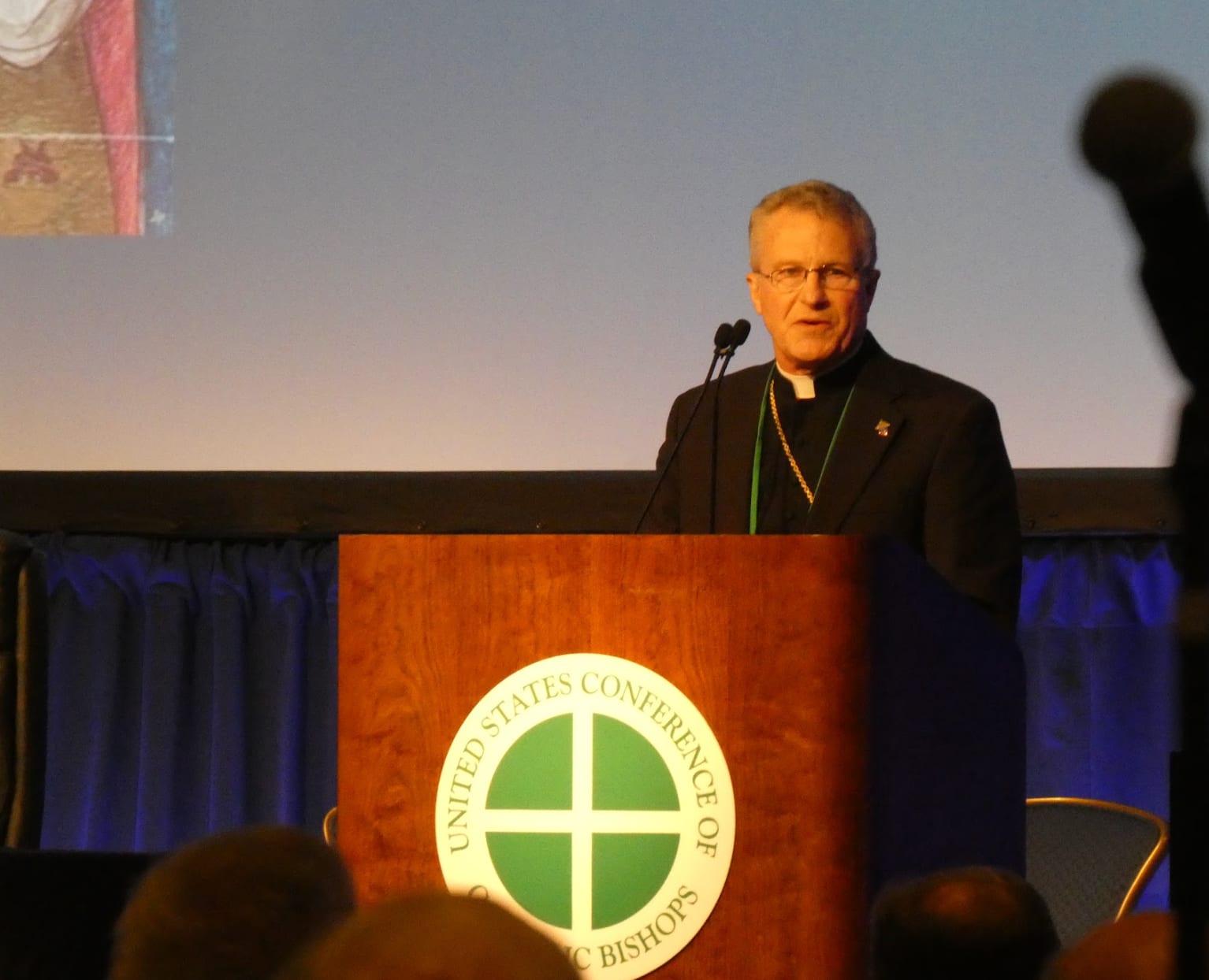
And the archbishop who helped lead drafting of the statement told The Pillar that the U.S. bishops are unified in a commitment to solidarity with migrants.
The statement aimed to express “ties of communion and compassion” with immigrants amid a contemporary “climate of fear and anxiety.”
“We are saddened by the state of contemporary debate and the vilification of immigrants,” the bishops’ statement said.
“We are concerned about the conditions in detention centers and the lack of access to pastoral care. We lament that some immigrants in the United States have arbitrarily lost their legal status. We are troubled by threats against the sanctity of houses of worship and the special nature of hospitals and schools. We are grieved when we meet parents who fear being detained when taking their children to school and when we try to console family members who have already been separated from their loved ones.”
And in a phrase added while the bishops discussed the speech Nov. 12, they spoke unequivocally about their perspective on federal immigration enforcement actions:
“We oppose the indiscriminate mass deportation of people,” the bishops wrote.
The statement was drafted with input from the body of U.S. bishops, who met in Baltimore this week for the annual fall plenary meeting, and is the first “special message” approved by the bishops since a 2013 response to the Obama administration’s contraceptive insurance mandate.
According to the USCCB rules on statements, “special messages” may only be issued at plenary assemblies, and require two-thirds approval from the bishop members.
Archbishop Richard Henning of Boston helped to coordinate the text’s drafting at this week’s meeting. Noting that the statement passed with 216 votes in favor, five votes against and three abstentions, Henning said it demonstrated episcopal unity on immigration.
“People keep telling us that we are divided as a conference and then we’re not. There is a fundamental unity among the American bishops,” Henning told The Pillar.
“If we are going to speak on something sensitive like this where there’s a lot of suffering and pain here, and when you’re speaking to people that are suffering, you can’t really say, well, I’m sympathetic or I’m sympathetic this far. You have to just be with them.”
“Was it important in this case that there be a kind of overwhelming sense of unity among the bishops? I think so,” Henning added to The Pillar.
“I think there are circumstances where it matters more that we speak in a unified way,” the archbishop said.
Henning said the statement mattered because of the common pastoral experience among the bishops of working with immigrants.
“We are pastors, we are on the ground and we are hearing from our people and hearing that there is fear, anxiety, people afraid to go to church, people afraid to bring their children to school, people afraid to go to a hospital because of immigration issues,” Henning told The Pillar.
“There’s a kind of chaos and arbitrariness of the moments on the ground that is causing a lot of distress. We are hearing this from our pastors. We are hearing it from the people directly.”
“We had the feeling that we have got to say something, as we have to reassure our own people.”
“Immigration is a divisive matter and I realize that it’s divisive in part because it has political consequences. These are always difficult issues for us to speak on as bishops because people living in the political world hear them as political engagement. They think we’re on their ground,” Henning told The Pillar.
“My own conviction is that it is possible and even required of us as bishops to speak on our ground, which is the ground of scripture and Church teaching.”
“When we say things like human beings have an inherent dignity that comes from God alone, that’s not engaging in politics — even if it has political consequences — that’s announcing the truth revealed to us in Jesus Christ,” Henning added.
Before it was passed Wednesday afternoon, the statement had been the subject of closed door discussion among the bishops. During a Monday executive session, bishops approved the drafting of a text by a small group. The draft was circulated to bishops for editing suggestions, and then a final draft text was distributed confidentially to bishops.
The working group assigned to draft the statement was Henning himself, Bishop Mark Seitz of El Paso, Bishop Daniel Flores, and Bishop Michael Burbidge of Arlington.
The text aimed to strike a balance, bishops said, acknowledging an enforcement crisis for immigrants and the importance of immigration regulation.
“Human dignity and national security are not in conflict. Both are possible if people of good will work together,” the bishops wrote.
“We recognize that nations have a responsibility to regulate their borders and establish a just and orderly immigration system for the sake of the common good. Without such processes, immigrants face the risk of trafficking and other forms of exploitation. Safe and legal pathways serve as an antidote to such risks.”
While the text was supposed to be closed to amendments when it came up for public discussion Wednesday, the first bishop to speak on it was Cardinal Blase Cupich, who proposed a change, asking that the phrase “we oppose the indiscriminate mass deportation of people,” be added to the text.
“That seems to be the central issue that we’re facing with our people at this time because people are discriminated against,” Cupich said.
After some procedural discussion, bishops took a voice vote on Cupich’s amendment — which received a resounding “yes” from the bishops, with no bishops voting against.
One bishop rose to ask for an amendment to the amendment, suggesting that the clause “without due process of the law” be added to Cupich’s addition.
The conference once again verbally affirmed the amendment, which seemed in the discussion to have been adopted.
But the “due process” clause did not appear in the final statement, with the USCCB telling The Pillar subsequently it had not been formally adopted into the proposal.
As bishops discussed the text, several prelates expressed support for the proposal.
Bishop Thomas Paprocki of Springfield shared his support for the proposal, reflecting on his experience growing up in a trilingual parish and working as an immigration lawyer as a young priest.
“I think this statement is both compassionate for the concerns of migrants and at the same time expressing the call for meaningful immigration reform, which I think is so much needed,” Paprocki said.
“When I was a lawyer my objective always was to try to get people legal status so that they would not be subject to such wage exploitation. And I’m very glad that the document reflects a statement that those who do not have proper immigration status are subject to the risk of exploitation. And so there’s a very strong call in this for immigration and reform.”
“I currently have one of my priests from another country who is a pastor. I ordained him. He’s a pastor of a parish. But because of immigration problems, he’s had to leave the country for a year,” Paprocki added.
“The immigration system is broken and the laws need to be reformed. So I’m very glad to see the statement that calls for compassionate care for immigrants, but at the same time urging our lawmakers for meaningful immigration reform.”
Archbishop Paul Coakley of Oklahoma City, newly elected to a term as USCCB president, also expressed his support.
“I think it’s a strong statement. I think it’s a balanced statement. I strongly support it for the good of immigrant brothers and sisters, but also find a balance protecting rights and immigrants, but also securing and calling upon our lawmakers and our administration to offer us a meaningful path that reforms our immigration system.”
Bishop Jose Maria Garcia Maldonado, a new auxiliary bishop of Chicago and himself an immigrant to the United States, voiced his gratitude to the bishops’ conference for writing and issuing the statement.
“I just want to share my sincere gratitude for just being here. I really feel welcomed by this body of Catholic bishops in the United States,” Maldonado said. “I am aware that I’m not the only migrant bishop of the United States, and this message will be not only for the migrant community in the United States, but also for the many priests that are probably waiting for this statement because there are many priests who want to support parishioners.”
“As a migrant person coming from Mexico to the United States, me and my whole family thank you so much for this.”
Archbishop Robert Casey of Cincinnati too expressed support, particularly as a source of help in addressing immigration concerns by his local flock.
“In my diocese, we have Springfield, Ohio, with a large Haitian community that lives continually in anxiety these days, so I just want to express my gratitude to the body of bishops for moving forward with this statement,” Casey said.
“I’ve added my voice to those seeking immigration reform for decades and this is something that rises above politics and partisanship. So I’m very grateful to us for coming together in a way of expressing this statement in a very clear way.”
One final amendment was requested by Archbishop Borys Gudziak, of the Metropolitan-Archbishop of the Ukrainian Catholic Archeparchy of Philadelphia. He asked that the conference add the phrase “God-given” before the term human dignity to emphasize that human dignity comes from God, not the law or government.
The conference accepted the amendment.
“This is not just the dignity that is guaranteed by charters or laws, but this is a God-given dignity,” Gudziak said.
Only one bishop expressed hesitation over the statement — Bishop Oscar Cantú of San Jose — saying that while he is grateful for the statement, he wished it had been “stronger.”
“I think it’s a good statement. I was hoping for something stronger,” Cantú said. “I think it has been made stronger by Cardinal Cupich’s amendment that we’ve accepted.
But Cantu also called bishops to stand by the statement.
“We as bishops, perhaps in our own diocese, can also — along with the statement — do some sort of prophetic gesture.”