





Where is Pope Leo on reforming Opus Dei?
The personal prelature of Opus Dei has been undergoing a canonical reform for the past three years, following two motu proprios by Pope Francis calling for changes to its canonical structure.
But while superiors of the Work, as it is informally known, handed in to the Holy See proposals for revisions to its statutes in June, there have been no official updates from the Vatican on how they have been received.
But amid media rumors touting dramatic changes to the prelature’s structure, Vatican sources told The Pillar that there has been no definitive resolution, and that Pope Leo XIV has yet to weigh in on the future of the Church’s only personal prelature.
—
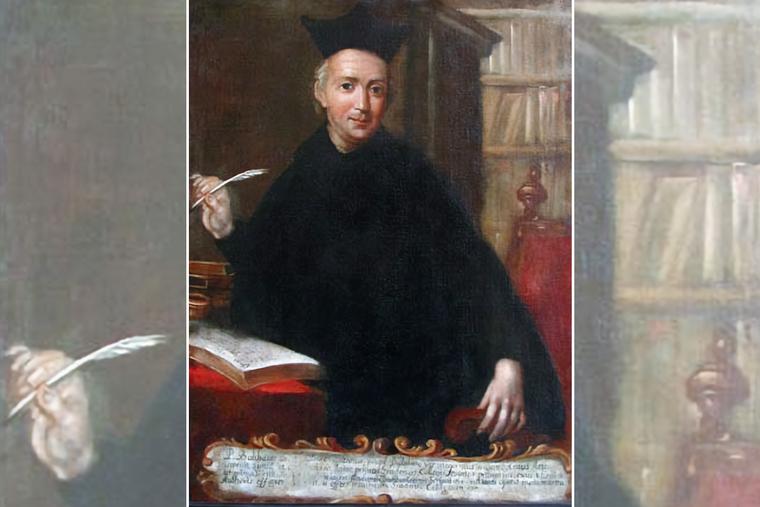
Opus Dei — “Work of God” — is an international Catholic institution founded in Spain in 1928 by St. Josemaría Escrivá de Balaguer, who was canonized in 2002.
The institution, originally a secular institute, was approved as the first and as yet only personal prelature in the Catholic Church in 1982 — a category created to accommodate it in the 1983 Code of Canon Law.
Opus Dei began as a program of Catholic spiritual and intellectual formation for laymen, and began admitting women to its programs of formation two years after its foundation.
For the nearly 90,000 Catholics (lay and clerical) affiliated with the group, Opus Dei “aims at holiness in their ordinary lives, especially through their everyday work.”
In addition to clergy who are incardinated into the prelature and canonically under the jurisdiction of its prelate, Opus Dei also has various levels of affiliated laypeople — and clarifying the relationship of these laypeople to the premature has been a key focus of the statute revision process.
More than 90% of lay people affiliated with the prelature are supernumeraries, often married men and women who live with their families or by themselves.
Numeraries and associates make voluntary commitments of celibacy, with the former usually living in community in houses of Opus Dei, and the latter by themselves or with family members. Most of the incardinated clergy of Opus Dei come from vocations among lay numeraries, while some associates have also been ordained as priests.
There are also diocesan priests and bishops associated with Opus Dei, through an organization called the Priestly Society of the Holy Cross.
There is another category of affiliated people known as cooperators, who are not considered formal members by the organization. In fact, according to the prelature, cooperators are not even required to be Catholic, but they collaborate in Opus Dei’s apostolic initiatives with their prayer, their work, or their alms.
What is changing with Opus Dei?
In 2022 and 2023, Pope Francis has published two documents motu proprio initiating a canonical reform of Opus Dei.
The first, published in July 2022, stipulated that the prelature would be supervised by the Dicastery for Clergy rather than the Dicastery for Bishops and would need to submit a yearly report on its work, instead of a five-year report as it had previously been required.
The 2022 motu proprio also stated that the prelate of Opus Dei should not be a bishop — as had previously been the case — with Pope Francis explaining that “a form of governance based on charism more than on hierarchical authority is needed” for Opus Dei.
The second motu proprio, published in August 2023, changed canon law to specify that personal prelatures would be “assimilated to public clerical associations of pontifical right with the faculty of incardinating clerics,” and that “the laity can dedicate themselves to the apostolic works of the personal prelature, but the manner of this organic cooperation and the main duties and rights connected with it shall be determined appropriately in the statutes.”
In other words, Opus Dei’s lay members — those recognized as such by the organization’s statutes — will likely not be considered members of the prelature properly speaking, but simply “organic cooperators.”
The manner of cooperation and the formality of their relationship to Opus Dei would be left to the prelature’s statutes to define, and these are still undergoing reform.
Some canonical scholars contend that the proposed changes are appropriate for an ecclesiastical entity structured as a personal prelature. But the changes would be a seismic shift for the prelature, as the vast majority of the 90,000 individuals involved in its work are lay people. Only about 2% of those currently considered as “members” are priests incardinated in the prelature.
The central impact of Pope Francis’ motu proprios is, therefore, a matter of Opus Dei’s self-understanding as a predominantly lay institution. The mooted changes have left many close to Opus Dei feeling that laypeople had been reduced to a second-class status as collaborators in newly explicitly clerical organization — even though more than 90% of those associated with it are laypeople and its primary purpose is the intellectual and spiritual formation of the laity.
In fact, nearly all Opus Dei houses, schools, universities, and other apostolic works are run by laypeople associated with the prelature, with priests serving almost exclusively as chaplains. Indeed, within the prelature laypeople — usually numeraries and associates, but sometimes even supernumeraries — are also placed in charge of the formation and spiritual direction of other laypeople
In an Oct. 2024 interview with The Pillar, Msgr. Fernando Ocáriz, prelate of Opus Dei, noted that “the law’s difficulty in framing new pastoral phenomena is evident.”
“Maybe the protagonism the [Second Vatican] Council wished for the laity still has a long road ahead.”
“I can guarantee that the current modification of the statutes requested by the Holy Father is being conducted with the fundamental criterion of adjusting to the charism [of Opus Dei], which, today, in many places, is better understood and shared. Law, which is so necessary, follows life, follows the incarnated message, to support and give continuity to life,” he added.
What has happened so far?
Opus Dei was supposed to convene a general congress to finish the new version of the statutes and present them to the Holy See in early May.
However, after Pope Francis’ death, Ocáriz announced that the congress would limit itself to renewing the central leadership positions of Opus Dei, and would appoint a commission to finish the statute revision process.
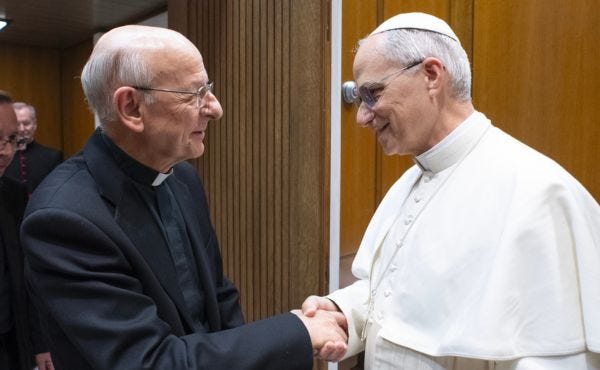
Pope Leo received Ocáriz and Msgr. Mariano Fazio, auxiliary vicar of Opus Dei, on May 14 — less than a week after his election. And Opus Dei announced that it had handed the Vatican its proposal for new statutes on June 11.
Since then, though, according to the prelature, there has been absolute silence.
Meanwhile, there has been at times feverish speculation about the new canonical structure of Opus Dei, with some media reports insisting that it will be reconstituted and formally split between a personal prelature for incardinated clergy, a priestly society for diocesan clergy, and a public association of the faithful for laypeople.
There’s also been speculation about changes about the office of the prelate, with some suggesting that it will no longer be a life-long position, or that it will become a more spiritual role, with the government power within the organization being exercised by another figure. There’s also been speculation about changes to the method of election of the prelate.
However, a Vatican official who has been part of the reform discussions told The Pillar that media reports presenting a slate of supposed changes as definitive or even having secured papal approval are “sheer madness” and that “the statutes are in the hands of the Holy Father.”
“The statutes are still in revision,” the source said, and no decisions have been made.
What will happen next?
While many expected that the new pope would quickly sign off the last proposal sent by Opus Dei, created under Pope Francis and aimed at encapsulating his vision for the Work, Pope Leo has had the statutes in his hands for some six months now without signalling his mind on the issue.
Sources close to the situation told The Pillar that the canonist pope is likely to first solve the ongoing situation regarding Torreciudad, an Opus Dei-run shrine in Spain that has been in a three-year dispute with its local bishop.
The local bishop threatened to resign from his post after reports that the Vatican-appointed commissary was considering siding with Opus Dei in the dispute.
Several sources involved in the discussions about the canonical reform of Opus Dei have also said that the fact that Pope Leo is taking his time reviewing the proposed revisions to the statutes could be good news for the prelature.
“It means he’s not blankly approving everything in the proposal that was supposed to be presented to Francis originally,” one of the sources told The Pillar.
Concerning the speculation about dramatic canonical reforms, some have also offered that some of these went beyond what was explicitly required by Francis’ two motu proprios, and could be subject to a scaling back under Leo.
It could also be that Leo’s own experiences with the institution are leading him to reexamine the thrust and scope of the proposed changes.
While Francis’ relationship with Opus Dei both in his time in Argentina and as a pope could be described as at best “distant,” Leo served as a Bishop of Chiclayo, a Peruvian diocese with a significant presence of Opus Dei.
The diocese was created in 1956, and after its first bishop died in 1968, the pope appointed Bishop Ignacio Obergozo, a Spanish priest of Opus Dei, to lead the diocese.
In 1998, Obergozo died. His successor, Bishop Jesús Moliné, was a member of the Priestly Society of the Holy Cross, associated with Opus Dei. Obergozo and Moliné led the diocese for a total of 45 years, and between the two, they oversaw a period of intense growth, overseeing the creation of a seminary and a Catholic university. Their time in office also saw the diocese’s population grow from 400,000 to more than 1 million, while the number of parishes nearly doubled.
When Bishop Robert Prevost arrived in Chiclayo, some local Catholics worried that he could bring with him a significant change in attitude since had been appointed by Pope Francis, who was generally viewed as being skeptical of Opus Dei and perceived “conservatives” in general.
While some media reports have tried to talk up tensions between Prevost and his more conservative clergy, especially those associated with Opus Dei, his record in the diocese on appointments and various local testimonies indicate that as bishop, Pope Leo actually embraced the clergy and institutions he inherited.
His vicar general, seminary rector, vicar for the clergy, cathedral rector, and several parish priests within his trusted circle were all members of the Priestly Society of the Holy Cross.
In fact, rather than bringing in a community of Augustinians from his own order to live with, Prevost instead opted to live with many of these priests, at the episcopal residence.
Of course, appreciation for an institution doesn’t necessarily mean accepting its own claims about its canonical nature. But it does give the pope firsthand knowledge of the role of the laity in Opus Dei.
As a canonist, Leo seems most likely to press ahead with formalizing the essentially clerical nature of personal prelatures. But the new pope’s own experience of the wider Opus Dei project might also make him more sensitive to the importance of its self-understanding, too. But how that plays out in the text of a new set of statutes remains is far from settled.