





Who was the slain nuncio Archbishop Courtney?

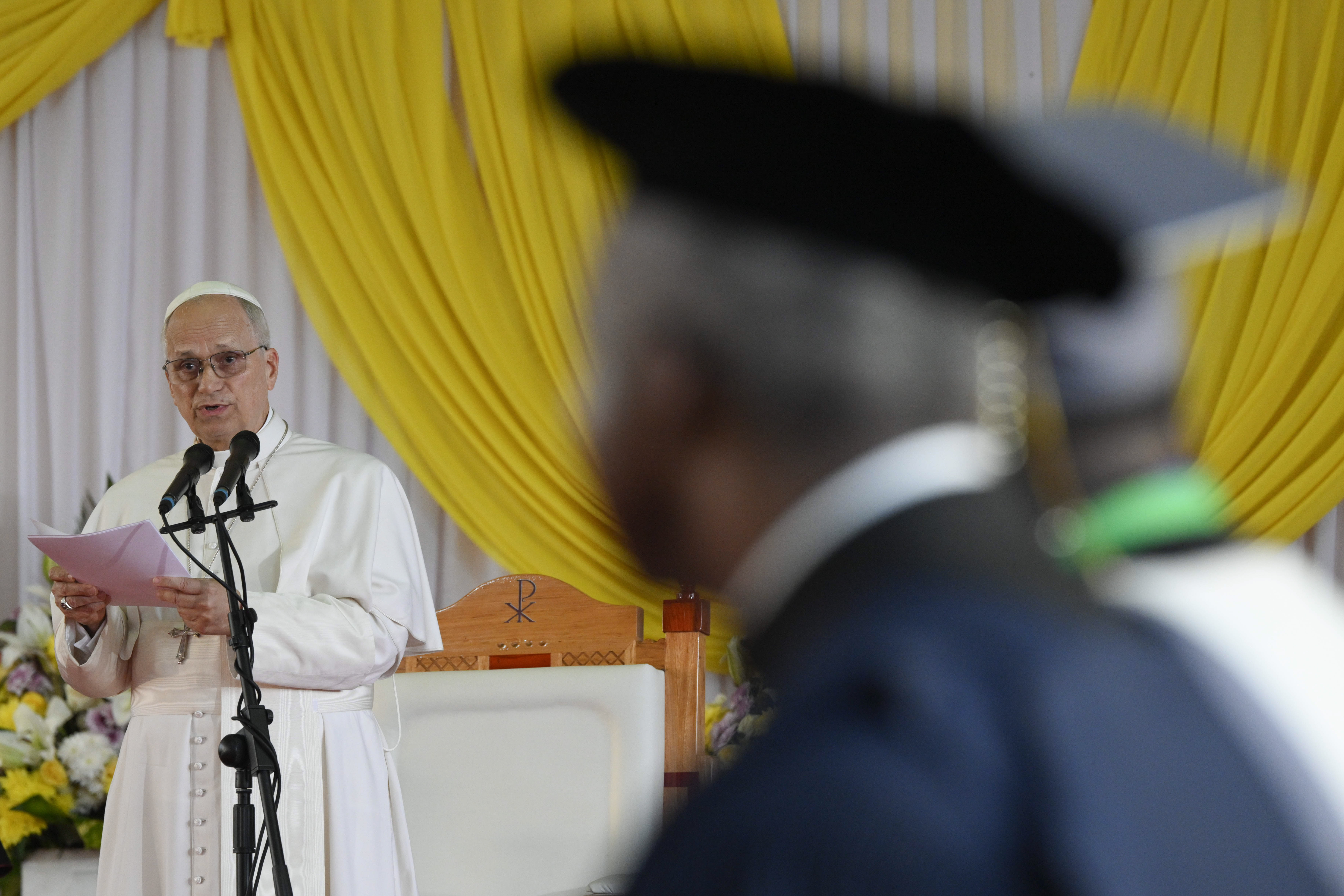
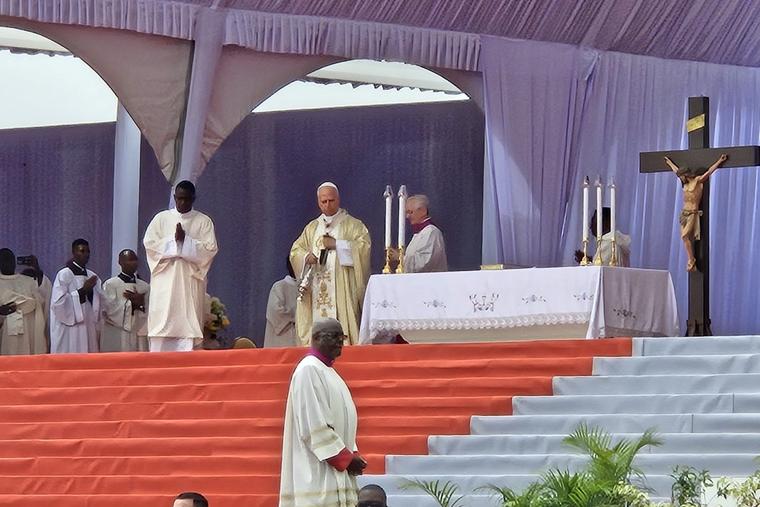
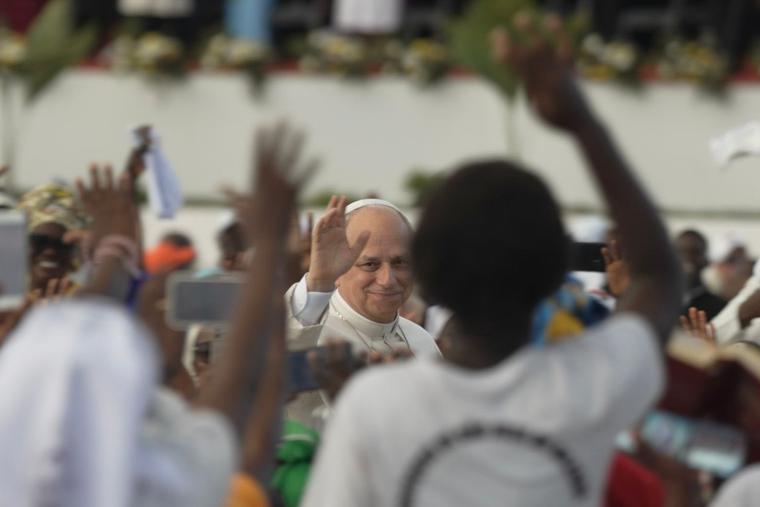
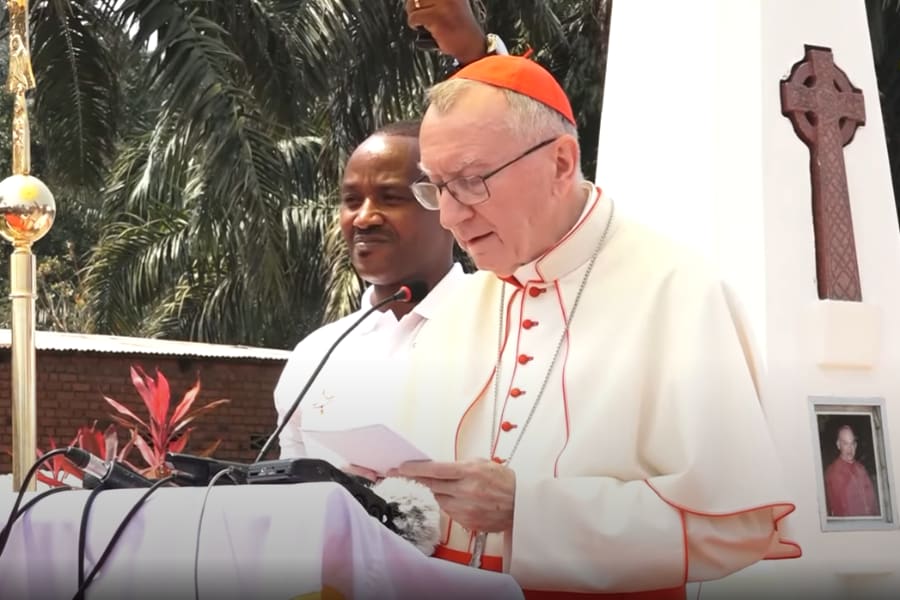
Vatican Secretary of State Cardinal Pietro Parolin inaugurated Thursday a memorial to the slain nuncio Archbishop Michael Aidan Courtney in Burundi.
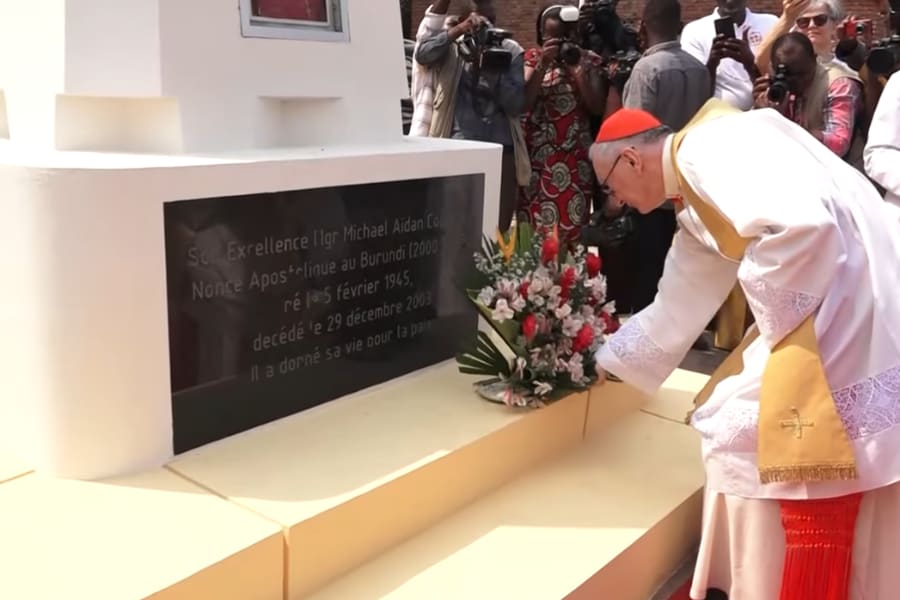
The Vatican’s most senior diplomat laid flowers Aug. 14 at the memorial to the Irish archbishop in Minago, a town on the shores of Lake Tanganyika.
The memorial is inlaid with a Celtic cross in honor of Courtney’s Irish heritage, a color photograph of the archbishop, and a plaque saying that “he gave his life for peace.”
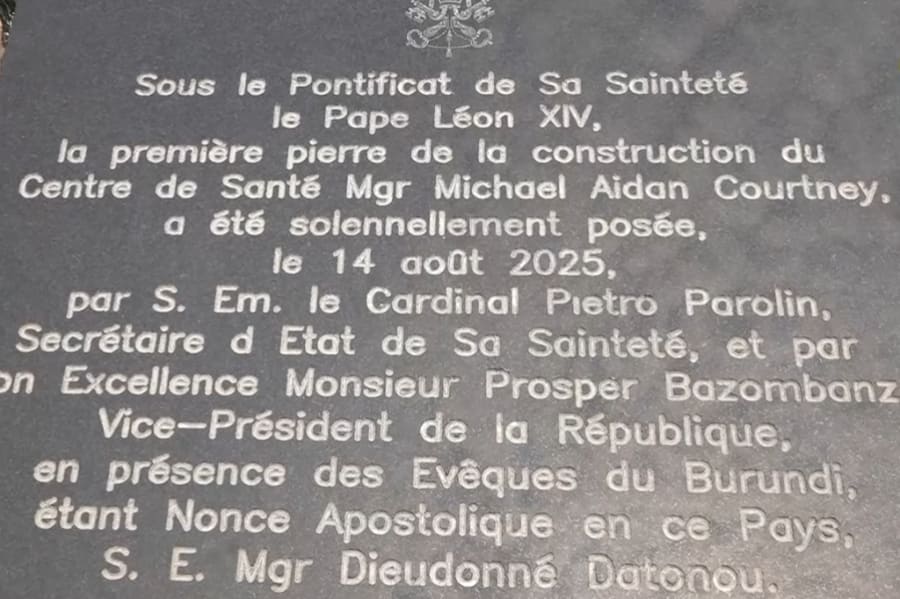
Parolin also laid the first stone of a health center that will be built in honor of Courtney, who is believed to be the first nuncio to die violently in more than 500 years.
Who was Archbishop Courtney? What happened on the day he died? And what was the aftermath?
Who was Archbishop Courtney?
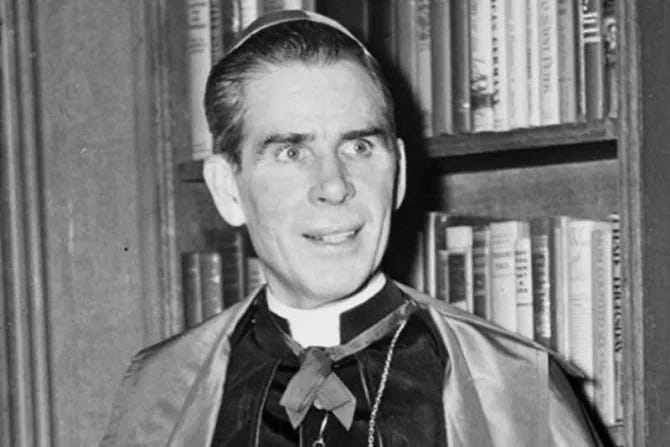
Michael Aidan Courtney was born on Feb. 5, 1945, in Nenagh, County Tipperary. He was the youngest of seven children of the medical doctor Louis Courtney and his artist wife, Elizabeth.
From a young age, Courtney seemed destined for greatness. He attended the Jesuit-run Clongowes Wood College, one of Ireland’s most prestigious high schools, which features in James Joyce’s first novel, “A Portrait of the Artist as a Young Man.”
Courtney shone there both academically and in sports. One teacher is said to have remarked: “Ireland isn’t big enough for that fellow.”
Courtney’s entry in the “Dictionary of Irish Biography” describes him as “a man of immense physical and mental energy,” whose hobbies included swimming, tennis, horse riding, skiing, windsurfing, and sailing.
He considered following his father into medicine, but opted instead to study economics and law at University College Dublin. Fellow students thought he was destined for a political career and were surprised when he decided to become a priest.
“I thought priesthood was where you lived not for yourself but for other people,” he said later. “I had two options. Either become a successful lawyer, marry, and have a family, or to choose a way whereby you do not live for yourself but for other people.”
After studying at the Pontifical Irish College in Rome, he was ordained for the Clonfert diocese in 1968, serving in parishes and as a chaplain to miners.
He returned to Rome for postgraduate studies, which led to his enrollment at the Pontifical Ecclesiastical Academy, the training center for Vatican diplomats, nicknamed the “school of nuncios.”
His first posting was to Apartheid South Africa in 1980, followed by Zimbabwe and Senegal.
Wherever he was posted, he thought it was essential to learn the local language. In addition to English and Irish, Latin and Greek, he picked up Italian, Spanish, French, German, Serbo‑Croat, Hindi, and Kirundi, Burundi’s national language.
At the apostolic nunciature in India, he helped to lay the groundwork for Pope John Paul II’s 1986 state visit. He was then sent to Yugoslavia, the only Vatican diplomatic outpost behind the Iron Curtain, followed by Cuba.
On the communist island, he established a rapport with Fidel Castro, noting they were both educated by Jesuits. He is credited with paving the way for John Paul II’s historic 1998 trip to Cuba.
After a move to Egypt, he supported the Vatican delegation at the stormy 1994 UN population conference in Cairo. He was also seen serving at an orphanage in the capital run by Mother Teresa’s Missionaries of Charity.
In 1995, he was sent to Strasbourg, France, to serve as the Vatican’s special envoy to the Council of Europe.
In the year 2000, he was named apostolic nuncio to Burundi, an East African country of 14 million people, around two-thirds of whom are Catholic.
The nation, roughly the size of the U.S. state of Maryland, had unraveled in 1993 when its first elected president, Melchior Ndadaye, was assassinated after only three months in office.
Ndadaye, a member of the Hutu ethnic group, was killed by a group of soldiers of Tutsi ethnicity. The killing unleashed clashes between the country’s Hutu majority and Tutsi minority.
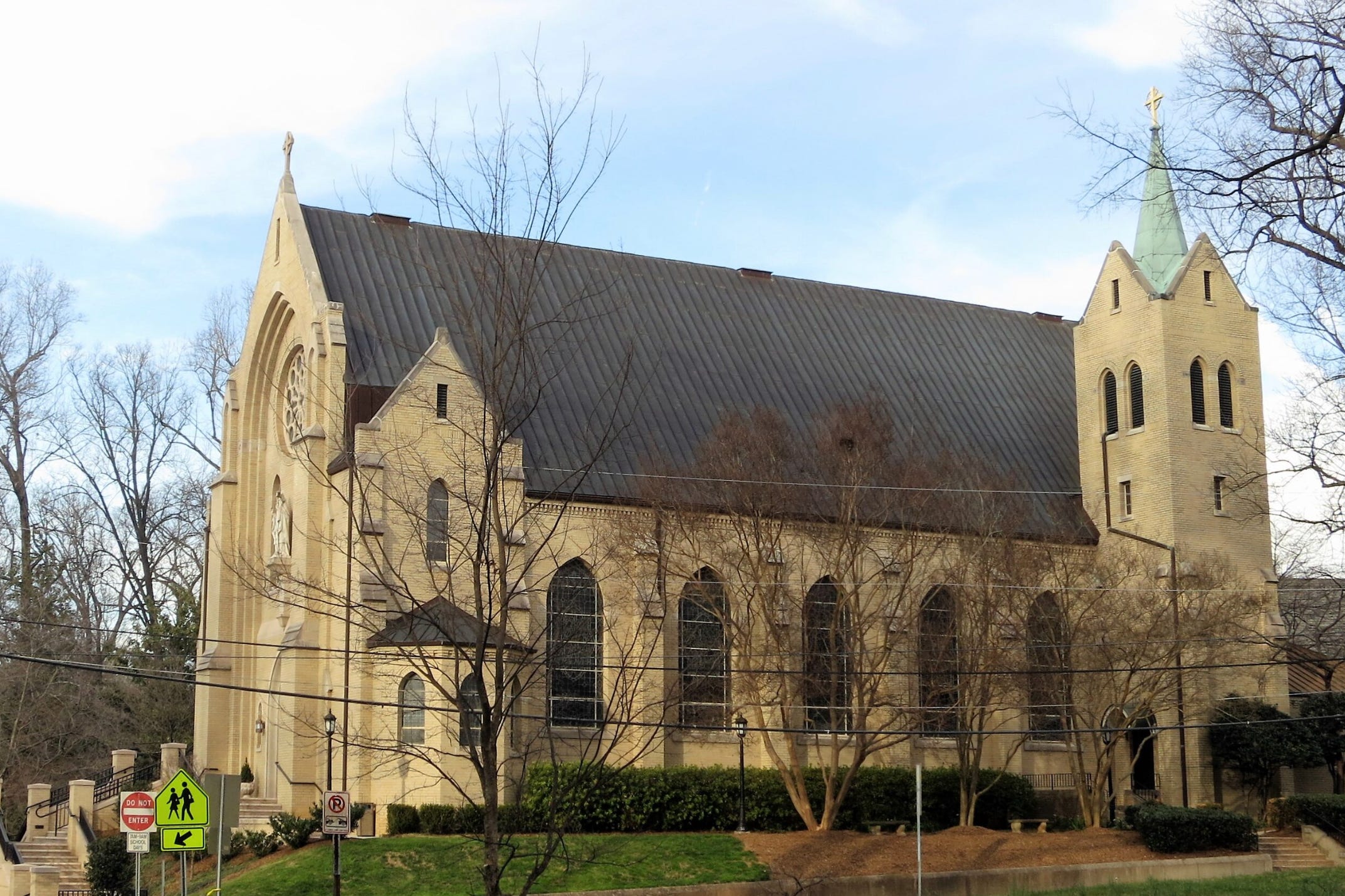
The civil war had lasted seven years and claimed tens of thousands of lives when Cardinal Francis Arinze, the then-prefect of the Congregation for Divine Worship, presided at Courtney’s episcopal ordination on Nov. 12, 2000. The ceremony took place at St. Mary of the Rosary Church in Nenagh, Courtney’s hometown.
In his homily, Arinze noted that Courtney was being sent to a nation wracked by violence as a messenger of forgiveness, reconciliation, and charity.
As Courtney landed in Burundi on Dec. 3, 2000, his aircraft was peppered by gunfire. He would be fired upon two more times in his first three years in the country, without sustaining injuries.
The archbishop quickly established himself as a trusted mediator between the government and rebel factions. In 2002, he helped secure the release of a kidnapped bishop.
In December 2003, only one rebel group had yet to sign a peace agreement with the government: the National Forces of Liberation, known by its French acronym FNL.
Courtney was preparing to leave Burundi to take up the post of nuncio to Cuba in January 2004. But he thought the FNL was on the verge of committing to peace, so he canceled his Christmas leave and received permission to remain in Burundi for another month.
What happened on the day he died?
On Dec. 29, 2003, Courtney attended the funeral of a priest outside of the capital, Bujumbura.
After the funeral, his car, which bore the Vatican flag and diplomatic licence plates, drove along the RN3, a major road leading back to Bujumbura. In addition to Courtney, the car contained a driver, a hitchhiker, and a priest.
When the car was about two miles from the town of Minago, there was a crackle of gunfire from a nearby hill. The 58-year-old archbishop was struck in the head, shoulder, and leg.
Of the car’s three other occupants, two were unscathed, while the priest was lightly injured.
Bullets struck the car’s tires, slowing its journey to the Prince Louis Rwagasore Clinical Hospital in Bujumbura, where Courtney died on the operating table.
What was the aftermath?
The Burundian authorities had no doubt that the killing was deliberate.
The then-President Domitien Ndayizeye said: “It was not an accident; he was killed.” The Vatican spoke of an “assassination.”
The shooting took place in a region known as an FNL stronghold, prompting the Burundian government to blame the rebel group. But FNL denied responsibility with great vigor, even threatening a local archbishop who was skeptical of their denial.
Courtney’s funeral Mass was held on Dec. 31, 2003, at Bujumbura’s Regina Mundi Cathedral. Burundi’s bishops said the archbishop had worked “day and night, without ceasing” to bring peace to the country through dialogue.
“He spared no effort to bring all Burundians together, excluding no one,” they said. “In that way, he wished to show that there is no way to save our country except that of dialogue, consultation, and the definitive rejection of murder and assassinations as a political means.”
The nuncio’s body was returned to Ireland, where a funeral Mass was celebrated on Jan. 3, 2004. Poignantly, the Mass took place at the St. Mary of the Rosary Church in Nenagh, and the celebrant was Cardinal Arinze, who had presided there at Courtney’s episcopal ordination three years earlier.
In his homily, Arinze said: “I cry for this heinous act of a few tragically misguided people in Burundi, people of violence who must not be allowed to give a negative image to a whole people.”
“I thank the Church in Ireland for having given to the universal Church in Archbishop Courtney a splendid witness who gave his life for Christ and the Gospel right up to the shedding of his blood. I pray for the conversion of all people of violence in Burundi and everywhere else in the world.”
The cardinal also cited the opening lines of Courtney’s will, which read: “Let my first words be addressed to the One who called me to serve Him in the priesthood and to be a Minister of His compassion, goodness, closeness and love to all of those whom Providence has destined me to encounter — in two parishes in the Diocese of Clonfert in Ireland and in various countries where I have served as a representative of the Holy See.”
“As I have ministered his pardon to others, I now place myself in His hands and beg His mercy and forgiveness for my own sins and shortcomings in his service.”
Courtney was buried in a cemetery at Dromineer, a tranquil village on the shore of Lough Derg, where he had a vacation home.
At a 2006 Mass, Courtney’s friend Bishop John Kirby said: “Two years have passed since the day we buried him in a beautiful graveyard beside Lough Derg.”
“We did not know then why he had been killed. There is every chance we never will.”