





Who’s next to lead at the USCCB?

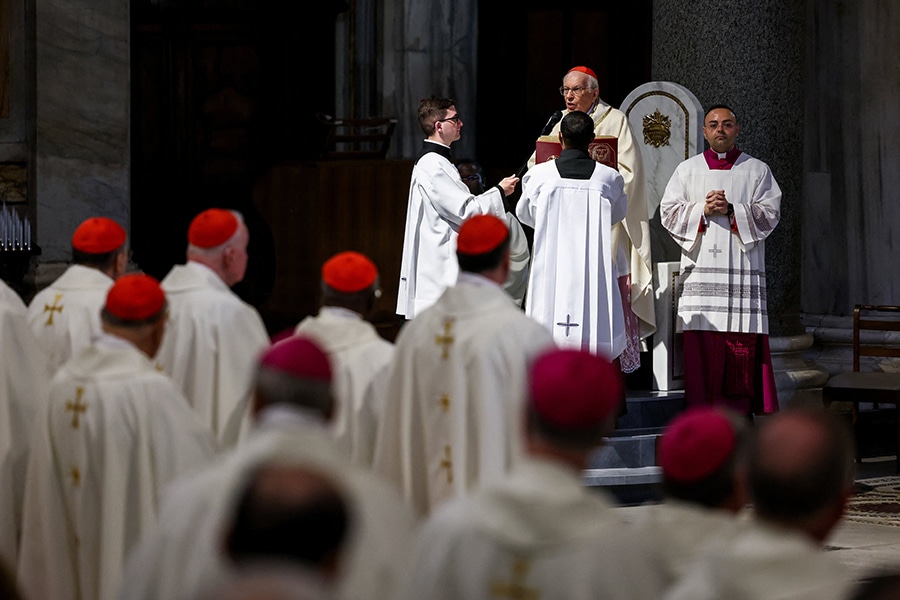
When the U.S. bishops meet for their plenary assembly in Baltimore next month, they’ll discuss the prospect of the 2029 National Eucharistic Congress, a new text of ethical directives for Catholic hospitals, and spend a great deal of time talking about the situation of immigrants to the United States.
The bishops will no doubt approve a message to send to Pope Leo — their American brother — and receive a message in response, through apostolic nuncio Cardinal Christophe Pierre.
There are some pending USCCB issues not yet on the bishops’ public agenda — including a proposal to substantially revise the CCHD community organizing program, the prospect of revising substantially the Dallas Charter, and a rewrite of the bishops’ pastoral statement on ministry to people with disabilities, which has been in the works for several years, but not yet at point of circulating a draft.
Other issues will likely be discussed behind closed doors during the bishops’ executive session — including the prospect of revising the USCCB’s “Faithful Citizenship” document, which has been due for discussion among the bishops for the past few years.
While USCCB meetings were once almost entirely public affairs, the bishops in recent years have called most of the meeting into executive session, with the public sessions restricted mostly to presentations and updates from conference committees and outside groups.
There is still sometimes pointed discussion among the bishops during their public sessions, and the meeting next month could feature at least some discussion ahead of the passage of the 2026 budget.
But most Catholics paying attention to the meeting will be watching for election results — to see what the election of new committee chairs, and executive leaders, portends for the bishops’ conference.
Of course, even those elections have in recent years become an increasingly less helpful barometer of episcopal perspectives, as the swath of American cardinals and bishops led by Cardinal Blase Cupich — those who might be described as “progressive” (however much that term limps when describing theological differences) — have limited their participation in conference affairs in recent years, largely recognizing that conference leadership has been for several election cycles in the hands of the more “conservative” conference majority.
But this year’s election could change that, at least a bit. While the most “progressive” bishops on the terna for president may not be elected, the episcopal appointments of the past few years have changed the make-up of the body, and new bishops could have a moderating effect on the election.
And the president’s race is not the only one watching.
After the bishops elect a president — from the 10 candidates on the slate, or with the unlikely possibility of a floor nominee — they will elect from the remaining candidates a vice president to serve alongside him.
It was, until recently, the USCCB’s custom to see the sitting vice president elected for the next term of the presidency, which often gives the actual voting for president something closer to the feeling of a coronation than an actual electoral contest, while the real drama of the election is usually reserved to the election of the conference vice president.
The bishops’ custom of electing the vice president to the top job was disrupted with the 2010 presidential election of then-Archbishop Timothy Dolan, who defeated Bishop Gerald Kicanas on a third-ballot runoff.
While Dolan told the New York Times he was surprised by the voting, most conference-watchers think the 2010 election outcome was actually the result of some careful planning, and a fair bit of politicking conducted by Dolan’s supporters.
Before Dolan, only two conference vice presidents were not elected to lead the conference. Archbishop Leo Byrne died in 1974, one month before he could be elected conference president. St. Louis’ Cardinal John Carberry was too close to retirement to be elected president in 1977.
And Dolan’s own vice president was elected president in 2013, as was his vice president in 2016, and his vice president was Los Angeles Archbishop Jose Gomez, who preceded Broglio in the job.
But the bishop elected as Gomez’ vice president broke the customary patter — not only was he not elected president of the conference after a term in the second seat, he wasn’t even eligible for the top job.
Gomez’ vice president was Archbishop Allen Vigneron, who was too old when he was elected to that job to ever be a candidate for president. And the current vice president, Archbishop William Lori, is in the same boat. But only two of the candidates on this year’s slate are too old for both a vice-presidential and presidential slot — meaning the new practice of electing older vice presidents is probably coming to an end.
But whether that means USCCB vice presidents will again be presidents-in-waiting won’t likely be clear until 2028.
So who are the 2025 candidates for president, and what might their election mean? Here’s a look at a few of the most likely front-runners, and some other bishop-candidates to watch:
The front-runners
Archbishop Paul Coakley
If there is a clear front-runner among the ten bishops nominated to the office of president, it is Archbishop Paul Coakley, who is now the conference secretary.
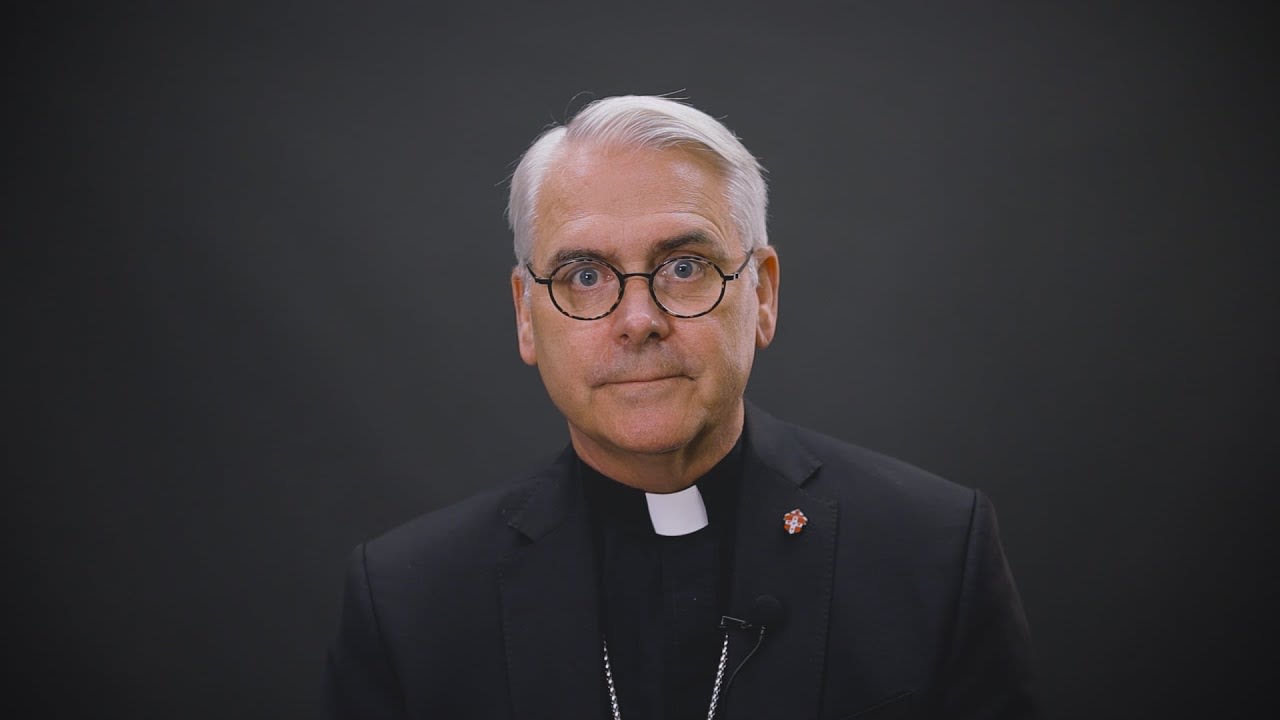
In fact, Coakley has been elected to the secretary position twice — in 2022 he was elected to fill the remaining year on Archbishop Timothy Broglio’s term, as Broglio had been elected secretary, and in 2023, he was elected by a huge majority to a term as secretary in his own right.
Coakley’s experience on the conference’s administrative committee — and his experience before that chairing high-profile Catholic institutions like Catholic Relief Services, make him a frequently discussed candidate for the presidency. It is obvious that he knows the structures of the conference, and has led a complete overhaul of the way that bishops assign the conference’s staff and budget toward annual priorities.
Even his critics acknowledge that Coakley runs meetings efficiently, and is capable of engaging in dialogue across the ecclesiastical aisles, as it were.
On the other hand, Coakley was also regarded among the front-runners in the 2022 election, but did not garner the kind of election support that many had predicted, in either the presidential or vice-presidential contests. And in 2019, Coakley got only the third-most votes in the VP contest, and did not make it to a run-off election for that office.
Still, as he’s continued to rack up experience, and take up the somewhat thankless job of overseeing the conference’s strategic planning process, there is a narrative among some bishops that 2025 is “Paul’s turn” at the conference.
Coakley will not get the votes of the Cupich-led network of bishops on the conference’s left — he’s viewed by that group as a “culture warrior,” and too close to organizations like the conservative lay-led Napa Institute. Coakley’s frequently outspoken opposition to the death penalty in his state isn’t likely to overcome that perception, nor are his statements advocating for solidarity with undocumented immigrants.
He won’t necessarily need that cadre’s votes to become the USCCB president. But depending on the reach of that group, they could play the spoiler, and move the conference toward a candidate perceived as being less conservative-coded. It is worth noting that in the 2022 secretary election, Coakley beat Cardinal Joseph Tobin by only 26 votes — with Tobin making a surprisingly strong showing for a bishop thought to be “left-leaning” — and portending the growing strength of the “progressive” voices in the conference.
If he is not elected president, but does pick up the vice-presidency, Coakley is the only serious candidate on the terna who would not be able to be eventually elected president. If he serves three years as VP, Coakley will be 73 years old at the time of the next conference presidential election, and too old
In some ways, given his trajectory, 2025 is probably a “now-or-never” year for Coakley, to take either the presidency or the VP slot.
Bishop Kevin Rhoades
While he often keeps a low profile among the American episcopate, Bishop Rhoades of Fort Wayne-South Bend should be considered a front-runner simply by the numbers: In 2022, he reached a third-ballot run off with Lori for the vice-presidency, and came fairly close to the number of votes needed for the office.
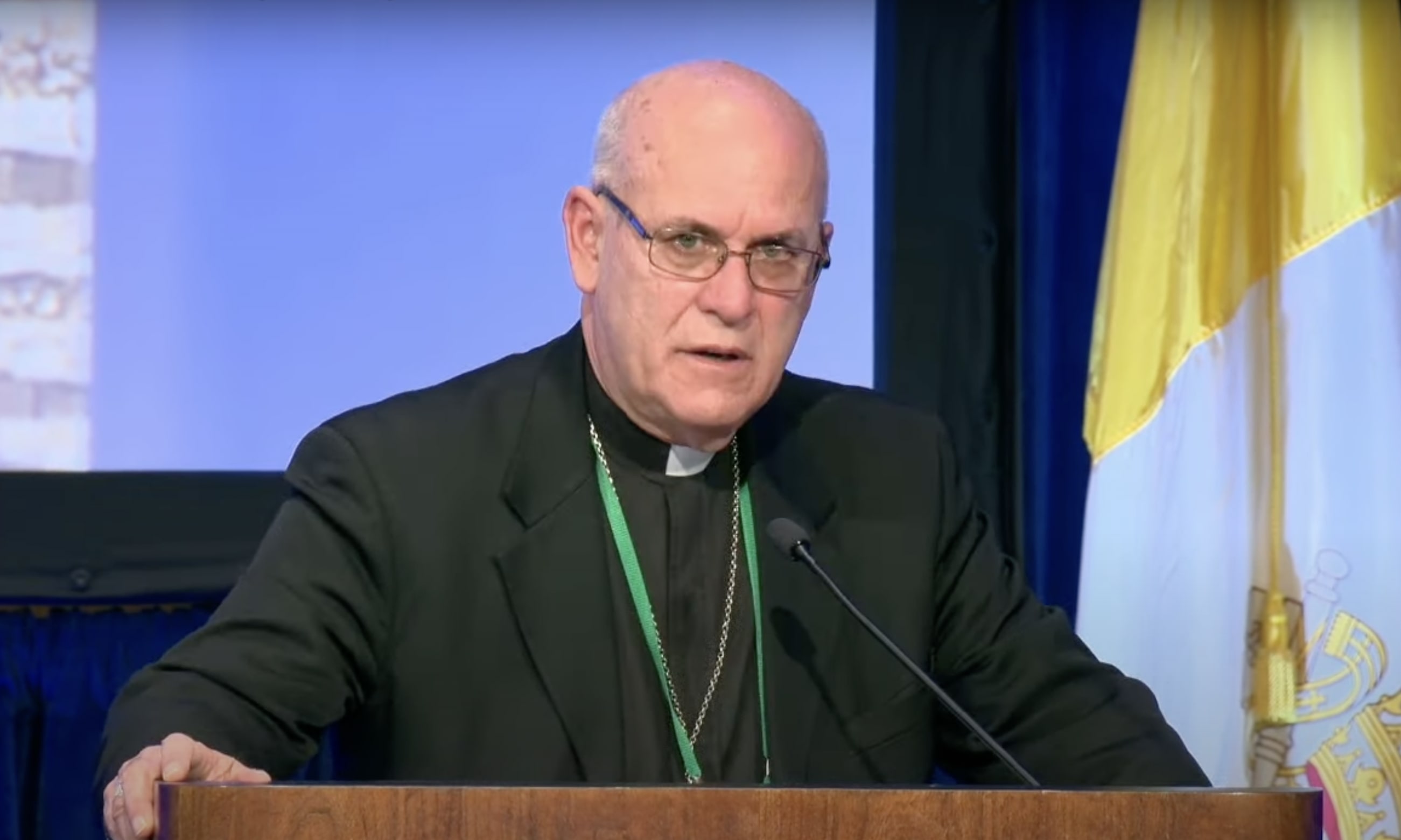
Rhoades is most well-known among the U.S. bishops for his work to calm the 2020 and 2021 fracas over “Eucharistic coherence,” in which bishops were dramatically divided over what their conference should say — if anything — about pro-abortion politicians receiving the Eucharist — most especially President Joe Biden.
While debate on the conference floor was fierce, Rhoades was then chair of the conference’s doctrinal committee, and spearheaded the effort that eventually saw the surprise of a nearly unanimous November 2021 passage of “The Mystery of the Eucharist in the Life of the Church.”
Rhoades attributed the eventual 228-8 consensus on the document to the Holy Spirit.
Bishops largely agreed, with several giving more immediate credit to a decision to begin the November 2021 meeting with prayer and closed-door sessions, which many bishops described to The Pillar as “synodality in action,” and a new course for the USCCB altogether.
But bishops also credited Rhoades and his committee with doing extensive regional consultation on the drafting of the controversial document, and bishops told The Pillar that even if the document didn’t take up every perspective they might have offered, by the time it came to a vote, most felt they’d been heard.
Rhoades, who led both open and closed-door discussion of the Eucharistic coherence document - and helped ensure the regional consultation process - came out of the debate having helped achieve consensus, when only months before - in June 2021 - the bishops had engaged in protracted and often-ugly debate on the prospect of even drafting a text, let alone publishing it.
While the Eucharistic coherence proceedings revealed deep fissures among the conference - and probably left some with scars - it also, eventually, morphed into a very different way of doing business for the conference, and, in the process, probably raised Rhoades’ stock among a cadre of bishops.
At the same time, there is a group of bishops who likely view Rhoades as too doctrinally conservative to get their votes, even if he has a low-key and conciliatory disposition when engaging.
If he’s not elected to be president, Rhoades remains a contender for the vice-presidential slot. The bishop has chaired the USCCB Committee on Laity, Marriage, Family Life, and Youth in addition to the doctrine committee, and is now the chairman of the Committee for Religious Liberty. Unlike Coakley, Rhoades is young enough to be elected vice-president, and subsequently become president.
The litmus test
Archbishop Edward Weisenburger is not going to be elected the president of the U.S. bishops’ conference.
Whether he knows that or not is unclear, but Weisenburger, who has emerged as a controversial figure since his March installation as Detroit’s archbishop, does not have the support of the majority of the U.S. episcopate.
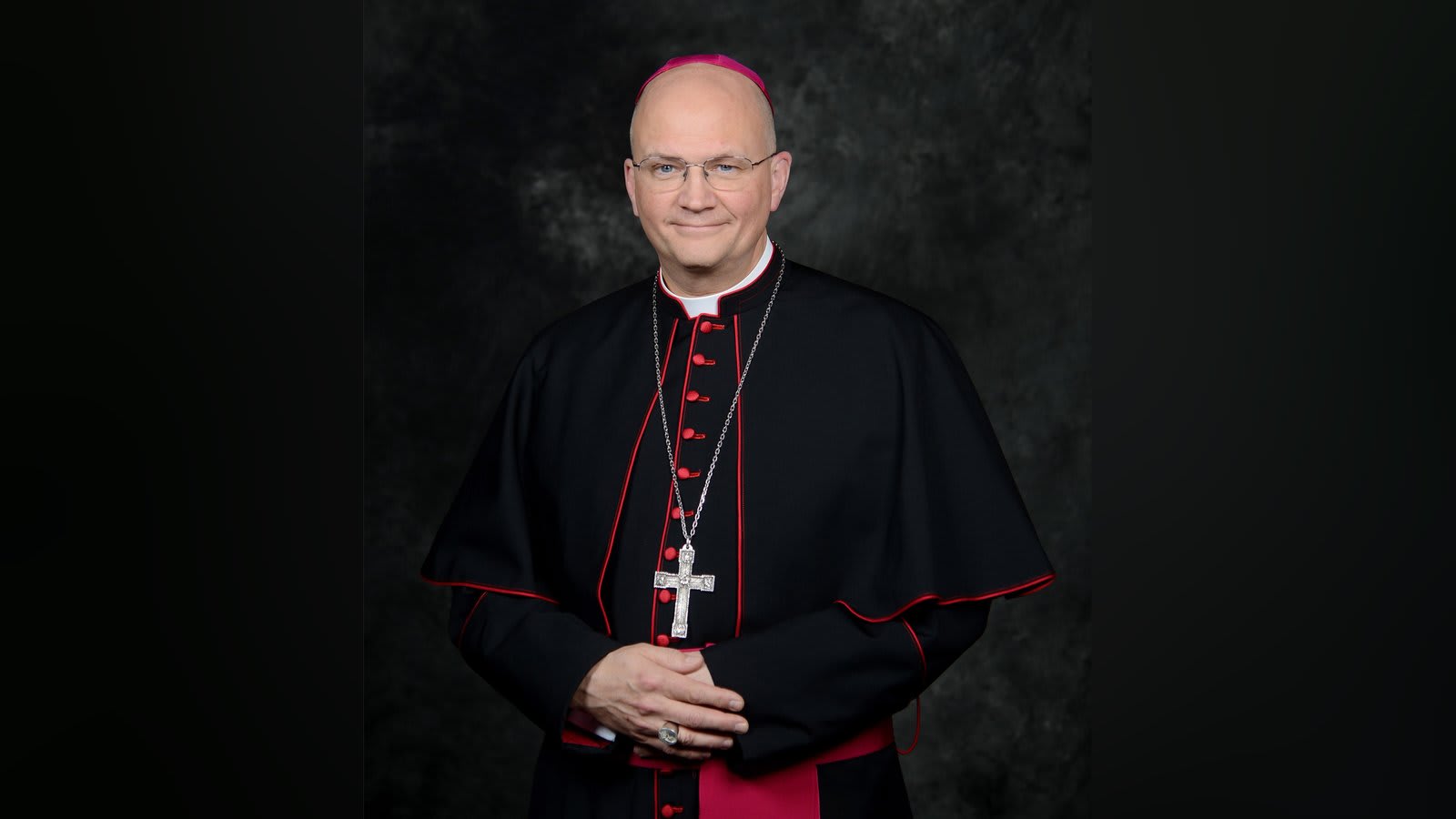
Previously Bishop of Tucson and Salina, Weisenburger is a canonist who in 2018 prompted canonical debate by suggesting that law enforcement officers involved in unjust deportations might be denied the Eucharist.
Weisenburger’s rhetoric of solidarity toward undocumented immigrants is relatively uncontroversial among bishops — even if unpopular among some other Catholics. But other decisions have painted him clearly in the Cupich-led “progressive” camp, including the firing of three professors from Detroit’s seminary, and a prohibition on the celebration of the Mass ad orientem.
While Weisenburger has become broadly unpopular among a swath of extremely online lay and clerical Catholics, there’s no definitive correlation to be drawn between that focus group and the American episcopate.
So Weisenburger’s vote total in the first round of balloting can be seen as a kind of touchstone indicator for the size of the Cupich caucus in the conference, which is helpful for understanding the make-up of the body.
The ‘unity’ candidates?
Coakley is the front-runner, and he’ll need a simple majority of the votes to win. But he won’t get the votes of the Cupich wing of the conference, and there may well be others not voting for him because of a perception that his election would contribute to polarization in the conference, or because of a desire for a leader seen less to be aligned with the conference’s most outspoken “conservative” voices. Again, that Cardinal Tobin came with 26 votes of being elected secretary in 2022 should not be ignored.
And there may well be a swath of bishops looking, in short, for someone seen to be more moderate, or with a focus more on the day-to-day of the conference than on divisive political issues.
If that’s the case, the front-running “compromise” candidate — the sort everyone can live with — might be seen as Archbishop Charles Thompson of Indianapolis.
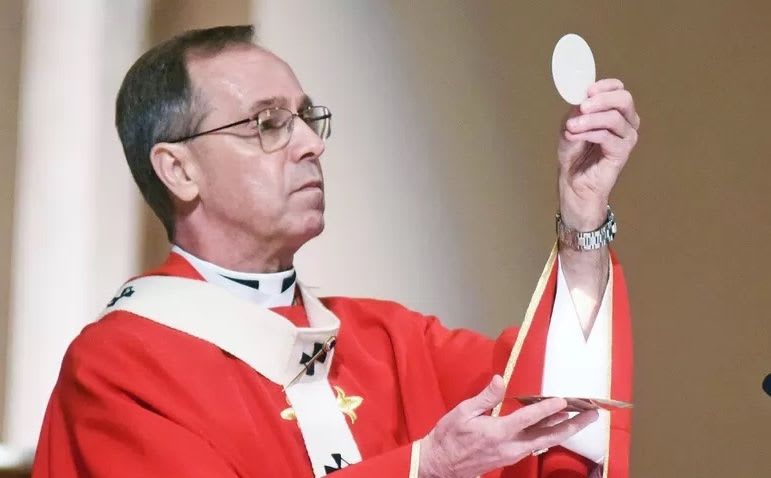
Thompson was the host of the 2024 National Eucharistic Congress, and is the outgoing chair of the conference committee on evangelization and catechesis, which quarterbacked the Eucharistic Revival efforts overall.
He is seen as theologically orthodox but non-ideological, personally moderate, unassuming, and a good pastor — and that might make him a viable candidate, drawing enough votes from across the body of bishops to become the conference president — or to take the second chair.
There is another possibility in the same vein, though it’s must more of a long shot.
Archbishop Nelson Pérez of Philadelphia is not known to stand out especially among the U.S. bishops in any particular way. While he previously chaired the committee on cultural diversity, in his last election at the bishops’ conference, Pérez lost an election to chair an international justice and peace committee.
He is not seen as ideological, and is generally regarded as affable and approachable. Still, the archbishop does not immediately suggest a likely presidential candidate.
Except, perhaps, for this: Among U.S. bishops, it was Pérez who secured the first major accomplishment in Vatican relations amid the new Leonine papacy — the archbishop got Pope Leo XIV to agree to a livestream dialogue with American young people at the National Catholic Youth Conference Nov. 21.
On the other hand, that event will be held at Lucas Oil Stadium in Indianapolis, which means the city’s host archbishop is sure to play a prominent role in things. That prelate? Archbishop Charles Thompson.
The wild card
If there is a prelate who is hard to peg in the U.S. bishops’ conference, it’s Bishop Daniel Flores of Brownsville, Texas.
A Thomist, fluent in Spanish and well-known for his work with immigrants, Flores — by all accounts — marches to the beat of his own drum.
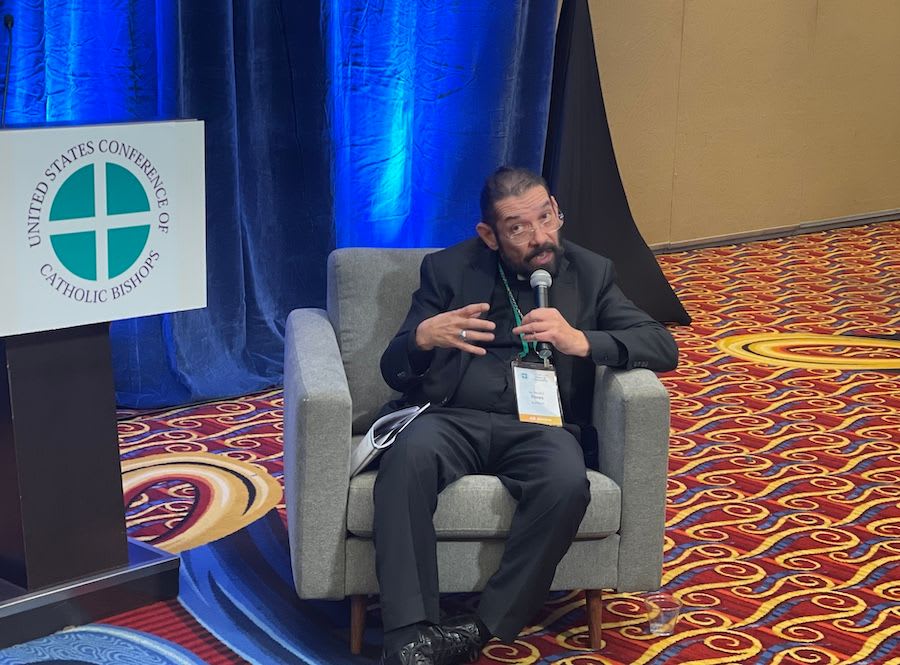
In recent years, Flores has had the task of coordinating the USCCB’s national synthesis document for the Church’s “synod on synodality.”
Critics of the document suggested it was ideologically charged, and some argued that bishops chosen to help with the document’s drafting - especially the outspoken “progressive” Bishop John Stowe, OFM Conv.- are out of step with the majority of the American episcopate.
But most bishops took a more nuanced view of Flores’ work on the document, with many concluding that the bishop made efforts to ensure the “synthesis document” was a cogent summary of the diocesan and regional texts from which it drew.
A bigger question about Flores’ electability to a top leadership position is his reputation as an original thinker, who can’t easily be pegged into an ideological camp.
Flores was resoundingly elected to chair the doctrine committee in 2020. But in 2022 — when he was also a candidate — he did not draw very many votes for either president or vice president.
That might mean that an original thinker with a keen intellect is not what bishops actually want in a ranking conference leader, if it means a leader whose decisions, whatever they might be, will not be especially predictable.
Still, you can never quite count Daniel Flores out until the votes are counted, especially in a year when bishops might hope to make a statement about immigration, and to elect a thinker ready to engage with the significance of an American papacy.
The field
The Pillar’s episcopal previews in years past have been wrong as often as they’re right — a good reminder that predicting bishops is a fickle sport, and that outcomes can still surprise.
Some remaining members of the terna seem unlikely to be elected: For example, Bishop Robert Barron, however well-liked, is likely perceived as too engaged in the work of his Word on Fire apostolate to take up the tasks of conference presidency. Former USCCB general secretary Bishop David Malloy is on the slate, but lost resoundingly when he ran for conference treasurer last year, and is not likely to fare better in the presidential contest.
But other bishops could make a strong showing.
Archbishop Rich Henning, the new archbishop of Boston, is well-liked in New England and New York, from whence he hails, and has had a meteoric rise over the past three years, during which time he briefly led the Diocese of Providence, before moving to Beantown. Henning has the approbatio of now-retired Cardinal Sean O’Malley, and has proven himself to be engaged as an evangelist.
The lacuna
If there is a noteworthy lacuna on the terna of 10 episcopal candidates for president, it is Archbishop Bernard Hebda, whose absence is not surprising, but still worth discussing.
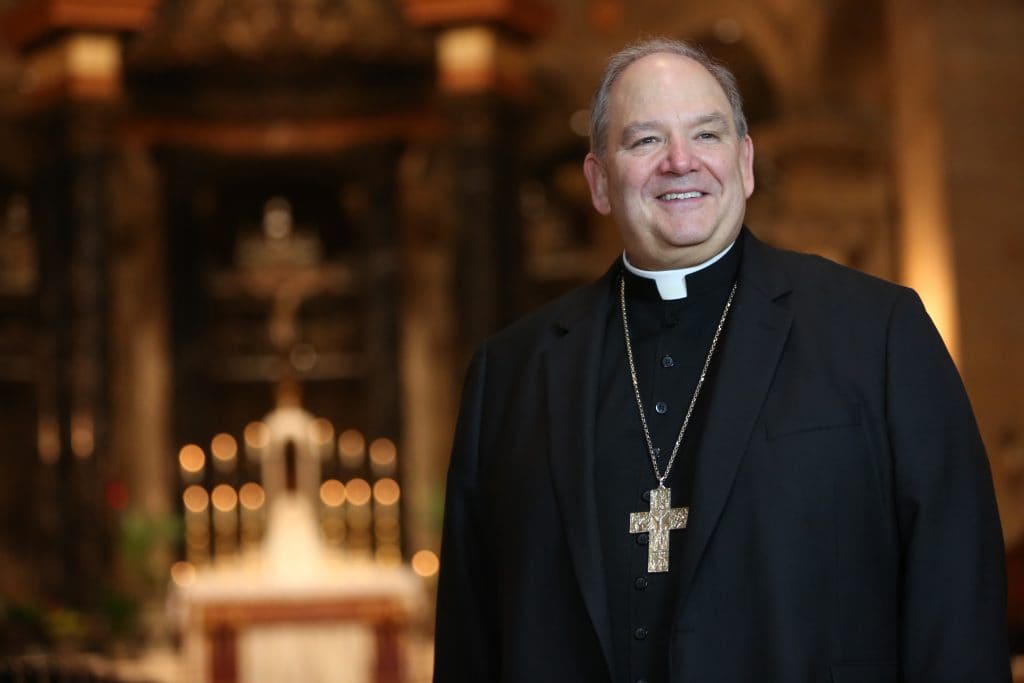
Hebda will begin this month his three-year term as treasurer of the bishops’ conference, and is widely respected among his colleagues at the conference.
In fact, while he has long pushed back, there has been for years a movement among some bishops to draft Hebda as a candidate for the conference presidency. As he usually eschews a national profile, some were surprised when Hebda last year agreed to run for treasurer, even while other observers have expressed hope that the archbishop might be warming up to the idea of eventually leading the bishops’ conference.
In the last year, Hebda has received broad support for his pastoral leadership of an extraordinarily difficult issue, the school shooting at Annunciation Catholic School. He also continues to receive plaudits for his approach to clerical sexual abuse, and is widely perceived to have strengthened faith in an extraordinarily diverse archdiocese.
It is likely that his responsibilities at home, in a community still in shock over its tragedy, seemed decidedly more important to Hebda than any invitations to consider sitting on the terna for conference president. And it is possible the archbishop felt he should do the job for which he was elected — treasurer — before considering any others.
But at 66, Hebda is likely to face continued speculation about the prospect of his possible leadership in the conference, and continued invitations to consider openness to the president’s chair, especially after a turn overseeing USCCB bank accounts.
—
Amid the speculation about horse races, there are broader questions to be asked about the USCCB. Its footprint diminished after migration staff layoffs, the conference will face additional financial challenges as U.S. dioceses deal with bankruptcy, and continues to face internal uncertainty about what its voice should be amid a moment of profound social and political change in America. Further, it’s not clear how an American pope will deal with the American episcopate — whether the pontiff, who is known to regularly call collaborators for informal consultation, will work through the bishops’ conference, or around it.
But while there is much to unfold in the conference’s future, the election of leadership will say something about how the body of bishops will tackle those questions — and what they want their conference to be.
That makes the outcomes, and the voting, worth watching.