













Will cross-continental bishops become Leo XIV’s signature?

History will be made in Mainz Cathedral March 15, when the Latin Catholic Church in Germany gains its first non-European bishop.
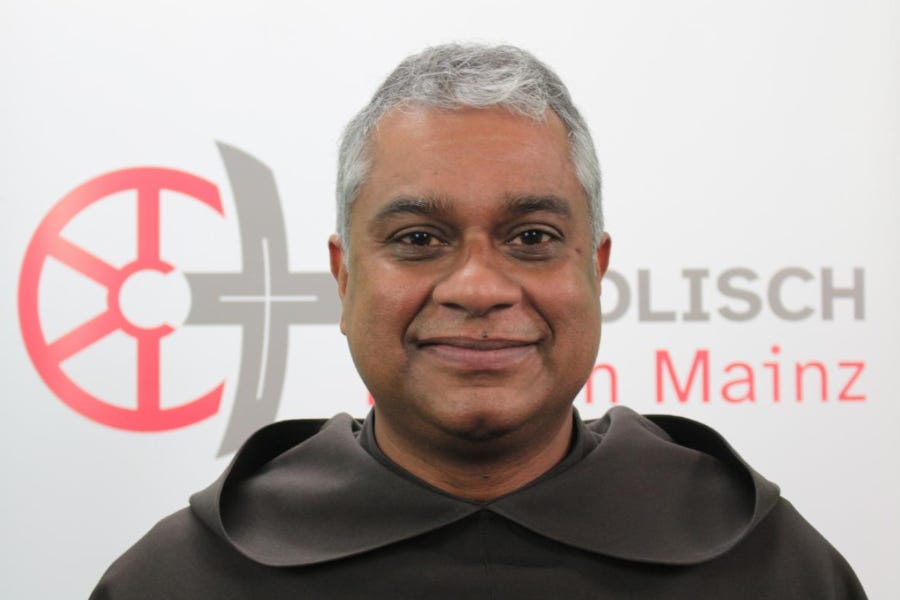
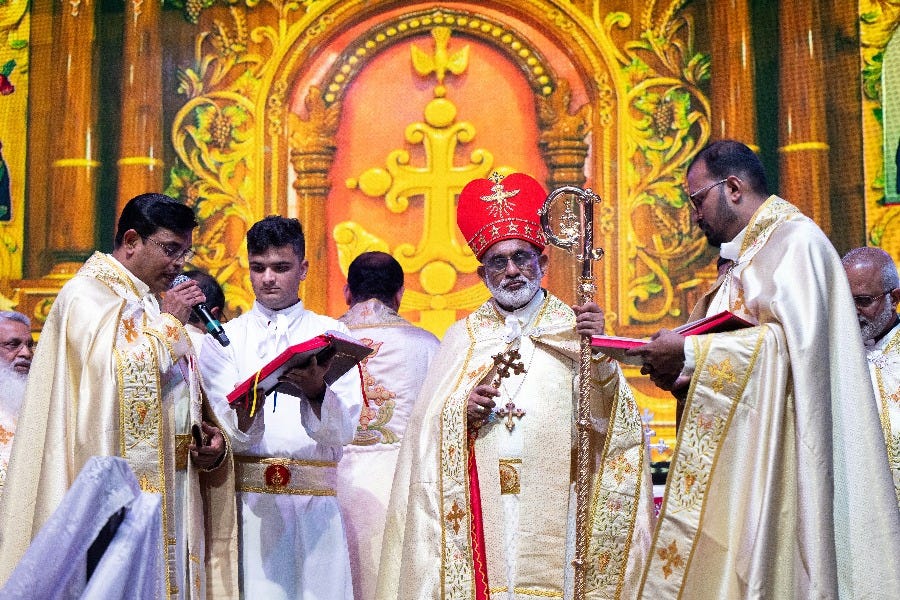
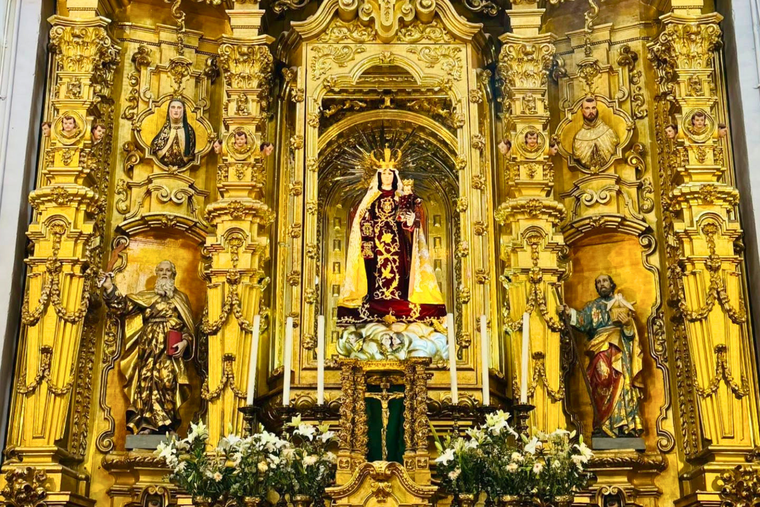
Fr. Joshy Pottackal, O. Carm., who was born in India but is a naturalized German citizen, will serve as an auxiliary bishop of Mainz, a diocese in southwest Germany that dates back to the 4th century.
His Nov. 26 appointment is the latest in a series of continent-crossing nominations by Leo XIV. They include:
???? Vietnam-born auxiliary Bishop Michael Pham, named May 22 as Bishop of San Diego, California.
???? Uganda-born Fr. Simon Peter Engurait, chosen June 5 as the Bishop of Houma-Thibodaux, Louisiana.
???? Philippines-born Msgr. Andres Ligot, named Aug. 29 as an auxiliary bishop of San José in California.
???? Poland-born Bishop Joseph Dąbrowski, C.S.M.A., named Nov. 1 as the Bishop of Hamilton, Canada.
???? Ghanaian Fr. John Kwamevi Cudjoe, S.V.D., appointed Nov. 11 as an auxiliary bishop of Guayaquil, Ecuador.
???? India-born Fr. Susai Jesu, O.M.I., selected Nov. 17 as the Archbishop of Keewatin-Le Pas, Canada.
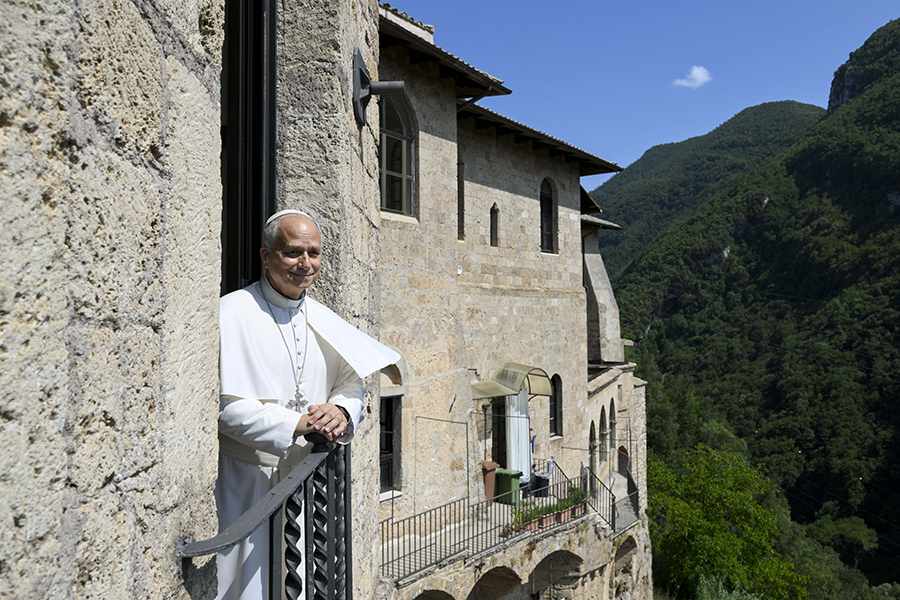
This emerging pattern in episcopal appointments is perhaps not surprising given Pope Leo XIV himself served as a diocesan bishop outside of his home country. His positive experience in Chiclayo, Peru, may have convinced him that elevating foreign-born clergy can enrich the local Church by highlighting Catholicism’s universality.
Like Pope Leo, who belongs to the Augustinian order, a significant number of the cross-continental appointees are religious, rather than diocesan priests. They bring not only experience of a different Catholic culture but also a distinctive spirituality.
Permanent outsiders?
Are there any downsides to appointing clergy formed on one continent as bishops on another?
Certainly, if they were being transplanted with no experience of the culture where they are appointed shepherds. But that’s not the case so far.
Bishop Michael Pham, for example, was born in Vietnam in 1967 and fled as a 13-year-old in 1980. A year later, he was resettled in the U.S., initially in Mankato, Minnesota, and relocated in 1985 to San Diego. So he has been immersed for 40 years in Californian Catholic life.
Similarly, Bishop-elect Joshy Pottackal was born in 1977 in the Indian state of Kerala, where the Syro-Malabar Catholic Church predominates. He made his first profession as a Carmelite in 1996. A year after his ordination in 2003, he left India for Germany, where he attended a language school and a pastoral training center for priests of religious orders. He began serving in the Mainz diocese in 2006, initially as a youth chaplain, so he has 19 years of experience in the region where he will serve as a bishop.
These stories are representative of the new cross-continental bishops. Still, these prelates may be operating at a certain disadvantage throughout their tenures, because they are likely to be seen as outsiders by a proportion of their flocks, no matter how intimately they know the local culture. If they make contentious decisions — and all bishops must — they may be accused of failing to grasp the local Church’s idiosyncrasies.
It will be interesting, for example, to see how Bishop-elect Pottackal relates to Germany’s synodal way, an initiative with a very different theology and ecclesiology to that of the Syro-Malabar Church in Kerala. If he questions it, will his criticisms be heard or quickly dismissed as an outsider’s uninformed opinion?
Old and new
In one sense, Pope Leo’s transcontinental appointments are a return to Catholic tradition. Consider these examples:
John England was born in Cork, Ireland, in 1786. He was ordained a priest in 1808. He left his home country in 1820, when Pope Pius VII appointed him as the first bishop of the newly erected Diocese of Charleston, then covering North Carolina, South Carolina, and Georgia.
João Crisóstomo de Amorim Pessoa was born in Portugal in 1810. He entered the Order of Reformed Friars Minor and was ordained a priest in 1835. In 1860, he was confirmed as the Bishop of Santiago de Cabo Verde, in the island country of Cape Verde. Just a year later, he was confirmed as the Archbishop of Goa, India.
England and Pessoa point to an earlier era in which bishops were routinely transplanted from the continents of their birth to others thousands of miles away. They lived in a colonial age when European powers were redrawing the world map and the Catholic Church was doing its best to adapt to the geopolitical changes.
If cross-continental appointments are becoming common again, it is for a different reason: mass migration.
Take the Diocese of San José in California, where the Philippines-born Bishop Andres Ligot now serves as an auxiliary. In 1982, the then-Bishop Pierre DuMaine created an Office of Filipino Ministry, in recognition of the large number of Filipino Catholics in the diocese. So when Ligot was incardinated in the diocese in 2004, there was already a well-established connection between the diocese and Filipino Catholic community.
Migration from the Indian state of Kerala to Germany began in the 1960s, when there was a post-war labor shortage in hospitals. German Catholic institutions recruited young Indian Christian women from the Malayali ethnic group, who mainly speak Malayalam as their first language. Another wave of migration to Germany came in the 2010s, driven by a shortage of nurses amid an aging population. The number of Indian nationals residing in Germany has risen from 40,000 in 2005 to around 280,000 by 2025. Overall, 16.7% of Catholics in Germany do not have a German passport.
So Bishop-elect Pottackal will encounter plenty of fellow Indian-born Catholics during his episcopal ministry in Mainz (though they are more heavily concentrated in bigger German cities).
Some observers believe that, with growing restrictions in developed countries and aging populations in the developing world, the era of mass migration could be coming to an end. But there should be plenty more cross-continental episcopal appointments, related to relatively recent population shifts, in the immediate future.