





WYD Lisbon’s unlikely surplus launches foundation to invest in Portuguese youth

For a while, World Youth Day Lisbon seemed destined for disaster.
First, the Covid pandemic caused the international gathering to be delayed from 2022 to 2023. Then, the invasion of Ukraine launched a war which created economic uncertainty across Europe. World Youth Day organizers braced for the worst, and were conservative in their expectations.
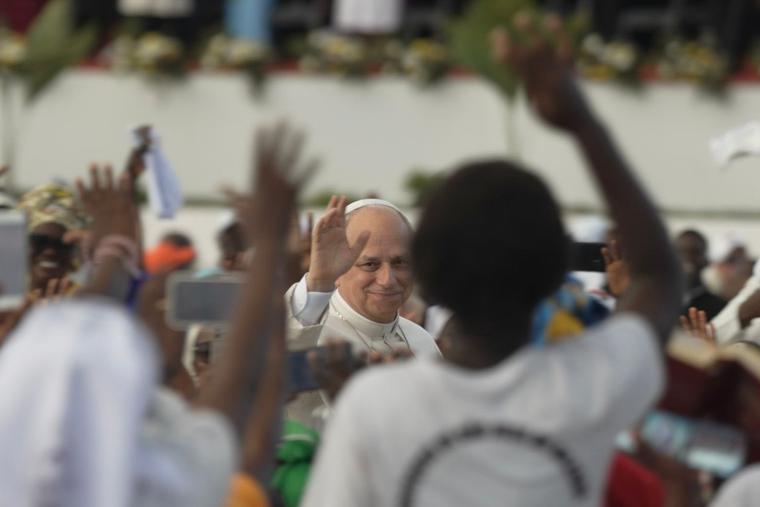
But in the end, the number of pilgrims far exceeded expectations. As registration fees and last-minute donations poured in, the team of organizers, headed by now-Cardinal Américo Aguiar, realized the event might even end with a budget surplus.
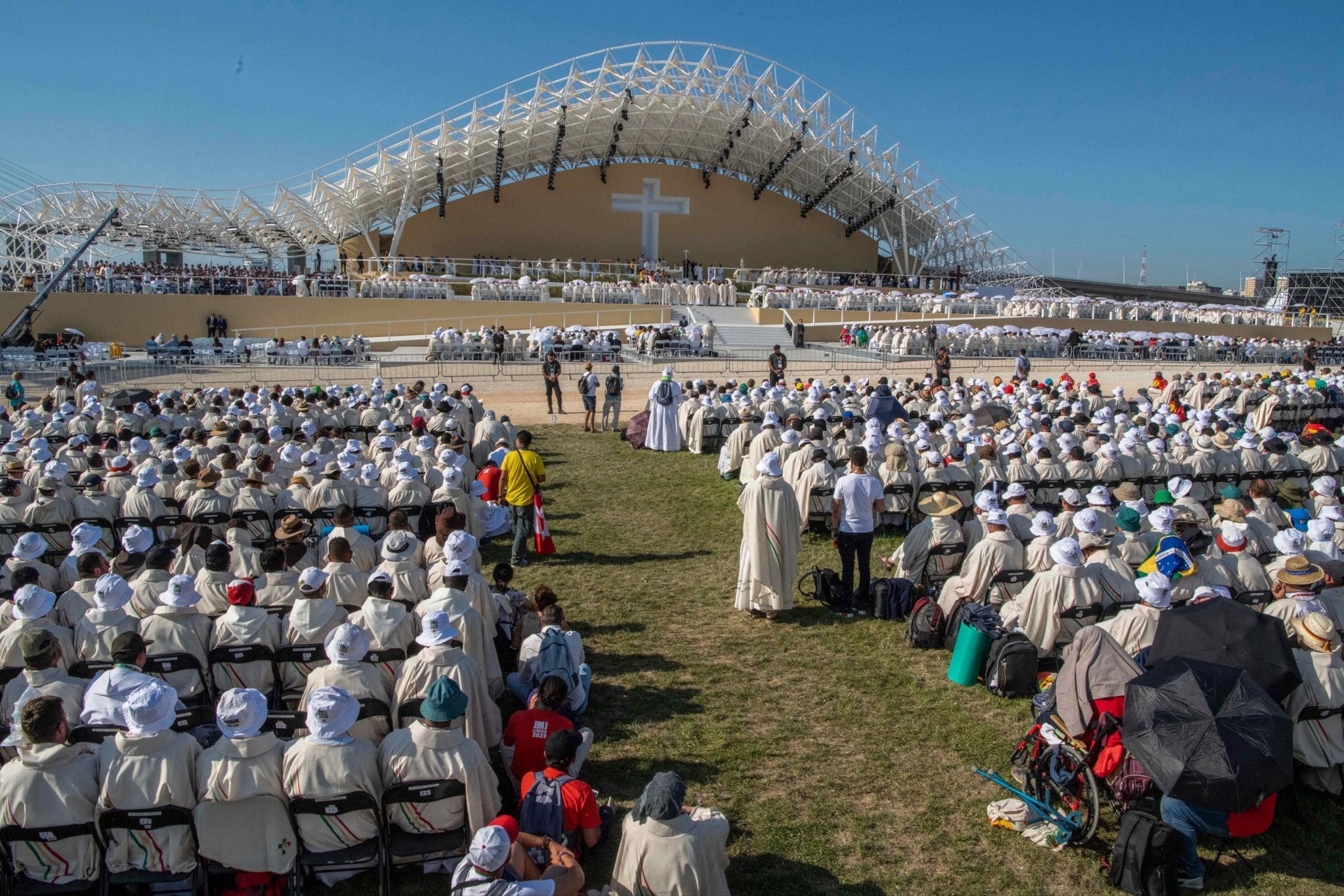
When the dust settled and the final accounts were presented, organizers discovered that they had not only covered their expenses, but were 35 million euros in the black.
So the foundation created to organize World Youth Day Lisbon decided to change its name -- and its focus. Fundação Jornada announced it would be investing the surplus money, and using the proceeds to perpetuate the legacy of World Youth Day in Portugal.
Today, the foundation is led by executive director Marta Figueiredo, who brings with her more than a decade of experience in strategic operations and nonprofit work.
As the foundation issues its first call for project proposals, Figueiredo spoke with The Pillar about the unlikely financial success story behind World Youth Day Lisbon, and how the foundation hopes to achieve its goals of supporting Portuguese youth for years to come.
That interview is below. It has been edited for length and clarity.
World Youth Day Lisbon ended with a significant surplus. This is surprising, considering the track record of previous World Youth Day gatherings. To what do you attribute the event’s financial success?
The final turnout was a big surprise, many more people than expected came to Portugal, and the income generated was significant.
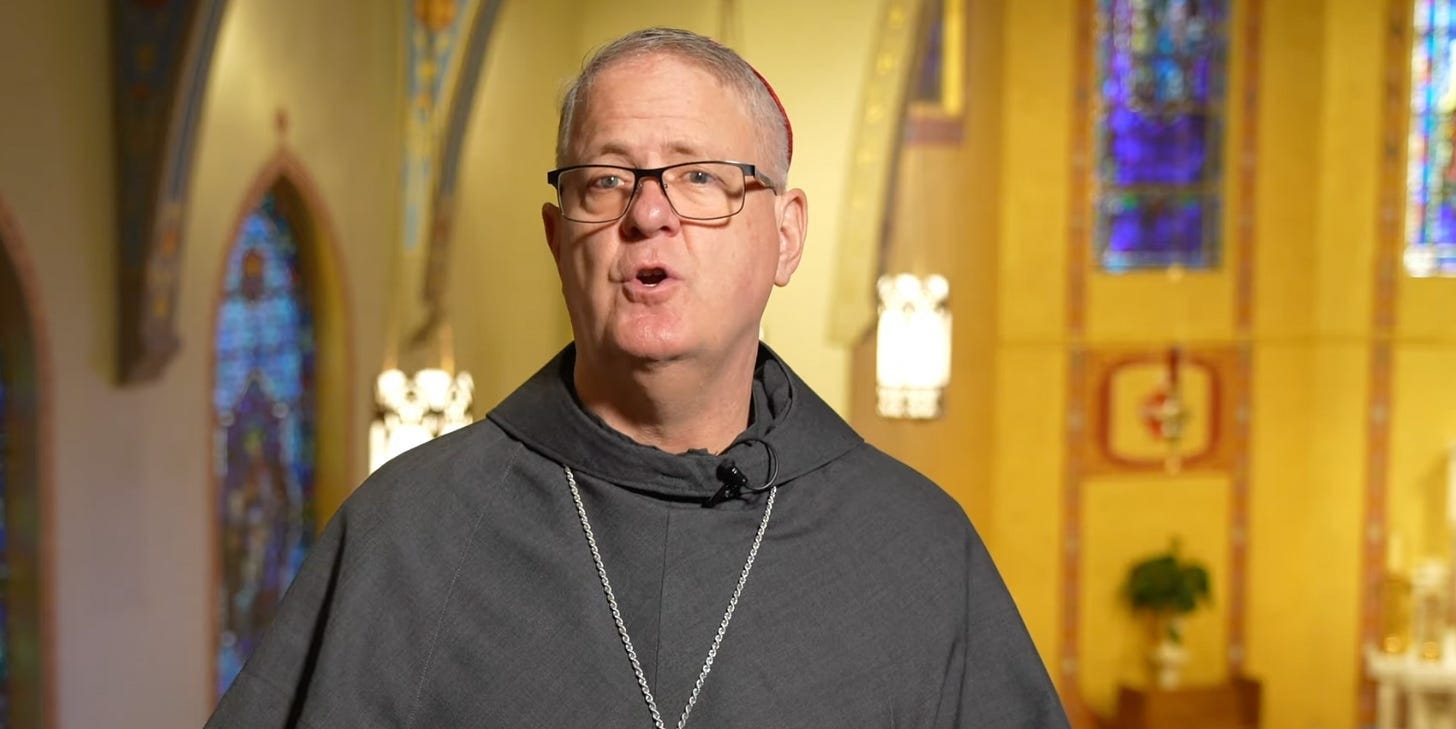
But we also have to give credit to the people involved, namely the former Patriarch of Lisbon, Cardinal Manuel Clemente, and now-Cardinal Américo Aguiar, who at the time was auxiliary bishop of Lisbon, and is now bishop of Setúbal.
The budget was controlled down to the last cent. And I think this is an important testimony, because I don’t think many other World Youth Day editions can boast this sort of surplus.
Finally, we counted on the generosity of a lot of volunteers and also many partners, both from the public and the private sector, who made contributions. Everybody pulled together to make this work. I think one of the biggest success factors in this World Youth Day was the way everybody worked together: the Church, public and private entities, and volunteers. That was a winning formula.
The end result was a 35 million euro surplus. The issue then became what to do with the money? Besides the financial assets, we also had a spiritual heritage from World Youth Day that we wanted to perpetuate, to nurture the seed that Pope Francis had planted here. It was logistically impossible to refund the money to donors, so the organizers decided to invest the money, to put it at the service of that spiritual heritage. World Youth Day happened with the support of all of civil society, and the vision of our foundation is to have a positive impact on the whole of society as well, on the youth in general.
So the Church found itself with 35 million euros in its hands and decided to invest it. That kind of investment sounds like it might be outside the Church’s realm of expertise. Who did you go to for advice?
The investment is the responsibility of the board, which is headed by the auxiliary bishop of Lisbon, Alexandre Palma, and a group of six specialists in different fields. They reached out to a group of three experts in investment who work with us as volunteers and help ensure that the funds are invested well.
Our concern [in choosing these experts] was their expertise, and their belief in what the foundation hopes to achieve. We didn’t go into details about their faith or practice, but we believe they are very much on board with our values and the foundation’s vision.
We adopted a very conservative approach, in line with the Church’s social commitments, values and sustainability. Our aim is to release around 800 thousand euros every year, in two installments, with calls for projects twice a year.
Are you ensuring that all of the foundation’s investments are morally acceptable, in accordance with Church teachings?
We have an investment policy statement to make sure of that. We took all the precautions, taking into account all the variables we can control. Our outlook for now is slow and steady growth, to preserve what we have rather than try to increase it quickly.
Do the project proposals need to have a spiritual or religious dimension to them?
No, they do not. The idea is to help everyone, to use Pope Francis’ key-phrase in Lisbon, “todos, todos, todos.”
This first call is a pilot model. We want to be close to our partners, and to work with the youth and for the youth. For this first phase we have 360 thousand euros, to support projects with up to 30 thousand euros [each].
In this first call, we are focusing on projects in their embryonic stage, which is why we are supporting them with a maximum of 30 thousand euros. But in the future, we also want to help projects that are already established to scale-up and reach even more people, and for those we will have more funds available.
We have set a number of fields we want to engage with, and our aim is to encourage the youth to be agents of hope, namely in the fields of mental health and spirituality; education and training; and social entrepreneurship.
With this first call for projects, we are definitely looking to help and work with projects that in some way benefit local communities and, especially, the towns and cities the pope visited, which are Lisbon, Loures, Oeiras and Cascais. It makes sense as a way to honor the memory of World Youth Day.
These 360 thousand euros for this first phase of funding projects come from interest already generated by the foundation’s investment, correct? Are you trying to increase that initial fund as well?
That is right. In the long run, that is our plan. If we can increase the base funds this will also contribute to generating more money for projects. But our priority at the moment is to create impact and acquire credibility and trust, so that other entities might also be interested in investing in the foundation.
We want to become a reference for anybody interested in investing in, and supporting youth projects in Portugal. My idea of success is that in five or ten years, we will have become the go-to organization for anybody wanting to support the youth in Portugal, because they recognize that we are credible and can make a difference.
Does part of the money go to paying for the foundation’s structure and staff?
That’s right. We try to keep that as light as possible, but to work efficiently we have to have full-time staff. Currently that’s myself, as executive director, and two other people who will mostly be responsible for following up on the projects we support and helping me manage the foundation on a daily basis.
[In addition] we pay rent. We very much wanted the office space to reflect the goals and vision of the foundation. We work in a building that belongs to the Maria Droste Foundation, and which is simultaneously a home for young, vulnerable, institutionalized girls and a social hub for organizations that work with youth, so we are surrounded both by youth and by others who work for youth projects.
When I mentioned 800 thousand euros for projects per year, that is after expenses. We try to keep to the international benchmark for these things, which is that the infrastructure should not account for more than 15% to 20% of the budget.
Who can apply for project funding in this first round?
For this first call, any young person, or any entity that has projects focused on young people can apply for funds. We want to place as few obstacles as possible, in order to invite everybody who is interested, so that then we can journey together.
They don’t have to be Portuguese. Foreign residents can also apply, or foreign organizations, provided the project is for youth in Portugal.
The only condition we are setting at the moment is for the projects to have a transformative impact on the youth they are aimed at. I have over a decade of experience working with charities, and I know that measuring impact can be very tricky, but our challenge is to find a way to measure the impact of these projects in providing young people with the skills required to be agents of hope.
The idea is to have two or three [payment] installments, with the first being bigger as a sign of confidence, and to encourage them to begin working as quickly as possible.
If a young person has a project, does there need to be an official entity backing him or her?
They can apply, but in order to receive the funds, there has to be an entity which will in some way help to incubate the project. Part of our job is to develop a relationship with these entities and, if necessary, pair them with the people whose projects are chosen.
We want to operate according to a logic of trust, but to whom much is given, much is required, so we will also be accompanying them closely -- not to take over, but to make sure that the funds are being applied to things that increase the common good and are transformative.
In this first phase we are hoping to choose 12 to 15 projects, so a relatively small portfolio, precisely so that we can follow them as closely as possible and build a relationship with them. We’re not just handing over money and then waiting for results. We want to be on the ground, accompany them regularly and have a close relationship with the projects we support.
Who will be responsible for that accompaniment?
In the first phase, us – myself and my two colleagues. But in a second phase, we are hoping to prepare volunteer mentors from different fields of expertise who might be able to help with this.
Say there is a project that needs help with marketing and communication, we’d want to be able to hook them up with an expert in that field who can give them some tips, or even a company that can fit that help into their social responsibility program.
One of the things we learned with World Youth Day is that there are so many generous people who are willing to help, and we have had a lot of people knocking on our door now, saying they want to help as well, so we believe we can do this without having to spend any more money on infrastructure.