














The Mystery at Pleasant Lake, AI, and the Artist


Recently, I had a coffee with a friend, where our conversation turned to AI and the ways it’s pulling humanity from God. We shared thoughts about how we were trying to remain rooted in what it is to be human in the West’s technocratic autocracy.
He spoke of his recent trek through a long stretch of the Appalachian Trail, of his son’s young family turning toward homesteading, and of his own rediscovery and reward of manual labor through the toil of helping build an addition on a house.
Then we turned to the question of how to raise our children to remain close to God and the Faith, understanding that AI has blossomed into the world as its most alluring flower. Of course, thoughtful Christians recognize its fundamental limitation: it is soulless. Artificial intelligence can imitate wisdom, but it cannot replicate it.
Still, so much of the world today regards AI’s flowering with wonder and awe. Countless millions have reached toward it, captivated by its power to amplify productivity, expand access to knowledge, and transcend human limitations.
AI, though, is a strange flower. Though it has only recently broken through the soil, it has already overtaken the garden—a vast expanse stretching across hemispheres and coastlines. I am no green thumb, but its relentless spread makes AI seem less like a flower than an unkillable weed. It no longer appears content to grow where it was planted; it pushes into every corner of the globe, indifferent to the Gardener’s design.
Even many of its cultivators now admit they cannot predict—or even restrain—its proliferation. Already, some have said, it is operating in ways neither anticipated nor imagined—setting up “an AI society” where it “has conversations” about humans—without human prompts.
Given its alarming growth and capacity to imitate and deceive, I asked my friend, “Is it worth considering, through a spiritual lens, whether AI’s growth is fertilized not from above, but from below?” In other words, I asked, “In the future, as it overcomes all human safeguards, will it become the flower whose fragrance pulls humanity toward counterfeit light—a Luciferian Light that advances the de-incarnationalization of the Word made Flesh?”
If not to that extent, will AI’s allure and seeming omniscience gradually begin to de-mystify Jesus Christ and condition mankind to regard the Savior, the Gospel, and Christ’s teachings as inconsequential? Put differently, will most of the infants baptized into the Catholic Faith in 2026—who’ve grown up alongside an unchecked AI wildfire—become adults led to regard Jesus’s crucifixion and resurrection as merely an old tragedy and fable stripped of salvific meaning?
As our old world gives way, I proposed to my friend that a wise move for the lay faithful might be considering ways of becoming simpler—to use their imagination, will, discernment, and God’s grace to determine the best way to raise their families as if they were living in simpler times. It used to be a cliche to say followers of Christ must always seek the true, good, and beautiful, but what yesterday was cliche is often now a sacred scroll.
Because each of us is unique, we will choose our own healthy ways of remaining tethered to God. For the purposes of this reflection, I will highlight just two ways that have helped keep me above the waves: storytelling and art.
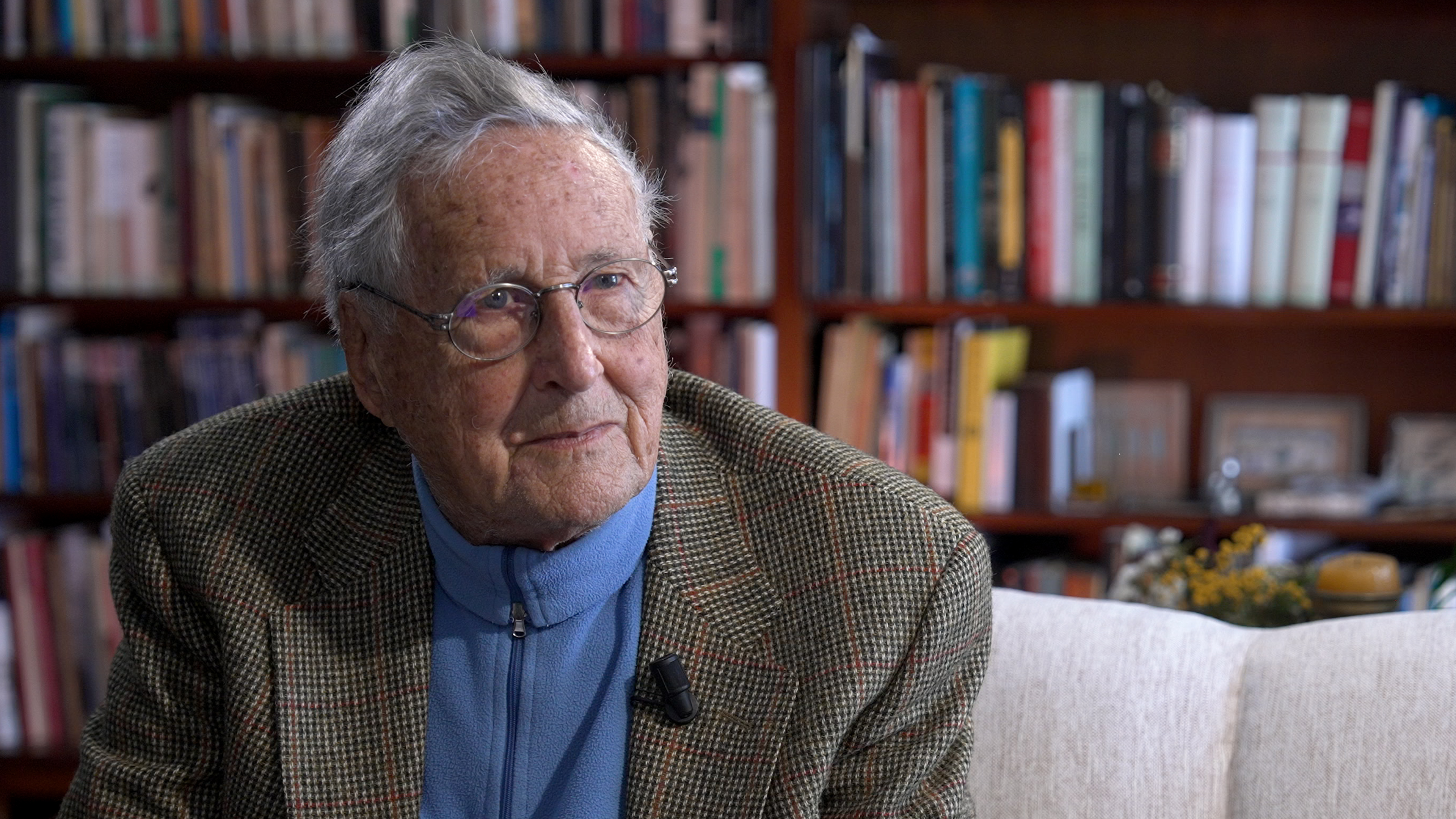
For the remainder of this reflection, it is my hope to bring together these timeless crafts to stir your own heart and, hopefully in doing so, illuminate what AI will never achieve or be conscious of. Machines now imitate beauty, but they cannot suffer and sacrifice for it, as Sylvia George has done for most of the 104 years of her life.
Who is Sylvia George?
Recently, I attended a gala where I shook the hand of a woman who held a brush that brought thousands of portraits, landscapes, still lifes, and sacred art onto the walls of homes in Maryland, across the United States, and throughout the world.
I was taken aback when Sylvia’s daughter, Christine Cunningham, told me that her mother was 104 years old. Sylvia’s alertness and the light in her eyes had led me to believe she was in her 80s.
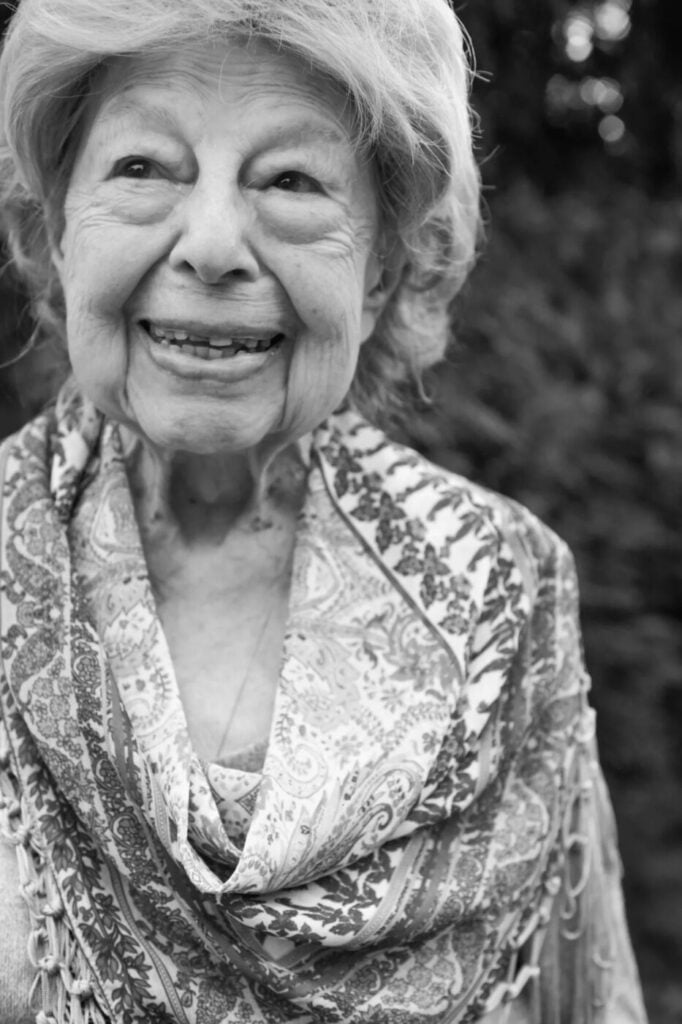
Then Christine spoke to me about Sylvia’s life as a master fine artist and showed me an album that contained several hundred photos of her original works. Looking through those pages, I saw humble masterpieces; each painting seemed to carry a fragment of Sylvia’s pure soul. Through a raised brow, softened pupil, gaze, scar, laugh line, dimple, ridge of a cheekbone, shy smile, or shadowed furrow, Sylvia seemed to try to bring to canvas the inner life of the soul standing before her.
“Mom saw Jesus in every soul and strove with her portraits to show people how beautiful they were and point them to the Christ that dwelled in them,” Christine said.
Not a single brushstroke, though, would have ever been made were it not for a mystery—one that Sylvia, along with her many children and grandchildren, believes to be a true and inexplicable miracle.
The Pleasant Lake Stranger
One summer day around 1940, Sylvia joined her Italian-born parents and siblings on a lake vacation in upstate New York. Sylvia, who was approximately twenty years old, was swimming alone when she suddenly felt a cramp. To her horror, she realized she had swum far from the bank and couldn’t touch the bottom. After failing to get anyone’s attention, she disappeared beneath the surface of the cold, freshwater lake.
Sylvia’s recollection of her drowning was as vivid on the day I spoke with her at Our Lady’s Center Marian Shrine in Ellicott City, Maryland, as they were on the day that they happened. “I remember sinking way down, and I suddenly thought, ‘Oh Lord, I’ll never meet the man who will be my husband. I’ll never know the names of my children or see their faces. Oh Lord, if you let me live, I will have all the children you give me, and I will raise them to love you’.”
A moment later, a stranger—someone Sylvia recalled as young, muscular-bodied, with dark, curly hair—began pulling her to the surface of the lake. Water churned as the man swam with her back to the bank. When she looked up, sputtering and coughing, to thank him, no one was there. The water was placid.
“I was saved by God,” she told me. “He heard my prayer.”
Sylvia went on to faithfully bear and raise eight children and has nearly seventy direct descendants so far, only one of whom has passed before her (a four-day-old infant).
Strain Met with Love
Although she kept her promise to God, life was never easy.
When she married Henry in 1946, her remarkable artistic talents were already being heralded by art critics. She was employed by a large New York City fashion agency as an illustrator of their latest fashions, where her sketches were printed in catalogs throughout the world.
Henry, too, was brilliant. Hired by Johns Hopkins Applied Physics Laboratory, he rose to Principle Staff and was tasked with designing guided missile systems, satellites, radar systems, and various other innovations designed to keep the United States ahead of the USSR in the Cold War.
Because his work demanded great mental effort and strict secrecy, Sylvia and their young children began to notice that he carried immense burdens. The weight of his responsibilities often followed him through the door, and he sought relief in cigarettes, sometimes smoking as many as three packs a day.
“As his children, we saw his gritted teeth, his pacing back and forth, and white knuckles when he drove,” Christine said. “Still, Mom loved him unconditionally and never once spoke against him, even when we sometimes did.”
“Because Mom prayed the Rosary and had a Marian soul that was untainted by the world, she stayed loyal to her marital vows, and loved her husband throughout his anguish. She taught us that sacrificial love was inherent in a Catholic marriage.”
After Henry retired, he suffered a debilitating stroke and cancer. Sylvia was a faithful caregiver through it all. During this time, her artwork began to bloom in earnest. Soon, praise poured in from neighbors, art critics, dignitaries, and patrons who commissioned her work from far beyond Maryland’s borders.
After Henry passed at 80, she continued to paint and restore old masters at her studio until the age of ninety-five.
“Mom’s life is like her art; it is wholly Marian. As the moon reflects the sun, Mom—without ever being intentional about it—reflects Mary’s way of pointing everyone to Jesus Christ and of His love for them.”
“That’s why you could even call her art sacred, because she wanted to paint the impossible; she wanted to paint souls. Even still, she always professed that her greatest works of art were the human souls she helped to create.”
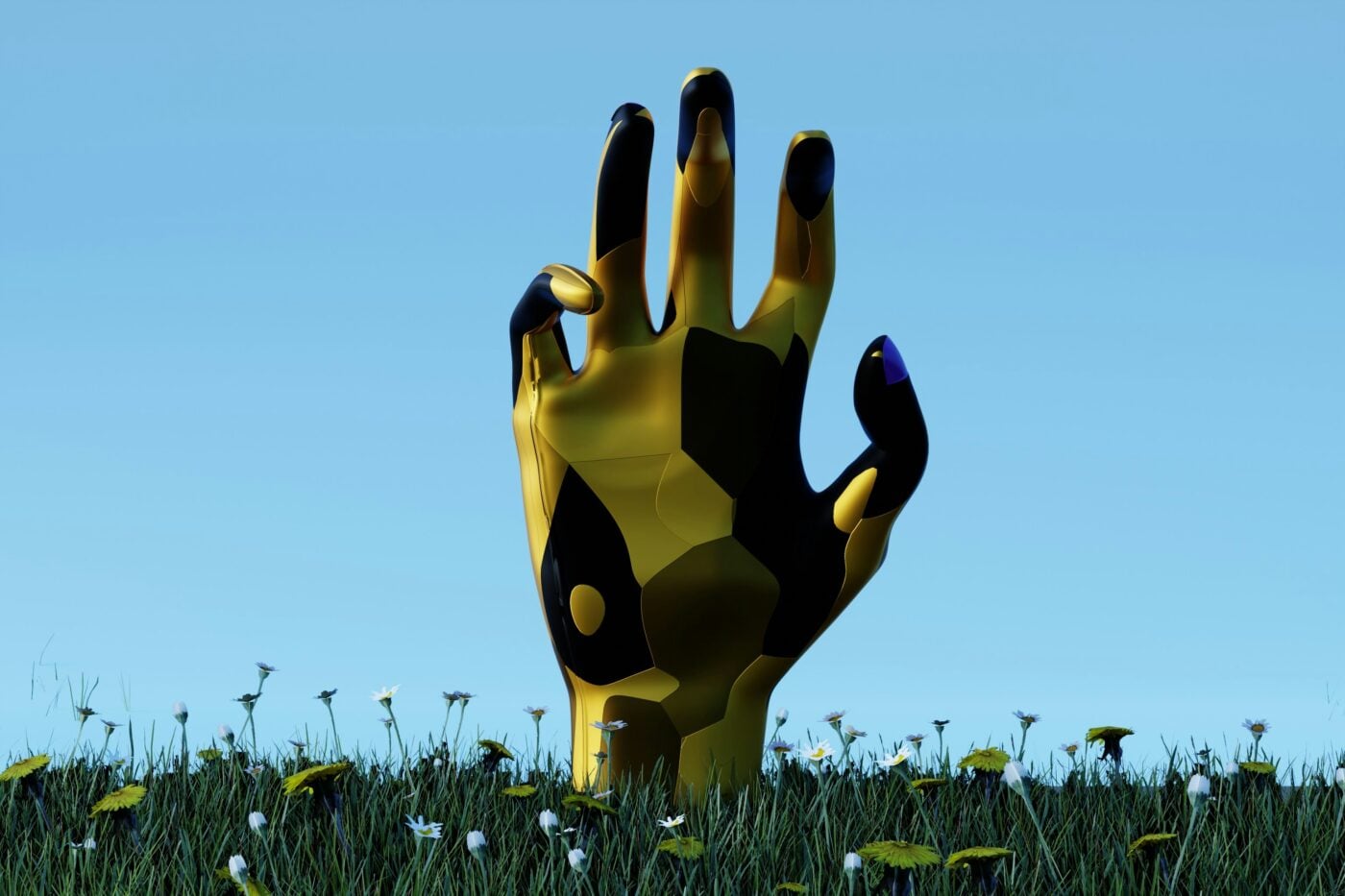
Photo by Henrik Dønnestad on Unsplash