



.JPG/_jcr_content/renditions/cq5dam.thumbnail.cropped.750.422.jpeg?#)

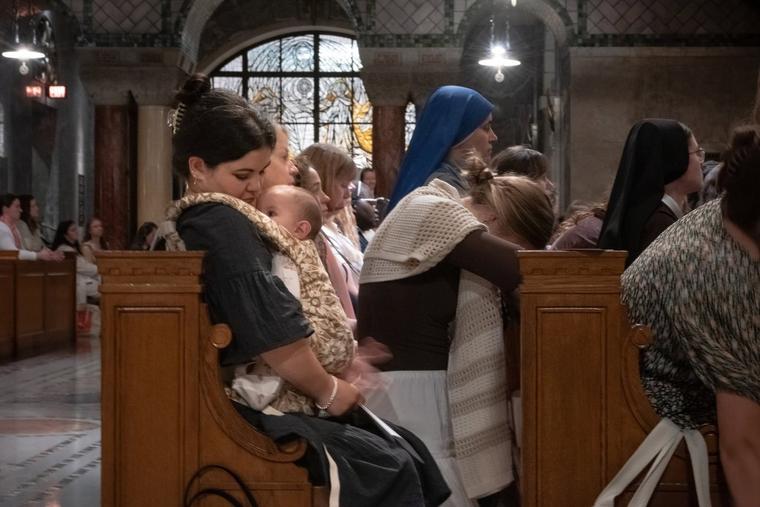







Called to the Lay Monkery
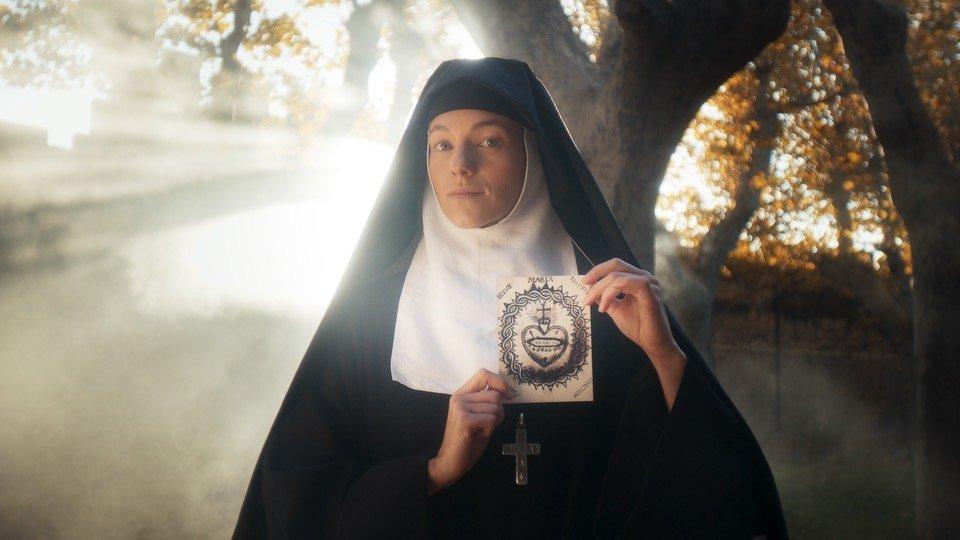
I recently picked up the book Joy Within His House: A Cloistered Nun’s Reflections on Following Christ by Sister Mary Magdalene of the Immaculate Conception Prewitt, OP. The book explores life within the cloister, which is a mysterious place for 99.999% of the world’s population.
Her revelations are profound and distinctly Dominican. She answers the question: How does a member of the Order of Preachers build the Kingdom of God from within the secrecy of a closed community? In other words, how does a nun who can’t physically go out and “preach,” preach?
This led me to the question posed through this article: What is keeping us—those who are not monks or nuns—from practicing monasticism?
If you’ve read my writing, you’ll know my answers: careers, families, hobbies, and screens.
But is it possible for us to emulate the life of a monastic in the chaos of the lay life?
Sister Mary Magdalene argues that it is possible.
Here’s how we do that.
Lean into Suffering
I was in the laundry doing the washing in front of a Sister who was throwing dirty water into my face every time she lifted the handkerchiefs to her bench; my first reaction was to draw back and wipe my face to show the Sister who was sprinkling me that she would do me a favor to be more careful. But I immediately thought I would be very foolish to refuse these treasures which were being given to me so generously, and I took care not to show my struggle. I put forth all my efforts to desire receiving very much this dirty water, and was so successful that in the end I had really taken a liking to this kind of aspersion, and I promised myself to return another time to this nice place where one receives so many treasures.
The saints sought suffering. When writing about St. Francis of Assisi, G.K. Chesterton wrote, “[Sacrifice] was as positive as a passion; it had all the air of being as positive as a pleasure. He devoured fasting as a man devours food. He plunged after poverty as men have dug madly for gold.” I know it seems counterintuitive to place suffering as the first place to find contemplation. After all, shouldn’t our first moments of waking up be dedicated to God? Of course, but we first need to wake up, and waking up in today’s world is a difficult thing to do.
There is no shortage of crosses in our day-to-day. Instead of avoiding them, a true contemplative leans into them as the means by which their abstinence, penance, and sacrifice becomes Christ crucified again. If you can’t find Jesus in the difficulties of life, you will surely miss Him when all is well.
Become Community
Only by naturally and honestly rubbing up against one another can we become more polished in holiness…For anyone who loves something else along with you, but does not love it for your sake, loves you less.
Sister Mary Magdalene is referring to Christ in the aforementioned quote. She could refer to anything, however, because regardless of what (or who) we love, if we don’t have others in mind when we contemplate that love, we are using that thing we love for its utility alone. I might love my car, but if I refuse to give a ride to my loved ones, my love is misplaced. In the same way, I might love Jesus and His Catholic Church, but if I don’t love it for the sake of saving souls, Jesus becomes an invisible friend and the Church a mere social club.
Community is the mirror that reflects our contemplation. What we see in that mirror is the effect of our prayerful intent. Who we become, then, is based first on why we contemplate. To be “other-centered” is to love one’s neighbor as yourself. And in doing so, you “seek first the Kingdom of God and everything else [is] given to you as well” (Mt. 6:33).
Release Your Power into the World
The story of Martha and Mary teaches us a valuable lesson. There are people who place their spiritual value in acts of service and others who find it in contemplation. The lesson learned, however, is that Martha and Mary worked together. This isn’t an either/or situation—it is a both/and.
That being said, Jesus did tell us that one was better than the other—to contemplate is greater than to act. In fact, the power of contemplation is what the saints participate in eternally. In that state, they intercede for us without any willful action of their own. On the contrary, their contemplation in the beatific vision is enough to release powerful influxes of spiritual power into the world.
This same contemplative participation is what the cloisters commit their lives to. As an effect, their monasteries become the equivalent of nuclear power plants of spiritual energy. “The fate of humanity is decided by the prayerful hearts and uplifted hands of contemplative women.”
This shouldn’t be a surprise. Look to the first Christian communities. Jesus told His apostles to “Go and make disciples of every nation” (Mt. 28:19), but what did the women do while the men went out? They stayed. They prayed. They fueled the spiritual and economic stability that was needed for the men of God to spread the Gospel. Without the women, the early Church would have been too weak to sustain itself spiritually.
We are able to participate in this same contemplative power. All it takes is a shift in intent and mindset. As Sr. Mary Magdalene writes, “the smallest degree of sanctifying grace in one individual is greater than the natural good of the entire universe,” which means that our tiny sacrifices and our reception of contemplative gifts from God can do a great deal more than our acts of service. At the same time, they become a burning furnace of zeal that moves us to do good works simply for the fact that they build up the Church. The monk and the missionary, then, are one and the same. And while there must be a great deal of monk in the missionary, there is no such thing as a missionary without a monk.
The contemplatives drive the whole of evangelization.
For years, I thought that being a missionary disciple means that we had to do something at all times. I questioned why there weren’t more missionaries, more books written, more apostolates, more podcasts, more evangelists. More. More. MORE!
Fast forward to the present day, and now there are so many apostolates online and in real life that a simple Google search for “Catholic [add your area of interest here]” will pull up hundreds of influencers, resources, and places where Christ’s Church has taken root.
The funny thing is, I’m not so sure that the people who are “doing” are truly the main characters in the spreading of the Gospel.
I think it’s the cloistered nuns…
…and the lay monkery that you and I practice, dear reader.
Photo by Francesco Ungaro on Unsplash