





























Catholic groups stress efforts to combat hunger as Senate prepares to consider farm bill
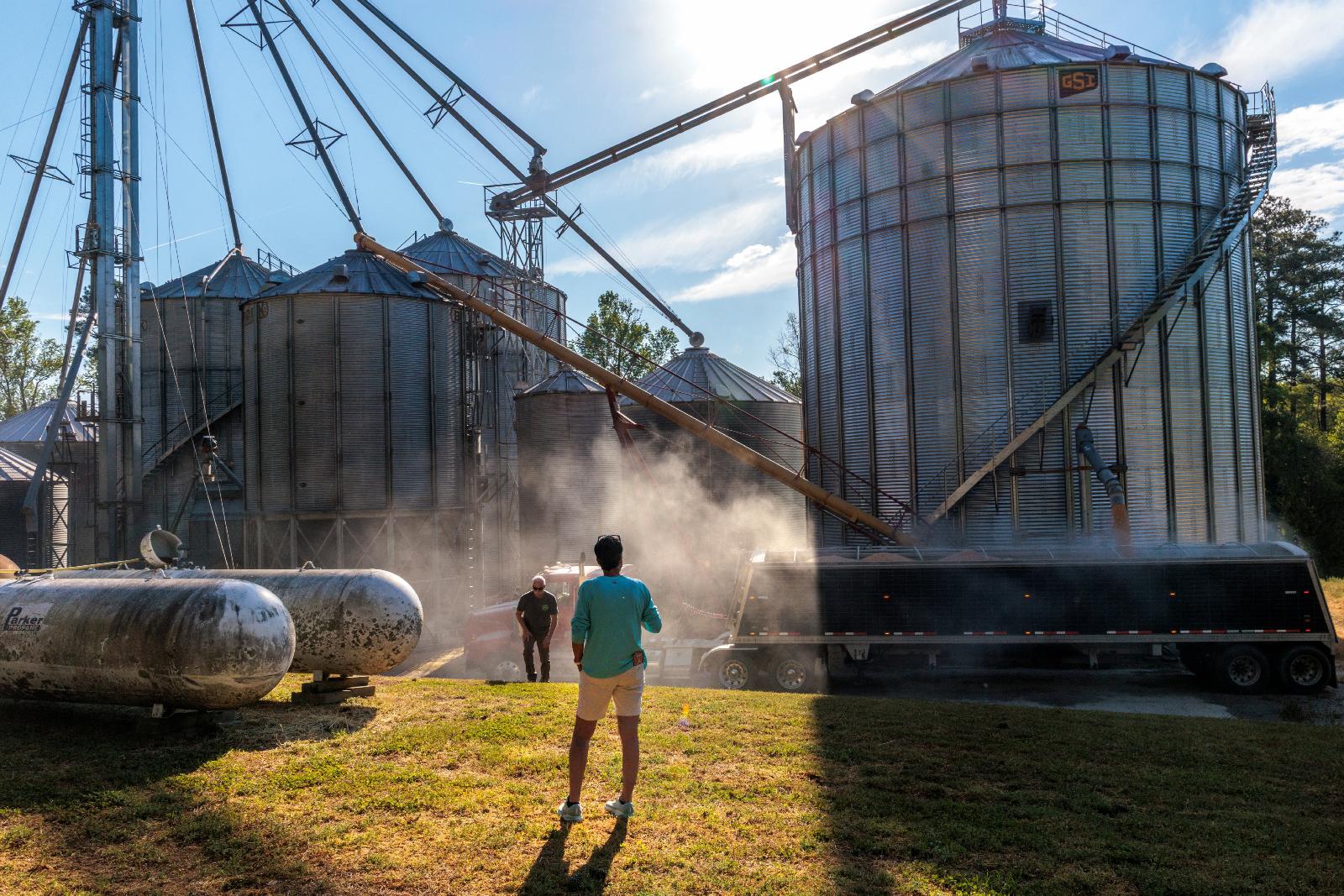
WASHINGTON (OSV News) — As the U.S. Senate prepares to consider a farm bill recently approved by the U.S. House, Catholic organizations together with the U.S. bishops sought to stress to lawmakers the importance of efforts to combat hunger, such as robust support for the Supplemental Nutrition Assistance Program, or SNAP, a major part of the nation’s social safety net.
The House on April 30 passed a $390 billion farm bill on a close to party-line vote; 14 Democrats and three Republicans broke with their respective parties in support of or opposition to the bill.
Julie Bodnar, outreach and policy adviser for the Secretariat of Justice and Peace at the U.S. Conference of Catholic Bishops, told OSV News, “Historically, the farm bill has been a bipartisan process.” She said the USCCB would like to “see that continue.”
“It’s historically been a bill that brings everything together, that acknowledges that the needs of farmers, the needs of rural America, that the needs of hungry people, they’re all linked,” she said. “There’s no need to pit them against each other. These interests are aligned. They’re not opposed.”
Polarized farm bill has uncertain fate
Opponents of the House’s farm bill have argued the near-party-line vote is a departure from longstanding norms of bipartisanship around the legislation. The bill faces an uncertain future in the Senate, where the upper chamber is expected to attempt to make its own changes before sending it back to the House.
Francisco “Frankie” Chevere, director of social policy and government affairs for Catholic Charities USA, told OSV News, “the chances of having a farm bill passed in the Senate are, at best, doubtful.”
A traditionally bipartisan piece of legislation, the farm bill in recent years has become more polarized. Congress last passed a farm bill in 2018 that expired in 2023, and even with Republican control of Congress and the White House since January 2025, lawmakers have thus far been unable to send a new farm bill to the president’s desk.
The One Big Beautiful Bill Act, which enacted key items of President Donald J. Trump‘s legislative agenda on issues including taxes and immigration, included a provision increasing work requirements for SNAP recipients, including those experiencing homelessness, and other measures expected to cut SNAP. The House’s farm bill would lock in about $187 billion of those cuts to SNAP between 2025 and 2034.
“Over 3 million participants, kids, seniors, veterans, people with disabilities, working parents have already lost SNAP since July of last year,” Chevere said in reference to the One Big Beautiful Bill Act’s July 4 passage. Some estimates are as high as 4.3 million.
SNAP changes sought
Catholic groups including Catholic Charities USA, Catholic Relief Services, and the Society of St. Vincent de Paul USA, Catholic Rural Life, and the USCCB committees on Domestic Justice and Human Development and International Justice and Peace, have urged lawmakers to make several changes to the legislation.
In a February letter, they advocated for the delay of newly enacted state cost-sharing requirements for SNAP benefits, the elimination of the felony-based exclusion from SNAP participation to promote reintegration and food security for dependants, and for Puerto Rico to be transitioned into full participation in SNAP over the course of a decade.
The One Big Beautiful Bill Act also implemented a cost-sharing structure with the states for the administration of SNAP. Bodnar said the USCCB would like to see that cost shift delayed by two years so that the changes “can be made thoughtfully, so that they can be made carefully, so that families aren’t the ones paying the price for administrative errors.”
John Berry, national president of the Society of St. Vincent de Paul USA, told OSV News, “Every human person is sacred and has the right to sufficient food in order to live their life with dignity. As Pope Leo XIV recently stated, ‘No one can remain on the sidelines in the fight against hunger.'”
Berry said the Society of St. Vincent de Paul USA is committed to fighting hunger in the U.S.
“We have thousands of food pantries, meal sites and food programs throughout the country,” he said. “But with more than 47 million people across every state and congressional district struggling to put food on the table, SNAP continues to be the nation’s most effective and responsive tool to combat hunger.”
Puerto Rico changes sought
Berry said his organization is seeking a farm bill that “delays the newly enacted state cost-sharing requirements for SNAP benefits so all states have time to succeed in lowering errors and protect participation, eliminates the felony based exclusion from SNAP participation, and provides Puerto Rico a structured opportunity to transition from the Nutrition Assistance Program (NAP) to full SNAP participation.”
Puerto Rico, a U.S. territory, is not included in SNAP, and relies instead on a separate program with a fixed rate. Proponents of its inclusion in SNAP point to the island’s geography and more than 1.3?million low-income residents as circumstances that leave many vulnerable to hunger, especially in the event of natural disasters, such as hurricanes, or power grid failures.
Chevere said “providing equal treatment to all territories of the United States in SNAP” is another key priority for Catholic Charities USA.
“At the present time, Puerto Rico, which is the largest territory of the United States, doesn’t have full SNAP benefits,” he said. “There are other territories that do have SNAP benefits, like the Virgin Islands. Puerto Rico and Guam, they don’t have full SNAP benefits.”
Farm Bill tied to human dignity and food security
Marilyn Richardson, senior policy and legislative specialist for Catholic Relief Services, the overseas relief and development arm of the Catholic Church in the U.S., pointed to funding for U.S.-grown and produced agriculture commodities used in international food assistance as another key area.
“CRS’ top priority is making sure that U.S. international food assistance programs (like Food for Peace) are continued, with adequate staffing and funding, and flexible enough to respond quickly to the level of hunger we’re now seeing globally,” Richardson said. “These programs are lifesaving and life-affirming. They prevent hunger around the world, support farmers and their families, and improve nutrition and education outcomes for vulnerable communities.”
Richardson said passing a farm bill is closely tied to human dignity and food security concerns.
“The farm bill is very important in shaping U.S. international food assistance,” she said. “It authorizes and funds major programs like Food for Peace and McGovern-Dole, which are central to the U.S. response to global hunger. Through these programs, the U.S. responds to urgent hunger needs and supports long-term food security around the world, reflecting a commitment to care for our global family.”
She added, “The policies set in the farm bill directly affect how many can be served and how quickly and effectively that assistance reaches those most in need.”
Kate Scanlon is a national reporter for OSV News covering Washington. Follow her on X @kgscanlon.
The post Catholic groups stress efforts to combat hunger as Senate prepares to consider farm bill first appeared on OSV News.