


















The Lesson of the Ascension in Our Lives Today


Have you ever noticed how the Ascension is celebrated during a time when many cross graduation stages and enter new stages of life? There is much to learn from these seemingly unrelated yet coinciding events. Against the context of graduations and new beginnings, the Ascension of the Lord imparts a deeper, richer perspective on the art of saying goodbye.
The Gospels reveal different accounts of the one Ascension event. Matthew gives no Ascension narrative. In Luke’s account, it seems that the Ascension took place on Easter Day (Lk. 24:50-53). And while Mark’s longer ending mentions it (Mk. 16:19-20), there is no suggestion of time passing after the Resurrection either. In the Lord’s conversation with Mary Magdalene recorded in John, He mentions the Ascension (Jn. 20:17), but the Gospel writer gives no detailed account of the actual event.
Abbot Jeremy Driscoll’s liturgical approach to the Resurrection narratives provides a compelling framework for interpreting the Ascension and understanding how we encounter Christ in both mysteries. He says:
The texts refuse to let themselves be tamed into a simple narrative of just another something that happened and can be told. We are in a new realm now where language and narration struggle, and the different narrative styles and details of the evangelists are Spirit-inspired means that put us into contact with this new reality, this new realm of inexhaustible richness, a reality. (98)
Driscoll thus suggests that the lack of description is the most appropriate way to convey an event that is greater than words. Still, how are we to learn of and understand the Ascension?
This brings us to the Acts of the Apostles, which do contain the untamed accounts of this event. This second volume of Luke is the only account that tells us that the Ascension of the Lord took place forty days after the Resurrection (Acts 1:3). Forty days mark a time of preparation. Jesus was forming His Church in the in-between, from His Resurrection to His Ascension. We saw it throughout the Easter Season, with Mary Magdalene and the Apostles as prime examples.
In Acts, Jesus gives His final instructions. He speaks of the Holy Spirit, gives many proofs of His Resurrection, reveals the Kingdom of God, and tells the apostles to stay in Jerusalem until the coming of the Paraclete. Jesus reveals the Kingdom of God to His apostles. For forty days, He unpacks this great mystery and assures them of the gift of the Holy Spirit, that they would receive His power and be His witnesses. This is seen in Peter. Peter preaches zealously on the day of Pentecost. He has been formed by this telling of the Kingdom of God and infused with the gifts of the Holy Spirit.
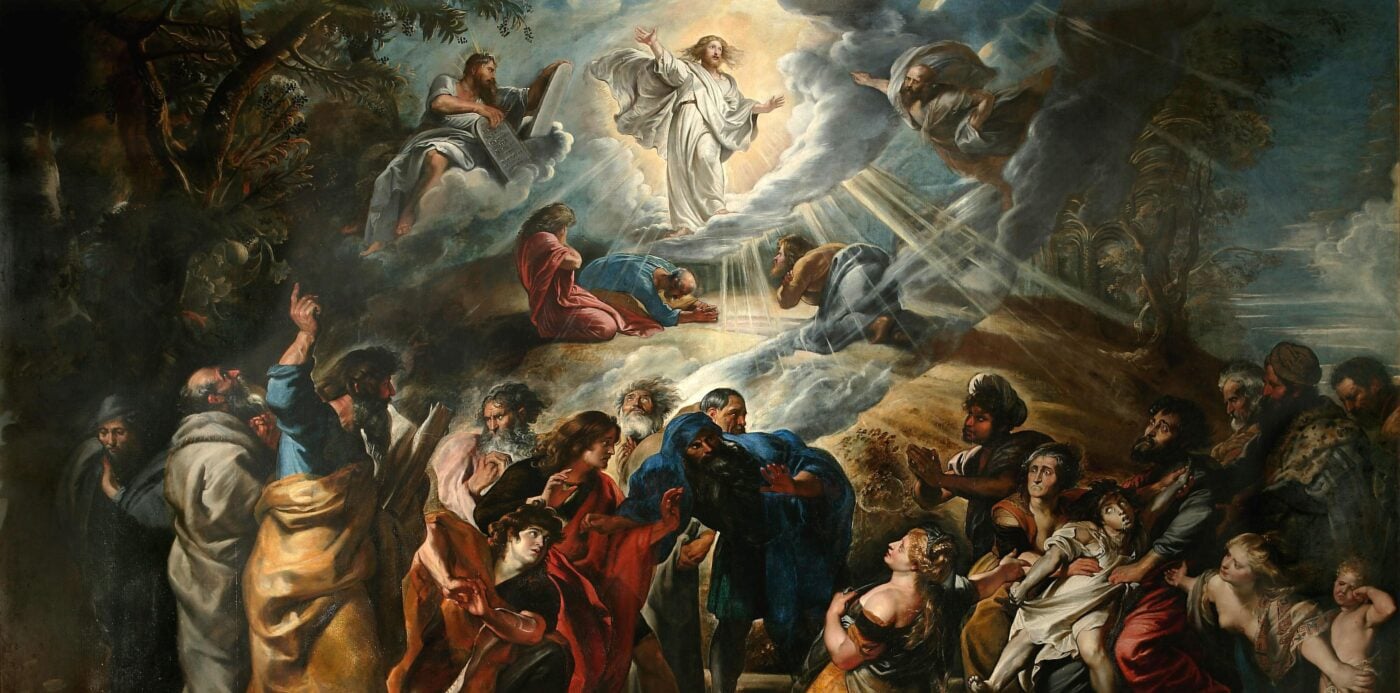
Afterward, Jesus is “lifted up” (Acts 1:9). It is interesting that the word “Ascension” or “ascended” is not even used in the account. Pope Benedict XVI comments that this verbiage demonstrates the sovereignty of Our Lord:
…the verb “to lift up” was originally used in the Old Testament and refers to royal enthronement. Thus Christ’s Ascension means in the first place the enthronement of the Crucified and Risen Son of Man, the manifestation of God’s kingship over the world.
Furthermore, the “cloud took him from their sight” (Acts 1:9). This is Old Testament language that reveals intimacy with God. Jesus ascends to the right hand of the Father and is with His Church forever in a new way.
How can we translate this massive faith event into our lives today? If He did not ascend to His Father, our faith would be limited. We would be people who felt the need to be physically near Jesus to be close to Him. His Ascension has allowed us to be with Him in a new way forever. His Ascension is not the absence of God in His Church, but an intimacy with Him found in its sacraments. We have been given the power to reveal and witness to the Kingdom of God. People come to faith by the witness of believers!
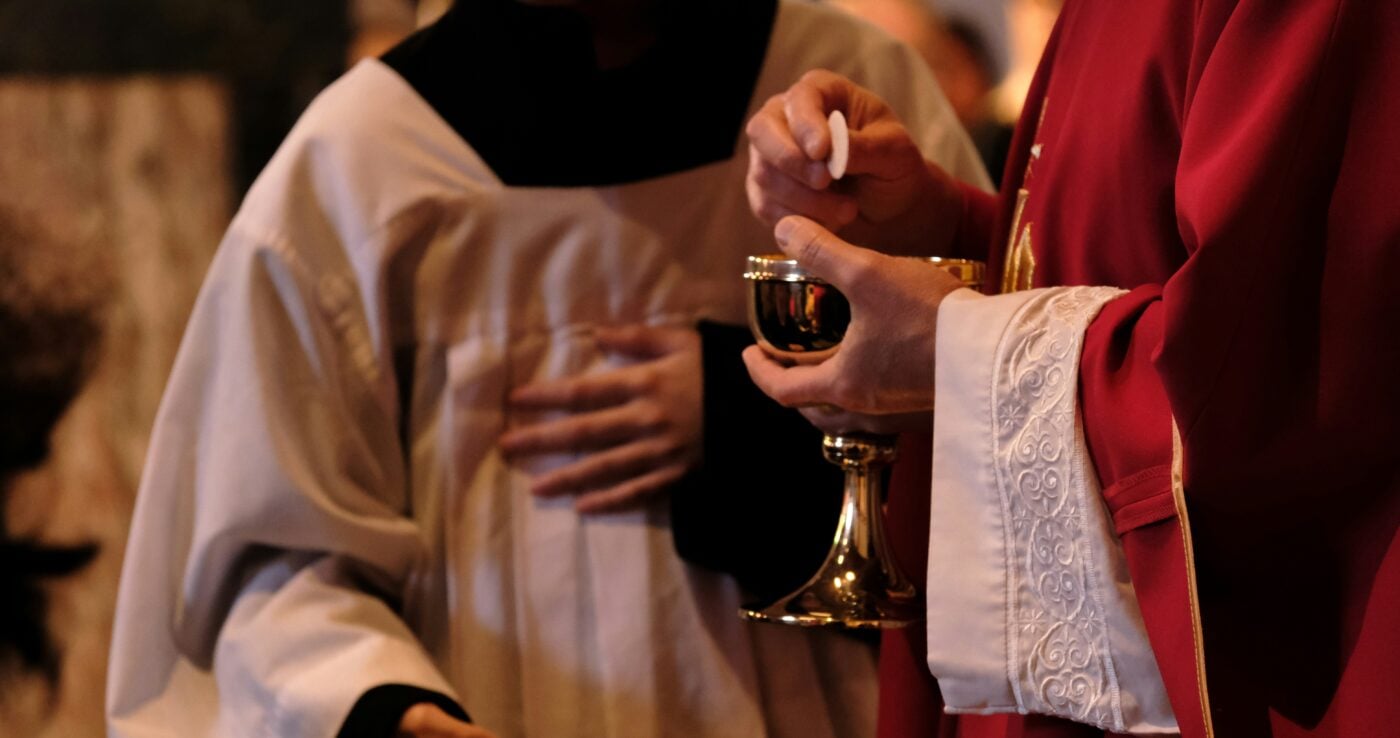
We are not a Church awaiting the return of our absent Master. Like the apostles, we are filled with great joy, for we are a Church that has been given authority, charity, and witness to reveal the Kingdom now and to know Him in the breaking of the bread.
Returning to our meditation on this season of graduations and new beginnings, saying goodbye to those close to us embarking on new life journeys is never easy. Yet, as they leave, we know that just because we are losing their physical presence does not mean we are losing them. They are etched on our heart, and we on theirs. Blessed are we to know such friends!
Below is a quote that means a great deal to me. It helps me understand the Ascension and relates it to my relationship with others in this life, where we say hello and goodbye over and over again. The quote is from Fr. Ron Rolheiser, OMI, and emphasizes that the Ascension is a way of loving deeper:
The mystery of saying goodbye is really the mystery of the Ascension, the most under-understood mystery both inside and outside of religion. The Ascension is about going away so that our loved ones can fully receive our spirit. It’s about the mystery of saying goodbye, when goodbye isn’t really goodbye at all, but only love’s way of taking on a different modality so that it can be present in a way that’s deeper, purer, more permanent, less-clinging, and less-limited by the tensions, disappointments, inadequacies, wounds, and betrayals that, this side of eternity, forever make our intimacy a work in progress.
Happy Ascension, everyone! Alleluia.