






















Washington Roundup: DHS nominee clears key hurdle; Gabbard testifies amid Iran war scrutiny; and more

WASHINGTON (OSV News) — President Donald Trump’s nomination of Sen. Markwayne Mullin, R-Okla., to lead the Department of Homeland Security cleared a key Senate hurdle after a tense hearing.
The same week, top intelligence officials testified before the Senate Intelligence Committee about their annual assessment of worldwide threats, amid scrutiny of the Trump administration’s combat operations in Iran, and Supreme Court Chief Justice John Roberts denounced “dangerous” rhetoric directed at federal judges.
Mullin nomination advances after tense hearing
The Senate Homeland Security Committee voted March 19 to advance Mullin’s nomination after his hearing a day earlier included a tense exchange with the committee’s top Republican.
Sen. Rand Paul, R-Ky., chair of the Senate committee, pushed Mullin to apologize for saying he “completely” understands why a neighbor violently assaulted Paul in 2017, and criticized him for his apparent attempt to challenge the leader of a labor union to a fight during a 2023 hearing.
“Explain to the American public why they should trust a man with anger issues to set the proper example for ICE and Border Patrol agents,” Paul argued.
Mullin said during the hearing that “I don’t think anybody should be hit by surprise. I don’t like that.”
“But if I do have something to say, everybody in this room knows I’ll come straight to you,” he said.
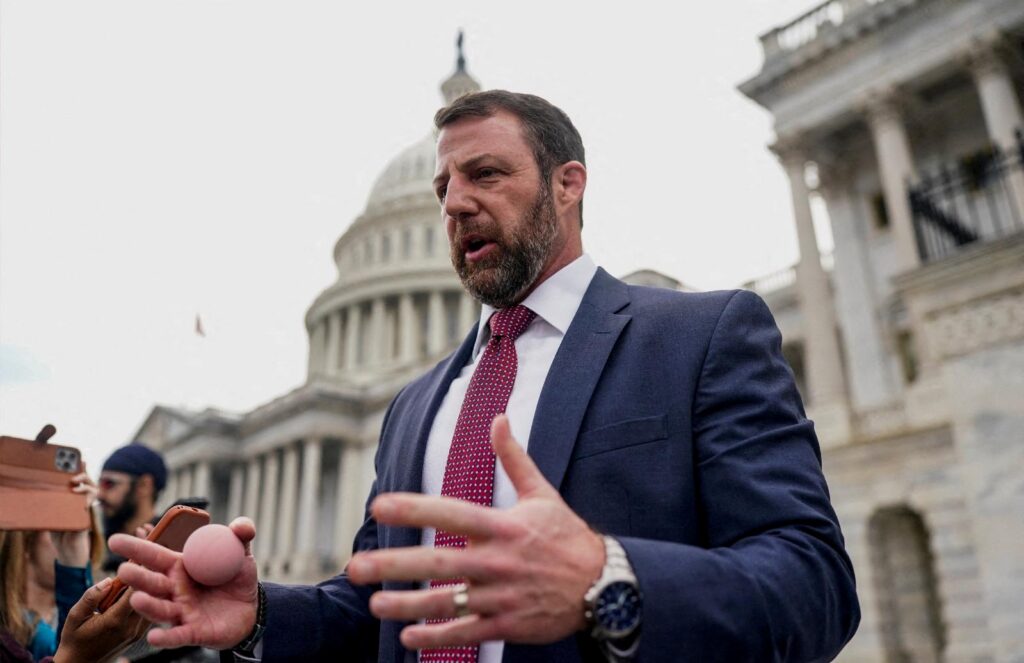
Although Paul declined to support Mullin, Sen. John Fetterman, D-Pa., broke with his fellow Democrats on the committee to vote in favor of advancing Mullin’s nomination to the full Senate, allowing that nomination to proceed.
Trump’s nomination of Mullin to lead DHS after he announced he was removing Kristi Noem from the post came amid a still-ongoing funding lapse for the department.
In January, lawmakers ended a brief, partial government shutdown, agreeing to pass most outstanding appropriations bills but only a two-week extension for DHS to allow negotiations for reforms regarding federal immigration officers after federal agents killed two American citizens in Minnesota in separate incidents. However, they have yet to come to an accord on what those constraints would entail. Continued funding for DHS remains stalled, forcing employees within the DHS agency, which also includes entities like the Transportation Security Agency and the Coast Guard, to work without pay.
In a Feb. 24 statement issued shortly before President Donald Trump’s state of the Union address, a group of U.S. bishops, most from the U.S.-Mexico border region, urged several reforms to immigration enforcement, including that sensitive locations such as houses of worship, schools and hospitals are protected from enforcement actions.
Gabbard testifies amid scrutiny of Iran war
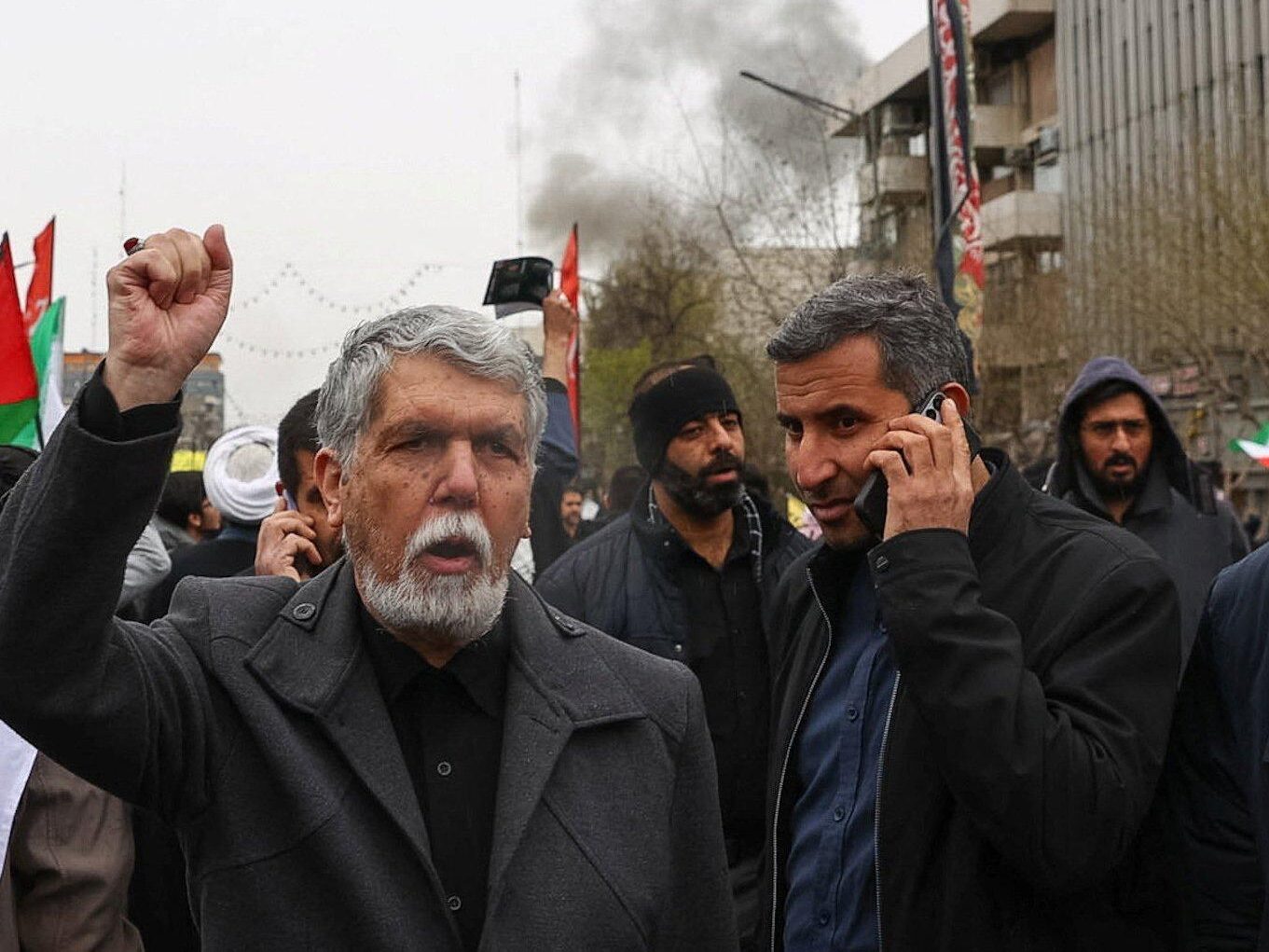
Top intelligence officials, including Director of National Intelligence Tulsi Gabbard, testified before the Senate Intelligence Committee March 18 on their annual assessment of worldwide threats, amid scrutiny of the Trump administration‘s combat operations in Iran.
Gabbard said the Iranian regime was “intact” but “largely degraded” by the strikes, carried out by the U.S. and Israel.
“Its conventional military power projection capabilities have largely been destroyed, leaving limited options. Iran’s strategic position has been significantly degraded.”
“Even so,” she added, “Iran and its proxies remain capable of and continue to attack U.S. and allied interests in the Middle East.”
Gabbard, one of the most vocal anti-war critics in the Trump administration, stayed largely mum on her own views of the conflict, arguing the decision was Trump’s. She said the intelligence community’s assessment was that “if a hostile regime survives, it will seek to begin a yearslong effort to rebuild its missiles and UAV forces.”
Pope Leo XIV is among the world leaders who have called for a ceasefire in the region.
Gabbard’s testimony came one day after Joe Kent, the Trump administration’s top counterterrorism official, resigned, citing his objections to the war in Iran, claiming it was “manufactured by Israel.”
Sen. Mitch McConnell, R-Ky., denounced that claim, pointing to what he called “baseless and incendiary conspiracies” in Kent’s resignation letter.
Prior to his resignation, Kent was under FBI investigation for several months on suspicion that he leaked classified information, multiple outlets reported.
Roberts denounces personal rather than legal criticism of federal judges
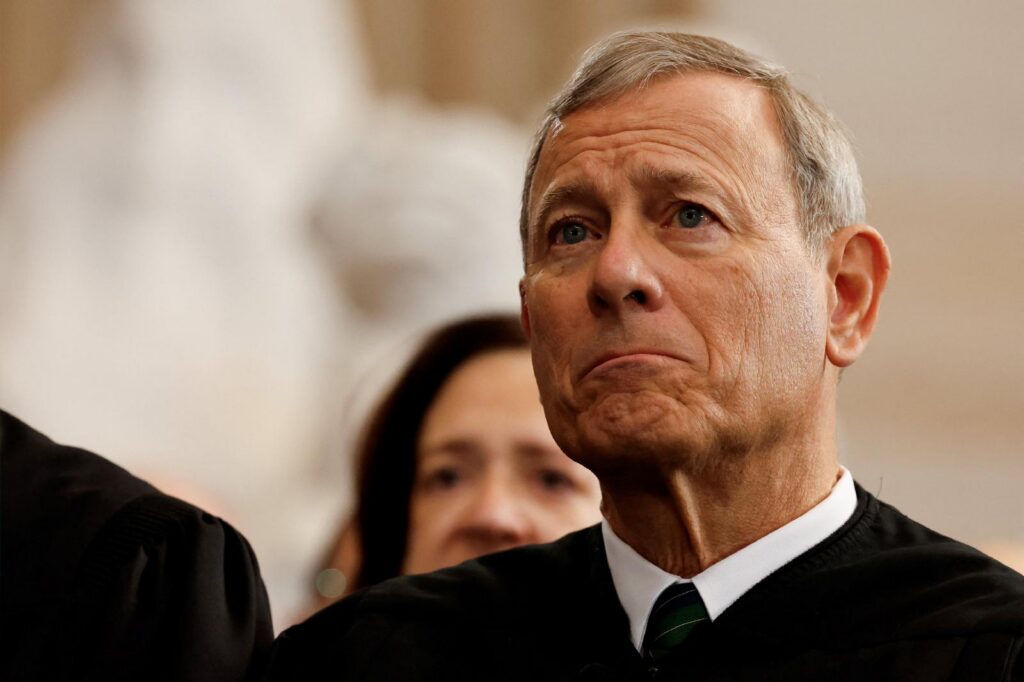
Chief Justice Roberts said March 17 that while criticism of the court’s legal reasoning is “healthy,” some rhetoric directed toward the justices and other federal judges is “dangerous.”
In a rare public speaking appearance at Rice University’s Baker Institute for Public Policy in Houston, Roberts, who is Catholic, said, “Judges around the country work very hard to get it right.” He added, “And if they don’t, their opinions are subject to criticism.”
“But personally directed hostility is dangerous, and it’s got to stop,” Roberts said.
Although Roberts did not name the president, his comments came just days after Trump called U.S. District Judge James Boasberg “a Wacky, Nasty, Crooked, and totally Out of Control Judge” in a social media post for blocking subpoenas the Justice Department had issued to the Federal Reserve.
After the high court on Feb. 20 rejected the Trump administration’s claim that the 1977 International Emergency Economic Powers Act, or IEEPA, granted the president unilateral power to impose sweeping tariffs on nearly every country around the globe, finding that the law does not grant him that authority, Trump called the majority “very unpatriotic and disloyal to our Constitution.”
Speaking more generally, Roberts said, “I actually try not to read outside criticism too much.”
“You’ve done your best and that’s all you can do,” he said.
Catholic Health Association testifies at health care costs hearing
As lawmakers on the U.S. House of Representatives Committee on Energy and Commerce’s Subcommittee on Health held a hearing March 18 to examine rising health care costs, the Catholic Health Association of the United States was among the groups that submitted testimony in favor of certain recommendations it said would help foster “accessible, affordable health care as a basic human right.”
“Catholic health care is already advancing affordability through prevention, innovation, and stewardship. Our members are working to address the root causes of costly hospital care, such as food and housing insecurity, expanding telehealth, shifting appropriate care to outpatient settings, and investing in the health workforce, including needed nursing programs. Catholic hospitals also maintain significantly lower operating costs than other nonprofit hospitals, demonstrating strong stewardship and efficiency,” CHA said in its testimony.
Recommendations made by CHA included urging lawmakers to pursue a health care agenda that would “strengthen and stabilize coverage in the ACA Marketplace, Medicaid, and Medicare to reduce uncompensated care and prevent avoidable utilization,” reduce administrative waste “by reforming prior authorization and insurer payment practices, including inappropriate denials and delays,” and make new investments in education and training for the health care workforce as part of “targeted strategies to address shortage areas, including in immigration policy.”
Kate Scanlon is a national reporter for OSV News covering Washington. Follow her on X @kgscanlon.
The post Washington Roundup: DHS nominee clears key hurdle; Gabbard testifies amid Iran war scrutiny; and more first appeared on OSV News.